
Egypt Signals Military Support for Saudi Arabia Against Houthis. Is the Yemen War Becoming a Regional Conflict?
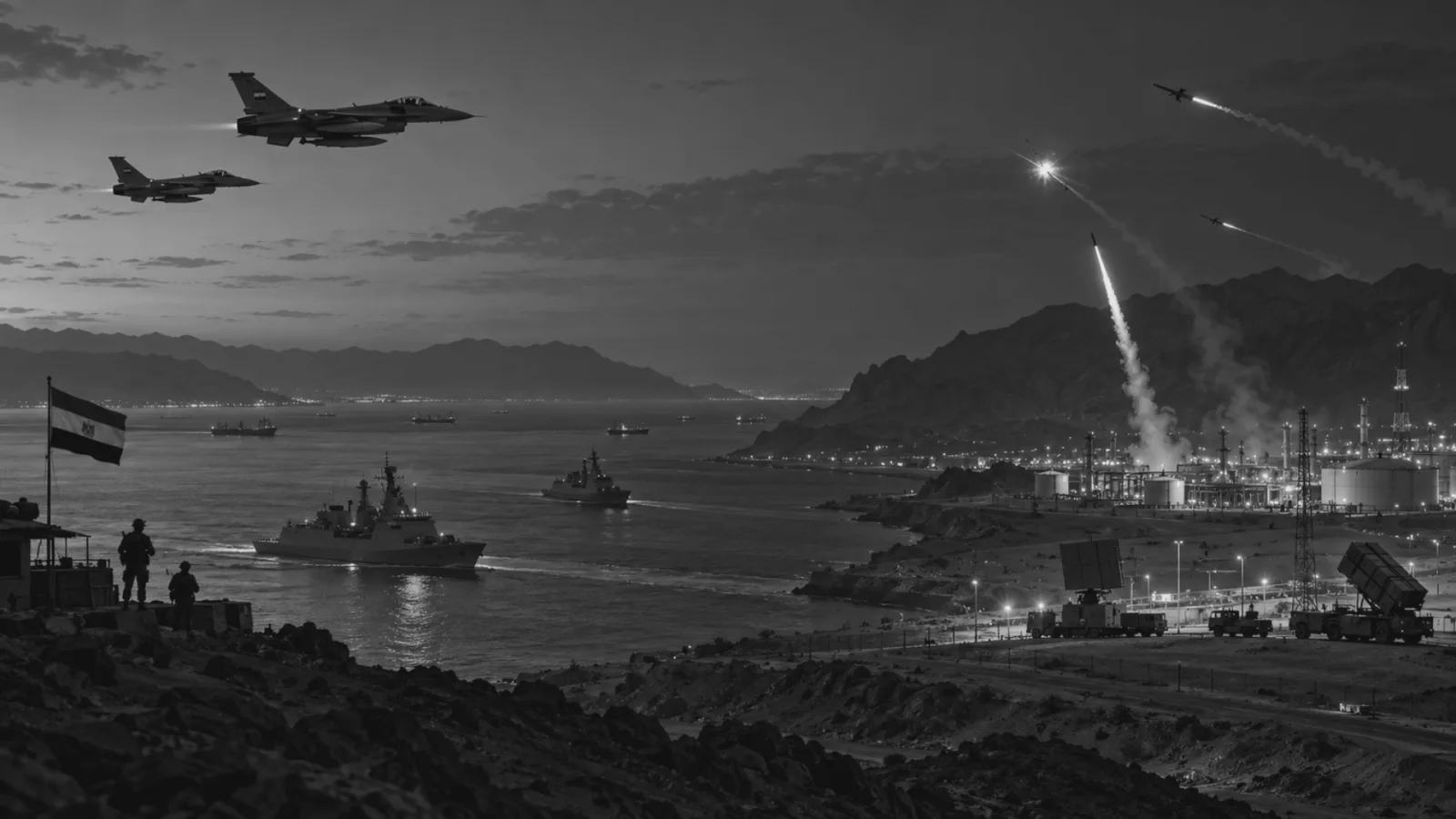
Egyptian President Abdel Fattah el-Sisi announced on 17 October 2026 that Cairo was prepared to undertake necessary measures to defend Saudi Arabia against escalating Houthi attacks, provided Riyadh formally requested assistance. He subsequently called for an emergency parliamentary session to obtain the necessary authorisation for potential intervention. The development follows sustained Houthi missile and drone attacks against Saudi airports, energy infrastructure and other strategic facilities, alongside renewed fighting in Yemen. Egypt's announcement comes amid reports of the United Arab Emirates resuming support for anti-Houthi forces and the implementation of the Makkah Joint Defence Agreement between Saudi Arabia, Pakistan and Türkiye. CNAWS assesses with moderate confidence that these developments represent an emerging regional security alignment intended to contain Houthi military pressure and reinforce Saudi Arabia's defensive capabilities. However, the involvement of additional regional powers does not necessarily indicate preparations for a coordinated offensive campaign inside Yemen. Egypt's immediate contribution, if authorised, is more likely to involve air defence, maritime security and other defensive assistance than a substantial ground deployment. For Pakistan, the situation presents a particularly difficult strategic dilemma as its commitments to Saudi Arabia increasingly compete with domestic security requirements and longstanding reservations about involvement in Yemen. The widening conflict also threatens maritime security in the Red Sea and the Bab el-Mandeb Strait, with implications for Egyptian Suez Canal revenues, regional energy trade and India's commercial connectivity with Europe.
Egypt's Announcement Marks a Significant Diplomatic and Military Development
On 17 October, Egyptian President Abdel Fattah el-Sisi announced during a graduation ceremony at the Egyptian Military Academy that Egypt would take necessary measures to defend Saudi Arabia if requested by the Saudi leadership. While emphasising that Cairo had no intention of initiating hostilities against another country, Sisi declared that allowing Saudi Arabia's security or stability to be undermined was unacceptable.¹
Sisi acknowledged that any intervention would require parliamentary approval and requested an emergency session to obtain the necessary mandate. The Egyptian House of Representatives subsequently announced that it would convene on 18 October at 1 PM Cairo time.²
The announcement is significant because it indicates Cairo's willingness to formalise a potential military role in the current confrontation between Saudi Arabia and Yemen's Houthi movement. However, the immediate development should not be interpreted as Egyptian entry into the war. Sisi's offer remains conditional upon a Saudi request, the necessary domestic authorisation and a decision regarding the nature and extent of the assistance to be provided.
Egypt's position must also be understood in the context of its longstanding relationship with Saudi Arabia. Riyadh has been among Cairo's most important economic and political partners, particularly since 2013, providing financial assistance and investments that have contributed to Egypt's economic stability. At the same time, Cairo regards instability in the Red Sea and the Arabian Peninsula as a direct concern for its national security.
The timing of the announcement suggests that Egypt is increasingly concerned that the deteriorating situation in Yemen could have consequences extending well beyond the Saudi-Yemeni border. Unlike previous periods of relative containment, the present escalation is directly threatening Saudi Arabia's civilian aviation infrastructure, energy sector and international commercial interests.
Houthi Escalation Is Changing the Operational Environment
The immediate background to Egypt's announcement is the renewed military confrontation between the Saudi-led coalition and the Houthis following the collapse of the earlier truce in Yemen.
During October 2026, the Houthis intensified their missile and drone campaign against Saudi Arabia, targeting King Khalid International Airport in Riyadh, other aviation facilities and infrastructure associated with Saudi Aramco. The 10 October attack on Riyadh's international airport killed at least 13 people and injured more than 300, according to Reuters. Subsequently, the Houthis attacked Saudi Aramco's headquarters in Dhahran and threatened further strikes against airports and energy facilities.³
These attacks demonstrate that the Houthis retain the capability to conduct long-range strikes against high-value targets despite years of military operations intended to degrade their capabilities. Their ability to sustain missile and drone attacks has exposed weaknesses in Saudi Arabia's defensive architecture and created additional pressure on Riyadh to demonstrate that it can protect critical infrastructure.
The operational significance extends beyond the immediate destruction caused by individual strikes. Sustained attacks against airports can disrupt civilian aviation, impose additional security costs and undermine investor confidence. Similarly, attacks against energy infrastructure threaten the commercial foundations of the Saudi economy, particularly at a time when Riyadh is attempting to diversify its economic activities under Vision 2030.
Within Yemen, Houthi operations have also intensified. The group has expanded its pressure around Taiz, one of the country's most strategically important cities, while continuing to threaten the internationally recognised government's position in Aden. On 15 October, Houthi missiles struck the presidential palace complex in Aden, reportedly killing five people. The renewed fighting has also increased pressure on the Bab el-Mandeb maritime corridor, where Houthi territorial gains and attacks against shipping have complicated efforts to restore secure maritime navigation.⁴
The Houthis appear to be pursuing a strategy that combines territorial expansion inside Yemen with coercive pressure against Saudi Arabia. By threatening Saudi infrastructure and commercially important maritime routes, they can increase the economic and political costs of continued Saudi involvement in the conflict.
This approach also creates a significant asymmetry. Saudi Arabia must protect a geographically dispersed network of airports, industrial facilities, ports, energy infrastructure and urban centres, while the Houthis can impose costs through comparatively limited missile and drone attacks.
Nevertheless, the continued Houthi campaign does not mean that Saudi Arabia has lost its ability to defend itself. Its armed forces retain considerable conventional capabilities. The emerging problem is that defensive interception alone may be insufficient to prevent repeated attacks or resolve the underlying military situation inside Yemen.
Egypt's Military Options and Strategic Constraints
Egypt is not an entirely new participant in the Yemen conflict. It previously joined the Saudi-led intervention in March 2015, contributing naval and air assets. Its involvement was particularly relevant to maritime security in the Red Sea, reflecting Cairo's interest in protecting the Suez Canal and the southern maritime approaches to Egyptian waters.⁵
The current announcement therefore represents the possible expansion or renewal of an existing strategic relationship rather than the establishment of an entirely new military alignment.
Egypt possesses one of the largest conventional military forces in the Middle East, including substantial air, naval and ground capabilities. In principle, these assets could support Saudi Arabia through defensive air operations, maritime patrols, surveillance, logistics and coordination of air-defence activities.
However, the military feasibility of Egyptian participation should not be confused with the political desirability of direct intervention.
Cairo faces considerable economic constraints, and an extended campaign in Yemen could impose substantial financial and operational costs. Additionally, Egypt has limited incentive to become involved in a prolonged ground war against a movement that has demonstrated considerable resilience against more than a decade of military pressure.
Consequently, a restricted defensive commitment would offer Cairo a means of demonstrating solidarity with Saudi Arabia without assuming responsibility for the outcome of the war.
CNAWS assesses with moderate confidence that, if Egypt receives parliamentary authorisation and a formal Saudi request, its initial military contribution would most likely concentrate on air and maritime defence, surveillance and logistical support. Offensive operations against Houthi positions cannot be ruled out under a future escalation scenario, but they would represent a different political and operational decision from the defensive assistance currently being discussed.
A Wider Regional Alignment Is Taking Shape
Egypt's announcement is occurring alongside signs of renewed coordination among several states concerned about the Houthi threat.
On 17 October, The Guardian reported that the United Arab Emirates had agreed to resume financial support for certain anti-Houthi Yemeni forces, including elements of the Giant Brigades, in exchange for Saudi air support. The reported arrangement is particularly significant because relations between Riyadh and Abu Dhabi had deteriorated over competing political and military interests in southern Yemen.⁶
If implemented, the agreement would represent a partial reconciliation driven by a shared concern over Houthi territorial advances.
However, the anti-Houthi camp continues to suffer from internal divisions. Southern separatist organisations remain focused on their own political objectives, including the future status of southern Yemen, while the internationally recognised Yemeni government seeks to regain territory from the Houthis. The alignment of these different forces against a common adversary does not necessarily mean that they share a common vision for Yemen's political future.
A second development is the emergence of a broader diplomatic grouping comprising Saudi Arabia, Egypt, Pakistan and Türkiye. On 11 October, the four countries issued a joint statement condemning Houthi attacks against Saudi Arabia and reaffirming support for Riyadh's security, sovereignty and right to defend itself.⁷
This grouping is important because it brings together states with substantial military capabilities and longstanding security relationships with Saudi Arabia. However, their positions are not identical, and the diplomatic statement does not constitute a joint operational command or a commitment by all four countries to participate in military operations against the Houthis.
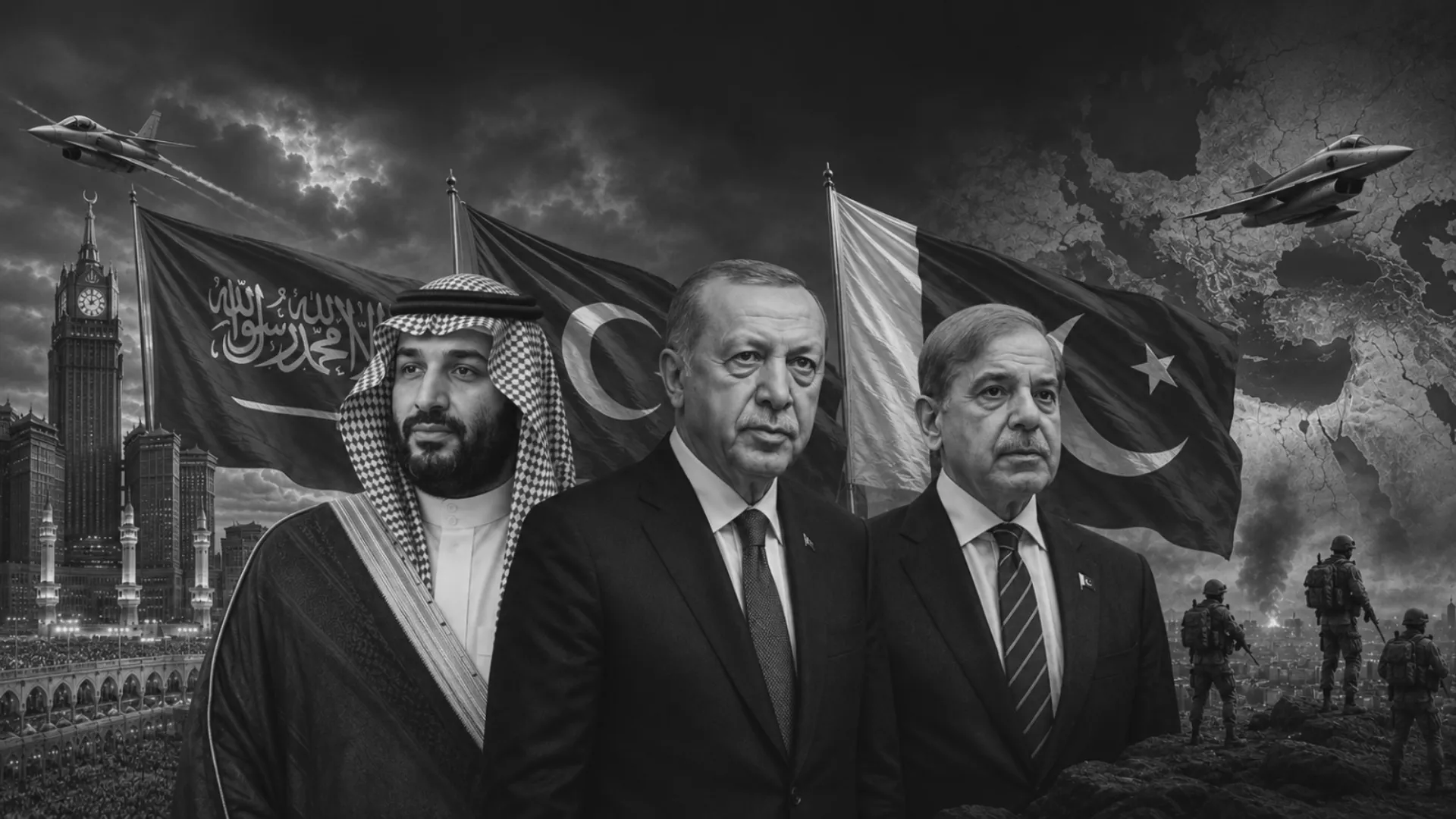
The distinction becomes particularly important when examining the Makkah Joint Defence Agreement, signed on 7 August 2026 by Saudi Arabia, Pakistan and Türkiye.
The agreement stipulates that an armed attack against one member is to be considered an attack against all three and commits the signatories to strengthening collective deterrence and defence cooperation.⁸
On 5 October, following an emergency meeting of the alliance's Strategic Political and Defence Committee in Riyadh, the three countries announced their intention to implement collective defence commitments through the provision and deployment of agreed military forces and capabilities.⁹
These developments suggest that Saudi Arabia is attempting to strengthen its security through overlapping bilateral, trilateral and wider regional arrangements rather than relying exclusively on the United States or its existing coalition in Yemen.
The important question is whether these arrangements can be translated into effective military coordination. Political solidarity and defence agreements can facilitate burden-sharing, but the effectiveness of a regional response will ultimately depend on the availability of military assets, agreed operational responsibilities and the willingness of participating states to accept escalation risks.
Pakistan Faces a Difficult Strategic Dilemma
Among the countries involved in the emerging regional security arrangement, Pakistan faces one of the most complicated strategic calculations.
Islamabad maintains longstanding defence relations with Riyadh, including training cooperation, military deployments and political commitments to Saudi security. These relationships have acquired additional significance following the signing of the Makkah Joint Defence Agreement.
Pakistan's Foreign Office confirmed on 9 October that Pakistani military personnel had been deployed to Saudi Arabia under existing arrangements and that further mobilisation would depend upon requirements determined through the alliance's command structure. However, Islamabad rejected reports suggesting that Pakistani fighter aircraft had conducted cross-border offensive operations against the Houthis in Yemen. It also reiterated that the alliance was defensive in nature and that deployed forces would not cross into Yemen to launch attacks.¹⁰
This distinction is crucial. Pakistan's participation in Saudi defensive operations cannot automatically be interpreted as involvement in offensive military action inside Yemen.
Nevertheless, its ability to avoid deeper involvement may become increasingly constrained if Houthi attacks continue and Riyadh seeks additional military support from its partners.
Türkiye faces a similar, although not identical, question. Ankara has indicated that its contribution would be defensive and technical, while Turkish President Recep Tayyip Erdoğan stated on 12 October that the Makkah agreement would be submitted to parliament for ratification.¹¹
For Pakistan, the present situation revives a dilemma encountered during the Saudi-led intervention in Yemen in 2015. At that time, Saudi Arabia requested Pakistani military assistance, including aircraft, naval assets and ground forces. Pakistan's parliament unanimously adopted a resolution recommending neutrality in the Yemen conflict while reaffirming its commitment to Saudi Arabia's territorial integrity and security.¹²
The difference in 2026 is that Pakistan has since entered into a formal collective defence arrangement.
Islamabad therefore faces pressure to demonstrate the credibility of its commitments to Riyadh without becoming involved in a conflict that could generate domestic opposition, complicate relations with Iran and divert military resources from its own security priorities.
Pakistan is simultaneously confronting a substantial internal security challenge involving the Tehreek-e-Taliban Pakistan in Khyber Pakhtunkhwa and the Baloch insurgency. Its confrontation with the Afghan Taliban has further strained the security situation along the Durand Line.
Consequently, any major Pakistani military commitment to Saudi Arabia would have to be assessed against the demands of these existing security challenges.
A limited defensive deployment may allow Pakistan to satisfy some of Riyadh's immediate requirements without entering the war in Yemen. However, sustained Houthi attacks on Saudi territory could create mounting political pressure for a more substantial contribution.
The ability of Islamabad to maintain the distinction between defensive support and direct participation in the conflict will therefore constitute an important indicator of the alliance's practical limitations.
Red Sea Security and the Economic Implications for Egypt and India
Beyond the immediate military confrontation, the widening conflict presents serious risks to maritime security in the Red Sea and the Bab el-Mandeb Strait.
Bab el-Mandeb connects the Red Sea with the Gulf of Aden and the Indian Ocean, making it an essential maritime passage for trade between Asia, Europe and the Mediterranean.
For Egypt, the strategic importance of the corridor is particularly significant because maritime traffic through the Red Sea is directly connected to the commercial viability of the Suez Canal.
Previous Houthi attacks on commercial shipping forced shipping companies to divert vessels around the Cape of Good Hope, reducing traffic through the Suez Canal and creating financial pressure on Egypt.
Although the Suez Canal Authority reported signs of recovery in vessel traffic and revenues during 2025, renewed insecurity in the Red Sea threatens to disrupt that recovery.¹³
Egypt therefore has a direct economic interest in preventing the Houthi threat from further undermining commercial navigation.
From India's perspective, the consequences could also be substantial. The Red Sea–Suez route remains important for India's merchandise trade with Europe, particularly for engineering products, textiles, chemicals, automobiles and other manufactured goods.
During the earlier Red Sea crisis, the Indian government reported that rerouting vessels around the Cape of Good Hope had increased transit times by approximately 35–40 percent and contributed to higher shipping costs and logistical delays.¹⁴
A renewed deterioration in maritime security could reproduce similar pressures through higher insurance premiums, longer delivery schedules and increased freight costs.
The risk is not limited to merchandise trade. Persistent insecurity in the Red Sea and Bab el-Mandeb could also affect the routing of energy shipments and increase the vulnerability of supply chains already exposed to wider instability in West Asia.
For India, the emerging security alignment involving Egypt, Saudi Arabia, Pakistan and Türkiye therefore has implications extending beyond Yemen. New regional defence arrangements could influence the political and operational environment in which India protects its commercial interests and maintains maritime security cooperation with partners in the Arabian Sea, Gulf of Aden and Red Sea.
However, these developments do not necessarily indicate the emergence of a hostile regional bloc directed against India. Their immediate purpose is the protection of Saudi Arabia and the containment of the Houthi threat. New Delhi's principal concern will be whether the resulting military activities contribute to maritime stability or produce further escalation that disrupts regional trade.
Outlook and Indicators to Monitor
The most immediate indicator will be the outcome of Egypt's emergency parliamentary session and whether Riyadh subsequently submits a formal request for military assistance. Parliamentary authorisation would provide a political and legal basis for potential Egyptian action, but would not necessarily establish that deployment had begun.
The second indicator will be the scale and character of Egypt's military preparations. The movement of naval assets towards the Red Sea, the establishment of military coordination mechanisms with Saudi Arabia or the deployment of air-defence and surveillance capabilities would provide stronger evidence of operational involvement than political announcements alone.
The third indicator concerns the reported Saudi-Emirati understanding over Yemen. The restoration of Emirati support for anti-Houthi forces could improve the operational capabilities of the internationally recognised Yemeni government and its partners. Nevertheless, the persistence of divisions over southern Yemen could prevent the formation of a coherent military strategy.
The fourth indicator is the extent of operational implementation under the Makkah Joint Defence Agreement. Confirmed deployment of additional Pakistani or Turkish personnel, air-defence systems or supporting military capabilities would demonstrate that the alliance is moving beyond declaratory commitments. Any involvement in offensive operations inside Yemen would represent a more consequential development and a substantial departure from the defensive positions publicly articulated by Islamabad and Ankara.
The fifth indicator will be the Houthi response. Continued attacks against Saudi airports, energy facilities and other high-value infrastructure would increase pressure on Riyadh and its partners to undertake more forceful measures. Conversely, a reduction in cross-border attacks combined with renewed diplomatic engagement could create space for de-escalation.
Finally, the conflict's trajectory around Taiz, Aden and the Bab el-Mandeb Strait will be decisive for evaluating the military balance inside Yemen. The International Organization for Migration reported that more than 233,000 people had been displaced by the latest fighting as of 16 October, highlighting the humanitarian consequences of the renewed offensive.⁴ A prolonged confrontation involving expanded foreign participation would risk worsening these conditions without necessarily producing a decisive military outcome.
Strategic Assessment
CNAWS assesses with moderate confidence that Egypt's announcement reflects the emergence of a broader regional effort to protect Saudi Arabia against Houthi military pressure rather than an immediate decision to initiate a new multinational offensive inside Yemen.
The Yemen conflict has already demonstrated its regional dimensions since the Saudi-led intervention began in 2015. What is changing in October 2026 is the degree to which states outside Yemen are being drawn into more formal political, military and institutional commitments as the Houthis intensify attacks against Saudi territory.
The emerging security arrangement offers Riyadh additional diplomatic leverage and potentially greater access to military capabilities. However, the coalition's effectiveness will depend upon reconciling different national priorities. Egypt is principally concerned with Saudi security and Red Sea stability, Pakistan faces competing internal security demands, Türkiye has emphasised defensive support, and the UAE remains influenced by its interests in southern Yemen.
These differences could constrain the development of a unified regional strategy even as political support for Saudi Arabia increases.
The Houthis, meanwhile, may calculate that sustained attacks against Saudi infrastructure can generate sufficient economic and military pressure to compel concessions. Yet such a strategy also risks provoking a more coordinated regional response and increasing the possibility of wider escalation.
For India, the principal concern is that an increasingly internationalised confrontation could deepen instability across an economically and strategically important maritime region while drawing several of New Delhi's regional partners into competing security commitments.
Conclusion
Egypt's willingness to defend Saudi Arabia represents an important development in the renewed Yemen conflict, particularly when considered alongside the reported return of Emirati support to anti-Houthi forces and the gradual operationalisation of the Saudi–Pakistan–Türkiye defence agreement.
However, these developments should not be mistaken for evidence that a comprehensive regional military campaign has already been agreed upon.
The immediate shift is from political solidarity towards the preparation of collective defensive arrangements. Whether this evolves into direct multinational intervention in Yemen will depend on the continuation of Houthi attacks, the effectiveness of Saudi defensive measures and the willingness of regional partners to accept greater military commitments.
The greater strategic risk is that Saudi Arabia and its partners could find themselves drawn into an expanding confrontation without a sufficiently coherent political strategy for resolving the war in Yemen. The Houthis have already demonstrated that they can impose substantial economic and security costs without achieving conventional military superiority. Unless these underlying dynamics change, the introduction of additional military actors may increase the scale of the conflict without necessarily bringing it closer to resolution.
References
Reuters. “Egypt's Sisi Seeks Parliament's Backing to Help Defend Saudi Arabia if Asked.” October 17, 2026.
Egypt State Information Service. “Parliament to Hold Emergency Session Sunday on Sisi's Call.” October 17, 2026.
Andrew Mills. “Houthis Bring the War to Riyadh.” Reuters, October 14, 2026.
Reuters. “In Yemen's Besieged Taiz, Families Take Shelter as Houthis Close In.” October 16, 2026.
Reuters. “Egyptian Forces Join in Yemen Campaign Against Houthis.” Khaleej Times, March 26, 2015.
Patrick Wintour. “UAE Agrees with Saudi Arabia to Re-enter Yemen Conflict amid Houthi Gains.” The Guardian, October 17, 2026.
Republic of Türkiye, Ministry of Foreign Affairs. “Joint Statement by the R4 Group, 11 October 2026.” October 11, 2026.
Ministry of Foreign Affairs, Government of Pakistan. “Makkah Al-Mukarramah Summit for Joint Defence.” August 7, 2026.
Ministry of Foreign Affairs, Government of Pakistan. “Joint Statement: Emergency Meeting of the Strategic Political and Defense Committee of the Makkah Alliance for Defense.” October 5, 2026.
Ministry of Foreign Affairs, Government of Pakistan. “Transcript of the Press Briefing by the Spokesperson on Friday 09th October, 2026.” October 9, 2026.
Reuters. “Turkey to Send Mecca Agreement to Parliament Soon, Erdogan Says.” October 12, 2026.
Dawn. “Full Text of Pakistan Resolution on Yemen.” April 13, 2015.
Suez Canal Authority. “Adm. Ossama Rabiee Meets the Delegation of the IMF Mission.” December 8, 2025.
Press Information Bureau, Government of India. “Union Minister Shri Sarbananda Sonowal Addresses Key Concerns on Container Shortages and Port Expansion in Parliament.” July 30, 2024.
Tags

Author