Department of Hybrid Warfare & Irregular Conflict · Situational Reports · Armed Conflicts ·
Saudi Arabia’s Two-Strait Problem: Houthi Gains Put the Kingdom’s Red Sea Energy Bypass Under Pressure
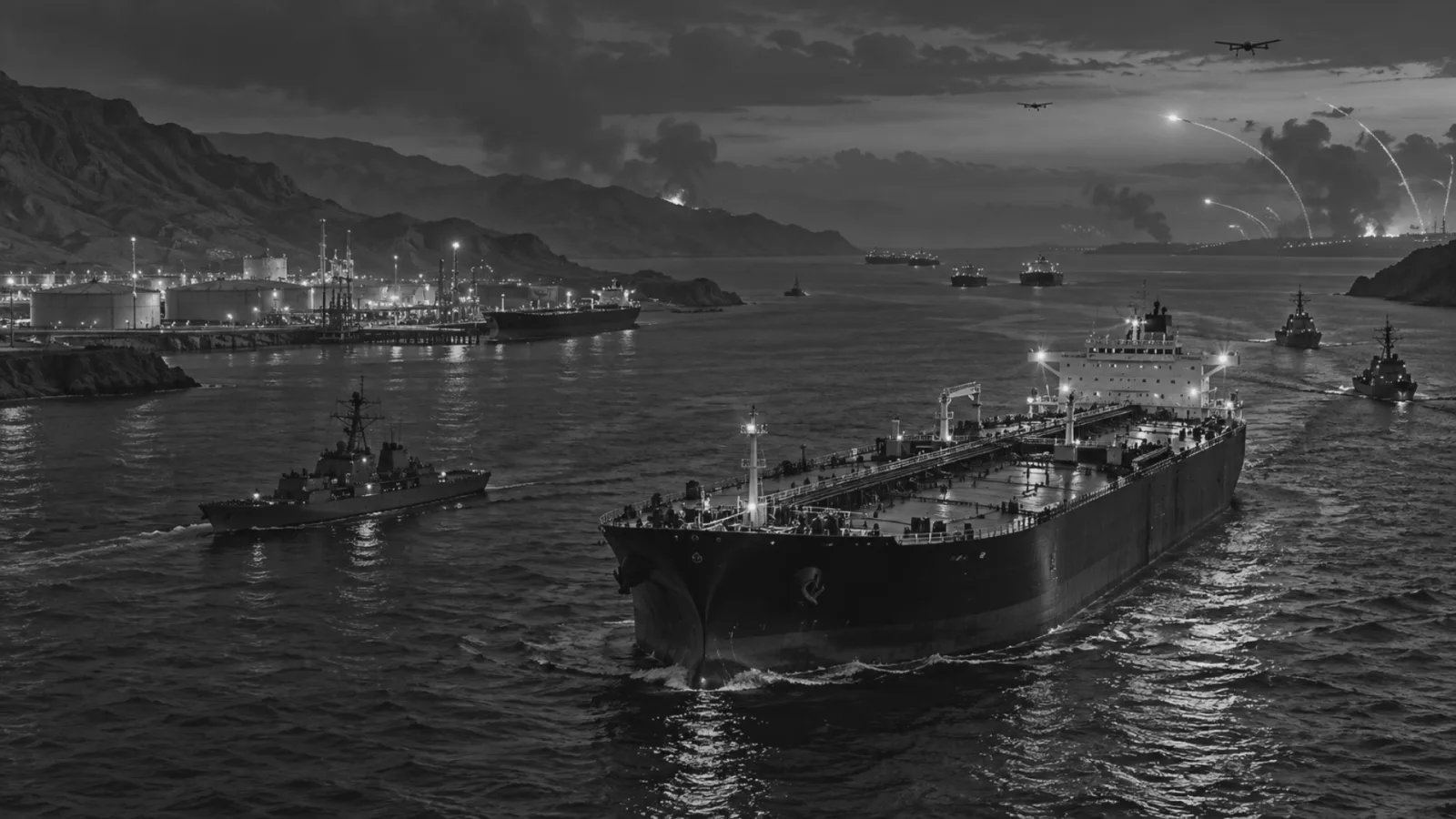
Saudi Arabia is confronting an energy-security problem that its infrastructure strategy was specifically designed to prevent. For decades, Riyadh has maintained the East-West crude pipeline and the Red Sea export terminal at Yanbu as strategic insurance against disruption in the Strait of Hormuz. That insurance became indispensable after the US-Israeli war with Iran sharply reduced traffic through Hormuz in 2026, forcing Saudi Arabia to reroute millions of barrels per day westward across the kingdom. Yet the alternative route is now exposed to a second conflict. Yemen's Houthis have expanded along the Red Sea coast, seized Mocha and other positions commanding the approaches to Bab el-Mandeb, declared Saudi vessels subject to a maritime blockade and resumed missile and drone attacks against Saudi cities and energy infrastructure. On 19 September, the Houthis claimed attacks on sensitive targets in Riyadh and an Aramco facility at Yanbu, while Saudi authorities confirmed intercepting a ballistic missile bound for the capital and additional attacks directed towards several other locations.¹ The strategic problem is therefore no longer simply protecting oil shipments from disruption at Hormuz. Riyadh must now secure the western outlet that was intended to bypass Hormuz while simultaneously defending the pipeline, ports and maritime routes connecting the two coasts.
Two chokepoints are now part of the same Saudi problem
The scale of the exposure becomes apparent when the two waterways are viewed together. The Strait of Hormuz carried an average of approximately 20.9 million barrels per day of petroleum liquids during the first half of 2025, equivalent to around one-fifth of global petroleum consumption, according to the US Energy Information Administration. Roughly 89 percent of crude oil and condensate passing through Hormuz was destined for Asian markets, with China, India, Japan and South Korea accounting for most of those flows. Bab el-Mandeb ordinarily performs a different but complementary function by connecting the Arabian Sea and Gulf of Aden with the Red Sea, Suez Canal and Mediterranean. Around 4.2 million barrels per day of petroleum liquids passed through Bab el-Mandeb during the first half of 2025, although that figure was already substantially below pre-Red Sea crisis levels.² For Saudi Arabia, the strategic significance of the Red Sea route is greater than these aggregate figures suggest because Yanbu allows crude originating in the kingdom's eastern oilfields to bypass Hormuz entirely through the East-West pipeline.
That bypass has become critical during the current Iran conflict. EIA data show just how dramatically the regional shipping environment changed in 2026. Average oil movement through Hormuz fell from 21.6 million barrels per day in the fourth quarter of 2025 to 14.9 million in the first quarter of 2026 and only 4.9 million in the second quarter, although EIA cautions that vessel-tracking information has become unusually difficult to verify because ships increasingly switch off or manipulate their AIS signals for security reasons.³ Reuters reported on 18 September that only four commodity vessels had visibly transited Hormuz during the previous day, compared with a ten-day average of roughly 16, while ships were continuing to operate with transponders disabled. The same reporting showed 23 commodity vessels passing Bab el-Mandeb. The result is a regional energy system in which neither of Saudi Arabia's principal maritime directions can now be treated as predictably secure.
The Houthi advance has changed the Bab el-Mandeb equation
The most significant military development has occurred on the Yemeni side of Bab el-Mandeb. During September, Houthi forces rapidly advanced through the southern Tihama coastal region, capturing the historic port of Mocha before extending control across Yemen's Red Sea coastline and islands. Reuters reported on 17 September that the advance had placed Houthi forces along the Yemeni shore of the approximately 19-kilometre-wide Bab el-Mandeb Strait. Earlier reporting showed Houthi units reaching the Hanish Islands and pushing Saudi-backed government forces towards Dhubab, directly opposite Perim Island at the entrance to the strait.⁴ Control of territory does not mean the Houthis can simply close Bab el-Mandeb at will against every vessel, and commercial traffic continues to pass through. It does, however, give the movement a stronger geographical position from which to employ coastal surveillance, missiles, drones and maritime strike systems against selected shipping.
The Houthis have sought to distinguish between general navigation and their campaign against Riyadh. Their maritime coordination mechanism has stated that commercial navigation remains safe while Saudi vessels remain subject to a previously announced ban, and Houthi spokesperson Mohammed Abdulsalam has described operations as directed against specific targets rather than international shipping indiscriminately.⁵ Those assurances do not eliminate the commercial consequences. Shipowners and insurers make decisions based not only on declared targeting policies but also on the probability of misidentification, collateral damage, missile or drone failure and changes in targeting rules as a conflict evolves. The group's earlier Red Sea campaign from 2023 onward already demonstrated how attacks on a limited portion of commercial traffic could cause shipping companies to divert vessels around the Cape of Good Hope. EIA estimates that oil flows around the cape rose to approximately 9.1 million barrels per day during the first half of 2025 as disruptions around Bab el-Mandeb and Suez altered established routes.
Riyadh and Yanbu are now within the same battlespace
The 19 September attacks illustrated why Saudi Arabia cannot treat the maritime and homeland-defence challenges separately. Reuters reported flames and a substantial plume of smoke near Riyadh's international airport as the Houthis claimed missile and drone strikes against what they described as sensitive targets in the Saudi capital. Saudi Arabia said its air defences destroyed a ballistic missile directed towards Riyadh and foiled additional attacks on Bish, Farasan, Taif and Yanbu. The Houthis separately claimed that an Aramco installation in Yanbu had been targeted. Saudi authorities did not confirm that the claimed Yanbu energy target had been successfully struck, and the extent of any damage therefore remains unclear.⁶ The significance lies in the targeting geography. Riyadh represents the political and administrative centre of the kingdom, while Yanbu is the western terminus of the infrastructure Saudi Arabia depends upon to circumvent Hormuz.
The East-West pipeline further illustrates the vulnerability of the alternative route, although the threat is not limited to the Houthis. On 11 September, Saudi Arabia said drones launched from Iraqi territory had struck the pipeline, damaging infrastructure and forcing operations to halt. Riyadh did not immediately retaliate after a request from Iraq's prime minister, although it reserved the right to protect its territory and strategic installations.⁷ Reuters subsequently reported that three pumping stations had been damaged. When operations restarted on 22 September, the line was initially functioning at a reduced rate, with industry and security sources estimating that restoration of full capacity could require six to eight weeks. Before the attack, Saudi Arabia had been moving roughly 4 million barrels per day through the system to bypass Hormuz, although the pipeline itself has an estimated capacity of approximately 7 million barrels per day. The episode therefore demonstrates that the Saudi bypass strategy depends not only upon the security of Yanbu and Bab el-Mandeb but also upon hundreds of kilometres of inland infrastructure vulnerable to long-range drones.
The East-West pipeline is still strategically indispensable
The current crisis should not be interpreted as evidence that Saudi Arabia's East-West infrastructure has failed. Without it, the kingdom would have considerably fewer options while Hormuz remains disrupted. Saudi Aramco's pipeline network allows crude produced in the Eastern Province to reach Yanbu on the Red Sea and has long been central to Riyadh's ability to diversify export routes. The strategic value became visible again in early September when Red Sea crude and condensate loadings from Yanbu recovered sharply. Vortexa estimated loadings of approximately 3.7 million barrels per day during the first part of September, while Kpler estimated around 2.9 million, compared with substantially lower levels in August when Houthi activity had already disrupted Red Sea operations.⁸ The pipeline has therefore provided Saudi Arabia with real redundancy, but the present conflict is demonstrating that redundancy only works if the alternative network itself can be defended.
That distinction is important because Saudi energy security increasingly resembles a network-defence problem rather than the protection of a single chokepoint. Ras Tanura and the eastern export system remain exposed to events around Hormuz. The East-West pipeline contains multiple pumping stations spread across the kingdom. Yanbu contains export, storage, refining and other energy infrastructure. Tankers departing the Red Sea must ultimately move towards Bab el-Mandeb before reaching Asian markets or proceed north towards Suez for European destinations. A threat to any one component does not automatically stop Saudi exports, but simultaneous disruption at several points can reduce throughput, increase transport costs and force Aramco into increasingly complicated logistical solutions. The 2026 conflict is therefore testing the resilience of the entire export architecture rather than any one facility.
Saudi Arabia is building a floating workaround
One of the clearest indications of the pressure is the rapid expansion of ship-to-ship crude transfers off Oman. With conventional movements through Hormuz risky and Red Sea operations increasingly exposed, Gulf producers have developed what amounts to a maritime shuttle system. Tankers load inside the Gulf, make shorter passages through Hormuz and transfer their cargo offshore to larger vessels waiting in comparatively safer waters before returning for another load. Reuters reported that around 2.5 million barrels per day were expected to be moved through ship-to-ship transfers in the Gulf of Oman during September, compared with roughly 1.4 million barrels per day in August. Saudi Aramco has increasingly participated in this system as disruptions have constrained the effectiveness of its Red Sea option.⁹
The system has prevented the regional disruption from becoming a complete supply shutdown, but it comes at substantial cost. Reuters reported benchmark freight rates for a very large crude carrier carrying Gulf oil to China rising above $30 per barrel, an extraordinary increase reflecting tanker scarcity, conflict risk and the additional complexity of shuttle operations. At the same time, ships are increasingly sailing with AIS transponders switched off, naval protection has become more important and producers are absorbing additional transport and discounting costs to keep crude moving. This reveals an important distinction between physical energy availability and energy-security efficiency. Oil can continue reaching global markets while the system that delivers it becomes significantly more expensive, opaque and vulnerable. The economic effect of a maritime conflict therefore begins well before a chokepoint is completely closed.
The Houthis have acquired greater leverage than in the previous Yemen war
The renewed fighting also demonstrates how much the Houthi military position has changed since the opening years of the Saudi intervention in Yemen. The movement entered Sanaa in 2014 and survived years of Saudi-led military operations before a truce in 2022 substantially reduced direct fighting. By 2026, it possesses an established arsenal of ballistic and cruise missiles, one-way attack drones and maritime strike capabilities, while its September advance has extended its physical presence towards one of the world's most consequential maritime chokepoints. Reuters reported that Houthi battlefield footage from the current offensive shows extensive employment of drones and precision munitions, while the group has captured additional armoured vehicles, artillery and electronic equipment from opposing forces. Iran has long been accused by Saudi Arabia, the United States and UN investigators of supplying weapons, technology and training to the movement. Tehran has acknowledged political support for the Houthis but disputes characterisations that the group simply operates under Iranian command.¹⁰
The distinction is strategically important. Houthi interests and Iranian interests overlap significantly but should not automatically be treated as identical, particularly when assessing escalation decisions. What can be established is that pressure from Yemen is occurring at the same time as the Iran conflict has degraded security around Hormuz. The geographical effect places Saudi Arabia between two separate but interacting theatres. Even without centralised coordination of every operation, simultaneous threats around Hormuz, along the East-West pipeline and near Bab el-Mandeb create cumulative pressure on the kingdom's export system. From Riyadh's perspective, the strategic problem is therefore determined by the combined effect of those threats rather than solely by the chain of command behind each individual strike.
Saudi Arabia’s response remains calibrated but is becoming regional
Saudi Arabia has responded with air operations against Houthi-controlled territory while simultaneously seeking wider diplomatic and security support. The fighting has again become intense inside Yemen, where Saudi and Yemeni government aircraft have struck Houthi positions as the movement advances on multiple fronts. The human cost has increased rapidly. The UN International Organization for Migration reported on 18 September that more than 112,000 people had been displaced inside Yemen, with over 100,000 displaced during roughly the preceding two weeks, while nearly 3,000 people had crossed by sea to Djibouti.¹¹ The deteriorating humanitarian situation therefore accompanies the strategic struggle over the Red Sea coastline and cannot be separated from the consequences of renewed large-scale warfare.
International diplomacy is also widening. On 22 September, the foreign ministers of Saudi Arabia, Turkey, Pakistan and Egypt issued a joint statement on the margins of the UN General Assembly affirming Riyadh's right to defend itself under international law and stressing freedom of navigation. Separately, Russian President Vladimir Putin and Crown Prince Mohammed bin Salman discussed the conflict the same day and emphasised safe passage through both Hormuz and Bab el-Mandeb, an unusually explicit acknowledgement that the two chokepoints have become part of the same strategic problem.¹² These statements do not in themselves establish that Saudi partners will participate militarily, and they should not be read as evidence of imminent Turkish, Pakistani or other foreign combat operations. They do show, however, that the crisis has moved beyond the bilateral Saudi-Houthi confrontation and is increasingly being treated as a regional maritime-security challenge.
Why India should watch the two-strait crisis closely
India has a direct economic interest in the security of both waterways. The EIA estimates that India, China, Japan and South Korea together received nearly three-quarters of the crude and condensate moving through Hormuz during the first half of 2025. India also depends extensively on Gulf energy imports and on commercial routes connecting the western Indian Ocean to the Red Sea and Suez.¹³ Disruption around Hormuz can therefore raise crude and LNG costs, while instability at Bab el-Mandeb increases freight, insurance and delivery times for trade moving between India, Europe and the Mediterranean. The current crisis is unusual because the two disruptions are occurring simultaneously rather than as independent events.
There is also a defence-planning dimension. The conflict demonstrates the vulnerability of apparently redundant infrastructure to inexpensive long-range precision systems. Pipelines built to bypass naval chokepoints can themselves be attacked by drones. Alternative ports can become targets for ballistic missiles and UAVs. Maritime routes considered secondary during normal conditions can become primary wartime lifelines and thereby attract greater enemy attention. For India, which relies on complex energy routes across the Arabian Sea and has growing strategic interests in the western Indian Ocean, the Saudi experience underlines the importance of examining energy security not only in terms of oil reserves and supplier diversification but also in terms of terminal protection, maritime situational awareness, tanker availability, insurance exposure and the resilience of transportation networks.
Strategic Assessment
The present Saudi predicament is not a literal closure of two straits. Hormuz continues to carry oil despite severely reduced and difficult-to-measure traffic, while commercial vessels continue to transit Bab el-Mandeb. Saudi Arabia has also demonstrated considerable ability to adapt through the East-West pipeline, Red Sea exports, increased eastern loadings and ship-to-ship transfers off Oman. The kingdom therefore retains multiple options and substantial energy infrastructure. The more significant change is that none of these options is now strategically independent. Pressure on Hormuz increases Saudi dependence on Yanbu, which increases the strategic value of the East-West pipeline and Bab el-Mandeb. Pressure on the Red Sea then pushes cargoes back towards Hormuz or forces expensive offshore transfer arrangements. Attacks on inland pipeline infrastructure can simultaneously weaken the connection between the two systems.
The Houthi advance along Yemen's Red Sea coast has consequently changed the strategic geometry of the conflict. Riyadh's western export route was designed to reduce vulnerability to an Iranian disruption of Hormuz, yet the emergence of an increasingly capable Houthi force near Bab el-Mandeb means that the Red Sea can no longer be assumed to provide an uncontested escape route. The key indicators now are whether the Houthis consolidate control around Dhubab and Perim, whether attacks against Yanbu or other western Saudi energy facilities continue, how quickly Aramco restores full East-West pipeline capacity, whether shipping traffic through Hormuz recovers and whether regional diplomacy succeeds in reducing Houthi-Saudi hostilities. Until those trends change, Saudi Arabia's energy-security challenge is best understood not as two separate maritime crises but as a single network problem stretching from the Persian Gulf, across the Arabian Peninsula and into the Red Sea.
References
1. Reuters. “Flames, Smoke Seen near Riyadh Airport; Houthis Claim Attacks on Saudi Capital.” September 19, 2026. Reuters report
2. U.S. Energy Information Administration. “World Oil Transit Chokepoints.” Updated March 3, 2026. U.S. EIA analysis
3. U.S. Energy Information Administration. “Short-Term Energy Outlook: Energy Security and Global Oil Chokepoints.” August 2026. U.S. EIA report
4. Reuters. “How Yemen’s Houthis Went from a Small Mountain Militia to a Big Regional Threat.” September 17, 2026. Reuters report
5. Reuters. “Yemen’s Houthis Close In on Bab el-Mandeb Strait in New Threat to Shipping.” September 10, 2026. Reuters report
6. Saudi Press Agency. “Coalition: A Ballistic Missile Launched by Houthi Militia Toward Riyadh Was Intercepted and Destroyed.” September 19, 2026. Saudi Press Agency statement
7. Reuters. “Saudi Arabia Says Drones Launched from Iraq Hit East-West Pipeline, Holds Off on Retaliation.” September 11, 2026. Reuters report
8. Reuters. “Hormuz Shipping Traffic in Single Digits, Data Shows.” September 10, 2026. Reuters report
9. Reuters. “Hormuz Shuttles Keep Oil Flowing, but at a High Cost.” September 21, 2026. Reuters analysis
10. United Nations Security Council. “The Situation in the Middle East: Yemen, 10222nd Meeting.” September 2026. UN Security Council transcript
11. United Nations Information Service. “Geneva Press Briefing: IOM Update on Displacement in Yemen.” September 18, 2026. United Nations briefing
12. Reuters. “Putin and Saudi Crown Prince Call for Safe Passage via Hormuz, Bab el-Mandeb.” September 22, 2026. Reuters report
13. Reuters. “Turkey, Saudi Arabia, Pakistan, Egypt Affirm Riyadh’s Right to Defend Itself.” September 22, 2026. Reuters report
Tags
- #Bab el Mandeb
- #Houthi Attacks
- #Middle East Energy Security
- #Red Sea Crisis
- #Saudi Arabia Houthis
- #Saudi Oil Exports
- #strait of hormuz
- #Yemen War
Author