


Categories

Related Authors

K. N. Dhruv Ramesh
K. N. Dhruv Ramesh works with the Office of the CEO at C2C Advanced Systems Ltd., a publicly listed defense technology company specializing in C5ISR systems. In this role, he supports initiatives related to defense technology, strategic planning, and emerging security challenges. He holds a B.Tech in Electronics and Communication Engineering from VIT Chennai and previously interned with the Security and Law Division of NITI Aayog. Having completed an Open-Source Intelligence (OSINT) certification hosted by CNAWS, his research focuses on military aviation, defense procurement policy, unmanned aerial systems, space initiatives, cybersecurity, and C4I networks. He is particularly interested in how the intersection of technology, policy, and strategy shapes India’s future security environment.
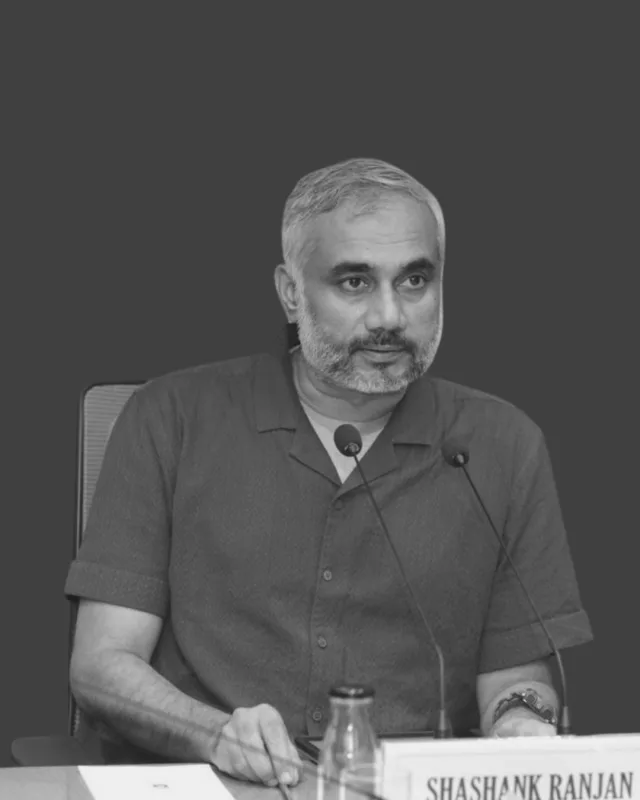
Prof. Col. Shashank Ranjan (Retd.)
Prof (Col) Shashank Ranjan has 33 years of rich experience in the Indian Army as an Infantry Officer. He has served for almost 20 years in Counter-Insurgency / Counter- Terrorism environment in Jammu & Kashmir and in the North East Region. His specialisation in matters related to Internal Security, National Security and Counter-Terrorism is by the virtue of holding several appointments in active counter – terror operations to include two battalion commands in Jammu and Kashmir. He has led his troops in defence diplomacy exercise with United States Marine Corps (USMC), in United Nations Peace Keeping Operations in Ethiopia-Eritrea and Human Assistance and Disaster Relief Operations in J&K and in Andaman and Nicobar Islands. In addition, Prof (Col) Ranjan has held various instructional appointments during his service wherein he was involved in training of junior and mid level army officers at tactical and operational levels. While posted with the Army Headquarters for three years, he was handling modernisation and capital procurement projects of the Indian Army. Prof (Col) Ranjan was a Research Fellow with Indian Army’s think tank, Centre for Land warfare Studies (CLAWS), New Delhi, where he carried out extensive research on Left Wing Extremism (LWE) and authored a book titled. ‘Resolving India’s Maoist Challenge – Looking beyond Security and Development’. In addition, he has numerous publications concerning terrorism and internal security issues to his credit, which have been published in several military journals. He regularly writes columns for various Indian national dailies. His paper on China’s BRI was awarded with a medal in Chief of the Army Staff Gold Medal Essay Competition and was acknowledged as a valuable policy document by the Indian Army. He has actively participated, as a panelist, in several national and international seminars and workshops on counter-insurgency / counter-terrorism. His work on insurgency related issues is mainly centred on people centric and subaltern issues that prevail in insurgencies. He graduated with History (Hons.) from University of Delhi, mastered in Gandhian Philosophy, Peace & Conflict Studies from IGNOU, did his M Phil in National Security & Defence Studies from Panjab University and is pursuing Indian Army sponsored PhD programme from MAHE (Manipal Academy of Higher Education).

Jorge Marinho
PhD in Communication Sciences, BA in International Journalism

Joshua W.J. Brown
Joshua W.J. Brown is a Toronto-based writer, filmmaker and independent researcher whose work examines what happens when technical systems, institutional rules and human use stop lining up cleanly. He writes across technology, AI governance, accessibility, public systems and Great Lakes history, with a particular interest in evidence, provenance and the design of systems that still work when the ordinary path fails.