Department of Disruptive & Emerging Technologies · Research Papers · Defence Technology · Armed Conflicts · Terrorism and Militancy ·
The New Frontline: Assessing Drone and Loitering Munition Threats on India’s Western Border
Introduction
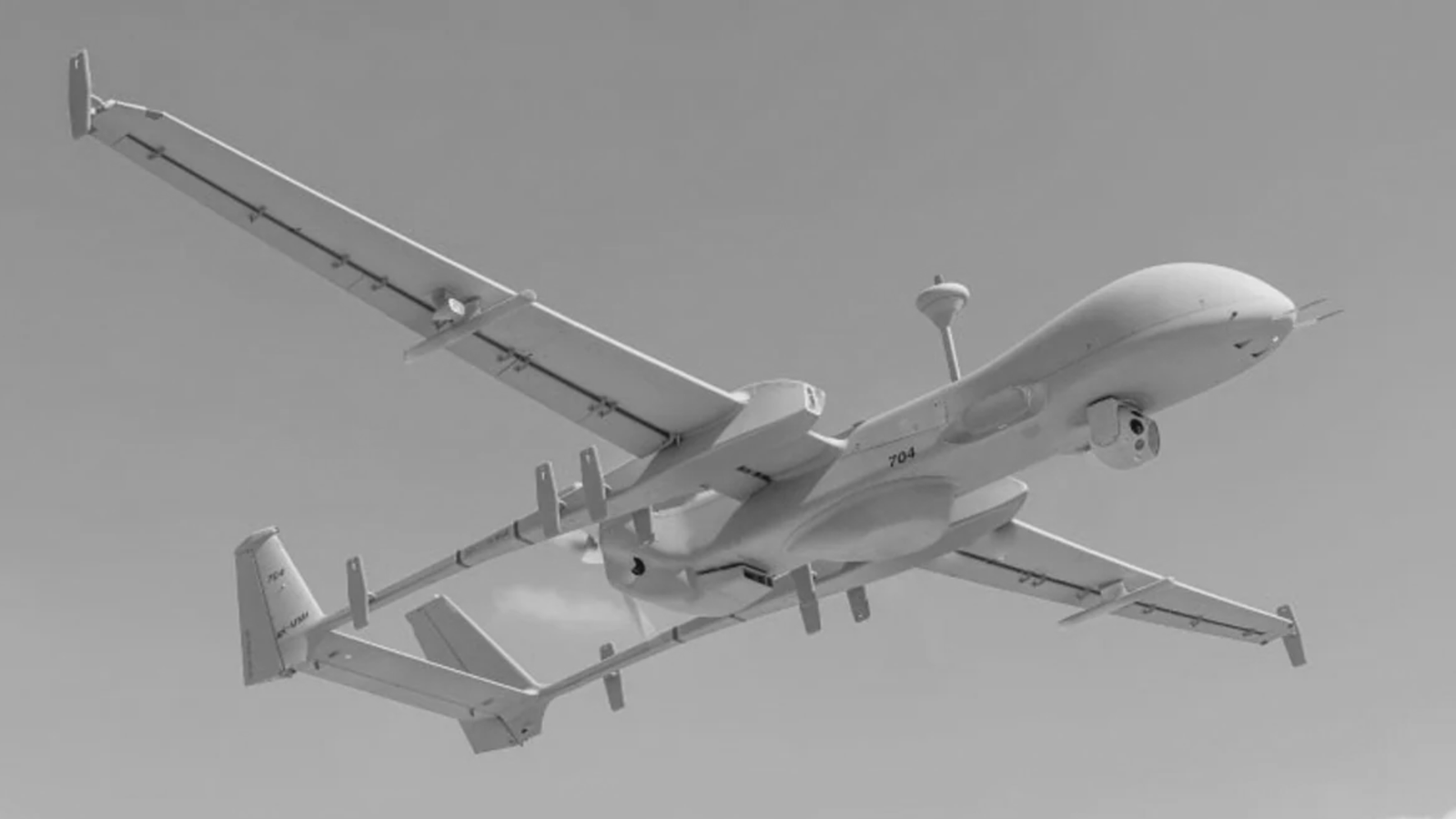
Once a marvel of scientific curiosity and civilian innovation, drones have rapidly evolved into indispensable pillars of modern warfare. From delivering packages to delivering precision-guided death, their transformation reflects the blurring boundaries between civilian and military domains in the twenty-first-century battlespace. Today, unmanned aerial systems (UAS) and loitering munitions define the tempo and psychology of conflict. They scout, strike, surveil, and self-destruct with a precision once reserved for advanced manned aircraft. Their low cost, high adaptability, and capacity for autonomous or remote operation have democratized access to air power, empowering both state militaries and non-state actors alike. Nowhere is this duality more evident than along the volatile India–Pakistan border, where drones have moved beyond their technological origins to become instruments of asymmetric warfare, smuggling, and strategic coercion.
To understand the threats that drones, and loitering munitions pose in modern-day warfare, it becomes imperative to first get to know how the idea to use drones and such UAVs in modern combat was first encapsulated among the pundits and proponents of warfare. The first instances of invention of drones, or for that instance, Unmanned Aerial Vehicles (UAVs), were for the purposes of making breakthroughs in the scientific and research and developmental fields, when scientists were experimenting with radio control, autopilots, and gyroscopes, to find answer to question that ‘can machines be controlled remotely?’. One of the many first instances include Nikola Tesla demonstrating a radio-controlled boat “Teleautomaton”. This model is referred to as the conceptual ancestor of the modern-day UAVs. This set up a precedent which was later followed by British engineer Archibald Montgomery Low, who is credited to have developed the first powered drone aircraft.
Effectively speaking, the end of the Great War started a chain of events in which the powers were competing with each other to develop such machines that could maximize destruction mechanically and effectively reduce risk of the human life, and one such development was going on in the field of UAVs. One such instance is reflected in the use of the Kettering Bug (1917), which was developed by Charles Kettering and Orville Wright (one half of the Wright Brothers). This was a small, unmanned biplane carrying explosives, pre-programmed to fly a certain distance and dive onto targets. It used gyroscopic guidance and mechanical timers. It is often dubbed as the world’s first cruise missile. Later, in the year 1918, the US Navy tested radio-controlled boats as explosive delivery platforms, the early precursors of the naval drones.
By 1918, several nations had built pilotless aircraft or boats. All of these designs were crude, unreliable, and short-ranged, but conceptually aligned. Countries like France and Germany also participated in this new era of arms race, by building crude variants of pilotless torpedoes and gyroscopes. For the first time in history, the world’s leading powers were simultaneously exploring unmanned flight for warfare. Obviously, it goes without saying that this period was marked by the beginning of the end of World War II, and the preparation for the world to enter into a more clandestine period, where the superpowers were secretly competing with each other in the arms race. This period, although silent, when compared to its immediate predecessor, was going to be a more dreadful one. It was called the “Cold War”, and more aptly so, as there were no significant episodes of armed conflicts, but the contemporaries had taken off in an arms race without their actual use, only to keep their respective stockpiles updated.
Research and development in the field of target drones and radio-controlled vehicles gained traction immediately after the Great War, with members of both the Allied and the Central Powers vying for getting a breakthrough in acquiring necessary technology to build advanced radio-controlled, gyroscopic and miniature engines. Militaries of participating nations formalized programs to construct target drones and radio-controlled vehicles. The index of participating nations again featured same names as above, with new entrants like the former Soviet Union and Japan also making it to the list. The development of drones was more precise in the manner that it would be majorly used in combat roles and/or training of military personnel of the countries who were pursuing it. For example, the USA developed the Curtiss N2C-2 and the Radioplane OQ-2 drones for target practicing for anti-aircraft gunners, along with using radio-controlled boats for gunnery practice. The use of Fernlenkboote (FL-Boats) by Germany in World War II is another such example. Other instances include the development of the Queen Bee (radio-controlled drone aircraft) by the Great Britain and the Tupolev TB-1 and TB-3 bombers (initially tested as radio-controlled drones).
Loitering munitions were built to solve the purpose of inventing an effective hybrid between reusable drones and missiles. Missiles could hit fast, but not precisely, and drones, which could hit precision strikes, required a separate set of weapons to engage the target. The invention of loitering munitions filled this lacuna, as militaries, during the time of Cold War, when this technology was developed, were in process of developing a “search-and-strike” weapon. This led to the concept of loitering munitions i.e., a system that could hover over an area, waits for an opportunity, and attack immediately without external coordination or multiple platforms. They are called so because when they are launched towards a target, they fly, hover or loiter over an area, identify the pre-fixed target and then strike, destroying themselves in the process. It is famously called the Kamikaze drones, named after the Japanese pilots who used to crash into the target, eliminating it and, in the process, themselves.
Israel was the first country, known to have conceptualized the loitering munitions in practice, which was borne out of necessity of survival, during the Yom-Kippur War (1973), where they needed to locate and destroy enemy targets well inside the enemy lines. The result was the first loitering munition, IAI Harpy (operated in 1989-1990).
Rise of Drones and Loittering Munition Threats in Morern Warfare
The initial contemporary utilization of armed drones occurred in the early 1960s when the United States launched MQ-1 Predator drones for reconnaissance and targeted strikes in Afghanistan and Yemen as part of remote-controlled counterterrorism efforts. As other nations recognized the strategic significance of this technology, it progressed rapidly. The idea of "kamikaze drones," which are able to hover and target radar emitters on their own, was first introduced by Israel's Harpy loitering munitions, which were developed in the 1990s and later upgraded into the Harop. Drones had taken centre stage in both state and unconventional warfare by the 2010s. During the 2011 intervention in Libya and the U.S. war against ISIS, unmanned aerial vehicles were widely used for precise navigation and monitoring. The 2016–2020 Nagorno-Karabakh conflict between Armenia and Azerbaijan marked a significant turning point when Turkish-made Bayraktar TB2s and Israeli Harop loitering munitions destroyed conventional armoured units and air defence systems, demonstrating the superiority of inexpensive unmanned systems over conventional military forces. The conflict between Russia and Ukraine, which has been going on since 2022, has made drones an essential weapon in warfare. Long-range suicide drones, like the Iranian Shahed-136s, and commercial quadcopters are both utilised for direct strikes, artillery correction, and reconnaissance. Similar patterns have emerged in Africa, where drones have been used for surveillance and counterinsurgency, and in the Middle East, where Houthi rebels operated them against Saudi oil facilities in 2019. There is a fundamental difference in which two conflicting parties, one being a destabilising actor for the state and the other deployed to counter it, use these drones and loitering munitions. The difference lies not only in its quality but also the purpose it serves for the respective using party. For example, the destabilising actors like insurgents, terrorists, militias, etc. will always use drones (majorly), like commercial quadcopters and other kinds of UAVs to send or receive arms/ammunitions, narcotics, etc. UAVs like loitering munitions would be used to inflict destruction, only under adverse and unavoidable standoffs with the other party, which is generally the state military. On the other hand, the state military uses more sophisticated UAVs like Switchblade, Byraktar, Shahed drones and LMs for the purpose of eliminating the enemy using coercive means.
Presently, the world has, undoubtedly, spiralled into a state of anarchy, where, although, till the latter half of 2021, no “significant” episodes of hostile engagements were perceived, but, almost instantly, the whole world whirled into a state of quagmire, which began with the overthrowing of the democratically elected government in Myanmar, followed by the Russia-Ukraine war and the war between Israel and Hamas and its allies, the engagement between the Rapid Support Forces (RSF) and the military in Sudan, the agitated fall of the Assad regime in Syria, which has come to a hitch after India successfully conducted Operation Sindoor on our notorious neighbour’s soil.
Use of Drones by Pakistan for Smuggling and Reconaissance along LoC and IB
Multiple Indian government statements, BSF/Policing investigations and reporting place the first widely reported Pakistan-origin hexa-copter/drone incidents in 2018-19, and the initial use of these drones were to smuggle small arms and contraband, which increased at a sharp inclination between 2019 and 2023. Recovered multi-rotor aircraft and hexa-copters carrying drugs, small arms, and ammunition were documented by Indian police, Border Security Force (BSF) reports, and later journalistic and think-tank reviews starting in late 2018 and, more conclusively, starting in 2019. The pattern was so strong that by 2019, investigative reports were already detailing organized launch locations and specific courier runs across Punjab and Rajasthan borders, where, according to BSF reports, around 125 drones were recovered from the former alone (2024). Drone sightings have long been frequent in the Attari and Gharinda neighbourhoods of Amritsar, as well as Tarn Taran, Gurdaspur, and Fazilka. Among the places in Rajasthan are Barmer, Jaisalmer, and Sriganganagar. Although not as many numbers as its predecessors stated above due to the area being swampy and marshy, the Sir Creek area (Kutch region) has also reported incidents of sightings and neutralization. (Indian Express)
Beginning in late 2020, the persistent appearance of drones originating from Pakistan was observed along the border districts of Jammu. This phenomenon was not isolated; rather, it soon became apparent that these cross-border drone incursions were recurring with increasing frequency. Multiple drone sightings and the uncovering of tunnels in the Samba district during November and December 2020 marked the first notable escalation. These incidents marked the beginning of a new security risk in the corridor connecting Samba and Rajouri. Drone activity had increased in both frequency and geographic distribution by June 2021. Unmanned aerial vehicles (UAVs) were spotted over a number of places in the Jammu area, most notably over the military installation at Kaluchak. Later investigations in nearby regions like Kathua revealed that UAV operations were expanding all the way along the border. Twenty drone-related incidents occurred in Jammu & Kashmir in 2022, and five more occurred in 2023, according to open-source data. The underlying security issue persisted despite variations in the frequency of such incidents. The situation escalated further in May 2025. On May 9, multiple drones were reported over border districts, including Rajouri and Poonch, as part of a broader upsurge in UAV activity along the India–Pakistan border. In the subsequent days, specifically on May 12 and 13, Army units in Samba encountered further suspicious drone activity, prompting the implementation of blackout measures in Kathua, Rajouri, and Samba. The most recent incidents have also been concentrated in the Samba district. On July 26, 2025, security personnel recovered a 500-gram package of heroin that had been airdropped by a drone in Chillyari village. Shortly thereafter, during the night of October 11–12, two Pakistani drones were observed hovering over Challiyari and Chamliyal villages in the Ramgarh sector, necessitating renewed search operations by security forces.
Commercially available multi-rotors (DJI and clone-type quad/hexa-copters) equipped with basic cargo rigs and drop/release mechanisms were the main tool used in these early interdictions. Cross-border attacks on military facilities (use of IEDs from drones) were first publicly recorded in 2021 (Jammu airbase incident). Shortly after those initial recoveries, the phenomenon quickly became routine. From 2019 to 2023–2024, there was a significant increase in the number of breaches detected, and the activity changed from random single drops to systematic, repeatable smuggling runs. Smugglers developed sophisticated strategies (night launches, GPS pre-programming, "failsafe" return modes to avoid jamming), constructed basic launch/collection infrastructure near the border, and varied payloads (drugs, small arms, explosives, fake currency), according to evaluations from regional research outlets and security think-tanks. Consolidated incident histories and an explanation of how a smuggling ecology developed from the initial seizures are provided by the Carnegie and SATP reviews.
Like many other states, Pakistan uses military and paramilitary UAVs for legitimate surveillance and battlefield ISR in addition to smuggling. Adherence to open reporting and analyses of the larger India-Pakistan theatre, state ISR flights (for targeting and monitoring) and commercial drones are often used illegally in the same border zones, making attribution challenging. It is common practice to lift and deliver contraband and monitor cross-border movement using the same low-altitude routes, staging areas, and launch footprints; this practical overlap makes it more challenging to identify and assign legal responsibility during peacetime. The operational challenge of differentiating state-directed reconnaissance from purely criminal drone sorties in disputed border belts is emphasised in think-tank summaries.
The year 2021 marked the most significant shift in Pakistan’s drone activities across the India–Pakistan border, where the drones were used to explode at the Air Force Station in the Satwari area of Jammu. The twin explosions at Jammu Air Force Station on the night of 26–27 June 2021 were widely reported and investigated as the first recorded instance in India where explosive-laden drones were used to attack a defence installation. Reportedly, two quadcopters were used in this incident. This was also the first confirmed instance of a drone-based strike on a military installation in India, suspected to have been orchestrated by the infamous terror group Lashkar-e-Taiba (India Today, 2021).
In the year 2022, the data retrieved from BSF indicated ~ 228 recorded drone intrusions, out of which around 18 such intrusions were neutralized. Each incident involved a small multi-rotor craft capable of carrying 2-5 kilograms of narcotics or small arms, or a mix of both. Drones were equipped with auto-pilot feature, allowing smugglers to pre-program the routes that would be taken by them.
In 2023, drones from Pakistan became notably more prominent and sophisticated; India's BSF and Punjab Police recorded five times the number of drone interceptions than in prior years (The Times of India, 2024). During this time, drones were used for surveillance and reconnaissance, as well as for transporting weapons and drugs, suggesting a combination of intelligence and unlawful goals. For example, two significant interdictions took place between January and May 2023: on May 16, BSF units intercepted a drone close to Kakkar village (Amritsar), confiscating 15.5 kilograms of heroin; on May 17, another UAV was downed near Ramkot, which was later discovered to be carrying weapon components. Investigations showed that traffickers started employing relay antennas, signal amplifiers, and automated night-vision tools to combat Indian electronic warfare technologies. By 2024, the BSF documented more than 215 drone observations in Punjab alone from January to November, signifying that Pakistan's drone operations had risen to an unmatched level of frequency and magnitude (Indian Defence News, 2024; The Tribune, 2024). To exploit gaps in radar coverage, drones were often detected in the Amritsar, Ferozepur, and Gurdaspur regions, typically during the early morning or around midnight. On November 8, 2024, Indian security forces shot down a hexa-copter transporting drugs near Ferozepur; the drone was identified as a Chinese-made model, suggesting involvement from foreign suppliers.
The term “Narco-terrorism” has been gaining traction for quite some time now, especially with linkages to Pakistan using it as a tool against India, to fulfil its subterranean motives. There has been a certain routine where the narcotics, arms, ammunitions and other illicit contraband were smuggled across the border by Pakistan. So far, and this particular statistic is of the year 2025 alone, around 200 Pakistani drones have been seized by the BSF from which heroin (approx. 287 kg), methamphetamine (around 13 kg), arms (174 guns, hand grenades, and ~ 10 kg of high explosives have been recovered. Regarding drone-based smuggling, police in Bhikhiwind (Tarn Taran) filed 12 FIRs and detained 12 suspects; among the items seized were 4 pistols, 75 bullets, 5 magazines, 3+ kg of heroin, 492 grams of ICE, and 506 grams of opium. Five Pakistani drones carrying heroin and handguns were intercepted by the BSF in the Amritsar and Tarn Taran sectors. Among the particular drones were the DJI Mavic 3 Classic and DJI Mavic 4 PRO, which together carried more than 2.8 kg of heroin. Drones play a vital role in this plan of theirs, where they obviously personify the role of a “postman” who delivers the narcotics, small arms and other illegal stuff across border into India, and then return back with the money, counterfeit, of course, to fund all kinds of terrorist activities.
Operation Sindoor, the code name for the May 2025 Indo-Pak crisis, marked a new era in which unmanned systems were used as frontline combat tools in addition to smuggling and reconnaissance. Open reports state that on May 7–8, 2025, Pakistan launched coordinated nighttime attacks across several Indian forward positions using numerous maneuverable drones and loitering munitions (Reuters, 2025; Stimson Centre, 2025). The use of Turkish-made multi-rotor attack drones (like the Asisguard Songar and Byraktar models), in addition with Chinese made Wing Loong – II and CH-4, in conjunction with locally modified systems like the Burraq UAV, Shahpar – II drones (indigenously developed), along with Kamikaze drones from Turkiye, that could launch short-range precision strikes were employed by intelligence services. Radar stations, ammunition stations, and fuel depots along the western border were the targets of these attacks. India responded by using its SkyDome counter-drone systems, Swathi counter-battery radars, and domestically produced Nagastra loitering munitions to eliminate aerial threats.
Current Counter-measure Tactics Employed by India
The Indian military and paramilitary forces have held the recurring matter of drone attacks and movements as one of the paramount issues that currently test the genius of our defence undertakings like DRDO, the Ordnance Factories etc. To curb the menace created by these hovering aerial structures, some counter measures have been taken by the Indian defence and paramilitary forces alike, such as deployment of Low Altitude Surveillance Radars, for obvious reasons that the drones fly at a comparatively lower altitude and so, a dedicated surveillance system has been the need for their early detection and destruction, along with Radio Frequency (RF) scanners, which have been especially deployed at forward posts and airbases like Jammu, Samba, Ferozepur. DRDO’s D-4 Drone Detection and Deterrence System has also been in action since the Jammu Air Force station attack in 2021. Deployment of portable anti-drone jamming guns like Jammer Anti-UAVs (DRDO), Drone Detection, Deterioration and Destroyer (D4, BEL), apart from employing private sector players like the Zen Technologies’ Zen Anti-Drone System, Green Robotics’ Indrajaal Autonomous Drone Defence Dome, among others. This also showcases how, through promotion of Make In India and encouraging private players in defence manufacturing by giving sufficient subsidies, a perfect blend of Public-Private-Partnership (PPP) can be created, which not only offers a diverse platter of all kinds of defence equipment to be used by the forces, but also ups the ante in terms of the quality of defence equipment production in the country. Laser based “hard-kill” systems tested by DRDO and BEL since 2022, capable of physically destroying UAVs up to 2 km away have also been employed in addition to the BSF and the Army having Quick Reaction Teams (QRTs) equipped with night-vision sights and high-quality rifles. Also, enabling the common people with support and entrusting them with responsibility to protect their respective areas have been a successful strategy that the Indian government employed through its Vibrant Village Programme and also by appointing the Village Defence Guards in the villages bordering Pakistan.
A framework of integrated surveillance and coordination to counter drone / cross-border threats, via interagency fusion centres and satellite / UAV counter-surveillance has been initiated. A fusion centre is essentially a nodal hub where intelligence, sensor data, alerts, and operational directives from multiple agencies converge. In the case of Drone Monitoring and Response Centres (DMRC) under MHA, the idea is that data from radars, ground sensors, maybe acoustic sensors or RF sensors is shared across BSF, NIA, IAF, local police, etc. The MHA has released tenders and documents for Anti-Drone Systems / Counter-Drone Systems, specifying multi-sensor integration. Upgrading to “SMART” fencing has also been a key development near the Punjab and Jammu borders, where, since the recent past, episodes of drone sightings and confiscation of contraband and arms, have been on a high. Upgrading to the Anti-Drone System (ADS), India’s first indigenous combining radar detection, EO/IR tracking, RF jamming and laser neutralization, which have been deployed at strategic bases like in New Delhi, Jammu, Srinagar, have proved to be a game-changer, not only under normal circumstances, but also during Operation Sindoor, when, drones and Loitering munitions were shot down before they could inflict damage upon the key Indian establishments. Reports suggest that over 600 drones launched by Pakistan were intercepted and destroyed, while they were airborne (India Today, 2025). However, the exact number of Loitering Munitions destroyed were unknown. While an official figure regarding drones, LMs, and other ammunitions destroyed by India has yet to be released by the MHA, the above given figures pose a victory for the scientists at the facilities and the armed forces, being able to inflict damage onto even the newest of the types of coercive tactics employed by Pakistan.
Lacunae in India's Counter-Drone Strategy
India’s been hustling to deal with drones being used for terrorism, smuggling, and sneaky cross-border spying, but there are still some glaring holes in the whole system. Technology isn’t quite there yet, and the agencies and procedures could be exhausting. Nefarious elements across the Pakistani border are exploiting these situations for their ulterior motives. Instead of producing a proactive drone doctrine, India has mostly just produced reactive responses after the attacks. For example, the drone strike on Jammu Air Force Station back in June 2021. After the attack, the boiling topic of discussion at national and international security dialogues and fora was on counter-drone tackling. But, before the attacks, the drone smuggling cases were just dumped on the Border Security Force or the local cops and treated like some random crime, not part of a bigger, nastier threat. The problem with this approach is, by the time someone wakes up to the danger, it has already done damage, not only to the physical establishments of the country, but also, it leaves a deep psychological imprint on the minds of officers, agencies and the common people alike. Dedicated agencies also lack a sense of coordination. As a result, when drone sightings are witnessed at borders, responses are delayed. Undoubtably, with the establishment of theatre commands, some sense of streamlining has been witnessed but to understand the threats from drones and loitering munitions as something that will only advance with time and to dedicate a particular agency to monitor and neutralize these threats, not only presently, but as and when the war progresses, is imminent.
Way Forward and Recommendations
Since drone and loitering munition warfare is a very new phenomenon, the road towards its countermeasures has to be treaded very carefully. As stated earlier, India’s approach for the looming threats from drones and loitering munitions has been reactive, and not proactive. Although, the modern use of drones and loitering munitions as a tool or weapon to inflict damage and destruction has been around for quite some time (the first reported use was during the Vietnam war (1960s), by the United States of America against North Vietnam), countries had not perceived it as an imminent threat against their national security, until recently, when drones and loitering munitions were programmed in such a manner that they could prove to be a sort of added advantage, where, they could strike the adversary with pinpoint accuracy, and return safely (in cases of drones alone) to their base without being traced back. The ongoing wars in Ukrainian territories and parts of West Asia are a living proof that how countries have fared in the area of development of drones and loitering munitions, where the loss of military personnel that has been reported, has been a teeny fraction of what the numbers used to be in the past wars. Although, civilian deaths have been on an alarmingly high, but casualty of military has not been comparatively that much. The undeniable credit for this goes to the new age of warfare that the world has entered and has witnessed firsthand through the two wars, especially the Isreal-Hamas one, where open source reporting have reiterated how Israel has eliminated the top leaders of Hamas, Hezbollah, and other participants of Iran’s Axis of Resistance, with pin point accuracy, and with minimum loss on their own side. India should not be perceived as a mere follower of the trend but should up its ante and become one of the trendsetters in the new age which we have entered. For this to be realised, support, not only military and technological, but also legal and legislative, is needed.
Establishing a statutory Counter-UAS Committee, under either the Ministry of Home Affairs or the Ministry of Defence, or getting the best of both worlds, is a necessary first step in this direction, and it should not be restricted to only the Union government taking the reins in their hands, but participation from state governments, especially, those at the borders, is vital. The Ministry of Civil Aviation’s National Counter-Rogue Drone Guidelines can serve as a precedent, because as mentioned earlier, there is no national policy regarding military drones and their usage.
Military and paramilitary operational recommendations are equally important as its counterpart. Development of long-range radars and ISR drones, with a high-flying stealth ability would be an important development in the approach towards setting up a proactive policy, as these drones would be able to infiltrate beyond enemy lines and fetch first-hand information on the notorieties that the enemy is up to. Low altitude enemy drone detection through EO/IR camera, RF detections and using EW jammers (portable or vehicle mounted) to detect and hunt down drones can be a viable development.
Radars are the backbone of detection. Development of dedicated radars to detect larger UAVs and aircrafts, small quadcopters and LMs and also stealth drones is the need of the hour. In crowded, urban, or noisy border environments where micro-radars can produce false alarms, acoustic arrays are effective at detecting distinctive rotor/propeller signatures. Acoustic sensors provide a low-cost, power-efficient detection layer for micro-drones, particularly in valleys and at very low altitudes, when combined with AI models (sound-signature libraries). They are helpful in providing early warnings in areas of Poonch and Jammu.
Integration and inter-agency cooperation are of paramount importance. Draft SOPs that give the Army, BSF, state government, and local police the ability to respond to the detection of a hostile UAV without encountering bureaucratic obstacles (e.g., temporary authority to jam/engage, secure crash site, arrest suspects). SOPs must specify who is responsible for gathering evidence and who leads the interagency investigation. To prevent smuggling networks, NTRO/NIA/Customs/Police/BSF should perform predictive analytics using recovered drone serial numbers, RF signatures, and previous drop sites. Intelligence must drive interdiction; if at all possible, diplomatic channels should be used to arrest Pakistani handlers and supply chains.
Footnotes
- Bharat Electronics Limited. (n.d.). Anti-Drone System (D4 System). BEL. Retrieved 2025, from https://bel-india.in/product/anti-drone-system/
- Carnegie Endowment for International Peace. (2023, July 10). Drone intrusions along the India–Pakistan international border: Countering an emerging threat. https://carnegieendowment.org/posts/2023/07/drone-intrusions-along-the-india-pakistan-international-border-countering-an-emerging-threat
- CSIS. (2025, May 28). The Russia–Ukraine Drone War: Innovation on the frontlines and beyond. Center for Strategic and International Studies. Retrieved 2025, from https://www.csis.org/analysis/russia-ukraine-drone-war-innovation-frontlines-and-beyond
- Deccan Herald. (2025, May 8). Border district Kutch on high alert after recovery of drone debris amid Operation Sindoor. https://www.deccanherald.com/india/gujarat/border-district-kutch-on-high-alert-after-recovery-of-drone-debris-amid-operation-sindoor-3531916
- Greater Kashmir. (2025, May 23). Pakistani drone with Rs 5 crore heroin seized in Rajasthan. https://www.greaterkashmir.com/latest-news/pakistani-drone-with-rs-5-crore-heroin-seized-in-rajasthan/
- Hindustan Times. (2025, Sep). BSF seized 200 drones, 287 kg heroin along Indo-Pak border so far this year. https://www.hindustantimes.com/cities/chandigarh-news/bsf-seized-200-drones-287-kg-heroin-along-indo-pak-border-so-far-this-year-101760471748858.html
- India Foundation. (2021, February). J&K Tracker: November–December 2020. India Foundation. https://indiafoundation.in/wp-content/uploads/2021/02/JK-TRACKER-Nov-Dec-2020.pdf
- India Today. (2021, June 27). In a first, drones used to drop explosives on Jammu air base. https://www.indiatoday.in/india/story/air-force-station-jammu-blast-drone-attack-suspected-1819895-2021-06-27
- India Today. (2024, Oct 12). BSF shoots down Pak drone carrying heroin, pistol in Punjab's Ferozepur. https://www.indiatoday.in/india/story/bsf-shoots-down-drone-heroin-pistol-punjab-ferozepur-pakistan-2615712-2024-10-12
- India Today. (2025, May 9). Pakistani drones intercepted at multiple locations in Jammu & Kashmir and Punjab. https://www.indiatoday.in/india/story/pakistani-drones-intercepted-locations-jammu-kashmir-punjab-india-2722445-2025-05-09
- Indian Ministry of Home Affairs (Technical). (2024, May 28). Counter Drone System — Qualitative requirements & test draft (internal reference/public notice). Retrieved 2025, from MHA documents archive.
- IJRPR (International Journal of Research & Publications). (2025). Countering Rogue Drones: India’s Legal and Technological Measures. IJRPR, V6(issue). Retrieved 2025, from https://ijrpr.com/uploads/V6ISSUE5/IJRPR46033.pdf
- Ministry of Civil Aviation, Government of India. (2024). National Counter Rogue Drone Guidelines. Government of India. Retrieved October 17, 2025, from https://www.civilaviation.gov.in/ministry-documents/national-counter-rogue-drone-guidelines
- Moneycontrol News. (2025, May 13). No enemy drones at present: Army calms panic after hours of border activity in Samba, Jalandhar. https://www.moneycontrol.com/city/no-enemy-drones-at-present-army-calms-panic-after-hours-of-border-activity-in-samba-jalandhar-article-13021820.html
- NDTV. (2023, Mar 7). 2.6 kg heroin dropped by drone along India-Pak border in Rajasthan, seized. https://www.ndtv.com/india-news/2-6-kg-heroin-dropped-by-drone-along-india-pak-border-in-rajasthan-seized-3841702
- NDTV. (2025, May 10). India’s home-built D4 system is killing Pakistani drones — all about it. Retrieved 2025, from https://www.ndtv.com/india-news/indias-home-built-d4-system-is-killing-pakistani-drones-all-about-it-8379576
- Observer Research Foundation. (2023, March 12). Countering drones: India’s evolving security framework. https://www.orfonline.org/expert-speak/countering-drones-india/
- Reuters. (2021, June 27). India probes suspected use of drones in blast at Jammu air base. https://www.reuters.com/world/india/india-probes-suspected-use-drones-blast-jammu-air-base-officials-2021-06-27/
- Remote Warfare / Doha Institute. (2024). Remote Warfare: Evaluating the combat effectiveness of drones in the context of the war on Gaza (Report). Retrieved 2024, from https://www.dohainstitute.org/en/Lists/ACRPS-PDFDocumentLibrary/remote-warfare-evaluating-the-combat-effectiveness-of-drones-in-the-context-of-the-war-on-gaza.pdf
- Samba Times. (2025, July 26). Pakistani handlers and drone-based smuggling in Jammu and Kashmir border villages: A persistent threat. https://sambatimes.in/pakistani-handlers-and-drone-based-smuggling-in-jammu-and-kashmir-border-villages-a-persistent-threat
- South Asia Terrorism Portal (SATP). (2021, June). Faultlines, Issue 32. Institute for Conflict Management. https://www.satp.org/Docs/Faultline/32.pdf
- The Times of India. (2024, Dec 2). Drone seizures surge 150% along Indo-Pak border in Punjab. https://timesofindia.indiatimes.com/city/chandigarh/drone-seizures-surge-150-along-indo-pak-border-in-punjab/articleshow/115878257.cms
- The Times of India. (2025, Apr 4). Pakistani drone with Rs 2.5cr worth heroin seized in Rajasthan border village. https://timesofindia.indiatimes.com/city/jaipur/pakistani-drone-with-rs-2-5cr-worth-heroin-seized-in-rajasthan-border-village/articleshow/119965407.cms
- The Times of India. (2025, October 12). Search operations launched after Pakistan drones sighted along border in J&K’s Samba. https://timesofindia.indiatimes.com/india/search-operations-launched-after-pakistan-drones-sighted-along-border-in-j-ks-samba/articleshow/124488948.cms
Prashail Tripathi is a Research Intern at CNAWS. He has completed his post graduation (M.A.) in National Security Studies from the Central University of Jammu. As an avid researcher, he has been affiliated with think tanks like IMPRI and KIIPS as a research intern. His core interests lie in understanding contemporary geopolitical scenarios, civil-military relations of India’s neighbouring countries, energy security, war studies among others.
(The views expressed are those of the authors and do not represent the views of CNAWS.)
Tags
- #anti-drone technology india
- #counter drone systems india
- #drone smuggling punjab border
- #drone threats to india
- #drone warfare 2025
- #drone warfare in south asia
- #drone-based narco-terrorism
- #hybrid warfare
- #india pakistan border drones
- #indian drone defence systems
- #indo-pak drone conflict
- #jammu drone sightings
- #loitering munitions india
- #loitering munitions warfare
- #modern warfare
- #operation sindoor
- #pakistan
- #pakistani drones in punjab
- #punjab drone seizures
- #rajasthan border drones
- #uav threats to national security
Author
Prashail Tripathi
Prashail Tripathi is a Research Intern at CNAWS. He has completed his post graduation (M.A.) in National Security Studies from the Central University of Jammu. As an avid researcher, he has been affiliated with think tanks like IMPRI and KIIPS as a research intern. His core interests lie in understanding contemporary geopolitical scenarios, civil-military relations of India’s neighbouring countries, energy security, war studies among others.