
Ukraine's Deep Strikes Expose a Growing Strategic Divide Between Washington and Europe
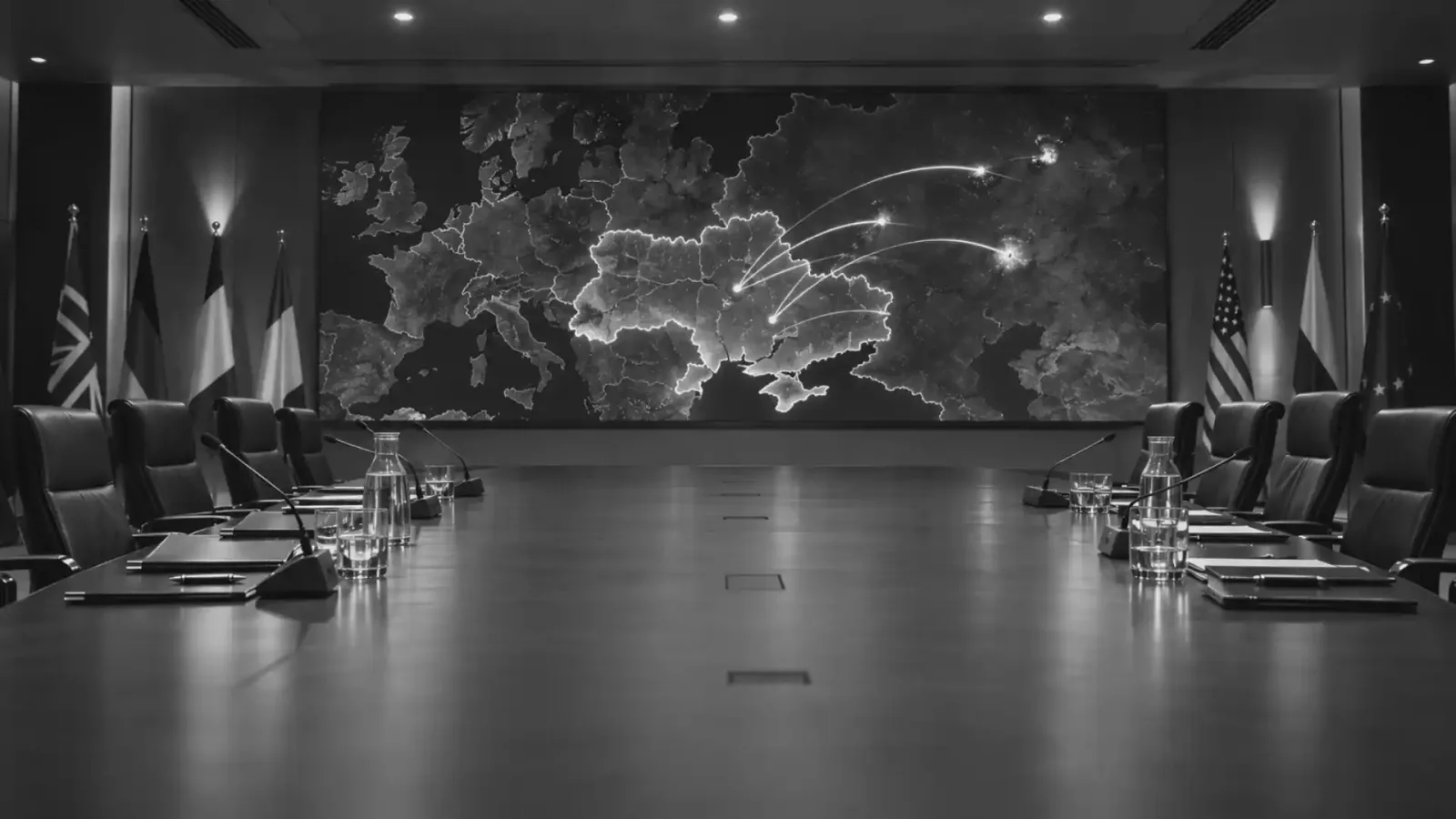
The disagreement between Washington and its European allies over Ukraine's long-range strikes inside Russia has exposed a fundamental difference in their approaches to the war. During the Ukraine Defence Contact Group meeting on 17 November 2026, senior American defence official Elbridge Colby questioned the military effectiveness of deep strikes, prompting objections from Germany and Britain. Washington favours concentrating resources on defending Ukraine's front lines and disrupting Russian military logistics, while its European partners consider attacks against Russia's defence-industrial and economic infrastructure necessary to weaken Moscow's capacity to sustain the conflict. The dispute comes as Europe assumes greater responsibility for financing Ukraine's military requirements. Its significance lies in whether differing assessments of military effectiveness, escalation risks and negotiating leverage will translate into conflicting operational priorities, potentially undermining coordination at a critical stage of the war.
The Disagreement at Brussels
On 17 November 2026, US Under Secretary of War for Policy Elbridge Colby challenged the effectiveness of Ukraine's long-range strikes against targets inside Russia during the 37th Ukraine Defence Contact Group meeting at NATO headquarters in Brussels. Colby argued that such attacks had neither materially slowed Russian advances along the front line nor brought the conflict closer to a negotiated conclusion. He advocated concentrating military assistance on Ukraine's defensive operations and medium-range strikes against Russian logistics supporting frontline formations.¹
Colby also questioned attacks against commercial infrastructure, referring specifically to facilities associated with Wildberries, Russia's largest online retailer. His concern was that strikes affecting civilian economic activity could strengthen domestic support for the Kremlin and increase Moscow's willingness to escalate. Ukraine has alleged that the company's supply networks support Russian military activities, a claim the company denies. The disputed status of these facilities is therefore relevant to both operational effectiveness and the legality of individual attacks.
Germany and Britain rejected the broader American assessment. German Defence Minister Boris Pistorius described criticism of Ukrainian attacks against strategic military and military-used targets as quite a stupid thing. He argued that greater attention should be directed towards Russia's continuing attacks against Ukrainian electricity, water and heating infrastructure. British Defence Secretary Wes Streeting similarly maintained that Ukrainian strikes had weakened Russia's military capabilities, bought time and saved lives.²
NATO Secretary General Mark Rutte adopted a more measured position, identifying Ukraine's ability to defend its territory, resist Russian advances and degrade Moscow's military capabilities as complementary objectives. He avoided endorsing an unconditional approach to deep strikes.³
The dispute therefore concerns more than the geographical range of Ukrainian weapons. It reflects different assessments of how Russia's military capacity can be weakened and what battlefield conditions are necessary to produce an acceptable political settlement.
The Military Logic of Ukraine's Deep-Strike Campaign
Ukraine's long-range strike campaign is designed to compensate for its disadvantage in conventional military resources by targeting infrastructure that supports Russia's ability to sustain prolonged operations. Oil refineries, storage facilities, military-industrial installations, ammunition depots and transport infrastructure serve different functions within this strategy.
Attacks against logistics facilities closer to the front can produce relatively immediate operational effects by interrupting ammunition deliveries, troop movements and equipment replenishment. Strikes against oil refineries and defence-industrial facilities operate over longer periods by imposing repair costs, disrupting production and increasing pressure on Russia's military economy.
This distinction is central to evaluating Colby's argument.
A successful attack on an oil refinery may not immediately reduce Russian artillery fire or alter territorial control. However, sustained disruption to fuel production can create cumulative logistical and economic difficulties. Russia must divert financial resources towards repairs, strengthen protection around vulnerable infrastructure and manage interruptions across its energy supply chain.
Evidence indicates that these effects are becoming increasingly substantial. On 18 November, Reuters reported estimates from two industry sources indicating that Ukrainian strikes had disrupted or halted operations at 15 of Russia's 35 major refineries. Combined crude processing volumes had reportedly fallen by approximately 45 per cent from their late-October level. Importantly, average throughput during November was estimated to be only 5–10 per cent below September and October averages, demonstrating why the immediate disruption figure should not be treated as a sustained nationwide production loss.⁴
An earlier International Energy Agency assessment also found that Ukrainian attacks were increasingly affecting complex secondary refining units. While minor damage to primary processing facilities may be repaired within weeks, heavily damaged secondary units can require several months of restoration.⁵
These findings establish measurable industrial disruption, although they do not independently demonstrate a proportional reduction in Russian military operations.
Ukraine's strategy consequently rests on an assumption that cumulative economic damage, military-industrial disruption and the diversion of Russian defensive resources will eventually weaken Moscow's capacity to continue the war. Its success must be assessed over an extended period rather than solely through immediate changes on the battlefield.
The Limits of Deep Strikes and the Escalation Problem
Washington's criticism nevertheless raises legitimate military questions.
Long-range strikes consume unmanned systems, intelligence resources, targeting capabilities and industrial production capacity that could otherwise support operations closer to the front. Their value depends on whether the resulting damage exceeds the operational opportunities sacrificed elsewhere.
Russia also possesses considerable geographic depth, dispersed industrial infrastructure and the ability to repair or reorganise damaged facilities. Consequently, individual attacks against distant economic targets may impose costs without sufficiently affecting the military capabilities determining the immediate ground campaign.
The distinction between disrupting Russia's war-supporting infrastructure and deliberately imposing suffering on its civilian population is particularly important. International humanitarian law permits attacks only against military objectives and requires compliance with proportionality and precautionary obligations. A commercial facility does not become a lawful target merely because some goods passing through it may have military applications. Its actual contribution to military action and the anticipated military advantage must be established.⁶
There is also an escalation dimension. Moscow can respond to Ukrainian attacks by intensifying strikes against Ukraine's infrastructure, expanding its target selection or increasing military pressure elsewhere. However, this risk must be assessed against Russia's existing campaign of long-range attacks rather than assuming Ukrainian restraint would necessarily produce reciprocal restraint.
The operational question is therefore not whether deep strikes should be abandoned or pursued without limitation. It is whether their targets, frequency and expected consequences support Ukraine's broader military objectives.
Europe's Changing Role in the War
The disagreement has emerged alongside an important redistribution of responsibility within the Western coalition.
The Trump administration has increasingly shifted the financial burden of sustaining Ukraine's defence towards European governments while continuing to facilitate access to American military equipment. At the Brussels meeting, Rutte stated that participating countries had pledged more than $10 billion through the Prioritised Ukraine Requirements List (PURL) initiative and US Foreign Military Sales arrangements. European financing remains particularly important for acquiring American weapons that cannot be readily replaced by European production.³
This arrangement creates a structural tension. European governments are assuming greater financial responsibility for Ukraine's defence but do not necessarily share Washington's preferences concerning how the war should be conducted.
The differences are becoming visible in procurement decisions.
On 17 November, Britain announced a £240 million winter air-defence package, including more than 1,000 short-range interceptor missiles and additional radars.⁷ More significantly, a British government statement published on 18 November outlined plans for a further £260 million package containing over 1,000 long-range strike drones, including systems capable of travelling more than 1,000 kilometres. The package was intended to support Ukrainian attacks against legitimate military targets far behind Russian lines. Its announcement does not establish completed delivery or operational deployment.⁸
This decision is particularly consequential because London is explicitly supporting the expansion of the capability Washington has questioned. Germany has also maintained substantial military assistance, including air-defence systems, interception equipment and arrangements supporting Ukrainian drone production.
Nevertheless, these positions do not establish a complete rupture between the United States and Europe. The partners continue to cooperate on essential military requirements, including air defence, ammunition supplies and the protection of Ukrainian territory.
The disagreement is more accurately understood as an emerging divergence over the allocation of resources between immediate battlefield requirements and efforts to weaken Russia's longer-term war-making capacity.
Consequences for Western Strategy and Negotiations
The disagreement carries wider consequences because military assistance is increasingly connected to negotiations concerning the war's termination.
Washington's preferred approach emphasises maintaining a defensible Ukrainian front line and denying Russia further territorial gains. The underlying calculation is that a stable military position can reduce Moscow's expectations of future battlefield success and create incentives for a negotiated settlement.
Germany and Britain appear more willing to support sustained pressure on Russia's economic and military infrastructure, partly because restricting Moscow's ability to regenerate forces could improve Ukraine's negotiating position over time.
These approaches are not inherently incompatible. Frontline defence and military-industrial disruption can reinforce each other. The difficulty arises when limited resources or political restrictions require choosing between them.
A fragmented approach could produce uncertainty for Ukrainian military planners. Kyiv requires predictable access to equipment, munitions, intelligence support and industrial capacity. Differences among major supporters concerning target selection and acceptable escalation risks may complicate procurement priorities and operational planning.
The diplomatic context intensifies this concern. European leaders are meeting in Berlin on 19 November through the Coalition of the Willing, with American envoys Steve Witkoff and Jared Kushner also expected to participate. The meeting coincides with high-level US–Russia–China diplomacy in Shenzhen, raising European concerns about negotiations affecting continental security without sufficient European participation.⁹
The central risk is that Washington and European capitals may adopt different assumptions about the military pressure necessary before negotiations can produce a durable settlement. Such differences could weaken their collective bargaining position even if military assistance continues.
Strategic Implications
The dispute illustrates a broader transformation in contemporary warfare. Long-range, relatively low-cost strike systems allow a militarily disadvantaged state to impose disruption deep inside a larger adversary's territory. Yet the ability to reach distant targets does not automatically produce strategic advantage.
For military planners, including those in India, the critical lesson concerns the relationship between tactical success and strategic effect. Successful penetration of air defences and damage to a target must be evaluated against the resulting consequences for enemy force generation, logistics, operational tempo and political decision-making.
Ukraine's experience also demonstrates that protecting industrial infrastructure, transport networks and energy facilities has become an integral component of national defence. Conventional air-defence systems alone may be insufficient against sustained attacks involving numerous inexpensive unmanned platforms.
At the alliance level, the disagreement highlights the difficulties that arise when major security partners possess different threat perceptions, escalation thresholds and political objectives despite supporting the same military campaign.
Assessment
The November 17 disagreement represents a meaningful divergence in American and European assessments of the Ukraine war, but it does not yet constitute a breakdown in Western military coordination.
The American argument correctly emphasises that military operations must produce measurable effects on the battlefield or improve the conditions for terminating the conflict. However, evaluating deep strikes exclusively through immediate territorial changes risks underestimating their cumulative impact on Russia's military economy.
The European position recognises the importance of degrading Russia's capacity to sustain a prolonged war, although economic disruption alone cannot be assumed to compel Moscow to negotiate or substantially reduce frontline pressure.
The most effective strategy would integrate frontline defence, operational interdiction and carefully selected deep strikes within a common framework of military objectives and escalation management.
The principal strategic risk is that Washington and Europe may increasingly pursue different theories of how the war can be brought to an end while remaining dependent on each other to sustain Ukraine's defence. If this divergence begins shaping military assistance, targeting priorities and negotiations independently, its consequences could extend far beyond the present disagreement over long-range strikes.
Endnotes
Sabine Siebold et al., “German Minister Rejects US Criticism of Kyiv's Deep Strikes as 'Stupid',” Reuters, November 17, 2026.
Reuters, “German Minister Rejects US Criticism of Kyiv's Deep Strikes,” November 17, 2026.
North Atlantic Treaty Organization, “Joint Press Conference Following the Ukraine Defence Contact Group Meeting,” transcript, November 17, 2026.
Reuters, “Drone Attacks Nearly Halve Russia's November Oil Refining, Sources Say,” November 18, 2026.
David Martin and Talya Vatman, “Russian Refining Sector Struggles amid Intensifying Ukrainian Attacks,” International Energy Agency, September 17, 2026.
International Committee of the Red Cross, “Methods and Means of Warfare,” guidance concerning military objectives, distinction and the conduct of hostilities.
UK Ministry of Defence, “More Than 1,000 Air Defence Missiles for Ukraine as UK Delivers £240 Million in Winter Support,” November 17, 2026.
UK Prime Minister's Office, “1,000 Long Range Strike Drones Announced for Ukraine as Prime Minister Co-Chairs Coalition of the Willing in Berlin,” November 18, 2026.
Reuters, “Ukraine's European Allies Meet in Berlin in Show of Support,” November 19, 2026.
ImageSource: ChatGPT
Tags

Author