

India's ₹1,976-Crore Barak-1 Upgrade: Strengthening Naval Defences Against Modern Aerial Threats
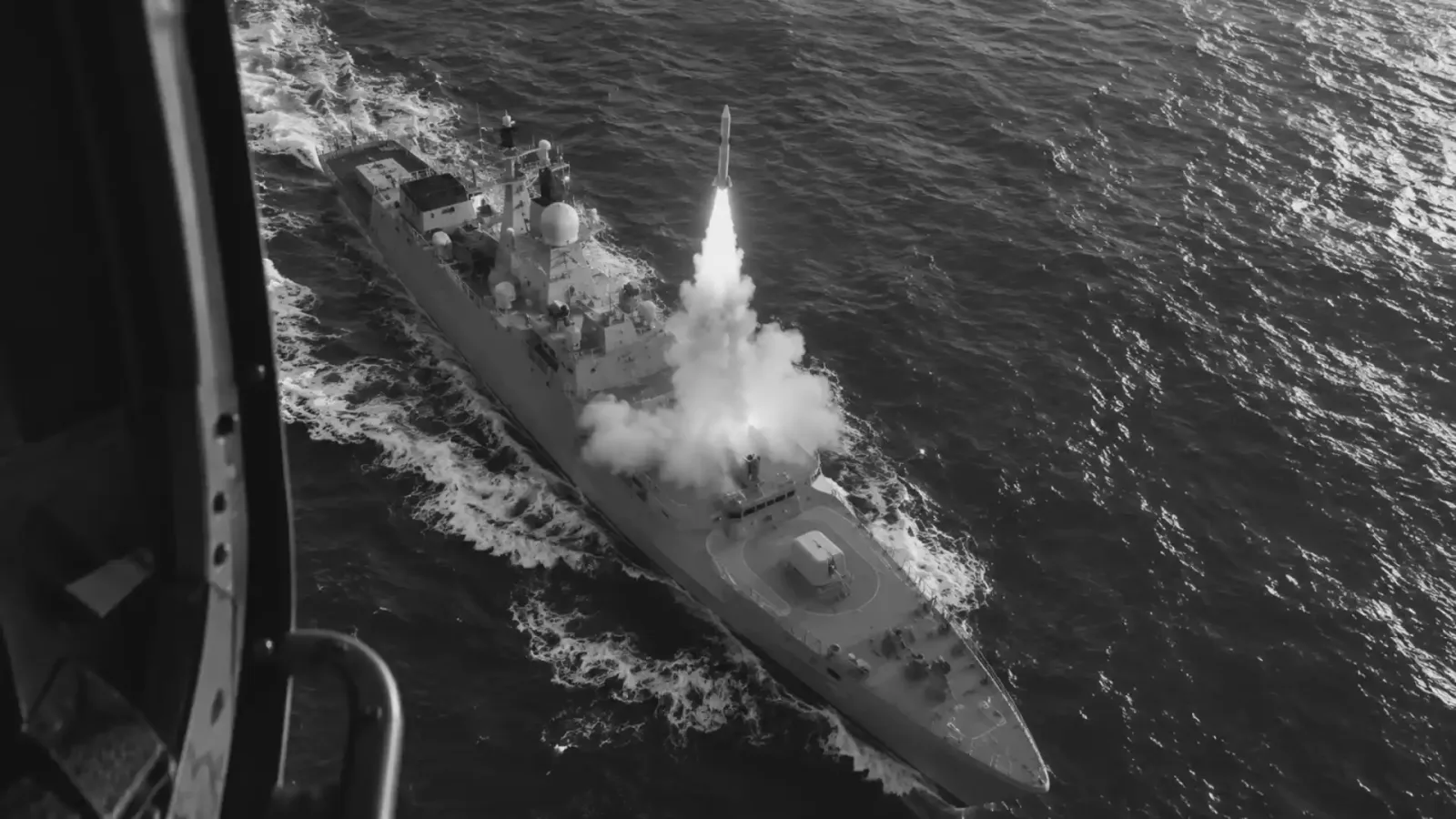
India's ₹1,976.40-crore agreement with Israel Aerospace Industries (IAI) to modernise the Indian Navy's Barak point-defence missile systems reflects the continued operational importance of short-range shipborne air defence. The upgrade will address technological obsolescence and improve the capability of existing systems at a time when naval vessels face increasingly complex threats from sea-skimming anti-ship missiles, unmanned aerial vehicles and coordinated aerial attacks. However, improvements to individual interceptors and their supporting systems cannot independently resolve the challenges posed by saturation strikes, limited missile inventories and compressed engagement timelines. The agreement is significant as part of India's broader effort to preserve the combat effectiveness of its existing fleet while developing indigenous naval air-defence capabilities.
The Agreement and Its Scope
On 18 November 2026, India's Ministry of Defence signed a ₹1,976.40-crore contract with Israel Aerospace Industries for the upgradation and obsolescence management of the Barak Point Defence Missile System installed aboard Indian Navy warships. The agreement was concluded under the Other Capital Procurement Procedure in the presence of Defence Secretary Rajesh Kumar Singh in New Delhi.
According to the Ministry, the programme involves comprehensive hardware and software upgrades intended to strengthen the anti-air defence capabilities of Indian naval platforms.¹
The agreement follows the Defence Acquisition Council's approval on 5 August 2025 for upgrading the Barak-1 Point Defence Missile System.² It therefore represents the progression of an existing modernisation requirement from initial acquisition approval to a signed contract.
The scope of the announcement is important. The Ministry has not disclosed the specific technical modifications, number of participating warships, implementation schedule or revised engagement parameters. Although it refers to enhanced capabilities, there is insufficient public information to establish whether the programme will increase missile range, engagement capacity or interception performance against particular threat categories.
The contract should consequently be understood as a programme to modernise existing defensive infrastructure rather than the acquisition of an entirely new naval missile-defence architecture.
Why Barak-1 Remains Operationally Relevant
India began acquiring Barak-1 systems in 2000 to strengthen the close-in defence of its surface combatants against aircraft and anti-ship missiles. The Israeli-developed system employs vertical-launch interceptors and was designed primarily for point defence, protecting the host warship against threats that penetrate its outer defensive layers.
The original Barak-1 has a publicly reported engagement range of approximately 10 kilometres and uses command-to-line-of-sight guidance.³ This makes its operational role fundamentally different from the longer-range Barak-8 family, developed jointly by India's Defence Research and Development Organisation (DRDO) and IAI.
Point defence remains essential because even sophisticated naval air-defence networks cannot guarantee that every incoming threat will be intercepted at extended ranges. An attacking missile may evade initial detection, approach at very low altitude or survive earlier engagement attempts. The defending warship must therefore retain an effective interception capability during the final phase of an attack.
The principal challenge is the increasingly limited time available for this engagement.
Sea-skimming anti-ship missiles exploit the radar horizon by approaching close to the sea surface, which can restrict detection opportunities even when a warship possesses advanced surveillance systems. High-speed weapons further compress the interval between detection, target classification, fire-control decisions and interception.
Consequently, the operational value of Barak-1 modernisation depends not merely on missile performance but also on the responsiveness and reliability of its associated sensors, fire-control equipment and combat-management interfaces.
Addressing ageing electronics, unsupported components and software limitations can improve operational availability and reduce the risks associated with maintaining legacy equipment. For warships expected to remain in service for several more years, these improvements may be more consequential than nominal increases in performance.
The Saturation-Strike Challenge
The proliferation of relatively inexpensive unmanned systems and precision-guided weapons has complicated the economics and operational management of naval air defence.
An adversary capable of coordinating several incoming weapons can place simultaneous demands on a warship's surveillance, tracking and engagement systems. Attack profiles involving different altitudes, speeds and directions increase the complexity of defensive decision-making.
Barak-1 was developed primarily to defeat conventional aerial threats, particularly anti-ship missiles. Its original design cannot be assumed to provide the engagement capacity or cost-effectiveness required against every contemporary drone or saturation-attack scenario.
Three limitations are particularly important.
First, finite interceptor inventories. A warship carries a limited number of ready-to-fire missiles. Modernisation of the launcher or fire-control system does not automatically increase the available missile inventory. Repeated engagements can exhaust defensive ammunition even if individual interceptions are successful.
Second, simultaneous engagement capacity. The ability to track multiple aerial objects is different from the ability to engage them concurrently. Actual defensive capacity depends on the combined performance of the ship's radar, fire-control system, interceptors and combat-management architecture. The November agreement does not publicly establish improvements to these parameters.
Third, the economics of interception. Using sophisticated surface-to-air missiles against large numbers of inexpensive drones can impose disproportionate costs on the defender. Missile-based point defence must therefore be complemented by electronic warfare, deception, naval guns and other suitable counter-unmanned aerial systems.
These challenges reinforce the need for a layered defence architecture rather than dependence on any single missile system. Naval systems must provide sufficient engagement opportunities while preserving the commander's ability to allocate appropriate defensive weapons against different threats.
India's Layered Naval Air-Defence Architecture
The Barak-1 upgrade forms one component of a broader transformation in India's naval defensive capabilities.
The Navy already operates the jointly developed Barak-8-based Long-Range Surface-to-Air Missile system on major surface combatants. In January 2025, the Ministry of Defence signed a separate ₹2,960-crore contract with Bharat Dynamics Limited for Medium-Range Surface-to-Air Missiles, describing the system as standard equipment on multiple naval vessels and an intended fit for many future platforms.⁴
These longer-range interceptors provide an opportunity to neutralise approaching threats before they reach the immediate vicinity of the warship. Barak-1 supports the complementary requirement for terminal protection on vessels equipped with it.
India is also developing the indigenous Vertical Launch Short Range Surface-to-Air Missile (VL-SRSAM), which is relevant to the future replacement and modernisation of legacy naval air-defence systems. DRDO and the Navy conducted successful trials in September 2024 and March 2025 against low-altitude, high-speed aerial targets, including a close-range engagement in the latter test.⁵
The trials demonstrate progress towards an indigenous capability, although publicly reported testing should not be equated with verified fleetwide operational induction.
The simultaneous continuation of Barak-1 upgrades and indigenous missile development reflects a practical procurement requirement. Existing warships must remain defensible throughout the period required for newer systems to complete development, production, integration and operational validation.
A related development is the Defence Acquisition Council's approval on 26 October 2026 for procuring an Active Offboard Decoy System (AODS) for the Indian Navy. The Ministry specifically identified its contribution to defence against modern anti-ship missiles.⁶ This indicates the increasing importance of integrating kinetic interceptors with electronic and deception-based defensive measures. The AODS approval remains an acquisition clearance, not evidence of completed fleet deployment.
Strategic and Operational Implications
The principal strategic value of the Barak-1 programme lies in sustaining the operational relevance of India's existing surface fleet.
A warship's combat capability depends on the combined effectiveness of its offensive weapons, defensive systems, sensors and electronic warfare equipment. Retaining capable offensive missiles while allowing point-defence systems to deteriorate would create an imbalance in the vessel's survivability.
For India, this matters particularly in the Indian Ocean Region, where naval forces must protect high-value combatants, sustain distant deployments and operate amid increasingly sophisticated maritime threats.
Nevertheless, the upgrade also highlights the continuing role of Israeli technology in India's naval air-defence architecture. The long-term objective should be to ensure that upgrades to existing foreign-origin systems do not delay indigenous production, integration and lifecycle-support capabilities.
The programme's effectiveness will ultimately depend on measurable improvements in system availability, reliability, integration and performance under demanding engagement conditions. Its contribution against coordinated attacks must be established through operationally representative testing rather than assumed from the contract announcement.
Assessment
India's decision to invest nearly ₹2,000 crore in Barak-1 modernisation is a necessary measure to sustain existing naval defensive capabilities, but its operational significance should not be overstated.
The agreement addresses an important requirement in the Navy's layered air-defence structure. It does not, on the information currently available, establish a new capability to defeat large-scale saturation attacks or demonstrate a transformation in missile engagement performance.
The more consequential question is whether India can integrate upgraded legacy systems, longer-range interceptors, indigenous short-range missiles, electronic warfare and counter-drone technologies into a coherent defensive architecture.
The future survivability of Indian surface combatants will depend less on the individual performance of any one missile system than on the Navy's ability to detect, prioritise and defeat multiple threats through integrated, sustainable layers of defence.
Endnotes
Ministry of Defence, Government of India, “MoD Inks Rs 1,976.40 Crore Contract with Israel Aerospace Industries for Upgradation & Obsolescence Management of Barak Point Defence Missile System for Indian Navy,” Press Information Bureau, November 18, 2026.
Ministry of Defence, Government of India, “DAC Clears Proposals Worth Rs 67,000 Crore to Enhance Operational Capability of the Armed Forces,” Press Information Bureau, August 5, 2025.
Satellite Today, “Israeli Barak-1 Interceptors Demolish Four Target Missiles,” November 3, 2008.
Ministry of Defence, Government of India, “Aatmanirbhar Bharat: MoD Inks Rs 2,960 Crore Contract with BDL for Medium-Range Surface-to-Air Missiles for Indian Navy,” Press Information Bureau, January 16, 2025.
Ministry of Defence, Government of India, “DRDO & Indian Navy Successfully Flight Test Vertical Launch Short Range Surface-to-Air Missile Off Odisha Coast,” September 12, 2024; and “DRDO & Indian Navy Successfully Flight-Test Indigenously-Developed Vertically-Launched Short-Range Surface-to-Air Missile,” March 26, 2025.
Ministry of Defence, Government of India, “DAC Clears Capital Acquisition Proposals Worth Rs 2.12 Lakh Crore for Defence Forces,” Press Information Bureau, October 26, 2026.
ImageSource: ChatGPT
Tags

Author