
Trump–Xi–Putin Summit: Is a New Great-Power Strategic Bargain Emerging Without Europe?
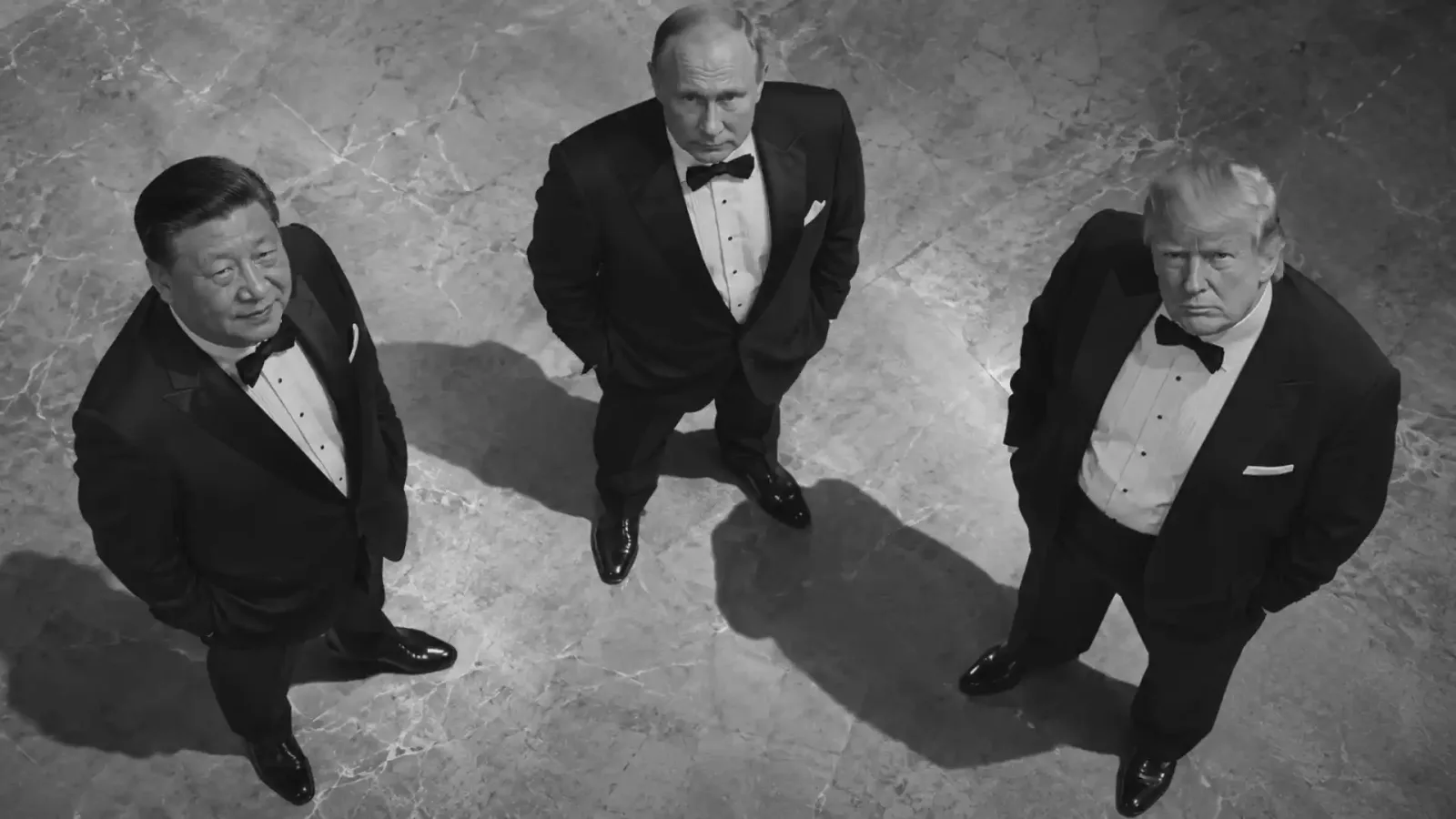
The unprecedented trilateral summit involving US President Donald Trump, Chinese President Xi Jinping and Russian President Vladimir Putin in Shenzhen on 19 November 2026 raises questions about the return of great-power diplomacy conducted outside established multilateral security frameworks. Washington seeks progress on nuclear arms control and the Iran conflict, Moscow wants greater influence over negotiations concerning Ukraine, while Beijing seeks strategic stability without compromising its military expansion or partnership with Russia. Although the meeting has invited comparisons with the 1945 Yalta Conference, the divergence in national interests makes an immediate comprehensive bargain improbable. Its greater significance lies in the possibility of establishing a recurring mechanism through which the three powers negotiate selected security questions. Such an arrangement could constrain Europe's influence over its own security environment and create new strategic complications for India.
The Shenzhen Summit and Its Strategic Context
On 19 November 2026, Donald Trump, Xi Jinping and Vladimir Putin gathered in Shenzhen for their first formal trilateral summit on the sidelines of the Asia-Pacific Economic Cooperation (APEC) leaders' meeting. Beijing had formally confirmed the engagement on 16 November, describing its intended purpose as promoting international peace and strategic stability among major powers.¹
The meeting followed separate bilateral engagements that exposed the different priorities of the three governments. According to Kremlin foreign policy adviser Yuri Ushakov, Ukraine dominated the Trump–Putin discussions. During his subsequent meeting with Xi, Trump expressed his desire for Washington and Beijing to help end the Russia–Ukraine war. However, US officials had previously indicated that Ukraine was not expected to feature prominently in the formal trilateral discussions.²
The distinction matters. The three leaders are engaging in parallel bilateral diplomacy while exploring a trilateral framework whose substantive boundaries remain uncertain. There is no verified agreement establishing a common position on Ukraine, Taiwan, Iran or the future international security order in the reporting reviewed for this assessment.
The significance of Shenzhen therefore extends beyond the prospect of an immediate diplomatic agreement. It creates an opportunity for Washington, Moscow and Beijing to begin treating selected international disputes as matters for direct negotiation among the three powers, potentially before the states most directly affected participate in those discussions.
Three Powers, Three Different Strategic Objectives
Washington's principal objective is to establish a new framework for nuclear arms control involving China alongside Russia. Trump also sees diplomatic engagement with Moscow and Beijing as a possible avenue for reducing tensions surrounding Iran, while maintaining negotiations with China over trade and technology restrictions.
Russia approaches the meeting from a different position. Putin seeks to strengthen Moscow's standing as an indispensable participant in international security negotiations, despite continuing Western sanctions and the war in Ukraine. A direct dialogue with Washington and Beijing provides Russia with diplomatic recognition and opportunities to pursue a settlement that accommodates its territorial and security demands.³
For Beijing, the calculations are more complicated. China wants to manage its competition with Washington, protect its access to international markets and advanced technologies, and resist external constraints on its expanding military capabilities. It also has little incentive to undermine its relationship with Moscow merely to facilitate an American diplomatic initiative.
During their bilateral meeting on 18 November, Xi and Putin reaffirmed the importance of deepening their strategic coordination, including cooperation in energy, trade and other sectors.⁴ The persistence of this relationship limits expectations that Washington could use trilateral diplomacy to fundamentally weaken China–Russia alignment.
Consequently, the most plausible outcome is selective accommodation rather than comprehensive strategic cooperation. Washington and Beijing may find common ground on economic stability, while Washington and Moscow explore Ukraine-related negotiations. These separate understandings would not necessarily require all three countries to reach a common position on the broader international order.
Nuclear Arms Control as the Immediate Test
Nuclear arms control presents both the strongest justification for trilateral engagement and its most serious obstacle.
The expiration of the New Strategic Arms Reduction Treaty (New START) on 5 February 2026 removed the last treaty-based numerical limits on deployed strategic nuclear forces between Washington and Moscow. Trump's proposed replacement would incorporate China, whose nuclear arsenal remains considerably smaller than those of the United States and Russia despite its rapid expansion.⁵
Beijing has consistently resisted trilateral numerical restrictions on the grounds that the existing asymmetry would institutionalise its strategic disadvantage. China is also concerned about American missile-defence developments, which could potentially affect the survivability of its nuclear deterrent.
For Washington, excluding China from future limitations would allow Beijing's nuclear expansion to continue while the United States negotiates constraints with Russia. This produces a structural disagreement that cannot be resolved merely through political declarations.
A more realistic outcome would be an agreement to initiate sustained strategic-stability consultations, improve crisis communication and consider confidence-building measures concerning nuclear deployments and command-and-control systems. Such steps could reduce uncertainty without requiring China to immediately accept the same numerical limitations as Washington and Moscow.⁶
The critical indicator will be whether Shenzhen produces an institutional negotiating process. A commitment to further consultations would represent limited progress. A verifiable arms-control agreement would require considerably more substantive negotiations.
Ukraine and the Risk of European Marginalisation
The summit's most consequential political implication concerns the management of the Russia–Ukraine conflict.
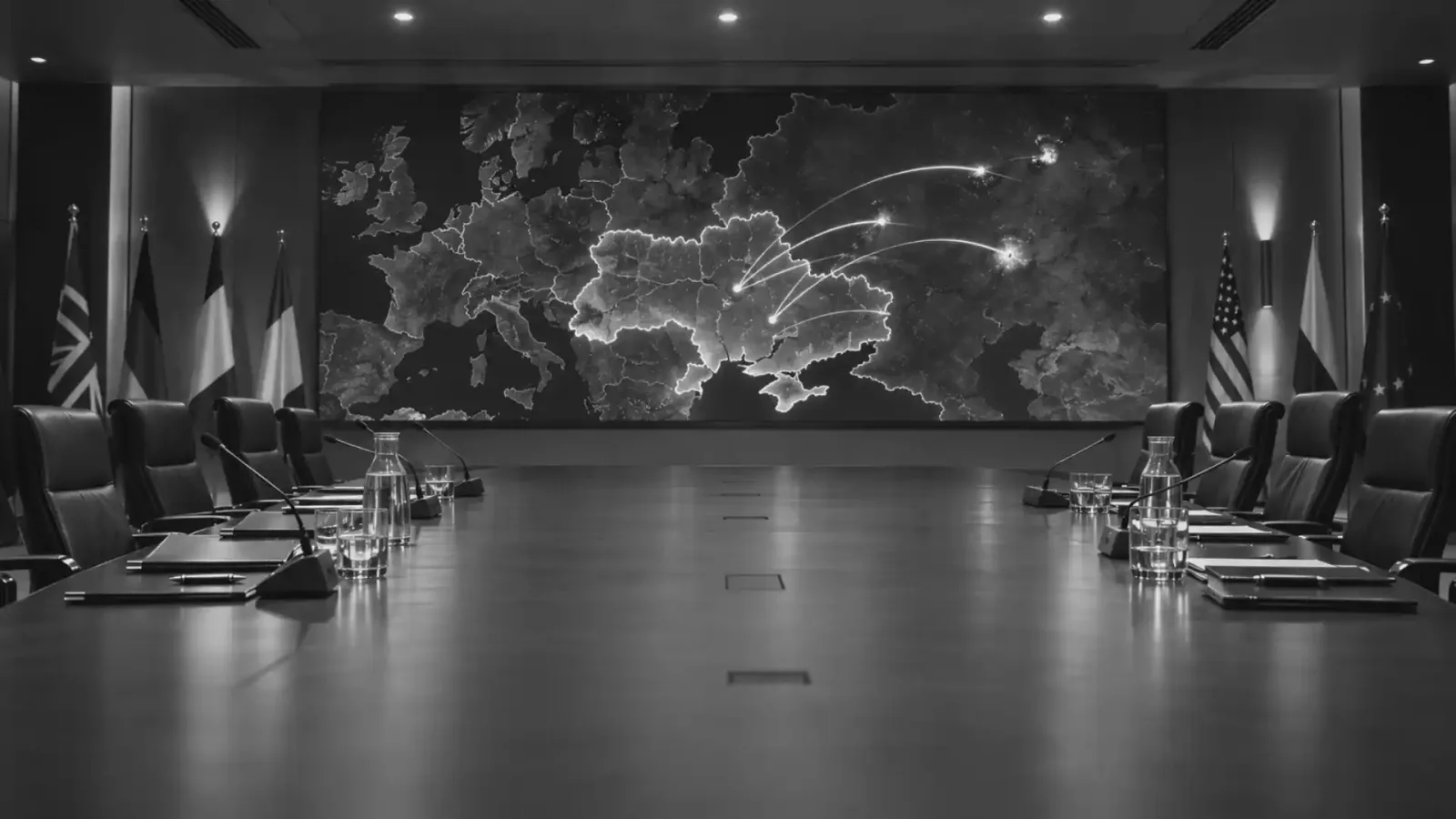
Moscow has an interest in engaging Washington over Ukraine's territorial status, security guarantees and the future relationship between Russia and European security institutions. Direct engagement with the American president provides an opportunity to pursue these questions without initially negotiating with the full coalition supporting Kyiv.
The absence of European representation from the trilateral meeting is not itself evidence of deliberate exclusion from a peace process. The European Union is not an APEC member, and the meeting is being conducted outside a formal Ukraine negotiating framework. Nevertheless, the European states most directly concerned with Ukrainian security have limited influence over the discussions taking place in Shenzhen.⁷
A settlement shaped principally through Washington–Moscow negotiations would face serious implementation problems if European governments were excluded from decisions concerning sanctions, reconstruction, security guarantees or future military assistance. Europe possesses considerable economic leverage over Russia, but remains dependent on American capabilities in several areas of collective defence.
This creates a contradiction. European participation is essential for implementing any durable regional security arrangement, yet the growing preference for leader-level negotiations among major powers risks reducing its influence over the initial terms.
The frequent comparison with the 1945 Yalta Conference is therefore more useful as a warning about diplomatic exclusion than as a prediction of an imminent territorial settlement. Unlike the wartime coalition at Yalta, the three governments meeting in Shenzhen possess competing strategic interests and no agreed framework for reorganising international security.
Taiwan, Iran and the Possibility of Cross-Regional Bargaining
The implications of trilateral diplomacy extend beyond Europe because Washington's strategic relationships with Beijing and Moscow operate across interconnected security theatres.
For China, Taiwan remains a central national-security priority, while Washington's regional alliances and military deployments are important elements of deterrence in the Western Pacific. A broader improvement in US–China relations could create space for military crisis-management arrangements, but there is no verified evidence that Washington has offered concessions concerning Taiwan as part of the Shenzhen engagement.
The danger would arise if the United States began treating its regional security commitments as negotiable components of a wider strategic accommodation. Such an approach could undermine confidence among Indo-Pacific partners even without any formal agreement altering American policy.
Iran presents a different opportunity for limited cooperation. Trump and Xi have both emphasised the importance of maintaining oil shipments through the Strait of Hormuz amid the continuing conflict.⁸ China has a substantial economic interest in maritime stability, while Washington faces military and political costs from prolonged hostilities.
However, overlapping interests in restoring commercial shipping do not necessarily indicate agreement on Iran's future security arrangements or regional military balance. Russia and China maintain relationships with Tehran that differ fundamentally from Washington's approach.
The broader possibility is that the three governments could gradually develop issue-specific understandings across Europe, West Asia and the Indo-Pacific. Whether these remain independent negotiations or evolve into exchanges of concessions across different theatres will determine their strategic significance.
Strategic Implications for India
India's principal concern should be the emergence of diplomatic arrangements that affect its security interests without providing New Delhi sufficient influence over their formulation.
India is not an APEC member and therefore has no institutional place in the Shenzhen meeting.⁹ Nevertheless, it maintains substantial relationships with all three participating powers, making the evolution of their strategic interactions directly relevant to Indian foreign and security policy.
Three implications deserve particular attention.
First, improved US–Russia relations could reduce some of the diplomatic and economic complications India faces in maintaining defence and energy cooperation with Moscow. However, New Delhi should not assume that American engagement will weaken Russia's increasingly important strategic relationship with China. The latter remains a more consequential variable for India's long-term continental security.
Second, any movement towards US–China accommodation requires careful assessment. Greater stability between the two powers could reduce risks of military escalation in the Indo-Pacific and improve the international economic environment. However, an accommodation that reduces American willingness to challenge Chinese coercion would create different consequences for India, particularly given continuing strategic competition along the Sino-Indian frontier.
Third, an agreement that contributes to de-escalation in Iran and the Gulf would have direct benefits for India's energy security, shipping interests and wider economic relationships with West Asia. The value of such an arrangement would depend on its implementation and durability rather than on diplomatic announcements.
India should therefore approach the emerging diplomatic environment through independent assessments of each major relationship rather than assuming that cooperation among the three powers will automatically benefit or threaten Indian interests. Continued engagement with Washington, Moscow, Beijing and European capitals will be necessary to understand emerging negotiations and protect India's strategic choices.
More importantly, strategic autonomy in an increasingly transactional international order will require material capabilities alongside diplomatic flexibility. Diversified defence supply chains, greater technological self-reliance, stronger maritime partnerships and resilient energy arrangements will determine how effectively India can respond to understandings reached among larger powers.
Assessment
The Shenzhen summit does not presently establish the emergence of a new great-power order. The considerable differences separating Washington, Beijing and Moscow make a comprehensive agreement concerning global spheres of influence unlikely in the immediate term.
Its strategic significance lies instead in the possible normalisation of a three-power negotiating framework. If repeated engagements begin producing understandings on nuclear stability, regional conflicts, economic restrictions or military deployments, Shenzhen could eventually mark the beginning of a more selective form of great-power concert diplomacy.
For Europe, the principal risk is a weakening of its influence over negotiations that determine its own security. For India, the challenge is to preserve strategic agency within an international system where major powers may increasingly negotiate their differences through direct, transactional arrangements.
The decisive question is whether Shenzhen remains a symbolic diplomatic encounter or becomes the foundation of an enduring mechanism through which Washington, Beijing and Moscow manage international security questions. The latter would have substantially greater implications for the global balance of power than any immediate declaration issued by the three leaders.
Endnotes
Ministry of Foreign Affairs of the People's Republic of China, “Xi Jinping to Hold the China-Russia-U.S. Summit with President Vladimir Putin and President Donald J. Trump,” November 16, 2026.
Reuters, “Ukraine Was Main Topic at Trump-Putin Meeting, Kremlin Says,” November 19, 2026; Jarrett Renshaw and Trevor Hunnicutt, “US, China Can Help End Ukraine War, Trump Tells Xi Before Trilateral with Putin,” Reuters, November 19, 2026.
Reuters, “A New 'Yalta'? Trump and Putin Push for a Meeting That Xi Is Wary of Hosting,” November 14, 2026.
Ministry of Foreign Affairs of the People's Republic of China, “President Xi Jinping Meets with Russian President Vladimir Putin,” November 18, 2026.
International Institute for Strategic Studies, “The Expiration of New START,” May 2026; Arms Control Association, “Media Backgrounder: Trump, Putin, Xi Trilateral 'Denuclearization' Talks at APEC,” November 16, 2026.
Hui Zhang, “What Xi, Trump, and Putin Should Agree on in Shenzhen,” Belfer Center for Science and International Affairs, Harvard Kennedy School, November 18, 2026.
Ron Bousso, “Trump-Xi-Putin Summit Exposes Europe's Power Deficit,” Reuters, November 19, 2026.
Renshaw and Hunnicutt, “US, China Can Help End Ukraine War, Trump Tells Xi Before Trilateral with Putin,” Reuters, November 19, 2026.
Asia-Pacific Economic Cooperation, “Frequently Asked Questions,” section on APEC's 21 member economies, accessed November 19, 2026.
ImageSource: ChatGPT
Tags

Author