
BLA Leadership Transition: Rehman Gul Alias Mureed Appointed Commander-in-Chief
The appointment of Rehman Gul, alias Mureed, as Commander-in-Chief of the Baloch Liberation Army (BLA) on 14 November 2026 marks a significant transition in the organisation's leadership following the removal of Bashir Zeb Baloch. A former commander of the Majeed Brigade and member of the BLA's Senior Command Council, Mureed brings reported experience in the Pakistan Army and extensive involvement in the Baloch insurgency. His elevation raises important questions about internal power dynamics, organisational cohesion and the future influence of the Majeed Brigade within the BLA's command structure. This report examines the circumstances surrounding the leadership change, Mureed's background, the Majeed Brigade's operational and ideological significance, and the potential implications for the insurgency in Balochistan. While the transition suggests an effort to preserve organisational continuity, its consequences for the BLA's military strategy, internal leadership and campaign against Pakistani security forces and Chinese interests remain uncertain.
Introduction
The Baloch Liberation Army's (BLA) appointment of Rehman Gul, alias Mureed, as its new Commander-in-Chief on 14 November 2026 marks an important development in the organisation's leadership. Mureed's elevation follows the removal of Bashir Zeb Baloch earlier in November and an interim transfer of administrative, military and policymaking authority to the BLA's Senior Command Council. The appointment brings to the organisation's highest position a commander who previously headed the Majeed Brigade, the BLA's specialised suicide-attack formation, and served on its Senior Command Council. The leadership change is therefore significant not simply as a succession of individuals, but because of the institutional position and organisational experience of the person selected to lead the movement. [i]
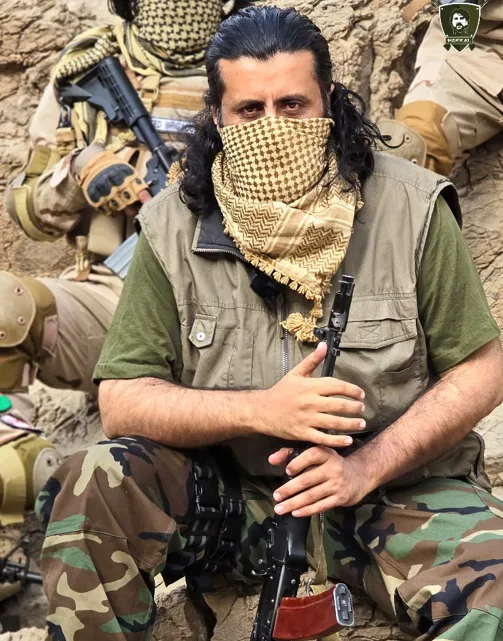
BLA Commander in Chief Rehman Gul Alias Mureed
In its statement dated 14 November, the BLA said Mureed had been elected unanimously following consultations within the Senior Command Council and with the endorsement of the organisation's leadership and commanders. The statement described him as a senior commander with extensive experience in important organisational positions, specifically identifying his previous membership of the Senior Command Council and command of the Majeed Brigade. It also declared that the organisation's campaign would continue with renewed intensity under the new leadership. The statement, however, provides little information about the internal deliberations that preceded the decision, the precise circumstances of the leadership transition or any changes to the command structure. Its account should consequently be understood as the BLA's official presentation of the appointment rather than independent confirmation of internal unanimity. [ii]
The significance of Mureed's elevation becomes clearer when considered against the BLA's recent organisational trajectory. Over the past several years, the group has expanded the geographical reach and visibility of its campaign, increasingly combining guerrilla activity in Balochistan with attacks on major infrastructure, security installations and Chinese interests. The Majeed Brigade has occupied a particularly prominent position in this evolution. Its association with high-profile suicide attacks has given it a distinct role within the BLA, while its leadership has become increasingly important to the organisation's public identity and operational profile. Mureed's movement from command of this formation to the overall leadership therefore raises questions about the relationship between the BLA's senior political-military authority and its specialised armed formations.
The appointment also follows a period of reported disagreement over the organisation's leadership and military direction. The removal of Bashir Zeb and the subsequent selection of Mureed indicate that the BLA's senior command has undergone a significant adjustment. Yet, the available public statements do not establish whether this transition represents a change in strategic direction, a consolidation of existing command relationships or an attempt to address internal organisational difficulties. Distinguishing between these possibilities is essential to understanding what the appointment may mean for the future of the insurgency.
This report examines Mureed's reported background, his rise within the BLA, the history and organisational significance of the Majeed Brigade, and the circumstances surrounding the leadership transition. It assesses the implications of his appointment while distinguishing between information disclosed by the organisation, findings reported by independent researchers and analytical conclusions drawn from the available evidence.
1. The leadership transition: From Bashir Zeb to Rehman Gul
The circumstances surrounding Mureed's appointment cannot be understood without examining the decision to remove Bashir Zeb Baloch. On 3 November 2026, BLA spokesperson Jeeyand Baloch announced that Bashir Zeb would no longer serve as Commander-in-Chief following a decision taken at a joint meeting of the organisation's senior leadership on 16 October. The announcement stated that administrative, military and policymaking authority had been transferred to the Senior Command Council pending the selection of a successor. [iii]
The BLA presented the decision as a constitutional transition rather than a response to an internal confrontation. Its statement referred to organisational principles introduced during the restructuring undertaken under Aslam Baloch in 2018, arguing that leadership positions should not be held indefinitely by individuals, regardless of their influence or seniority. It further claimed that the transition had taken place without fragmentation or disruption to the organisation's command structure. [iii]
This explanation is important because it reveals how the BLA wishes to present its internal governance. By emphasising collective decision-making, constitutional procedures and the authority of the Senior Command Council, the organisation is attempting to demonstrate that its leadership does not depend exclusively on the personal authority of an individual commander. Whether this institutional arrangement operates as described cannot be established from the public statements alone. The organisation has not released its constitution, explained the specific procedures governing the removal and election of a commander-in-chief, or provided details of the deliberations that led to Bashir Zeb's departure.
Independent reporting has raised questions about the circumstances surrounding the leadership transition. Reports published in early November 2026 suggested that disagreements over military strategy and the consequences of Operation Herof 2 had contributed to Bashir Zeb's declining influence within the organisation. The reports further indicated that Rehman Gul had increasingly assumed an influential role in the BLA's central decision-making before the formal leadership change. [iv]
The assessment also identified differences over the conduct of the BLA's military campaign, particularly the costs associated with large-scale operations and the preservation of experienced personnel. These claims offer a possible explanation for the leadership change. Neither the BLA's November announcements nor the available reporting provides sufficient evidence to conclude that strategic disagreements were the sole reason for Bashir Zeb's removal.
The appointment of Mureed on 14 November nevertheless resolves the immediate question of succession. His previous position on the Senior Command Council means that he was already part of the body entrusted with the organisation's administration and decision-making during the interim period. His appointment therefore represents an elevation from within the existing senior leadership rather than the introduction of an outsider.
2. Rehman Gul: From Pakistan Army service to BLA leadership
Rehman Gul's background distinguishes him from several prominent figures associated with the Baloch insurgency. Unlike commanders whose political trajectories developed primarily through student organisations and nationalist activism, Gul's reported career includes service in the Pakistan Army before his entry into the BLA.
A profile published by Imtiaz Baloch in the Jamestown Foundation's Militant Leadership Monitor on 13 August 2025 identifies Gul as a former member of the 19 Frontier Force Regiment. According to the profile, he joined the Pakistan Army in 2002, completed military training at the Pakistan Military Academy in Kakul and served for approximately eight years. His reported postings included locations in North and South Waziristan and the Line of Control sector in Kashmir. He subsequently left military service and joined the BLA in 2010, initially operating in the Bolan region under Aslam Baloch. [v]
The significance of this background lies in the contrast between his former institutional affiliation and his subsequent position within an armed organisation fighting the Pakistani state. His reported service placed him within the country's military establishment during a period of intensive counterinsurgency operations in the former Federally Administered Tribal Areas. His subsequent association with the BLA brought him into an insurgent environment where military experience and familiarity with the security establishment could carry considerable organisational value.
Jamestown's account also attributes an important role to Gul in the BLA's transition towards more prominent suicide attacks. The publication describes him as a senior figure involved in training, field command and the development of the organisation's specialised attack capability. It identifies his command of the Majeed Brigade as a central stage in his rise within the BLA. [v]
There are, however, limits to what can be established about his military background. The publicly available profile relies partly on secondary reporting, social media material and accounts attributed to individuals familiar with his career. His reported service history should therefore be treated as a documented biographical account rather than a fully independently verified military record.
Gul is also reported to have written Brahui poetry and political material. His literary activity is relevant because it provides an additional dimension to his public identity within the Baloch nationalist milieu. The Jamestown profile refers to his published writings and poetry, including Padnadri, as part of his ideological and literary background. [v]
His elevation consequently brings together three aspects of his reported career: prior military service, prolonged involvement in the BLA's armed structure and senior organisational authority. These characteristics distinguish his profile from that of Bashir Zeb, whose rise was closely associated with Baloch student politics and the organisational leadership that followed Aslam Baloch's death in December 2018.
The appointment does not, by itself, establish that the BLA will adopt a more conventional military structure. Nor does former service in the Pakistan Army necessarily translate into an ability to improve the organisation's effectiveness. It does, however, place a commander with reported experience of both state military service and insurgent command at the head of the organisation.
3. The Majeed Brigade: Origins and development
The Majeed Brigade occupies a distinct position within the BLA's organisational structure. It is the organisation's specialised fidayee formation, associated primarily with suicide attacks and operations intended to generate substantial political and symbolic impact. Its importance is not measured simply by the number of attacks attributed to it, but by the position it occupies within the BLA's public identity, recruitment narrative and presentation of its military capabilities.
The name Majeed is associated with Majeed Langove, a Baloch militant who attempted to assassinate then Prime Minister Zulfikar Ali Bhutto during his visit to Quetta in 1974. The BLA's later narrative also commemorates a younger Majeed Langove, who died during a security operation in 2010. The organisation uses these figures to establish a historical lineage of self-sacrifice within Baloch nationalist resistance. [vi]
It is important, however, to distinguish this symbolic history from the actual establishment of the present-day formation. The Majeed Brigade was not an operational organisation in 1974. Its origins as a BLA unit date to 2010, when it was established under Aslam Baloch, also known as Aslam Achu. The distinction between the historical figures associated with its name and the later formation is necessary to avoid conflating separate periods of Baloch militancy.
Research published by the Combating Terrorism Center (CTC) at West Point identifies the formation's establishment as 17 March 2010, with its first reported operation taking place in December 2011. The initial attack was directed against the residence of Shafiq Mengal, a local political figure in Quetta. Following this operation, the formation remained inactive for approximately seven years before its re-emergence in 2018. [vi]
The August 2018 attack near Dalbandin, targeting a bus carrying Chinese engineers associated with the Saindak mining project, marked the return of the Majeed Brigade to the BLA's operational narrative. The attack was particularly significant because it brought together two themes that would subsequently become central to the organisation's messaging: opposition to Chinese economic involvement in Balochistan and the use of suicide attacks against strategically significant targets. [v][vi]
The revival also coincided with a broader transformation in the BLA's campaign. Its activities increasingly extended beyond isolated attacks on security personnel towards operations intended to attract national and international attention. Chinese nationals, infrastructure associated with CPEC and prominent security installations became recurring subjects of the organisation's propaganda. The Majeed Brigade provided the BLA with a formation through which it could associate these attacks with a distinct organisational identity.
The brigade's development also needs to be considered against the fragmentation of the BLA. Following the 2017 split, rival factions emerged, commonly distinguished in research and reporting as BLA-J and BLA-Azad. The issue is particularly relevant because both factions have subsequently claimed the Majeed Brigade name. Research published by CTC in 2025 documents how BLA-J claimed the revival of the original formation in 2018, while BLA-Azad later claimed its own Majeed Brigade following an attack in March 2025. [vi]
Consequently, references to the Majeed Brigade should not automatically be treated as references to a single formation operating under a unified BLA command. In the present case, the announcement naming Rehman Gul as commander-in-chief comes from the faction represented by spokesperson Jeeyand Baloch and associated with the organisational lineage of Aslam Baloch. The appointment should therefore be understood within that faction's command structure.
4. The Majeed Brigade: Operational and Ideological Significance
The Majeed Brigade's emergence as a prominent component of the BLA has been accompanied by a series of attacks against Pakistani security personnel, Chinese nationals and locations associated with major economic projects. Its activities have given the organisation a specialised formation through which it has sought to project its campaign beyond the geographical limits of its traditional insurgent activity. The brigade's significance lies not only in its operational role but also in the political messaging surrounding its attacks, particularly those directed against Chinese interests in Pakistan.
The August 2018 Dalbandin attack, targeting a bus carrying Chinese engineers associated with the Saindak mining project, marked the brigade's return after several years of inactivity. The incident brought renewed attention to the security of Chinese personnel working in Balochistan and reflected the BLA's growing emphasis on opposing Chinese involvement in the province's mining and infrastructure sectors. It also established a pattern of targeting Chinese interests that would become a recurring feature of the organisation's campaign. [v]
The April 2022 suicide bombing near the Confucius Institute at the University of Karachi represented a further expansion of this campaign. The attack, carried out by Shari Baloch, killed three Chinese teachers and their Pakistani driver. Beyond its immediate casualties, the incident was significant because it extended the BLA's campaign to a major urban centre outside Balochistan and involved a female attacker. The organisation subsequently incorporated the attack into its propaganda, presenting it as part of its opposition to Chinese activities in Pakistan. [v][vii]
In October 2024, the BLA claimed responsibility for a suicide attack targeting a convoy carrying Chinese nationals near Karachi's international airport. The attack killed two Chinese nationals and a Pakistani national and occurred shortly before Pakistan hosted the Shanghai Cooperation Organisation summit. Its timing increased the diplomatic significance of the incident and reinforced concerns about the vulnerability of Chinese personnel operating outside Balochistan. [v][viii]
The BLA's campaign, however, has not been confined to Chinese interests. Its attacks have also targeted Pakistani military and security institutions, reflecting a wider effort to challenge the state's authority and demonstrate the organisation's ability to conduct operations beyond its traditional areas of activity. The March 2025 Jaffar Express hijacking was particularly consequential. The operation involved the seizure of a passenger train travelling from Quetta towards Peshawar and resulted in the deaths of civilians and security personnel. The BLA claimed responsibility and subsequently used the incident extensively in its propaganda. The US Department of State also cited the hijacking in its August 2025 designation announcement. It is important to distinguish this operation from attacks specifically attributed to the Majeed Brigade, as the train hijacking was claimed by the wider BLA and should not be characterised as exclusively a brigade operation. [ix]
The formation also occupies a distinctive ideological position within the BLA. Unlike religiously motivated militant organisations, the Majeed Brigade's public justification for suicide attacks is primarily framed through secular Baloch nationalism. Its propaganda presents self-sacrifice as an expression of national commitment and resistance rather than religious obligation. This distinction is central to the organisation's attempt to construct a separate ideological identity for the formation and differentiate its campaign from that of groups such as the Tehrik-e-Taliban Pakistan and Islamic State Khorasan Province.
An October 2026 study published by the Combating Terrorism Center at West Point, titled Dying for the Nation, Not for God: Inside the Doctrine of the Balochistan Liberation Army's Suicide Wing, examines this ideological framework and the manner in which the BLA presents the Majeed Brigade's role within its wider movement. The study analyses the organisation's publications, including Tojeel (2024) and Dhak (2025), which provide insight into the formation's ideological narratives, historical references and portrayal of its activities. The material draws upon examples from other nationalist and separatist movements, including the Japanese kamikaze and the Liberation Tigers of Tamil Eelam, to situate the brigade within a broader narrative of secular nationalist militancy. [x]
The brigade's institutional standing is also reflected in its international designation. On 11 August 2025, the US Department of State designated the BLA as a Foreign Terrorist Organization and explicitly included the Majeed Brigade among its aliases. The designation also incorporated the brigade as an alias under the BLA's existing Specially Designated Global Terrorist status. This treatment is significant because it recognises the Majeed Brigade within the BLA's wider organisational identity rather than as an entirely separate organisation. [xi]
Taken together, the brigade's operational history, ideological identity and international recognition demonstrate its importance within the BLA's organisational structure. Its association with high-profile attacks against Chinese nationals and Pakistani security interests has made it one of the most recognisable components of the insurgency. Rehman Gul's previous command of this formation is therefore relevant to understanding his rise within the organisation. His appointment as Commander-in-Chief places an individual with experience leading one of the BLA's most prominent specialised formations at the head of the wider movement.
5. What Mureed's appointment means for the BLA
Mureed's elevation to Commander-in-Chief brings a former head of the Majeed Brigade into the organisation's highest leadership position. This is an important development because the brigade has occupied a prominent place in the BLA's campaign and has been closely associated with some of its most consequential attacks in recent years.
His previous membership of the Senior Command Council is equally important. It indicates that his appointment did not originate solely from his position within the Majeed Brigade. He was already part of the organisation's senior leadership, giving him an established position within the decision-making structure before Bashir Zeb's removal.
The appointment may also alter the relationship between the BLA's specialised formations and its central leadership. Under Mureed, the organisation will be led by someone whose previous command responsibilities were associated with a specialised suicide-attack formation. Whether this results in greater institutional influence for the Majeed Brigade, or simply reflects the elevation of an experienced commander, remains to be seen.
There is also a broader question concerning the relationship between Mureed and Bashir Zeb. The latter remains an important figure in the BLA's recent history, having assumed leadership following Aslam Baloch's death in 2018 and presided over the organisation's subsequent expansion. His removal from the top position does not establish that he has left the organisation or lost all influence within it. The BLA has not publicly clarified his future organisational role.
The distinction between a leadership transition and a wider internal restructuring will therefore be important. A change in the commander-in-chief does not necessarily mean that the organisation's regional command arrangements, specialised formations or existing strategic priorities will change. Much will depend on the extent to which Mureed can maintain the support of the Senior Command Council and the commanders who endorsed his appointment.
The BLA's public statements suggest an intention to maintain continuity. Its November 3 announcement stated that the leadership transition would not disrupt its military activities or chain of command, while the November 14 statement reiterated that its campaign would continue under the new leadership. These declarations indicate that the organisation wishes to prevent the transition from being interpreted as a weakening of its command structure. [ii][iii]
6. Implications for the insurgency in Balochistan
The leadership change comes at a time when the BLA has become one of the most prominent armed actors in the Balochistan insurgency. Its campaign has increasingly combined attacks against security forces with operations directed at infrastructure, transport networks and Chinese interests. The organisation has also invested substantially in its media output, using Hakkal to publish statements, operational claims, videos and material intended to present its activities as part of a sustained national liberation campaign.
Mureed's appointment does not provide sufficient evidence to conclude that the BLA will adopt a fundamentally different strategy. His previous command of the Majeed Brigade and his reported military background may influence the way he approaches organisational leadership, but these factors alone cannot establish the direction of future operations.
The more immediate significance lies in the leadership structure that has emerged following Bashir Zeb's removal. The BLA has moved from a period of collective authority under its Senior Command Council to the appointment of a new commander drawn from within that council. The transition demonstrates that the organisation has sought to preserve its existing institutional framework while replacing its most senior individual leader.
The Majeed Brigade will remain central to assessments of this transition. Its position within the BLA, its association with high-profile attacks and its ideological importance make it an important indicator of the organisation's internal balance of authority. Mureed's previous command of the formation also means that his relationship with the wider BLA leadership will be closely connected to questions about the brigade's position within the organisation.
The transition should also be viewed in the context of the BLA's relationship with China. The organisation has repeatedly identified Chinese personnel and projects in Balochistan as targets of its campaign. The attacks at Dalbandin, Karachi University and Karachi's airport, alongside the BLA's wider propaganda against CPEC, have made the security of Chinese interests a major dimension of the insurgency. The appointment of a former Majeed Brigade commander does not independently establish a change in this policy, but it reinforces the importance of examining the brigade's place within the new leadership structure.
At the same time, the BLA's internal cohesion will be an important factor in determining whether the transition produces organisational continuity. The public presentation of unanimity should not be mistaken for independent evidence that all disagreements have been resolved. The absence of publicly available details about the deliberations, Bashir Zeb's future position and the precise distribution of authority within the Senior Command Council leaves important questions unanswered.
Conclusion
The appointment of Rehman Gul alias Mureed as Commander-in-Chief represents a significant leadership transition within the Baloch Liberation Army. His elevation follows Bashir Zeb Baloch's removal and the temporary transfer of authority to the Senior Command Council, placing a former member of that council and commander of the Majeed Brigade at the head of the organisation.
Mureed's reported background distinguishes him from several previous BLA leaders. His former service in the Pakistan Army, subsequent involvement in the insurgency and leadership of the Majeed Brigade have given him a position that combines military experience with organisational authority. His appointment also brings renewed attention to the Majeed Brigade, whose development has been closely associated with the BLA's use of suicide attacks and its campaign against Pakistani security institutions and Chinese interests.
The immediate significance of the appointment is therefore one of leadership continuity accompanied by a change in the individual occupying the organisation's highest position. Whether it will produce a wider reorganisation, alter the relationship between the central leadership and specialised formations, or change the BLA's strategic direction cannot yet be established.
The more important question is whether Mureed can consolidate authority following a transition that has attracted competing explanations. The BLA has presented the change as an orderly institutional process, while independent assessments have suggested that disagreements over military strategy and organisational management preceded Bashir Zeb's removal. Until further evidence emerges, the appointment should be understood as a consequential change in leadership rather than proof of a fundamental transformation in the insurgency.
For the moment, Mureed's elevation places the former commander of the Majeed Brigade at the centre of the BLA's leadership. His tenure will provide a clearer indication of whether the organisation can maintain internal cohesion and strategic continuity following one of its most consequential leadership changes in recent years.
Endnotes
[i] Independent Urdu. (2026, November 14). Rahman Gul alias Mureed elected as the new Commander-in-Chief of the Baloch Liberation Army. https://www.independenturdu.com/node/188737
[ii] Baloch Liberation Army. (2026, November 14). Commander Rehman Gul alias Mureed elected as the new Commander-in-Chief of the organisation. Press release issued by spokesperson Jeeyand Baloch, dated November 14, 2026. Original statement reproduced in the accompanying CNAWS research material.
[iii] The Tribune. (2026, November 4). Baloch Liberation Army announces leadership transition, transfers power to Senior Command Council. https://www.tribuneindia.com/news/world/baloch-liberation-army-announces-leadership-transition-transfers-power-to-senior-command-council/
[iv] Khan, A. (2026, November 4). BLA Leadership Crisis: Bashir Zeb's Removal, Internal Divisions and Prospects for Reunification. Pakistan Institute for Conflict and Security Studies. https://picss.net/bla-leadership-crisis-bashir-zeb-removal/
[v] Baloch, I. (2025, August 13). Rahman Gul: The Former Pakistani Army Captain Now Commanding the BLA's Majeed Brigade. Jamestown Foundation, Militant Leadership Monitor. https://jamestown.org/rahman-gul-the-former-pakistani-army-captain-now-commanding-the-blas-majeed-brigade/
[vi] Jadoon, A., Reas, D., & Tarby, N. (2025). The Baloch Insurgency in Pakistan: Evolution, Tactics, and Regional Security Implications. Combating Terrorism Center at West Point. https://ctc.westpoint.edu/the-baloch-insurgency-in-pakistan-evolution-tactics-and-regional-security-implications/
[vii] Independent Urdu. (2022, July 5). Reporting on the Karachi University suicide bombing and the BLA's claim of responsibility. See also Jamestown Foundation, Baloch (2025), cited above.
[viii] Baloch, I. (2025, August 13). Rahman Gul: The Former Pakistani Army Captain Now Commanding the BLA's Majeed Brigade. Jamestown Foundation. See also BBC News reporting on the October 2024 Karachi airport attack and the associated investigation.
[ix] US Department of State. (2025, August 11). Terrorist Designation of the Majeed Brigade. https://www.publicnow.com/view/FD676D531A9CFB84B09E53DCFA450BFFA6ACFDDF
Jadoon, A., Reas, D., & Tarby, N. (2026, October). Dying for the Nation, Not for God: Inside the Doctrine of the Balochistan Liberation Army's Suicide Wing. Combating Terrorism Center at West Point. https://ctc.westpoint.edu/dying-for-the-nation-not-for-god-inside-the-doctrine-of-the-balochistan-liberation-armys-suicide-wing/
[xi] US Department of State. (2025, August 12). Foreign Terrorist Organization Designation of Balochistan Liberation Army. Federal Register, Public Notice 12788. https://public-inspection.federalregister.gov/2025-15292.pdf
ImageSource: ChatGPT
Tags

Author
Sushant Pawar
Sushant serves as the Intelligence/ Lead Analyst for the Pakistan Security Desk at CNAWS, specializing in the Balochistan insurgency and Tehrik-e-Taliban Pakistan (TTP). His work spans monitoring the broader regional security environment , including insurgency trends, militant networks, and cross-border dynamics, to assess their impact on stability across South Asia. Beyond terrorism analysis, Sushant tracks Pakistan's evolving political and security landscape, delivering insights that inform regional stability and India's national security priorities.