Department of Hybrid Warfare & Irregular Conflict · Situational Reports · Intelligence · Terrorism and Militancy ·
SITREP: Escalating Fracture Within TTP Sphere Following Kurram Killings
A major internal rupture has emerged within the militant ecosystem of northwestern Pakistan after 18 members of Jamaat-ul-Ahrar were reportedly killed in Kurram District on 20 May 2026. JuA has publicly accused a faction aligned with Tehreek-e-Taliban (Pakistani Taliban, TTP) Emir Noor Wali Mehsud of orchestrating the killings under the justification of a “one-sided fatwa.” The unusually aggressive statement by JuA spokesman Asad Mansoor signals the possible collapse of a four-year uneasy restraint between JuA and the Noor Wali-led TTP central command. The rhetoric indicates the dispute has moved beyond ideological disagreements into an active intra-jihadist conflict with revenge dynamics now openly declared.
Simultaneously, emerging chatter within militant and regional OSINT circles suggests the attack may have involved or been facilitated by elements linked to Islamic State Khorasan Province (ISKP). Unverified claims further allege growing operational coordination between ISKP, Lashkar-e-Taiba (LeT), and segments of Pakistani intelligence structures in parts of Khyber Pakhtunkhwa aimed at containing or fragmenting TTP influence.
If accurate, the incident could represent not merely an internal TTP purge, but a broader proxy conflict within the militant landscape of Pakistan’s northwest.
Key Developments
The statement released by Jamaat-ul-Ahrar marks one of the most direct and confrontational public challenges to the authority of Noor Wali Mehsud in recent years. In unusually harsh language, JuA accuses Noor Wali’s faction of systematically eliminating rival jihadist elements and dissenting commanders since the early years of Tehrik-i-Taliban Pakistan. The statement revives long-standing grievances tied to the deaths of loyalists associated with former TTP emir Hakeemullah Mehsud, Punjabi militant factions, former JuA cadres, and commanders allegedly sidelined or removed during Noor Wali’s consolidation of power within the movement. JuA further claims that for the past four years it deliberately chose restraint and silence in order to preserve “jihad-e-Pakistan,” maintain organizational cohesion, and prevent the Pakistani state from exploiting internal divisions. However, by framing the recent killings of its members as unjustified murders legitimized through fabricated fatwas, the group now presents retaliation not merely as revenge, but as a religious and principled obligation. The tone and framing of the statement strongly indicate that JuA no longer views the current TTP leadership as either legitimate or capable of internal reconciliation, significantly increasing the risk of an open intra-jihadist confrontation.
Assessment of the Attack
Scenario A - Internal TTP Purge
One of the most plausible explanations for the killings in Kurram District is that they were part of a deliberate internal purge carried out by factions loyal to Noor Wali Mehsud against perceived dissenters within Jamaat-ul-Ahrar. Relations between JuA and the central leadership of Tehrik-i-Taliban Pakistan have remained fragile for years, shaped by ideological disagreements, leadership rivalries, and disputes over operational autonomy. Noor Wali has long been associated with efforts to centralize authority within the TTP structure, often sidelining or removing commanders considered insufficiently loyal or organizationally disruptive. JuA’s latest statement reinforces this interpretation by referencing earlier killings of rival commanders and accusing the TTP leadership of repeatedly weaponizing accusations of deviation or indiscipline to justify violence against fellow militants. Under this scenario, the operation may have been intended to neutralize JuA elements seen as increasingly autonomous or potentially rebellious. However, the unusually public and confrontational response from JuA now risks transforming what may have begun as a controlled internal disciplinary action into a wider organizational fracture, potentially triggering retaliatory attacks, defections, and the emergence of competing militant blocs.
Scenario B - ISKP Exploitation Operation
An alternative explanation emerging within militant and regional OSINT circles is that actors linked to Islamic State Khorasan Province may have either conducted or facilitated the attack while deliberately allowing suspicion to fall on the TTP leadership. Such an operation would align with ISKP’s long-standing strategy of exploiting divisions within rival jihadist organizations in order to weaken them from within. By intensifying mistrust between JuA and Noor Wali’s faction, ISKP could accelerate fragmentation inside the TTP ecosystem, creating opportunities to recruit disgruntled JuA fighters and expand its own influence within tribal militant networks historically aligned with the TTP. ISKP has repeatedly benefited from defections driven by ideological disputes, takfiri tensions, factional rivalries, and tribal grievances across the former FATA belt. The current environment, marked by accusations of betrayal, fabricated fatwas, and internal bloodshed, presents ideal conditions for such exploitation. If ISKP involvement is eventually confirmed, the incident would represent more than a simple militant dispute; it would indicate a calculated destabilization strategy designed to trigger cascading fragmentation within Pakistan’s jihadist landscape through manipulation of existing organizational fault lines.
Scenario C - Hybrid Proxy Destabilization Model
A more complex and highly sensitive theory circulating among regional militant observers is that external intelligence-linked actors may have exploited pre-existing tensions between JuA and the TTP leadership in order to deepen fragmentation within the anti-state militant sphere. According to circulating claims, elements linked to Islamic State Khorasan Province and Lashkar-e-Taiba have been expanding infrastructure and operational presence in parts of Khyber Pakhtunkhwa, allegedly benefiting from varying degrees of permissiveness from segments of Pakistani security structures. Within militant discourse, this has fueled speculation that intra-TTP instability is being strategically encouraged to weaken the cohesion and operational capacity of anti-state insurgent factions. Such perceptions are rooted in long-standing accusations inside militant ecosystems that sections of the Pakistani establishment selectively tolerate, manipulate, or redirect certain factions in pursuit of broader security objectives, including dividing insurgent networks, redirecting violence outward, or preventing the emergence of a unified militant command structure. At present, no independently verifiable evidence conclusively demonstrates direct orchestration by Inter-Services Intelligence or other state actors. Nevertheless, the perception itself carries significant operational consequences. As militant groups increasingly suspect infiltration, manipulation, or selective targeting, internal paranoia is likely to intensify, increasing the probability of further purges, retaliatory violence, and destabilizing factional warfare across the region.
Strategic Implications
Potential Fragmentation of TTP
The statement issued by Jamaat-ul-Ahrar represents one of the most serious and public challenges to the authority of Noor Wali Mehsud in recent years and may signal the beginning of a broader fragmentation process within Tehrik-i-Taliban Pakistan. By openly accusing the TTP leadership of systematically targeting fellow militants through fabricated fatwas and internal purges, JuA has crossed from quiet internal dissent into overt political and ideological confrontation. This significantly raises the possibility of JuA moving toward semi-separation from central TTP structures while still retaining operational links with sympathetic factions. The fallout could trigger retaliatory assassinations between rival commanders, deepen tribal and factional realignments, and create conditions for defections toward Islamic State Khorasan Province among fighters disillusioned with Noor Wali’s leadership. If tensions continue escalating, the region could witness the return of sustained factional warfare reminiscent of earlier fragmentation periods in the former FATA belt, particularly as competing militant groups attempt to consolidate territory, influence, and ideological legitimacy.
ISKP Opportunity Window Expands
Any major internal crisis within the TTP ecosystem is likely to create significant strategic opportunities for Islamic State Khorasan Province, which has historically benefited from instability among rival jihadist organizations. Internal distrust, revenge dynamics, and ideological polarization within TTP-aligned factions could substantially increase ISKP’s recruitment opportunities, particularly among younger or marginalized commanders frustrated with Noor Wali’s centralized leadership structure. As militant factions divert resources toward internal security, loyalty enforcement, and retaliatory operations, operational focus may shift inward rather than toward attacks against the Pakistani state. This inward fragmentation creates an ideal environment for ISKP to position itself as a more uncompromising and ideologically “pure” alternative. The instability could also further destabilize border regions between eastern Afghanistan and Khyber Pakhtunkhwa, where overlapping militant networks, tribal routes, and historical safe havens provide fertile ground for recruitment, infiltration, and expansion of influence. In such an environment, even limited ISKP involvement or propaganda exploitation could produce disproportionate strategic gains.
Increased Violence in Khyber Pakhtunkhwa
The immediate security environment across parts of Khyber Pakhtunkhwa is likely to deteriorate following the killings and JuA’s subsequent declaration of retaliation. Areas including Kurram District, North Waziristan, South Waziristan, and Khyber District face elevated risks of militant violence as rival factions move to secure territory, eliminate suspected defectors, and demonstrate organizational strength. Revenge killings and targeted assassinations are likely to increase in the near term, particularly against commanders accused of disloyalty or collaboration with opposing factions. Simultaneously, internal loyalty purges within TTP-aligned networks may intensify as leadership circles attempt to prevent further fragmentation or infiltration. These dynamics raise the probability of retaliatory operations not only between JuA and Noor Wali-aligned factions, but also involving opportunistic intervention by ISKP-linked actors seeking to exploit the instability. Collectively, these developments point toward a period of heightened volatility across the former FATA region, with the potential for localized militant conflicts to evolve into a broader intra-jihadist confrontation.
Analytical Outlook
The killings in Kurram District and the subsequent response from Jamaat-ul-Ahrar may represent the beginning of the most serious internal rupture within the Tehrik-i-Taliban Pakistan ecosystem since the major fragmentation period that followed the death of Hakimullah Mehsud and the post-2014 militant realignments. JuA’s statement goes far beyond emotional outrage or symbolic condemnation; it effectively amounts to a declaration that the current leadership structure under Noor Wali Mehsud has lost ideological legitimacy in the eyes of at least part of the militant network. By accusing the TTP leadership of systematically murdering fellow Mujahideen through fabricated fatwas and internal purges, JuA signals that internal trust within the organization has fundamentally collapsed and that retaliation is now viewed not only as justified, but unavoidable.
Regardless of whether the killings were directly orchestrated by Noor Wali-aligned factions, manipulated by Islamic State Khorasan Province, or indirectly exploited by hostile intelligence-linked actors, the broader strategic outcome remains largely unchanged. The cohesion of the anti-state militant landscape in northwestern Pakistan is entering an increasingly volatile and unpredictable phase marked by paranoia, factional distrust, ideological polarization, and heightened risks of retaliatory violence. The coming weeks will likely prove decisive in determining whether this crisis remains a limited internal dispute between JuA and the TTP leadership or evolves into a wider intra-jihadist conflict involving splinter factions, tribal networks, and opportunistic intervention by rival militant organizations across the former FATA region.
The views expressed are those of the authors and do not represent the views of CNAWS.
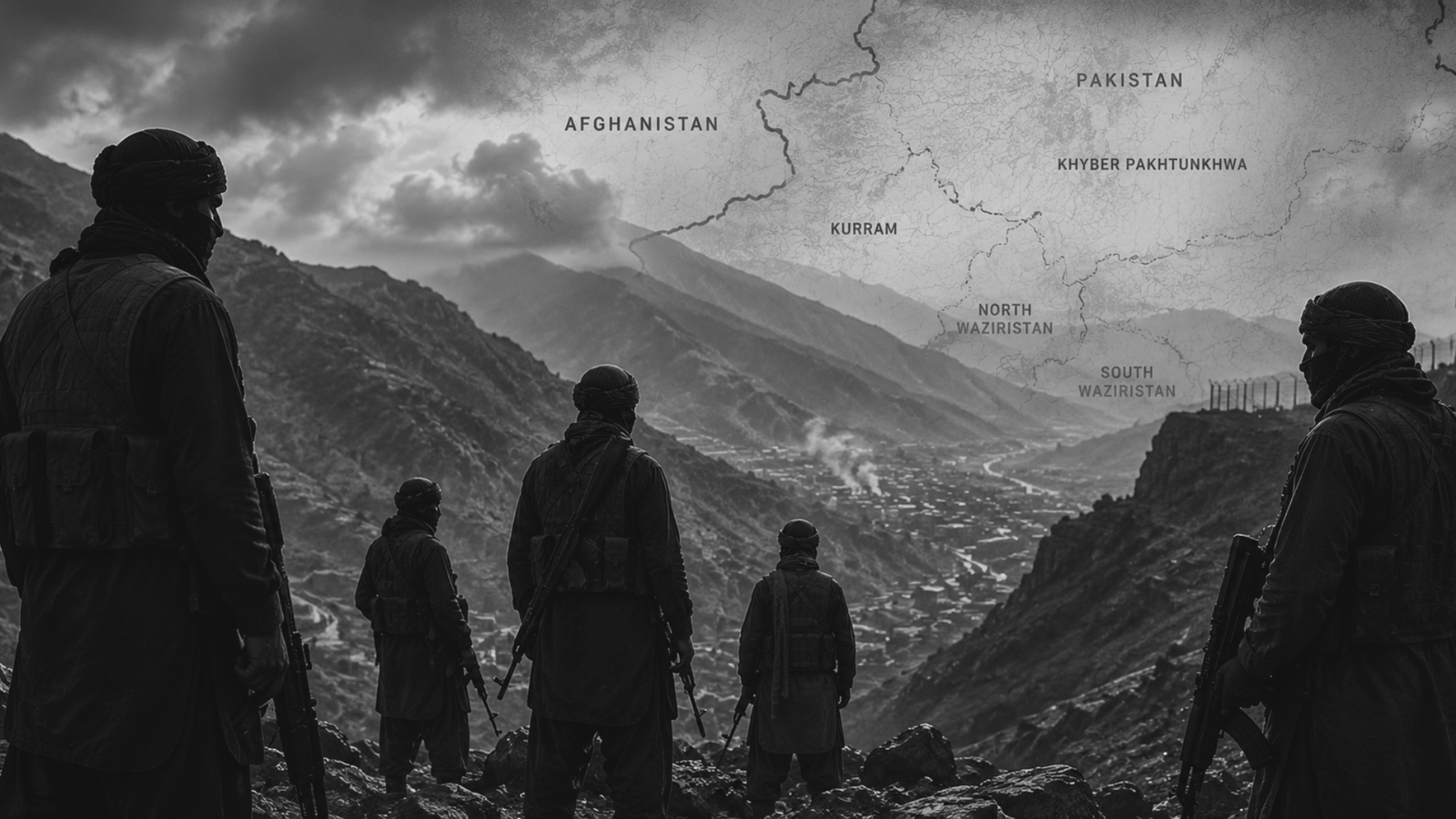
Image Source: ChatGPT
Tags
- #Hafiz Gul Bahadur Group
- #ISKP
- #Islamic State Khorasan Province
- #Jamaat-ul-Ahrar
- #Khyber Pakhtunkhwa
- #lashkar-e-taiba
- #pakistan
- #Pakistan ISI terrorism
- #Tehreek-e-Taliban Pakistan
- #ttp attacks in pakistan
Author
Sushant Pawar
Sushant serves as the Intelligence/ Lead Analyst for the Pakistan Security Desk at CNAWS, specializing in the Balochistan insurgency and Tehrik-e-Taliban Pakistan (TTP). His work spans monitoring the broader regional security environment , including insurgency trends, militant networks, and cross-border dynamics, to assess their impact on stability across South Asia. Beyond terrorism analysis, Sushant tracks Pakistan's evolving political and security landscape, delivering insights that inform regional stability and India's national security priorities.