Department of Hybrid Warfare & Irregular Conflict · Articles · Terrorism and Militancy ·
Pakistan Kills 18 Militants in KP and Balochistan, but Is Its Counterterrorism Strategy Working?
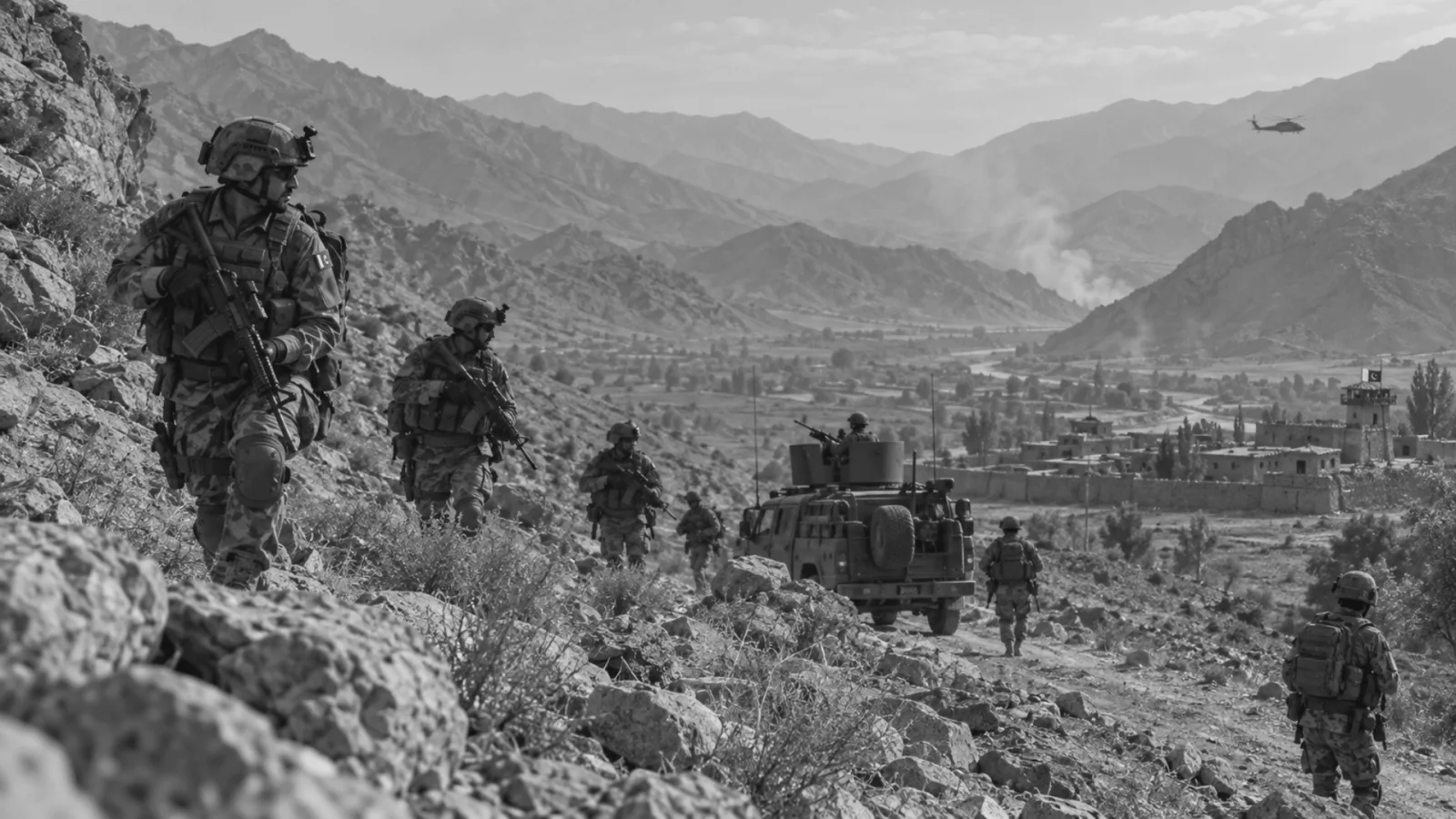
Pakistan's security forces reportedly killed 18 militants in separate operations in North Waziristan and Mastung on 7 October 2026. The latest engagements demonstrate Islamabad's continuing capacity to locate and eliminate militant personnel, but they do not, by themselves, establish that its counterterrorism campaign is reducing insurgent operational capability. CNAWS incident-level data from March through August reveals a persistent divergence between militant fatalities and militant-initiated activity. In August, 408 militant fatalities were recorded while militant actors initiated 335 of 440 security incidents. Separate September reporting by the Pakistan Institute for Conflict and Security Studies also points to continued militant activity, although its narrower attack-based dataset should not be directly compared with CNAWS figures. CNAWS assesses that Pakistan is imposing significant tactical attrition without yet demonstrating sustained suppression across its two principal conflict theatres. The decisive measure will be whether militants lose their ability to regenerate cells, sustain attacks and retain operational initiative.
The 7 October Operations Renew an Uncomfortable Question
Pakistan's counterterrorism campaign continues to produce casualty figures that would ordinarily be interpreted as evidence of significant operational progress. On 7 October, Pakistani security sources reported that 13 militants were killed in an intelligence-based operation in North Waziristan, Khyber Pakhtunkhwa, following surveillance of suspected militant movement and hideouts. In a separate operation, five militants were reportedly killed in the Siyah Pasht and Killi Gashtari areas of Mastung district, Balochistan. Security sources also reported recovering weapons and ammunition and continuing clearance operations.¹ Pakistani authorities described the North Waziristan militants using the designation Fitna al-Khawarij, commonly applied by Islamabad to the Tehreek-e-Taliban Pakistan (TTP). Those killed in Mastung were identified under the state designation Fitna al-Hindustan, a term associated with Islamabad's allegations of Indian support for Baloch militant organisations. Those allegations should not be adopted as established fact merely because they appear in Pakistani official reporting. The reported casualty totals and group affiliations have not been independently verified.¹
The operational tempo did not appear to ease immediately. On 9 October, Pakistani state media reported another operation in North Waziristan in which seven militants were said to have been killed. The separate reports do not provide a sufficiently complete incident-level reconciliation to support casually adding every announced casualty figure into a single cumulative total.² The more important issue is what these operations achieve after the engagements end. The October operations follow a series of large reported militant losses in September. On 4 September, Pakistan's military announced that its forces had killed 48 militants over approximately three days of operations across Balochistan, including Mastung, Quetta, Kalat and Sibi. The military also reported 21 militant deaths in several engagements in Khyber Pakhtunkhwa between 3 and 5 September. These are Pakistani military claims, not independently confirmed body counts, and the separate announcements should be checked for overlapping engagements before they are aggregated.³ ⁴
If an organisation loses dozens of fighters, does its attack frequency decline? Does it become less capable of choosing the time and place of engagements? Do previously active districts become quieter? Do its tactics narrow? Or does another cell emerge and continue the campaign? These questions, rather than the headline casualty figure, should determine how Pakistan's counterterrorism performance is assessed.
Attrition Is Not the Same as Suppression
A militant killed during a counterterrorism operation represents a tangible loss. Yet an insurgent organisation is not simply a collection of armed personnel. Its capacity to sustain violence depends on commanders, facilitators, recruitment pipelines, weapons, financing, communications, local intelligence, safe locations and movement routes. Removing personnel can degrade that system without necessarily dismantling it. Attrition measures losses imposed through killing or capture. Disruption refers to the degradation of logistical networks, command arrangements, communications, facilitators and planned operations. Suppression is a sustained reduction in an organisation's ability to generate violence, while strategic defeat is a substantially higher threshold at which the network can no longer regenerate meaningful operational capability. These outcomes are related, but they are not interchangeable. Pakistan has demonstrated an ability to impose tactical attrition, and individual raids may have eliminated important commanders, destroyed cells or prevented attacks that never subsequently appear in incident databases. Those successes should not be dismissed. The question is whether repeated tactical gains are producing a measurable deterioration in militant operational output.
CNAWS's August 2026 Pakistan Militancy Assessment illustrates the problem. The database recorded 408 militant fatalities during the month. Yet militant-initiated incidents increased from 146 in the first fortnight to 189 in the second. Across August, militant actors initiated 335 of 440 recorded incidents, while security forces initiated 104.⁷ Pakistan was inflicting substantial losses at the same time as militant activity remained elevated. These figures do not demonstrate that every counterterrorism operation failed. They show that casualty production and conflict suppression are different measures. Tactical effectiveness must be evaluated against subsequent changes in organisational behaviour, not treated as a substitute for them.
The Initiative Gap Persists
The most revealing measure may be which side continues to determine when and where violence occurs. In March, CNAWS recorded 247 security incidents, of which 202 were initiated by militants and 45 were security-force counterterrorism operations. Militant actors therefore initiated approximately 82 percent of recorded activity. The assessment concluded that militants retained considerable control over the tempo, timing and location of engagements.⁵ By August, militant actors were still responsible for 335 of 440 recorded incidents, or more than three-quarters of the total. The share of incidents initiated by militants had increased from approximately 71 percent in July to more than 76 percent in August. Formally coded counterterrorism operations fell from 96 in July to 61 in August, although security forces continued conducting other armed engagements, raids, drone operations and limited air activity.⁶ ⁷
The difference between the 104 security-force-initiated incidents and 61 formally coded counterterrorism operations reflects separate categories in the CNAWS coding framework. They should not be presented as conflicting counts or as interchangeable measures. A state can possess superior firepower and still lack operational initiative. Pakistani forces may successfully locate concentrations of fighters and apply overwhelming force once a target is identified. Insurgent cells, however, do not need to defeat the military conventionally. They need sufficient mobility, local networks and organisational resilience to continue generating engagements on terms they choose. Under those conditions, tactical victories can accumulate without changing the wider conflict environment.
September Data Reinforces the Concern
The September picture provides an important external check on the direction of the conflict. In an assessment published on 5 October, the Pakistan Institute for Conflict and Security Studies (PICSS) reported 225 militant attacks during September, compared with 199 in August, an increase of approximately 13 percent. PICSS described September as the highest monthly attack total in 12 years. It also recorded 545 deaths when casualties from militant attacks and security-force-initiated actions were combined.⁸ These statistics are not directly comparable with CNAWS's 440 August incidents or its 408 militant fatalities. CNAWS's dataset covers a wider range of coded security incidents, whereas the 225 figure from PICSS refers specifically to militant attacks. Differences in inclusion rules, actor classification and casualty coding can generate substantially different totals. The two datasets nevertheless indicate a common directional concern. Continued security-force operations have coincided with a persistently active insurgency.
The 7 October North Waziristan and Mastung operations must be interpreted against this longer trajectory. They demonstrate that Pakistan can continue to impose losses. They do not yet show that the ability of militant networks to plan and conduct subsequent attacks has been decisively impaired.
Two Insurgent Ecosystems, Two Operational Problems
Pakistan is not confronting a single insurgency with one organisational structure. Khyber Pakhtunkhwa remains a major high-frequency theatre for Pashtun militant organisations, including the TTP and associated factions. Balochistan presents a different challenge, involving geographically dispersed insurgent groups that combine attacks on security forces with disruption of transport routes, infrastructure and commercial activity. In August, Pashtun militant actors initiated 153 incidents, up from 113 in July, an increase of approximately 35 percent. Their activity remained concentrated largely in Khyber Pakhtunkhwa, with military personnel, police, checkpoints and fixed security installations among their principal targets. Baloch insurgents generated 175 incidents, up from 160 in July, making them the largest militant actor category in the CNAWS August dataset.⁷ The distinction matters because both theatres impose different demands on the state. In Khyber Pakhtunkhwa, repeated ambushes, checkpoint attacks, targeted violence and armed clashes sustain pressure on military and police units. In Balochistan, insurgents can combine direct attacks with highway obstruction, checkpoint seizures and sabotage designed to raise the economic and administrative cost of maintaining state authority.
CNAWS recorded 66 infrastructure-sabotage incidents during August, of which 58 were attributed to Baloch insurgent actors. The affected target categories included roads, bridges, railway lines, telecommunications systems, electricity infrastructure, vehicles and energy assets.⁷ Even when such incidents do not produce large casualty totals, they can affect mobility, supply chains and the perceived reliability of the security environment. The same number of militants killed in two provinces therefore does not necessarily represent an equivalent operational effect. Eliminating an isolated attack cell in North Waziristan is different from disrupting the facilitators, local connections and infrastructure-sabotage networks underpinning an insurgency in Balochistan.
Why Low-Cost Militancy Is Difficult to Exhaust
The tactical structure of militant violence further explains why high casualty figures have not produced a collapse. CNAWS's March assessment found that small arms were involved in approximately 70 percent of recorded incidents. Clashes, targeted attacks and explosions were the principal tactical categories, with ambushes accounting for 57 of 65 recorded clashes. Non-suicide explosive devices were used in 49 of 50 recorded explosive incidents.⁵ This pattern reflects an insurgency that does not require sophisticated conventional capabilities to remain operationally relevant. A small cell can ambush a patrol, attack a checkpoint, deploy an improvised explosive device or target an exposed vehicle with comparatively limited resources. Such tactics create a difficult cost relationship for the state. Security forces may devote substantial intelligence, personnel and military resources to finding and eliminating a cell, while parts of the surviving network require fewer resources to generate another attack. Losses can nevertheless have cumulative effects. Experienced commanders, recruiters, bomb-makers and facilitators may be difficult to replace, and repeated attrition could ultimately degrade technical competence and organisational cohesion. But those effects must be demonstrated through a decline in attack generation, complexity, geographical reach or regeneration capacity. The CNAWS data through August has not yet established sustained degradation on that scale.
Geographic Concentration Is Not Strategic Containment
Pakistan's security challenges remain heavily concentrated in two provinces. Approximately 96.6 percent of incidents in CNAWS's August dataset occurred in Khyber Pakhtunkhwa and Balochistan. KP recorded 228 incidents and 351 fatalities, while Balochistan recorded 197 incidents and 319 fatalities.⁷ This concentration indicates that Pakistan is not experiencing a geographically uniform national insurgency. Neither of its principal militant ecosystems has demonstrated sustained control over extensive parts of the country. However, concentration should not be confused with suppression. A militant network may remain entrenched within its established theatre while developing new facilitation routes, testing peripheral security responses and sustaining connections beyond its core operating area. CNAWS's March Expansion Index placed the conflict at 3.8 out of 10, classified as controlled diffusion. Violence remained concentrated in established conflict zones, while incidents in Sindh, Punjab and other peripheral areas indicated more limited signs of probing and network testing.⁵ The principal risk is therefore not necessarily sudden nationwide expansion, but prolonged entrenchment and gradual adaptation within and around the main conflict theatres.
Kinetic Pressure Cannot Resolve the Regeneration Problem Alone
Sustained military and police operations remain necessary for restricting the freedom of action of armed groups. However, kinetic pressure alone is unlikely to eliminate the broader conditions in which militant organisations recruit, mobilise, conceal personnel and rebuild local networks. In Balochistan and Khyber Pakhtunkhwa, longstanding disputes over political representation, governance, economic opportunity, displacement and security practices form part of the conflict environment. Such grievances should not be conflated with support for militancy. Their persistence can nevertheless create openings that violent organisations seek to exploit. Effective counterterrorism therefore requires more than repeat engagements against identified fighters. It also depends on dismantling facilitation networks, improving local intelligence and policing, protecting vulnerable infrastructure, restoring administrative legitimacy and reducing the conditions that enable organisational regeneration. Without those complementary effects, the state risks repeatedly defeating militant cells without producing an enduring reduction in the level of violence.
Strategic Assessment and Forward Indicators
CNAWS assesses with moderate confidence that Pakistan continues to demonstrate considerable tactical lethality but has not yet shown sustained operational suppression across its primary conflict theatres. This assessment rests on the documented imbalance between militant- and security-force-initiated incidents, the persistence of low-cost attack methods and the geographical resilience of militant activity through August. Independent September attack data from PICSS is consistent with continued pressure, although it cannot be combined directly with CNAWS totals.⁵ ⁷ ⁸
The claim that the October operations killed 18 militants is plausible as a reported security-force result, but the available public evidence is insufficient to determine the identity and organisational importance of every person killed, the scale of disrupted networks or the number of future attacks prevented. Confidence in assessing the tactical results of a particular operation is therefore lower than confidence in describing the broader pattern captured by the longitudinal data. A credible improvement would become visible through several related indicators. Militant-initiated incidents would decline over successive reporting periods, and the gap between militant and security-force operational initiative would narrow. Repeatedly active districts would become persistently quieter. Infrastructure sabotage, ambushes and targeted violence would decrease, while evidence of recruitment, facilitation and logistical regeneration would weaken. Such changes should be tracked over months rather than inferred from a single high-casualty engagement.
The distinction is fundamental. A high militant death toll demonstrates attrition. Fewer attacks, degraded networks and a sustained loss of militant initiative demonstrate suppression. The October operations may contribute to the latter outcome, but the evidence currently available does not establish that they have done so.
Conclusion
Pakistan's security forces have repeatedly demonstrated that they can impose severe losses on militant organisations. The reported killing of 18 militants in North Waziristan and Mastung on 7 October is the latest example. Yet the fundamental question remains unresolved. Can these losses prevent the next cell from forming, the next attack from being organised and the next operational cycle from beginning? CNAWS's March to August data, read alongside separate September reporting, shows a prolonged contest in which the state retains superior firepower while militant networks retain sufficient organisational resilience to sustain violence. Neither the ability to kill militants nor the ability to conduct repeated raids should be mistaken for evidence that the insurgency is collapsing. Pakistan's counterterrorism performance will ultimately be measured less by the number of militants killed in individual operations than by whether those operations produce a lasting decline in militants' capacity to attack. For now, tactical attrition remains visible. Strategic suppression remains unproven.
References
Dawn Report, “18 Terrorists Eliminated in KP, Balochistan Operations,” Dawn, October 8, 2026. Read source.
News Desk, “Security Forces Kill 7 Terrorists in North Waziristan IBO,” Dawn, October 9, 2026. Read source.
Dawn Report, “Forces Ramp Up Actions, Kill 48 Terrorists in Balochistan,” Dawn, September 5, 2026. Read source.
Dawn Report, “21 Terrorists Killed in KP Operations, Says ISPR,” Dawn, September 7, 2026. Read source.
Centre for New Age Warfare Studies (CNAWS), Pakistan Militancy Assessment, March 2026, monthly security assessment, CNAWS Intelligence Division, March 2026.
Centre for New Age Warfare Studies (CNAWS), Pakistan Militancy Assessment, July 2026, monthly security assessment, July 2026.
Centre for New Age Warfare Studies (CNAWS), Pakistan Militancy Assessment, August 2026, monthly security assessment, August 2026.
Pakistan Institute for Conflict and Security Studies (PICSS), “PICSS Weekly Insight: 25 Sep 2026–01 Oct 2026,” October 5, 2026. Read source.
Tags
- #Balochistan insurgency
- #North Waziristan
- #Pakistan Army
- #Pakistan counterterrorism
- #Pakistan militancy
- #Pakistan Security Crisis
- #Tehreek-e-Taliban Pakistan
- #TTP attacks
Author
Sushant Pawar
Sushant serves as the Intelligence/ Lead Analyst for the Pakistan Security Desk at CNAWS, specializing in the Balochistan insurgency and Tehrik-e-Taliban Pakistan (TTP). His work spans monitoring the broader regional security environment , including insurgency trends, militant networks, and cross-border dynamics, to assess their impact on stability across South Asia. Beyond terrorism analysis, Sushant tracks Pakistan's evolving political and security landscape, delivering insights that inform regional stability and India's national security priorities.