Political Centralization, Cross-Border Militancy and the Geo-Economic Unmaking of the Pakistan-Afghanistan Borderlands
This paper examines how cross-border militancy, political centralisation and declining economic connectivity are reinforcing instability along the Pakistan–Afghanistan frontier.
It analyses Pakistan’s counterterrorism campaign against the Tehreek-e-Taliban Pakistan (TTP), the strategic implications of emergency rule in Khyber Pakhtunkhwa, and the Taliban’s continued territorial control despite growing internal and external pressures. It also explores how border closures, disrupted trade and refugee returns are deepening economic and governance challenges.
The paper argues that neither military coercion nor economic engagement alone can stabilise the frontier. Instead, it proposes a phased framework combining verifiable Taliban action against the TTP, calibrated Pakistani restraint, restoration of accountable provincial governance, protected trade routes and locally grounded development.
Introduction
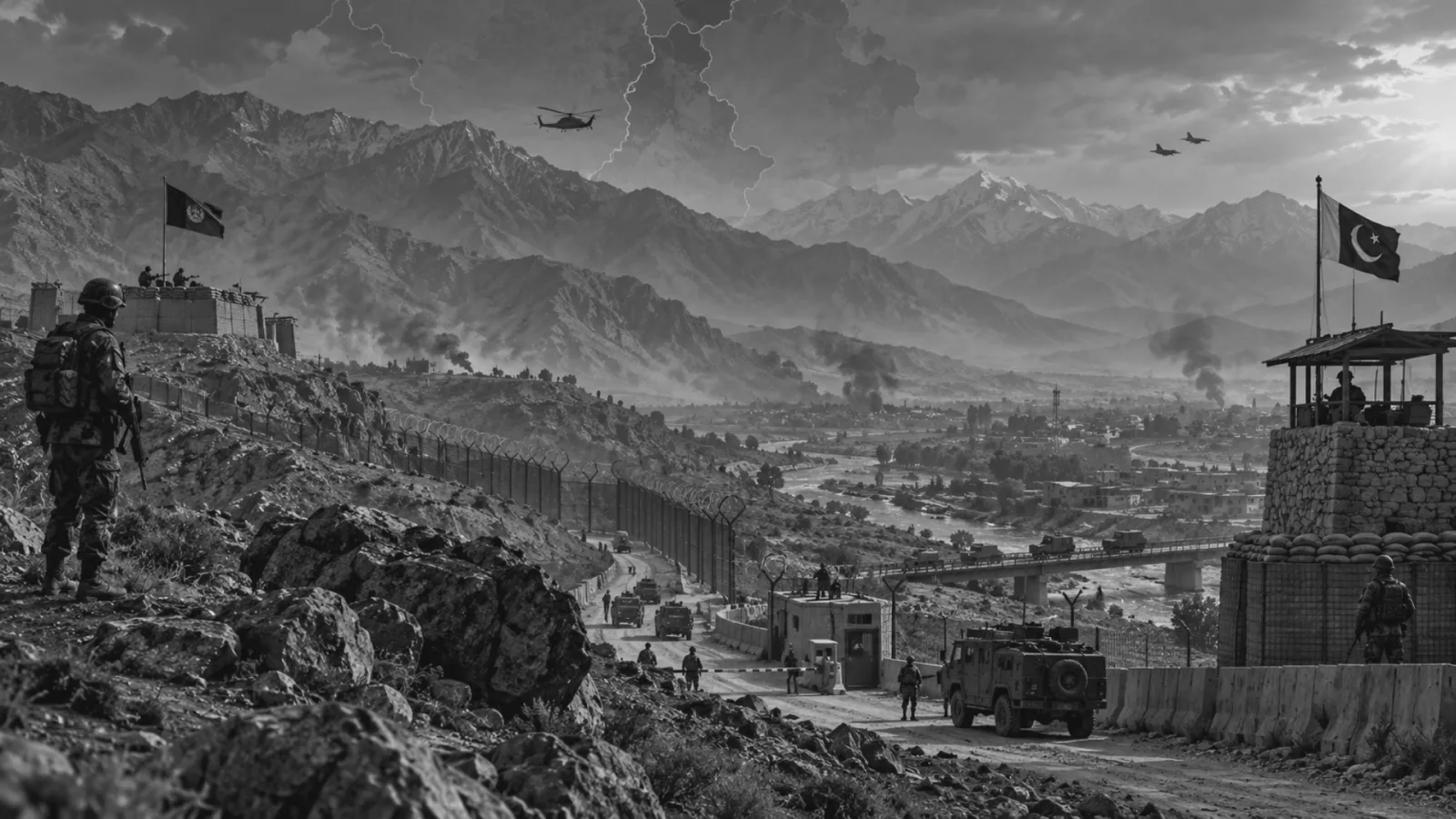
The Pakistan-Afghanistan frontier no longer faces a conventional border crisis. Instead, it is caught in a self-reinforcing cycle of coercive escalation, declining political legitimacy, and deteriorating economic connectivity. While Pakistan’s military pressure can disrupt Tehreek-e-Taliban Pakistan (TTP) networks and impose costs on Taliban authorities, such coercion becomes strategically counterproductive if it undermines elected representation in Khyber Pakhtunkhwa (KP), inflicts civilian harm, or disrupts the legal economy sustaining border communities. This erosion of trust diminishes human intelligence and administrative reach, while commercial isolation creates opportunities for smugglers, militant facilitators, and armed gatekeepers. The October 2026 imposition of emergency and governor’s rule in KP tests whether Pakistan can convert centralised command into sustainable control. Although this approach may enhance short-term coordination, it also risks eliminating the province’s principal electoral intermediary at a time when counterinsurgency requires increased local cooperation. On the Afghan side, the Taliban maintain effective territorial control. Anti-Taliban activities, such as those led by Sami Sadat’s Afghanistan United Front (AUF), reflect growing pressure but do not indicate imminent regime collapse. The most probable scenario is one of armed interdependence, in which both Pakistan and the Taliban authorities can inflict damage on each other, yet neither can unilaterally secure the frontier. The realistic policy objective is not immediate reconciliation, but rather the establishment of a minimum viable frontier compact. This compact should link verified Taliban restrictions on the TTP to calibrated Pakistani restraint, safeguard essential trade during political crises, restore accountable provincial governance in KP, and integrate border development into the security framework. The central policy implication is that security, legitimacy, and connectivity must be addressed simultaneously; progress in one area cannot compensate for failures in the others.
Pakistan’s western frontier presents a paradox. Islamabad has greater military reach than any armed group operating against it, yet the violence has intensified rather than receded. The Global Terrorism Index 2026 recorded 1,139 terrorism-related deaths and 1,045 incidents in Pakistan during 2025, the country’s highest death toll since 2013. It attributed 595 attacks and 637 deaths to the TTP, while KP and Balochistan together accounted for more than 74 percent of attacks and 67 percent of terrorism deaths. Separate data from the Pakistan Institute for Peace Studies recorded an increase in attacks in KP from 111 in 2021 to 413 in 2025, with 581 deaths and 698 injuries in the latter year. These figures underscore the need for decisive counterterrorism measures. They do not establish that greater centralization will produce better security. Counterinsurgency depends not only on the state’s ability to strike but also on its ability to distinguish militants from communities, secure voluntary information, prosecute suspects lawfully, maintain essential movement and demonstrate that cooperation with the state produces tangible benefits. These functions are primarily political, administrative and economic.
The central thesis of this paper is clear: Pakistan’s coercion-first approach risks transforming a cross-border militant threat into a broader crisis of frontier governance. While emergency rule may enhance unity of command, it could also delegitimise provincial authority, diminish local intelligence, and disrupt legal trade, thereby increasing the long-term military costs of control. Conversely, reopening trade without verified measures against the TTP would enable armed networks to exploit commercial mobility. Stabilising the frontier requires an integrated bargain across three domains.
Frontier | Immediate problem | Self-reinforcing effect | Strategic requirement |
Coercion | TTP sanctuary, cross-border strikes, Taliban retaliation and militant diffusion | Civilian harm and displacement create grievance while militants adapt geographically | Precise, intelligence-led operations combined with verifiable cross-border restraints |
Legitimacy | Emergency rule, PTI–federal confrontation and incomplete integration of the merged districts | Lower political trust reduces information-sharing and weakens civilian administration | Time-bound emergency powers, judicial review and restoration of representative government |
Connectivity | Border closures, trade diversion, refugee returns and insecure infrastructure | Legal employment contracts while smuggling and protection rents expand | Protected commercial lanes, digital customs and locally beneficial developme |
This framework is analytical rather than merely descriptive. Policy interventions should be evaluated based on both their immediate effects within a given domain and their secondary consequences in the other two. For example, a strike that eliminates a TTP commander may achieve tactical success, but if it results in civilian casualties, provokes Taliban retaliation, and leads to prolonged closure of Torkham, its overall strategic value may be negative. Similarly, infrastructure projects such as roads or railways may appear economically viable but risk becoming stranded assets if border operations are inconsistent.
How the Frontier Formed
The Durand Line emerged from the 1893 agreement between British India and Amir Abdur Rahman Khan. It was designed around imperial security and spheres of influence, not around contemporary requirements of citizenship, customs administration or integrated development. The line divided Pashtun communities and later became a source of dispute between Pakistan, which treats it as the inherited international boundary, and successive Afghan governments, which have disputed it or declined to formally recognize it. This disagreement fused questions of territory, Pashtun identity and state legitimacy long before the present conflict. The border’s permeability subsequently acquired strategic value. During the anti-Soviet jihad and the post-2001 war, routes supporting kinship and commerce also facilitated the movement of weapons, fighters, intelligence networks, and deniable influence. Pakistan sought strategic influence inside Afghanistan partly through its rivalry with India; Afghan governments invoked Pashtun affinity and resisted Pakistan’s attempt to transform the line into a fully regulated boundary. Both states therefore used cross-border networks while demanding sovereign restraint from the other.
This history does not mean that modern border management is impossible. It means that fencing and checkpoints cannot substitute for political incorporation. The same crossing can serve as a customs post, a humanitarian route, an insurgent infiltration point, and a household lifeline. When formal crossings close, movement does not disappear uniformly. High-risk actors with money and networks often adapt, while small traders, patients, transport workers and documented travelers absorb the greatest losses. Pakistan’s 2018 merger of the former Federally Administered Tribal Areas into KP was intended to replace colonial exceptionalism with courts, policing, provincial representation and public services. Implementation, however, has remained uneven. Administrative jurisdiction expanded more rapidly than police capability, judicial access, fiscal transfers and visible service delivery. This creates an operational vulnerability: the state is present enough to be blamed for insecurity but not consistently capable enough to protect, adjudicate and provide. The frontier trap is thus historically layered. It combines an externally contested border with internally incomplete governance. Militancy thrives not because border communities mechanically support armed groups, but because fragmented authority gives militants opportunities to coerce residents, tax illicit flows, exploit disputes and punish cooperation with the state. Effective defense requires shrinking those opportunities, not treating the population itself as a security problem.
PTI as a Security Variable
PTI matters in KP because it is not merely another provincial party. It first formed the provincial government in 2013 and retained a powerful mandate through successive electoral cycles. By 2026, it had become the main political intermediary between the Pakistani federation and a province that bears a disproportionate share of militant violence, military operations, displacement and disruption arising from Afghanistan. Its security record is mixed. PTI’s preference for negotiations and its comparatively accommodating rhetoric towards the Afghan Taliban reflected war fatigue among parts of the electorate, but dialogue did not produce a durable settlement with the TTP. The 2022 ceasefire collapsed, militants re-established networks, and violence subsequently intensified. Provincial authorities also failed to prevent intimidation and militant mobility in vulnerable districts. PTI’s electoral legitimacy therefore should not be confused with strategic infallibility. Yet that legitimacy remains operationally important. Local politicians, party workers, district administrations and elected representatives transmit grievances, identify coercive actors, negotiate access and explain security measures to communities. Removing the elected provincial executive may streamline orders from Islamabad, but it can also remove the political layer through which orders become locally implementable. On 11 October 2026, President Asif Ali Zardari imposed emergency and governor’s rule in KP under Articles 232 and 234, suspending the PTI-led provincial administration and transferring executive functions to Governor Faisal Karim Kundi with an 11-member advisory council. The federal government cited unprecedented militant violence and alleged provincial failure to support counterterrorism. The arrangement also established a special secretariat for 12 high-risk districts, most of them in the former tribal areas. The legal basis is consequential. Article 232 of Pakistan’s Constitution permits the declaration of an emergency when war, external aggression, or internal disturbance threatens security beyond a provincial government’s control; Article 234 permits the federal government to assume provincial functions where constitutional machinery has failed. On 15 October, a joint sitting of Parliament ratified the emergency and governor’s rule for two months by a vote of 214 to 56, while opposition legislators protested the decision. PTI has challenged the measures before the Peshawar High Court, which scheduled a hearing for 20 October. Parliamentary ratification settles an immediate procedural question; it does not settle the strategic question. The intervention carries four defense risks:
Politicization of counterterrorism: PTI mobilization and TTP violence are distinct phenomena. Treating opposition activity as part of the same security field enables militants to claim that operations target a Pashtun democratic mandate rather than armed networks.
Loss of human intelligence: Communities are less likely to volunteer information if security institutions are associated with political displacement, indiscriminate detention or collective punishment.
Military ownership of civilian failure: Once federal and military authorities dominate provincial administration, they become publicly responsible for policing, compensation, schools, roads and employment as well as battlefield outcomes.
Institutional dependency: Emergency administration can generate short-term compliance without building prosecutors, police investigators, courts and local governments capable of sustaining order after exceptional powers end.
Centralization, however, presents potential advantages. A unified chain of command can reduce center-province obstruction, align intelligence and police priorities, and expedite resource allocation to vulnerable districts. The critical measure is whether this authority is leveraged to build civilian capacity and establish a clear exit from emergency rule, or whether it becomes a permanent replacement for political processes. Emergency rule should be evaluated by its ability to reduce the state’s long-term reliance on the military. If, after two months, operations are more centralized, but police investigations, prosecutions, district administration, and political participation remain weak, the intervention will have enhanced command without achieving effective control.
The TTP and the Limits of Force
The TTP is a Pakistani insurgent umbrella, not simply the Afghan Taliban operating under another name. It has distinct leadership and objectives, but it shares ideological, social, and wartime ties with elements of the Afghan Taliban. That relationship creates a structural dilemma for Kabul. A comprehensive crackdown could rupture old alliances and provoke resistance among Taliban commanders; toleration invites Pakistani strikes and economic pressure; relocation disperses rather than resolves the threat. UN monitoring has repeatedly challenged categorical Taliban denials that foreign terrorist groups operate from Afghanistan. Available assessments describe the TTP as one of the most substantial armed organizations present in the country, with thousands of fighters and access to logistical and operational support. The exact relationship varies by commander and locality: sympathy, passive toleration and active assistance should not be treated as identical. Nor does Afghan sanctuary mean that every TTP operation is directed by Kabul. It does, however, make Pakistan’s core threat perception credible. Pakistan’s use of force can produce meaningful tactical effects. Precision strikes can remove commanders, disrupt training, destroy materiel, and force militants to devote resources to concealment. Border reinforcement can make mass infiltration more difficult. Intelligence-led operations inside KP can break cells and protect urban targets. The problem is not the use of force as such; it is the absence of an enforceable political mechanism that converts tactical disruption into sustained behavioral change.
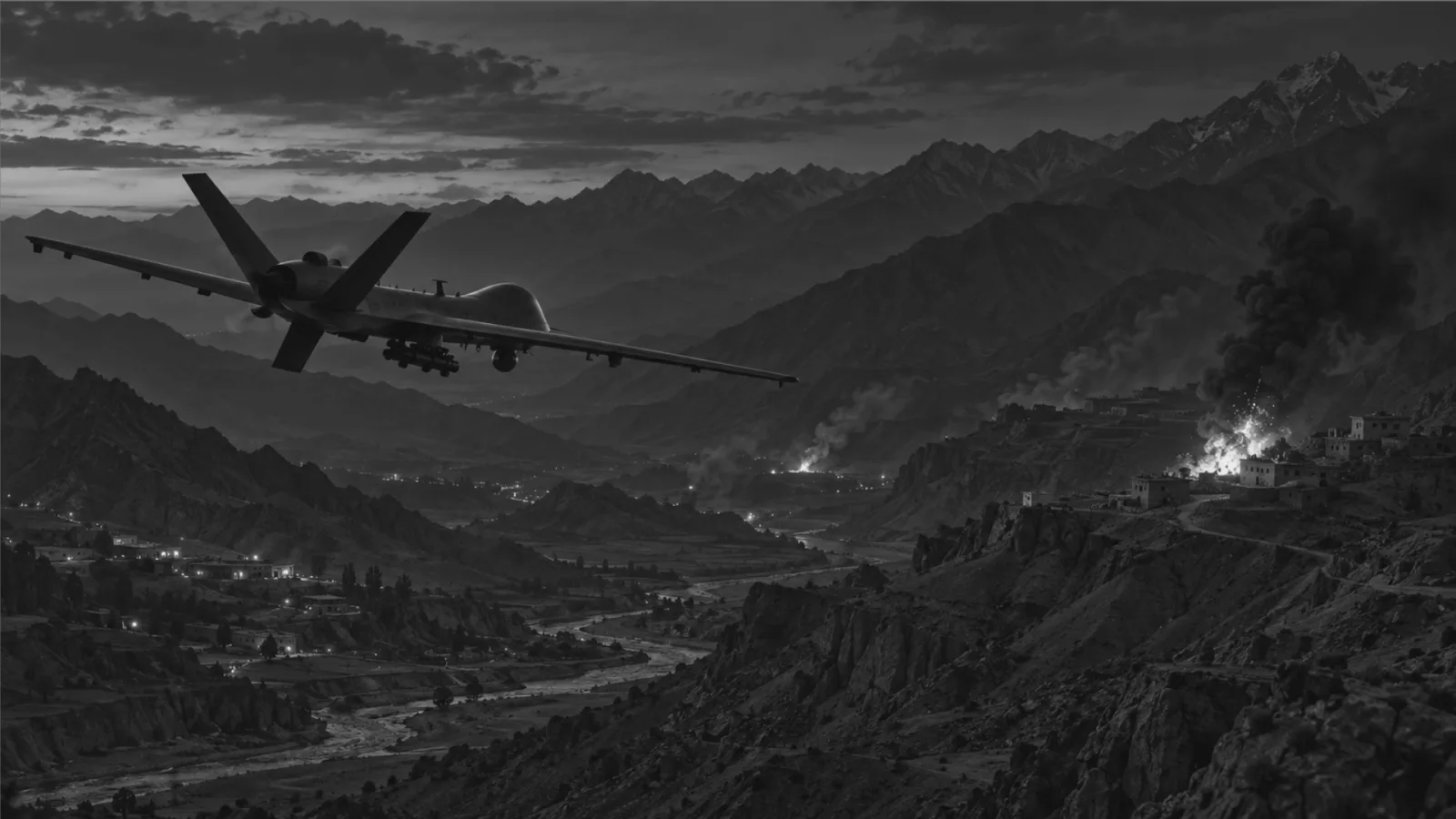
Cross-border operations also impose rising costs on civilians. UNAMA documented 372 civilians killed and 397 injured in Afghanistan from cross-border armed violence between 1 January and 31 March 2026, with most casualties resulting from air strikes. UN reporting recorded a further 399 civilian casualties between April and June. On 1 October, UNAMA confirmed ten civilian deaths, most of them children, and nine injuries in strikes in Kunar and Helmand. Civilian harm alters the military balance in three ways. First, it gives the Taliban a nationalist narrative that can temporarily overshadow domestic repression and internal division. Second, it supplies the TTP with narratives of revenge and recruitment. Third, it makes intelligence cooperation more difficult because communities fear both militant retaliation and state force. Civilian protection is therefore not an external humanitarian constraint on strategy; it is a condition of operational effectiveness.
Pakistan’s official Azm-e-Istehkam framework was presented as a multi-domain, multi-agency approach integrating intelligence, diplomacy, law enforcement, information and socioeconomic measures rather than a mass displacement campaign. That concept addresses the right problem. Its implementation has been undermined by fractured political ownership and the slow arrival of civilian and developmental components. Emergency rule could accelerate those components, but it could equally turn a “whole-of-system” doctrine into military predominance over the system. The threat environment also extends beyond the TTP. ISKP attacks Taliban authority and sectarian targets; Baloch insurgent organizations threaten Pakistan’s western provinces and Chinese-linked interests; and criminal markets facilitate weapons, transport and document fraud. These networks may cooperate transactionally without forming a unified command. Pressure on one organization can therefore redirect routes and expertise towards another. Pakistan should evaluate operations through net strategic effect, not body counts alone. The assessment should include militant leadership losses, weapons seized, attacks prevented, civilian casualties, displacement, subsequent recruitment, prosecutable evidence obtained, and the speed at which police and civil administration return. An operation that kills militants but leaves no lawful and legitimate holding mechanism merely resets the battlefield.
Taliban Control and Opposition
Claims that the Taliban are “losing Afghanistan” overstate the available evidence. The movement retains control of major cities, state institutions, border revenues and the principal coercive apparatus. The UN Secretary-General’s September 2026 assessment concluded that armed opposition groups conducted limited attacks that did not significantly challenge the de facto authorities’ territorial control. Control, however, should not be confused with political consolidation. Centralization around Kandahar has created tensions with other Taliban networks and with local commanders whose wartime autonomy has narrowed. Resource disputes, restrictions on local authority, ethnic exclusion and economic stress are particularly consequential in northern and western provinces. The Taliban can retake a district center; the need to do so repeatedly would still indicate increasingly expensive rule. The National Resistance Front, Afghanistan Freedom Front and smaller formations have demonstrated the capacity to conduct ambushes and targeted attacks. Their limitations remain substantial: fragmented leadership, uneven finance, limited territorial endurance, competing political constituencies and no sustained external patron comparable to those that shaped earlier Afghan wars. Sami Sadat’s AUF deserves attention but not exaggeration. Sadat’s background as a former Afghan army commander gives him potential access to former security personnel, and the AUF’s claims of activity beyond the traditional northern resistance geography seek to present it as a national movement. Yet the organization remains externally led, nascent and unproven as a territorial force. The relevant indicators are not the number of claimed attacks but whether the AUF can coordinate with other fronts, protect defectors, maintain logistics inside Afghanistan and hold territory beyond brief tactical action. The Taliban would become strategically vulnerable if three conditions converged: an elite split over relations with Pakistan; sustained local revolt driven by exclusion and economic predation; and an opposition structure capable of absorbing commanders and administering territory. Those conditions have not yet aligned. Pakistani attacks may widen disagreement within the Taliban, but they may also unify otherwise divided factions around sovereignty. The strategic implication is that Islamabad should seek leverage over the Taliban without making regime fragmentation a policy goal. A fragmented Afghanistan would likely result in increased ungoverned routes, weapons proliferation, refugee flows, and the emergence of competing armed actors. Pakistan’s interest lies in a constrained Taliban authority capable of enforcing commitments, rather than in either an unconstrained Taliban regime or a collapsed Afghan state.
The Geo-Economic Front
Security and commerce have become mutually hostage. Pakistan was historically Afghanistan’s most natural maritime outlet and one of its largest markets. Border closures, tariffs, political disputes and security incidents have encouraged Afghan traders to shift towards Iran and Central Asia. Alternative routes reduce Afghanistan’s dependence on Pakistan but increase transport distance and cost. Pakistan, meanwhile, loses exports, transit revenue and the strategic advantage of being Central Asia’s shortest route to the Arabian Sea. The humanitarian environment makes this disruption particularly dangerous. The UNDP Afghanistan Socioeconomic Review found that 74 percent of Afghans were unable to meet basic subsistence needs in 2025, and that more than nine in ten recent returnees could not meet basic needs. UNDP also reported an $11.3 billion trade deficit, debt affecting more than 80 percent of households, and economic growth that failed to keep pace with population growth. Mass returns intensify the shock. UNHCR data estimate 2.9 million Afghan returns from neighboring countries during 2025, including approximately 715,400 from Pakistan. Abrupt returns place additional pressure on housing, water, schools, employment and health services inside Afghanistan. They also remove workers and consumers from Pakistani local economies and weaken cross-border social networks that can support mediation and intelligence. Major infrastructure demonstrates the contradiction between geo-economic ambition and political practice. The World Bank’s Khyber Pass Economic Corridor was designed to reduce transport costs, improve Torkham’s trade function and connect Pakistan and Afghanistan to wider Central Asian corridors. The project’s logic is strategic: legal connectivity should generate employment, expand state visibility and make formal commerce more attractive than smuggling. Repeated closure, however, can neutralize the value of improved roads and customs infrastructure. CASA-1000 offers a more adaptable model. The power-transmission project resumed in Afghanistan under a ring-fenced World Bank structure that keeps construction payments and future revenues outside Taliban administrative systems and uses third-party verification. This does not resolve the political conflict, but it demonstrates how a regional public good can proceed through technical safeguards, monitored finance and bounded engagement. The proposed Trans-Afghan railway is strategically attractive but more vulnerable. It could connect Central Asia to Pakistani ports, yet financing, freight demand, border predictability, and physical security remain unresolved. A feasibility agreement is not an investment decision. Committing heavily before establishing reliable border protocols risks producing infrastructure that is periodically unusable and financially unsustainable. The security value of connectivity should also be specified carefully. Employment does not automatically prevent radicalization, and trade can be exploited by illicit actors. The defense case for connectivity is narrower and stronger: predictable legal trade increases the number of firms and households with a stake in stability; digital customs produce auditable data; formal logistics reduce dependence on armed intermediaries; and visible local benefits improve the state’s bargaining position against militants. Border performance should become a security metric. Islamabad and Kabul should track operating days, clearance time, cargo volume, inspection exceptions, trader complaints, humanitarian passage, and the share of traffic diverted to informal routes. A crossing that is physically secure but commercially non-functional is not a successful border post. The Outlook to 2030 implies four scenarios that illustrate the plausible range of outcomes. These are not predictions; rather, they identify the indicators and policy choices that could move the frontier towards or away from wider conflict.
Scenario | Relative likelihood | Characteristics | Warning indicators |
Armed interdependence | High | Recurring TTP attacks, periodic Pakistani strikes, Taliban retaliation and intermittent commercial reopening; neither side achieves decisive control | Stable militant tempo, repeated short closures, limited deconfliction and no major Taliban defections |
Fragmented escalation | Medium–high | Fighting expands across several crossing zones; civilian harm rises; emergency governance hardens; commerce and refugee movement become coercive tools | Attacks on urban centers or strategic infrastructure, prolonged Torkham/Chaman closure, artillery exchanges and wider displacement |
Afghan regime fracture | Low, high impact | Taliban elite splits combine with durable local revolt and coordinated opposition; multiple armed authorities compete for territory and external support | Senior defections, rival command structures, opposition control of district centers and external military sponsorship |
Negotiated containment | Medium, policy-dependent | Kabul restricts selected TTP networks under verification; Pakistan reduces strikes; protected trade and subnational dialogue resume | Verified facility closures, monitored relocation, fewer civilian casualties, predictable crossing schedules and restoration of KP civilian rule |
The primary risk is not a formal war between Pakistan and Afghanistan, but rather cumulative escalation. A high-casualty TTP attack could trigger a significant Pakistani response, leading to civilian deaths, Taliban retaliation, border closures, and the stranding of refugees and traders. Militants may exploit nationalist sentiment, while political leaders on both sides may find de-escalation increasingly difficult. Preventing this escalation cycle is a more attainable objective than resolving the Durand Line dispute or achieving mutual trust. The policy response should be sequenced yet simultaneous across the three frontiers. A 'security first, development later' approach is unlikely to succeed because security operations themselves alter legitimacy and livelihoods. The minimum viable compact would not normalise political relations or require Pakistan to recognize the Taliban government. Instead, it would establish bounded, verifiable exchanges that reduce the risk of uncontrolled escalation.
Phase One: Deconfliction
Pakistan and the Taliban authorities should establish a permanent border deconfliction cell staffed by military, intelligence, border, customs, and civilian officials. Its initial mandate should remain narrow:
Maintain a secure 24-hour incident hotline.
Notify the other side of major troop movements near designated crossing zones.
Exchange coordinates for hospitals, schools, refugee sites and other protected infrastructure.
Investigate firing incidents through timestamped logs and agreed liaison officers.
Facilitate the recovery of bodies, the release of detained border personnel, and the restoration of essential crossings.
Qatar or Türkiye could host records or facilitate meetings, while a small, neutral technical secretariat could verify whether notifications were made. The purpose would not be to adjudicate sovereignty. It would create an auditable record that limits misinformation and gives commanders an option between silence and retaliation. Pakistan should also adopt a civilian-harm mitigation protocol for cross-border force. Target approval should require positive identification, a collateral-damage risk assessment, a post-strike review, and a presumption against strikes near protected sites. Credible allegations should trigger rapid investigation and, where warranted, compensation. These measures protect operational legitimacy and reduce the information advantage available to militant propagandists.
Phase Two: Verifiable TTP Restraint
Pakistan’s demand that Kabul immediately eliminate every TTP network is unlikely to be enforceable. A graduated compliance ladder is more realistic:
Register named commanders and their dependants through biometric and location records.
Remove senior TTP figures from Kabul and provinces adjoining Pakistan.
Close identified training, media and logistical facilities.
Restrict weapons, fundraising, communications and movement permits.
Detain individuals credibly linked to specified attacks or place them under monitored restriction.
Establish procedures for evidence exchange and case review without relying on politically implausible mass extradition.
Verification should combine joint site visits where feasible, digital registration, commercial satellite imagery, telecommunications analysis and neutral observation. UNAMA could provide technical support only with an appropriate mandate and consent; it should not be assumed automatically capable of conducting intrusive counterterrorism inspections.
Reciprocity should be explicit. Verified Taliban action should trigger temporary Pakistani no-strike zones, reopening of designated commercial lanes and narrowly defined tariff or transit concessions. Non-compliance should result in targeted, reversible penalties against specific routes, entities, or facilitators, not a blanket closure that disproportionately harms civilians and formal traders.
Phase Three: Restore KP Legitimacy
Emergency rule requires an exit design. The federal government should publish a two-month review framework covering militant attacks, police readiness, court functionality, civilian administration, political freedoms and displacement. Any extension should identify which benchmarks remain unmet and why exceptional rule is more effective than a restored provincial government supported by federal resources. A KP Security Council should include the federal government, the military, the police, PTI, other provincial parties, and representatives of the merged districts. It need not receive unrestricted operational intelligence. It should review strategic priorities, civilian protection, compensation, displacement, reconstruction, and the transition back to elected rule. PTI should be held accountable for policy choices, including unsuccessful engagement with militants, through constitutional and electoral mechanisms. It should not be treated as an extension of the TTP. Maintaining that distinction protects the political center and denies militants the opportunity to merge lawful dissent with armed resistance. Civilian institutions must become the holding force. Priorities include protected police stations, counter-IED teams, forensic laboratories, secure evidence chains, digital case management, witness protection, financial investigation and specialist prosecutors. Army deployment may remain necessary, but every operation should include a transfer plan specifying when and how police and district officials resume authority.
Phase Four: Insulate Trade
Torkham, Chaman, Ghulam Khan, Angoor Adda and Kharlachi should adopt graded operating protocols. Even during political crises, green lanes should remain available for food, medicine, humanitarian supplies, perishable goods, and verified low-risk traders. Cargo and passenger processing should be separated, manifests exchanged electronically, and inspections allocated based on risk profiles rather than discretionary blanket stoppages. Closure decisions should identify the threat, geographic scope, responsible authority, and review date. Where one terminal is affected, both governments should activate pre-agreed diversion routes rather than suspending the entire system. A trader who complies with formal requirements must receive greater predictability than a smuggler; otherwise the border regime subsidizes illicit adaptation. Investment should prioritize small, usable assets: cold storage, veterinary and sanitary certification, truck scheduling, warehousing, secure rest areas, digital payments and local road maintenance. ADB analysis recommends value-added processing near Torkham to reduce logistics costs and create jobs. These investments should include transparent local hiring and grievance mechanisms so that communities see material benefit from protecting infrastructure.
Phase Five: Build Security Through Development
Development spending in the merged districts should be organized through district security-and-development compacts. Each compact should publish the project, contractor, budget, completion milestones, local employment share, maintenance responsibility and complaint channel. Geotagged reporting and independent audits would help distinguish actual delivery from announced allocations. Projects should be selected for their contribution to state presence and community resilience, not their visibility alone. Priority sectors include feeder roads linking communities to markets, primary health, girls’ and boys’ education, water, telecommunications redundancy, agricultural storage and municipal services in high-return or high-displacement areas. These create routine contact with civilian institutions and reduce dependence on militant arbitration or illicit logistics. CASA-1000 should retain its ring-fenced financing and independent monitoring, but route communities should also receive compensation, maintenance employment, and locally visible electricity benefits where technically feasible. The Trans-Afghan railway should remain at the feasibility stage until border operating protocols, credible freight demand and sustainable financing are established. In the near term, customs interoperability and road logistics offer higher security returns than another politically celebrated megaproject. Refugee and return policy must also be integrated into frontier security. Pakistan has a legitimate right to documentation and individual security screening. It should replace deadline-driven removals with biometric registration, case-based investigation, renewable lawful status for eligible workers, and phased assisted return. Exemptions should cover people at specific protection risk, mixed families, students, and those receiving essential medical treatment. Donors should support monitored reception, water, health, shelter, and livelihood systems inside Afghanistan rather than unrestricted transfers to Taliban authorities. The frontier compact should be evaluated through a public dashboard. The purpose is not to disclose sensitive intelligence but to prevent policy from being judged on isolated claims about militant casualties or infrastructure spending.
Conclusion
The Pakistan-Afghanistan frontier is unlikely to experience either decisive Pakistani pacification or imminent Taliban collapse. The most probable scenario is one of armed interdependence, in which both sides can inflict costs but neither can fully secure the frontier, eliminate hostile networks independently, or sustain escalation without incurring significant economic and civilian harm. While Pakistan’s centralization of KP may yield short-term command benefits, it risks becoming strategically counterproductive if it undermines the elected intermediary, civilian administration, and legal economy necessary for post-operation stability. The effectiveness of emergency rule should be measured not by the extent of authority accumulated, but by how rapidly it establishes the conditions for its own conclusion. The Taliban remain territorially dominant but politically brittle. The AUF and other opposition fronts indicate increasing pressure, not the emergence of a viable successor government. Pakistan should avoid policies premised on Taliban collapse, as Afghan fragmentation would multiply sanctuary, weapons leakage, and displacement. The primary objective should be enforceable Taliban restraint. The frontier trap can be addressed only by treating coercion, legitimacy, and connectivity as a unified strategic system. Verifiable action against the TTP must be linked to calibrated Pakistani restraint. Political order in KP must be restored through a transparent constitutional process. Essential trade must be protected from complete political closure. Development projects must strengthen accountable civilian institutions and provide visible local benefits. While none of these measures will reconcile Islamabad and Kabul, together they can prevent each militant attack from escalating into an interstate crisis and each border closure from financing the next cycle of conflict.
The views expressed are those of the authors and do not represent the views of CNAWS.
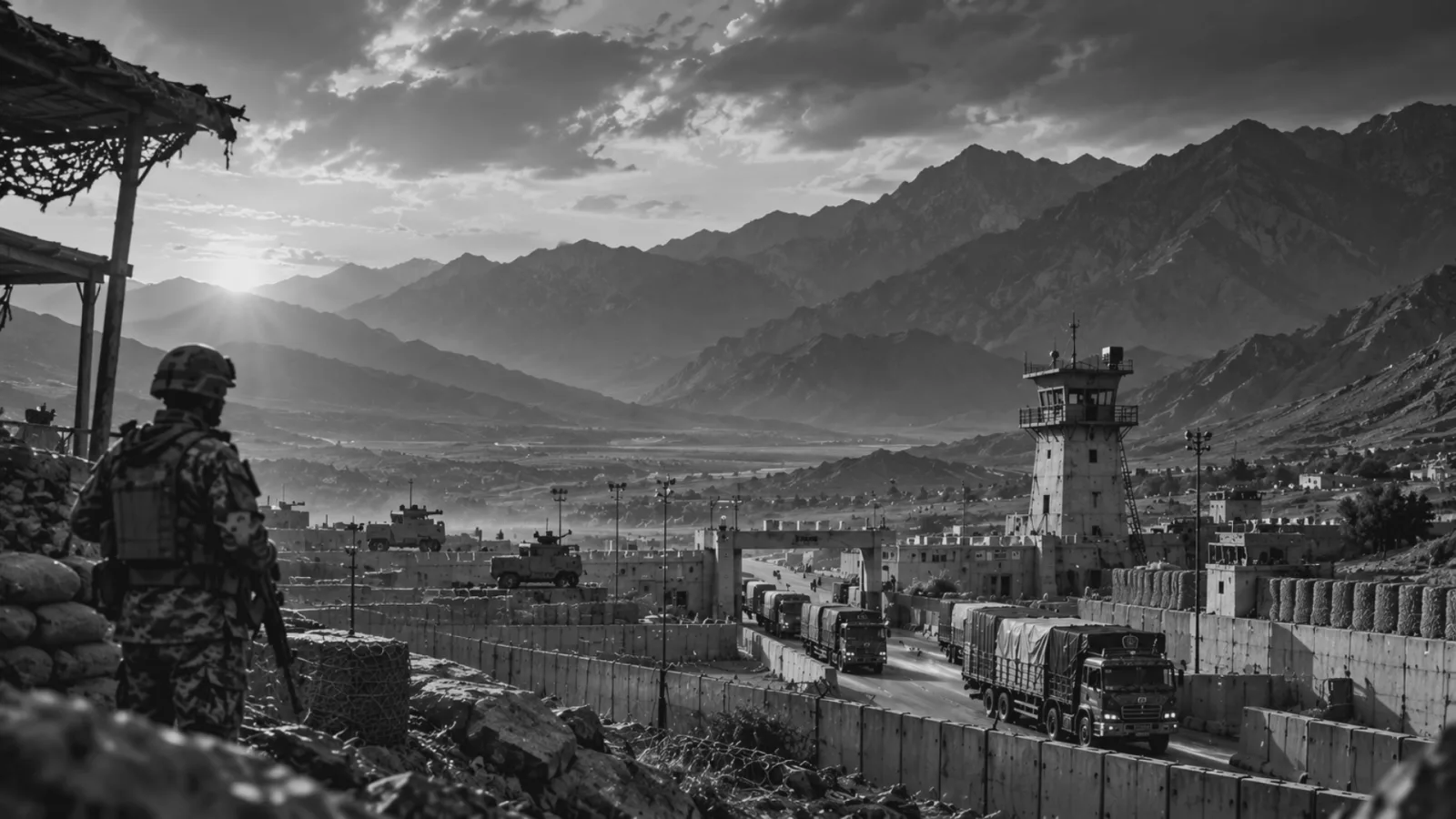
ImageSource: ChatGPT
Tags

Author
Shrestha Medhi
Shrestha Medhi is a doctoral scholar at the University of Delhi and a strategic intelligence analyst and geopolitical risk researcher at Pinkerton, specializing in regional security, cross-border militancy, and geopolitical developments across South Asia and the Indo-Pacific. Her research focuses on security dynamics, political transitions, and the intersection of geopolitics and economic connectivity.