
Russia's Jet-Powered Drone Offensive and the Changing Economics of Air Defence: Lessons for India
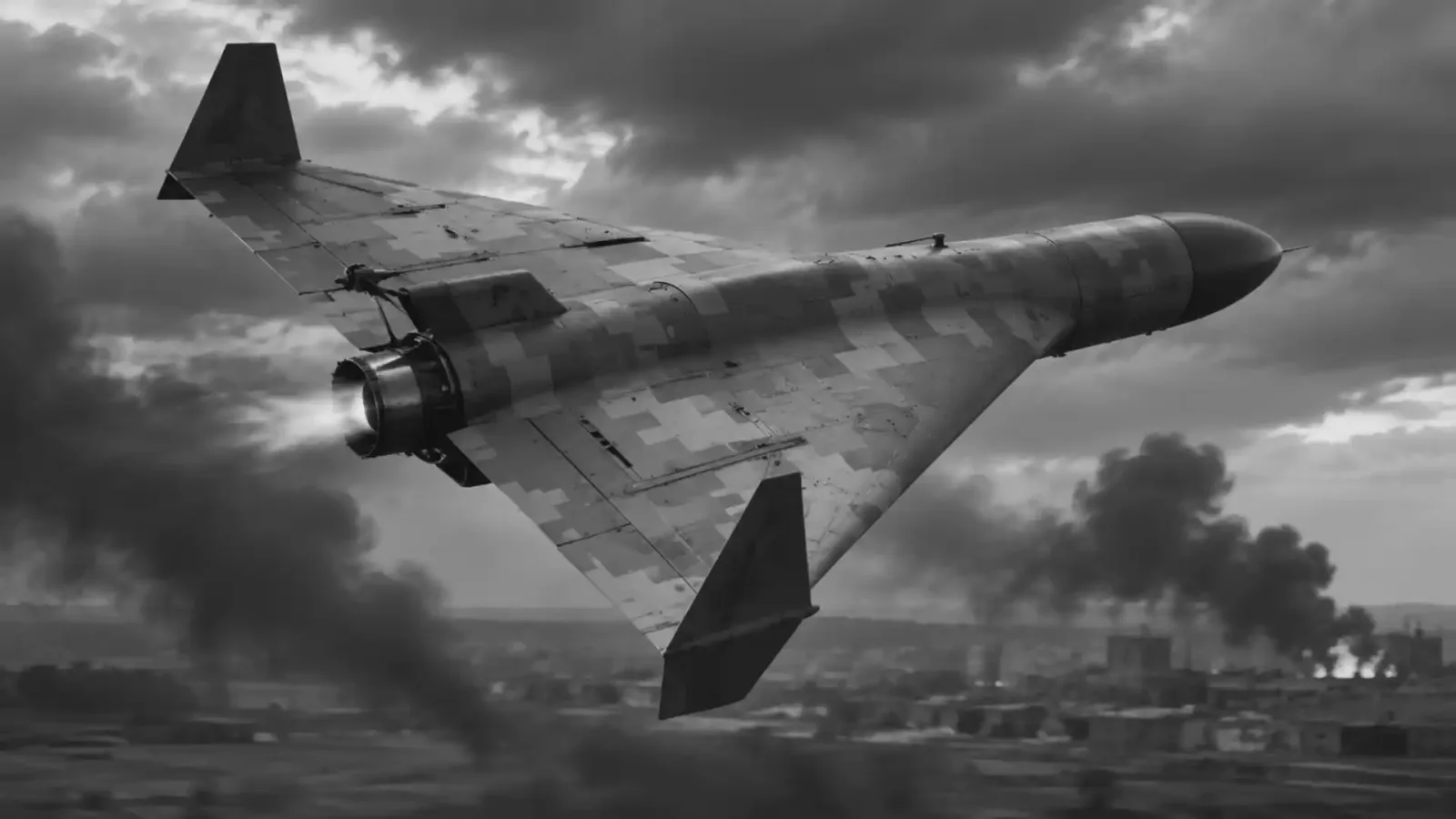
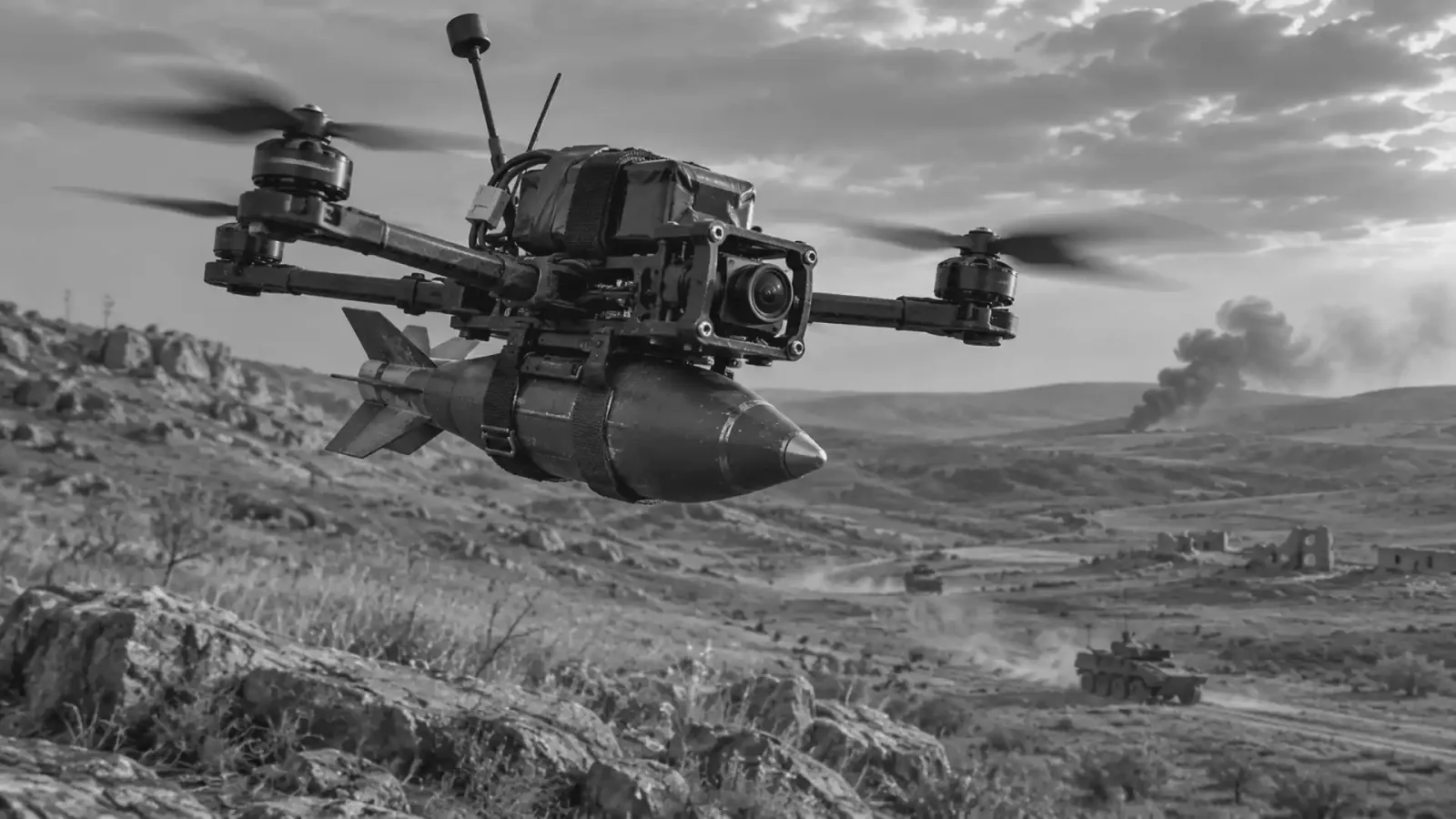
Russia's growing employment of jet-powered one-way attack drones in Ukraine represents an important evolution in unmanned warfare. During the overnight aerial offensive of 23–24 November 2026, Russian forces reportedly launched 96 unmanned aerial vehicles, of which 64 were jet-powered. The development indicates a growing shift towards faster unmanned strike platforms that occupy the technological and economic space between conventional propeller-driven attack drones and cruise missiles. Their proliferation threatens to alter the economics of air defence by increasing defensive expenditure, compressing decision-making timelines and placing additional pressure on existing counter-UAS architectures. For India, particularly against the backdrop of Pakistan's expanding unmanned warfare capabilities and defence-industrial cooperation with China and Türkiye, these developments highlight the need to assess air defence preparedness against an increasingly diverse spectrum of unmanned aerial threats.
Background and Recent Developments
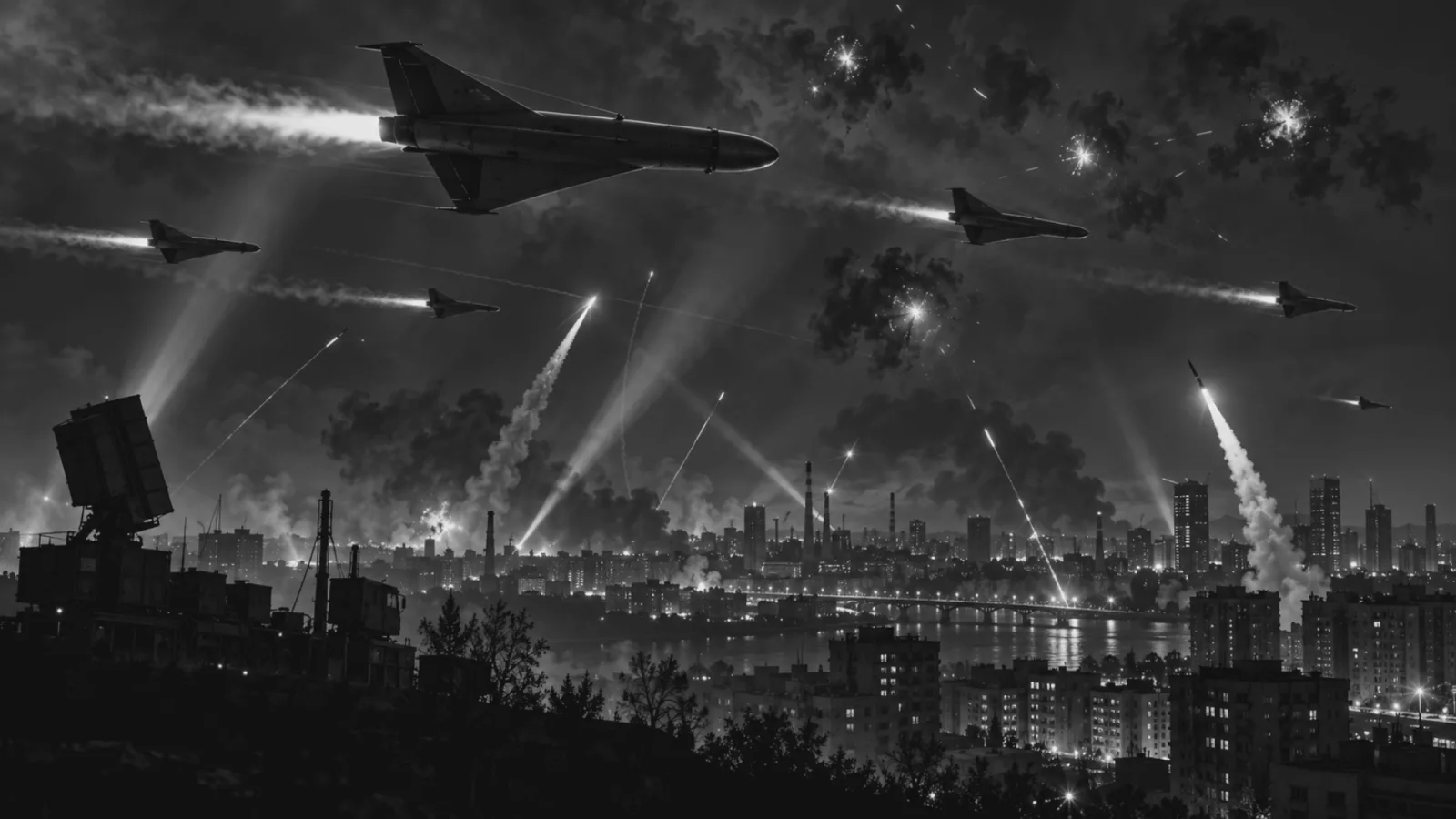
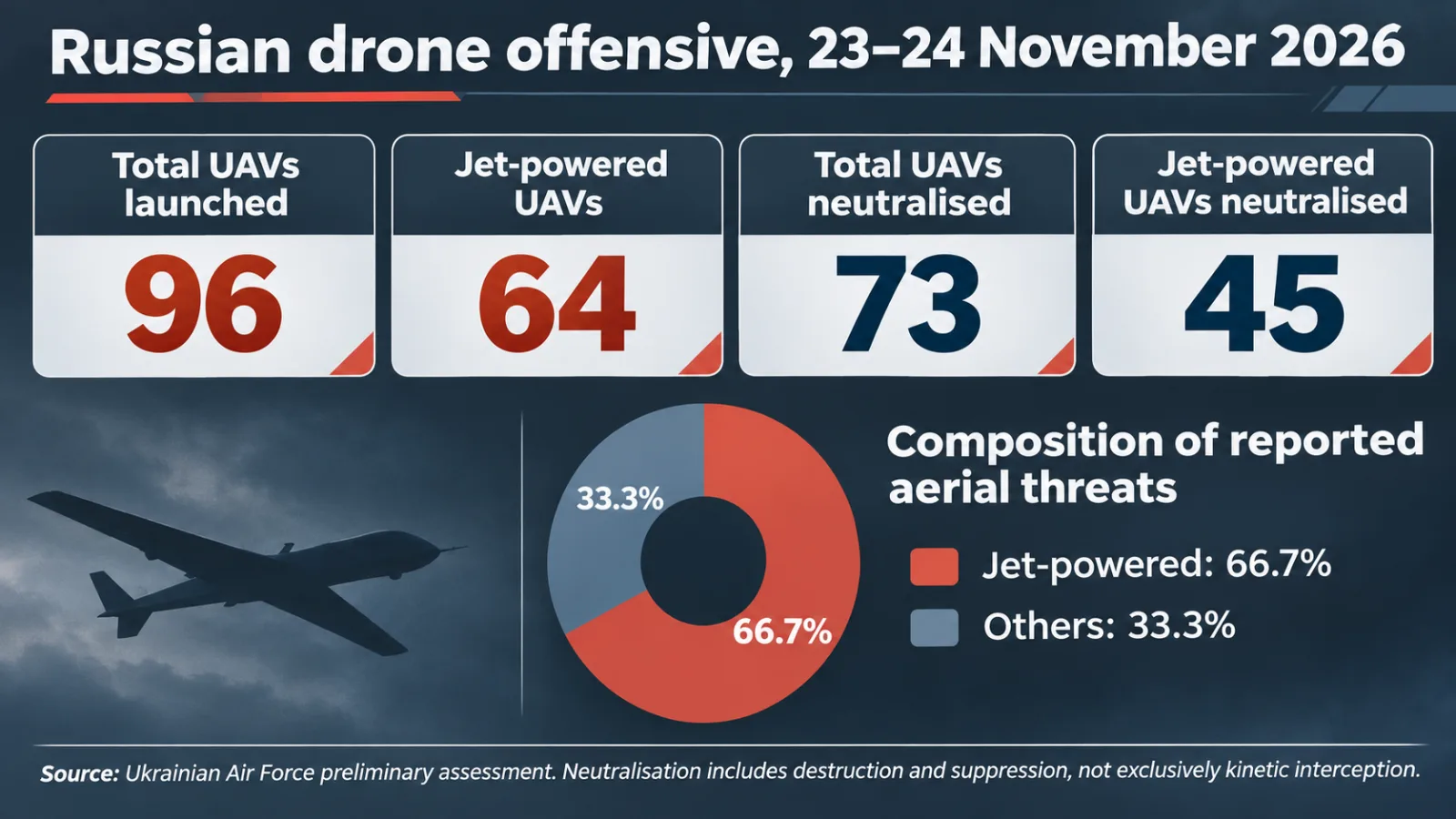
During the night of 23–24 November 2026, Russia launched a major unmanned aerial offensive against Ukraine involving 96 UAVs, including 64 jet-powered Shahed-type platforms alongside Gerbera drones and Parodiya-type decoys. According to preliminary figures released by the Ukrainian Air Force, Ukrainian air defence forces destroyed or suppressed 73 aerial targets, including 45 jet-powered drones. Drone impacts were recorded at 13 locations, while debris from intercepted platforms fell at two additional locations. Ukrainian defensive operations involved military aviation, surface-to-air missile units, electronic warfare elements, unmanned systems and mobile air defence groups.¹
The significance of the offensive lies less in the overall number of drones deployed than in the composition of the attacking force. Jet-powered platforms accounted for approximately two-thirds of the reported aerial threats, demonstrating their increasingly prominent role within Russia's long-range unmanned strike operations. Although a single offensive cannot establish the composition of Russia's entire drone inventory or its production capacity, the figures indicate that jet-powered attack drones are no longer merely experimental platforms employed in limited numbers. Their deployment at this scale suggests that they have become an important component of Russia's aerial strike campaign.²
On 23 November, Ukrainian President Volodymyr Zelenskyy convened a meeting of the Staff of the Supreme Commander-in-Chief specifically to address protection against Russian jet-powered drones during 2026 and 2027, taking into consideration Russia's projected production plans. The following day, Norway and Ukraine announced expanded cooperation on an anti-drone air defence system that Ukrainian officials stated had demonstrated effectiveness against jet-powered aerial threats. These developments underline the growing institutional attention being directed towards this category of unmanned weapon systems.³
From Propeller-Driven Drones to Jet-Powered Strike Platforms
The emergence of jet-powered one-way attack drones represents the latest stage in the evolution of Russia's long-range unmanned strike capabilities. Since the introduction of Iranian-designed Shahed-series drones into the conflict in 2022, Russia has progressively expanded domestic manufacturing and undertaken modifications to the original design. These developments have resulted in the emergence of several variants within the Geran family, reflecting a continuous process of technological adaptation informed by operational experience and changing Ukrainian defensive capabilities.⁴
The transition towards jet propulsion is particularly significant because it is gradually narrowing the distinction between one-way attack drones and conventional cruise missiles. While the original Shahed-136 and its Russian derivative, the Geran-2, were predominantly designed around affordability, endurance and large-scale employment, newer jet-powered variants introduce an additional dimension of speed. Although jet propulsion generally entails higher production costs and fuel consumption, these disadvantages may be offset by the operational utility of faster unmanned strike platforms.
Russia's experience also demonstrates that technological sophistication does not necessarily require the development of entirely new weapon systems. Incremental improvements to propulsion, navigation, electronic protection and communications can substantially alter the operational characteristics of an existing family of platforms. Consequently, air defence systems developed against a particular generation of unmanned threats may face a substantially different operating environment within a relatively short period.
Parameter | Propeller-driven attack drones | Jet-powered attack drones | Conventional cruise missiles |
|---|---|---|---|
Relative acquisition cost | Lower | Intermediate | Generally higher |
Speed | Relatively low | Higher | Generally high |
Manufacturing complexity | Lower | Intermediate | Higher |
Defensive reaction time | Relatively longer | Shorter | Shorter |
Air defence classification | UAV | UAV or missile-like threat | Missile |
Operational role | Expendable aerial strikes | Faster unmanned strikes | Precision stand-off strikes |
The comparison is qualitative. Individual platforms may differ considerably in performance, cost and operational characteristics.
Changing Economics of Air Defence
One of the most significant developments to emerge from the Russia–Ukraine conflict has been the growing importance of economic sustainability in air defence operations. Traditionally, sophisticated air defence systems were designed primarily to counter relatively expensive military aircraft, helicopters and missile threats. The proliferation of inexpensive, expendable unmanned platforms has fundamentally altered this calculation. Defending forces increasingly face circumstances in which the financial cost of neutralising an aerial threat may substantially exceed the acquisition cost of the attacking platform.
However, the economics of air defence cannot be understood exclusively through a comparison between the price of an incoming drone and that of an interceptor. The value of the asset being protected, the consequences of a successful attack, the availability of replacement interceptors and the wider economic impact of infrastructure disruption must also be considered. The employment of an expensive interceptor may be economically justified when protecting critical infrastructure or preventing civilian casualties. The greater challenge emerges when such engagements must be sustained repeatedly over extended periods.
Jet-powered drones complicate this equation further. The comparatively low cost of conventional propeller-driven drones encouraged the development of affordable defensive alternatives, including electronic warfare systems, interceptor drones and gun-based air defence systems. Faster unmanned platforms introduce additional performance requirements, potentially increasing the complexity and cost of defensive technologies. The defensive investments made against earlier generations of drones therefore may not automatically deliver equivalent effectiveness against newer platforms.
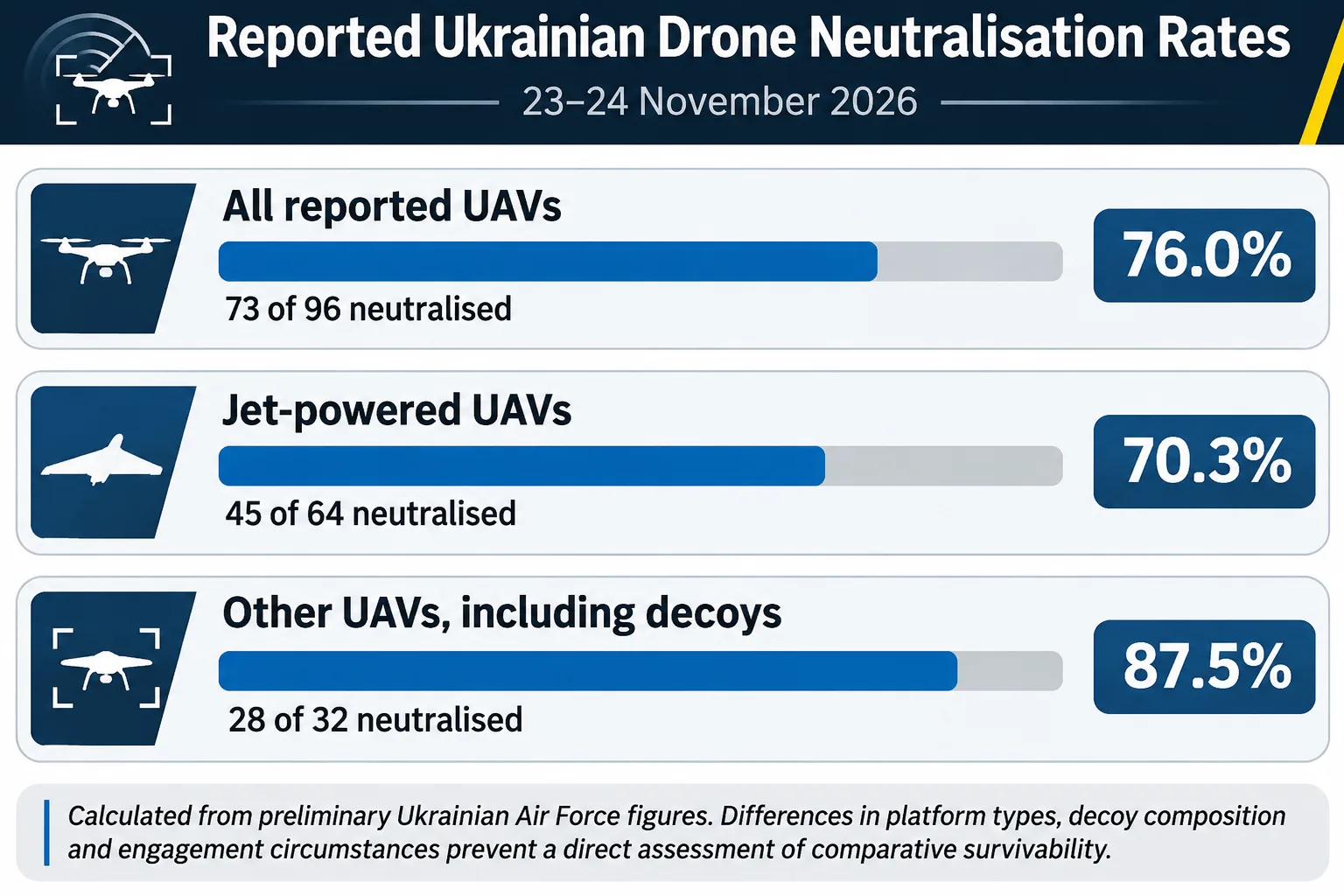
The preliminary Ukrainian data from 24 November illustrates this emerging challenge, although it does not conclusively establish that jet-powered drones are more survivable across the broader conflict.
The larger strategic concern is the sustainability of defensive expenditure. A country's air defence capability cannot be evaluated merely through the sophistication of its most advanced systems. Its industrial capacity to replenish ammunition, maintain sensors, repair equipment and sustain personnel during prolonged operations is equally important. In an extended conflict, the availability of defensive resources may become as consequential as their technological effectiveness.
Compression of the Air Defence Decision-Making Cycle
The increasing speed of unmanned aerial threats also has significant implications for military command and control. Air defence operations involve several interconnected processes, including detection, identification, classification, threat assessment, authorisation and engagement. Faster aerial platforms reduce the time available to complete these processes, increasing the importance of reliable intelligence fusion and coordinated decision-making.
This challenge extends beyond individual defensive weapon systems. A modern integrated air defence architecture may incorporate numerous sensors, command centres and defensive platforms operated by different military formations and services. Its overall effectiveness depends on the ability of these components to exchange information accurately and efficiently. Increased aerial threat diversity places additional demands on classification systems, communications infrastructure and the reliability of automated decision-support technologies.
The proliferation of jet-powered drones therefore reinforces the growing relationship between air defence, artificial intelligence, military digitalisation and network-centric warfare. However, increasing reliance on automation also introduces concerns regarding erroneous identification, software reliability, cyber security and accountability for engagement decisions. These considerations become particularly important in densely populated regions and airspace shared with civilian aviation.
Pakistan's Expanding Unmanned Warfare Ecosystem
For India, the developments in Ukraine acquire additional significance when examined against the backdrop of Pakistan's ongoing investments in unmanned warfare. Pakistan has progressively expanded its defence-industrial relationships with China and Türkiye, both of which possess increasingly sophisticated unmanned aircraft industries. These relationships encompass complete platform acquisition, local assembly, technology cooperation and the development of domestic industrial capacity.
On 18 September 2026, Türkiye's Pasifik Teknoloji signed a three-year agreement with Pakistan's National Radio and Telecommunication Corporation (NRTC), covering the supply and local assembly or production of 100,000 Merküt FPV drones, alongside several other unmanned systems, including 500 Deli loitering munitions. The agreement was publicly disclosed on 19 September.⁵ Although the Merküt is a different category of unmanned platform from Russia's long-range jet-powered Geran systems, the agreement demonstrates the growing importance of mass-scale unmanned warfare within Pakistan's defence modernisation efforts.
Pakistan's emerging unmanned arsenal also extends beyond tactical FPV drones. Recent developments associated with the Pakistan Air Force have indicated interest in additional categories of loitering munitions, strike drones and aerial decoys. CNAWS has previously documented reported developments involving the Lightning-I, Lightning-II, Arrow-I and YIHA-III platforms, alongside an apparent jet-powered decoy concept. The development and operational status of several of these systems remain uncertain.⁶
There is presently insufficient publicly verified evidence to establish that Pakistan possesses an operational long-range jet-powered attack drone inventory comparable to that of Russia. Nevertheless, the broader trajectory of Pakistan's unmanned modernisation warrants sustained attention. The strategic concern for India is not limited to any particular platform but encompasses the possibility of a progressively diversified unmanned warfare ecosystem supported by foreign technological partnerships and expanding domestic production capabilities.
Implications for India's Air Defence Preparedness
India's experience during Operation Sindoor in May 2025 demonstrated the importance of integrated air defence and counter-UAS capabilities. Official Indian assessments highlighted the employment of the Integrated Air Command and Control System (IACCS), Akash surface-to-air missiles, Pechora and OSA-AK systems, low-level air defence guns and electronic warfare capabilities in responding to aerial threats.⁷ India subsequently conducted successful trials of the Akash Prime system against high-speed unmanned aerial targets in Ladakh in July 2025.⁸
Nevertheless, the experience of a limited-duration military confrontation cannot automatically be extrapolated to a prolonged conflict involving sustained unmanned aerial operations. The evolution of drone technologies witnessed in Ukraine raises several broader questions regarding India's future preparedness.
Economic sustainability of air defence. Assessments of Indian air defence modernisation must consider recurring operational expenditure, domestic ammunition production, maintenance requirements and supply-chain resilience alongside the acquisition of advanced weapon systems. Long-term defensive sustainability deserves greater attention within military procurement planning.
Diversification of aerial threats. The emergence of faster unmanned platforms challenges conventional distinctions between counter-drone and missile defence requirements. Future capability assessments will increasingly need to consider a broad spectrum of aerial threats rather than treating unmanned aircraft as a homogeneous technological category.
Indigenous defence-industrial capacity. The ability of Russia and Ukraine to continuously modify unmanned systems and associated defensive technologies demonstrates the importance of responsive domestic industrial ecosystems. India's defence-industrial policy must similarly account for rapid technological obsolescence, iterative development and the need for continuing research beyond initial procurement.
Institutional and technological integration. The growing complexity of aerial threats reinforces the importance of inter-service coordination, secure communications, intelligence fusion and institutional mechanisms for incorporating lessons from contemporary conflicts into capability development.
Protection of civilian and strategic infrastructure. The Ukrainian experience demonstrates that the consequences of sustained drone warfare extend beyond military installations. Electricity networks, transportation infrastructure, industrial facilities and essential civilian services are increasingly affected by aerial warfare, making infrastructure resilience and emergency preparedness important components of national security planning.
The Emergence of an Intermediate Category of Aerial Weapons
The proliferation of jet-powered one-way attack drones points towards a broader transformation in the categorisation of aerial weapons. Historically, military planners distinguished between combat aircraft, unmanned aerial vehicles and guided missiles based on their design, cost, propulsion and operational employment. Technological convergence is gradually eroding these distinctions.
Jet-powered expendable drones combine several attributes associated with guided missiles with the industrial and economic characteristics of unmanned aircraft. Their emergence may encourage further investment in comparatively affordable precision-strike technologies across multiple countries. Consequently, capabilities that were once largely restricted to major military powers could become accessible to states possessing more modest defence-industrial resources.
For South Asia, this development carries implications beyond conventional military modernisation. The proliferation of increasingly capable unmanned strike systems could complicate crisis management, increase uncertainty surrounding aerial incidents and place additional pressure on military decision-making during periods of heightened tensions. The implications for escalation management between nuclear-armed neighbours therefore deserve attention alongside the technological aspects of drone warfare.
CNAWS Assessment
Russia's employment of 64 jet-powered drones in a single reported offensive on 23–24 November 2026 constitutes another important indicator of the changing composition of its unmanned strike campaign. While the available evidence does not establish that jet-powered drones will entirely replace conventional propeller-driven platforms, it demonstrates their growing relevance in contemporary aerial warfare.
The most consequential development is not necessarily the emergence of a faster drone but the gradual convergence of affordability, speed and expendability within a single category of aerial weapon systems. This convergence is challenging established assumptions about the economics of air defence, the classification of aerial threats and the sustainability of defensive operations.
For India, Pakistan's expanding unmanned warfare capabilities, supported by Chinese and Turkish defence-industrial cooperation, make these developments particularly relevant. The effectiveness of India's future air defence architecture will depend not only on its ability to neutralise increasingly sophisticated aerial threats but also on its capacity to sustain defensive operations economically, adapt institutionally and maintain technological relevance as adversarial capabilities continue to evolve.
Operation Sindoor provided India with valuable operational experience against contemporary unmanned threats. However, developments in Ukraine demonstrate that the technological environment against which such capabilities were validated is itself undergoing continuous transformation. Air defence preparedness must consequently be understood as an ongoing process of adaptation rather than a capability achieved through a single successful military operation.
Endnotes
1. Ukrainian Air Force assessment, reproduced in Ukrinform, “Air Defenses Neutralize 73 of 96 Drones Russia Launched against Ukraine Overnight,” November 24, 2026. See also additional reporting containing the jet-powered drone breakdown.
2. Institute for the Study of War, “Russian Offensive Campaign Assessment, November 24, 2026,” November 24, 2026.
3. Office of the President of Ukraine, “President Held a Staff Meeting to Discuss Protection Against Russian Jet-Powered Drones,” November 23, 2026; Norwegian Ministry of Defence, “Styrker det norsk-ukrainske sikkerhetssamarbeidet,” November 24, 2026; Reuters, “Norway and Ukraine to Expand Cooperation on Anti-Drone System,” November 24, 2026.
4. Center for Strategic and International Studies, “From Shahed to Geran: How Russia Continues to Reinvent the One-Way Attack Drone,” 2026; CNAWS, “Russia’s Jet-Powered Shaheds Are Rewriting the Air-Defence Equation,” 2026.
5. Pasifik Teknoloji A.Ş., “Material Event Disclosure (General),” Türkiye Public Disclosure Platform filing reproduced by Mergen, September 19, 2026; CNAWS, “Pakistan's 100,000 Turkish Kamikaze Drones: Assessing Islamabad's Shift Towards Mass-Scale Unmanned Warfare,” November 2026.
6. CNAWS, “Pakistan's Emerging Drone and Cruise Missile Arsenal: Is the PAF Building a Saturation Strike Capability Against India?,” November 2026.
7. Press Information Bureau, Government of India, “Operation Sindoor and India's Technological Advancements in Warfare,” May 2025.
8. Press Information Bureau, Government of India, “Successful Trials of Akash Prime in Ladakh,” July 16, 2025.
Tags

Author