
From Treaty to Military Alliance: Pakistan, Saudi Arabia and Türkiye Move to Operationalise the Makkah Defence Pact
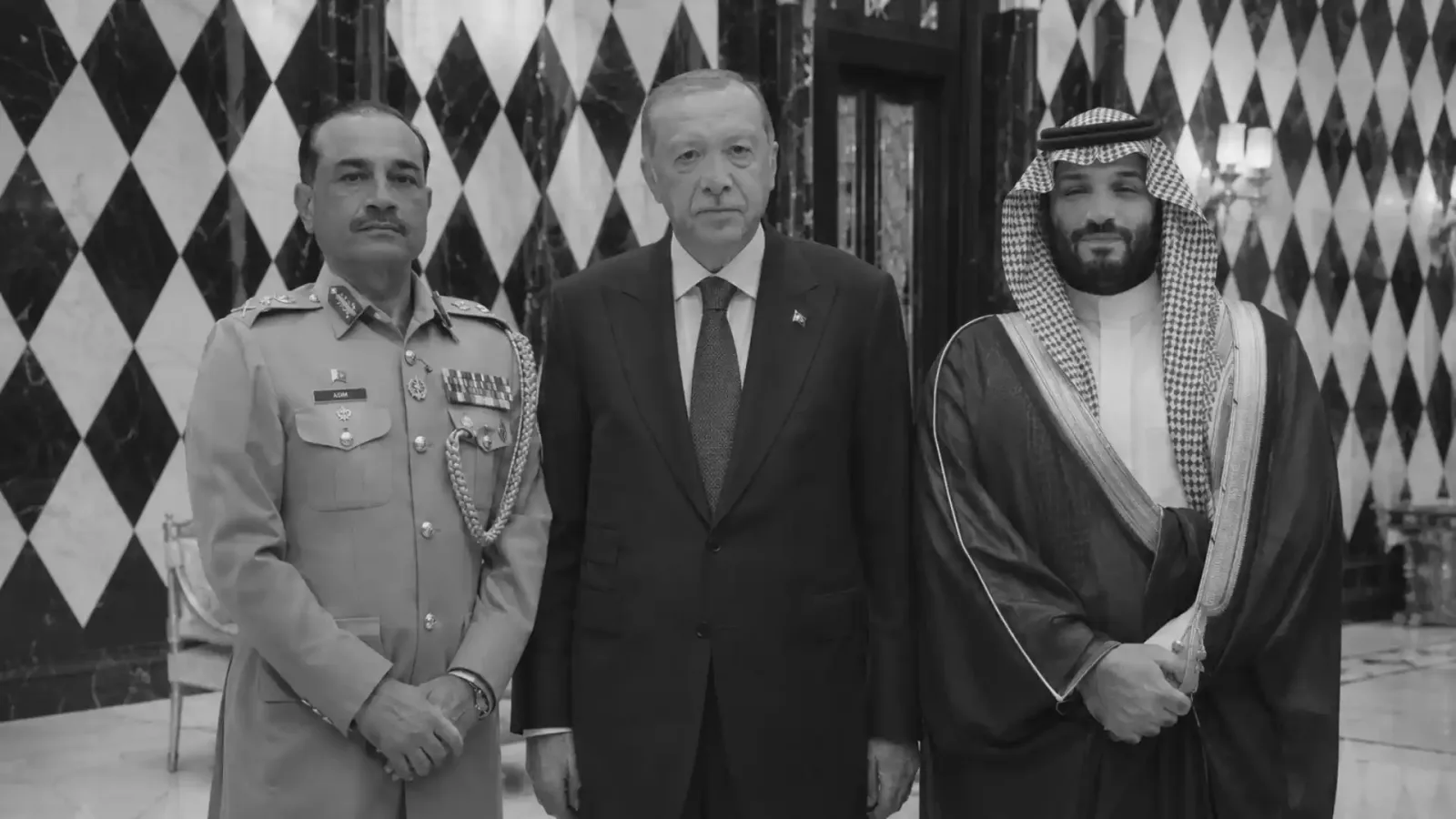
Pakistan is hosting the third meeting of the Strategic Political and Defence Committee (SPDC) of the Makkah Defence Alliance on 27–28 November 2026 to finalise institutional arrangements and establish mechanisms for implementing the collective defence commitments undertaken by Pakistan, Saudi Arabia and Türkiye. The meeting coincides with Turkish President Recep Tayyip Erdoğan's formal approval of the agreement, completing Türkiye's domestic ratification process. Continuing Houthi attacks against Saudi Arabia have simultaneously created an immediate requirement for the alliance to demonstrate its operational credibility.
Several developments since August 2026 substantiate earlier CNAWS assessments concerning the institutionalisation of the alliance, the expansion of defence-industrial cooperation and Pakistan's growing exposure to conflicts in West Asia. The publication of the 16-article agreement in October has also addressed several intelligence gaps previously identified by CNAWS, particularly concerning intelligence sharing, logistical assistance, military interoperability and collective defence obligations.
For India, the agreement's provisions concerning wartime logistical support, intelligence exchange and joint defence production warrant particular attention. While direct Saudi or Turkish military intervention in a future India–Pakistan conflict remains contingent upon multiple political and legal considerations, the institutionalisation of these partnerships could progressively strengthen Pakistan's military resilience and strategic endurance.
The Development
Pakistan is hosting a two-day meeting of the SPDC of the Makkah Defence Alliance in Islamabad on 27–28 November 2026. The committee, comprising foreign ministers, defence ministers and senior military chiefs from Pakistan, Saudi Arabia and Türkiye, is expected to discuss standard operating procedures, implementation mechanisms and coordination between the political and military institutions of the three countries. Preparatory consultations were conducted on 26 November to finalise the agenda and documentation for the meeting. Pakistan's Defence Minister Khawaja Muhammad Asif has confirmed that the continuing confrontation between Saudi Arabia and Yemen's Houthis will feature prominently in the discussions.¹
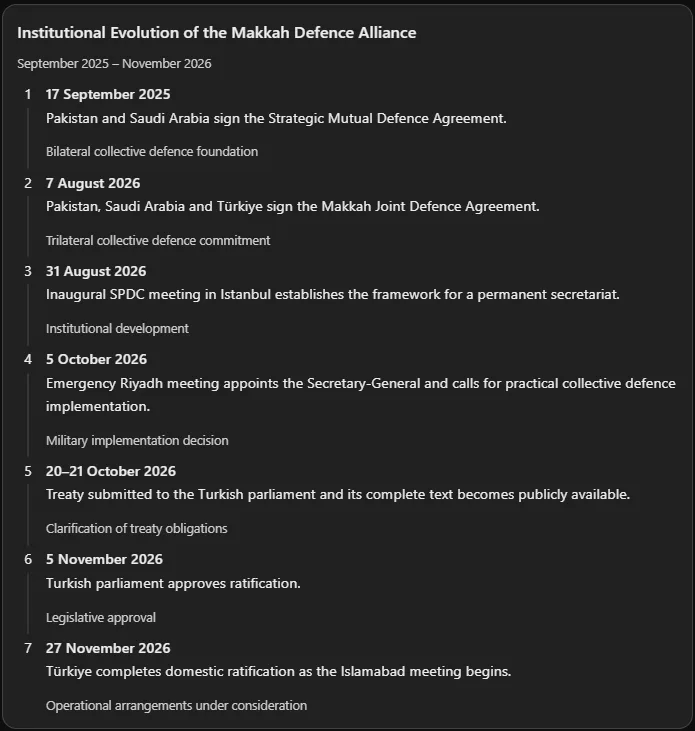
In a parallel development, Turkish President Recep Tayyip Erdoğan formally approved the Makkah Joint Defence Agreement through Presidential Decision No. 12017, dated 26 November and published on 27 November 2026. The approval follows the Turkish parliament's ratification of the agreement on 5 November, completing Ankara's domestic approval process. However, under Article 16 of the agreement, its formal entry into force requires the deposit of the final instrument of ratification at the headquarters of the alliance's secretariat. Confirmation of this procedural requirement remains outstanding in publicly available reporting.²
The simultaneous progression of legal ratification and operational consultations is significant because the alliance is developing amid an active regional security crisis rather than under relatively stable peacetime conditions. The escalation of Houthi attacks against Saudi Arabia has accelerated the requirement for practical military coordination, compelling the three governments to address questions concerning collective defence that remained unresolved when the agreement was signed on 7 August 2026.
From Declaratory Commitments to an Institutionalised Defence Architecture
In its assessment published on 8 August 2026, CNAWS identified the establishment of permanent trilateral military institutions, joint planning mechanisms, intelligence-sharing arrangements and integrated defence capabilities as the principal indicators that would distinguish a political declaration from a functioning military alliance. At the time, the absence of the complete treaty text prevented a definitive assessment of the institutional architecture, the nature of military assistance and the procedures governing the activation of collective defence commitments.³
Developments over the subsequent three months have partially corroborated that assessment. During the inaugural SPDC meeting in Istanbul on 31 August, the three countries agreed to establish a permanent secretariat in Saudi Arabia, with Pakistan providing its first Secretary-General for a three-year term. The meeting also established joint technology development, defence production and military interoperability as areas of institutional cooperation.⁴ At the emergency SPDC meeting in Riyadh on 5 October, Lieutenant General Nauman Mahmood (Retd.) was appointed as the alliance's first Secretary-General. More importantly, the committee agreed to proceed with the implementation of collective defence commitments through arrangements for the provision and deployment of mutually agreed military forces and capabilities in Saudi Arabia.⁵
The Islamabad meeting consequently represents the next stage of a process that has progressed from political commitment to institutional establishment and subsequently towards operational implementation. The existence of a permanent secretariat and a functioning working committee demonstrates that the arrangement is acquiring an enduring administrative structure. The current emphasis on standard operating procedures suggests that the alliance's immediate institutional priority is establishing the procedures through which its members will collectively assess threats, determine military requirements and authorise assistance.
However, a permanent secretariat should not be confused with a permanent operational military command. There remains no publicly confirmed information concerning the establishment of a standing trilateral force, a multinational operational headquarters or the delegation of command authority over nationally controlled military formations.
What the Published Treaty Reveals About Previously Identified Intelligence Gaps
The publication of the complete 16-article Makkah Joint Defence Agreement following its submission to the Turkish parliament in October represents an important development that allows for a more precise assessment of the alliance. Unlike the original joint declaration issued in August, the treaty text provides substantive information concerning collective defence obligations, institutional responsibilities, intelligence cooperation, logistical assistance, defence-industrial collaboration and membership expansion.⁶
Article 2 establishes an obligation to assist a member subjected to an external armed attack while allowing the participating countries to determine the nature and extent of assistance following an assessment of the circumstances and available capabilities. This addresses one of the principal questions identified in CNAWS's August assessment concerning whether the agreement would require automatic military intervention. The published provisions establish a collective assistance obligation but do not prescribe an identical military response from every signatory. Furthermore, their reference to Article 51 of the United Nations Charter places the exercise of collective defence within the framework of the right to self-defence.
Article 8 establishes the SPDC as the principal institution responsible for providing strategic direction and addressing obstacles to the agreement's implementation. It authorises the creation of subsidiary committees and the negotiation of additional protocols where required. The article also establishes a permanent secretariat in Saudi Arabia, with the position of Secretary-General rotating among the founding members every three years. These provisions substantiate CNAWS's earlier assessment that the agreement could gradually transform existing bilateral military relationships into a permanent multilateral security architecture.
Of particular significance are Articles 9 and 10. Article 9 expressly provides for intelligence exchange through mutually agreed secure channels, while Article 10 establishes provisions for logistical assistance during peacetime, wartime and other contingencies, including the provision of military equipment, ammunition, fuel and spare parts, subject to availability and compatibility. Article 13 further establishes safeguards concerning classified information, confidentiality and authorised access.
These provisions clarify that the agreement extends considerably beyond the headline collective defence commitment. Nevertheless, the existence of treaty provisions authorising cooperation does not establish that the corresponding capabilities or mechanisms are already operational.
Status of Intelligence Gaps Identified in August 2026
Intelligence gap | Position as of 27 November 2026 | Assessment |
|---|---|---|
Automatic military intervention | Article 2 permits determination of the nature and extent of assistance | Partially resolved |
Permanent institutional structure | SPDC and Riyadh-based secretariat established | Resolved |
Joint military command | No confirmed operational command structure | Unresolved |
Intelligence-sharing arrangements | Article 9 explicitly establishes intelligence cooperation | Legal basis established |
Wartime logistical assistance | Article 10 establishes mutual logistical support | Legal basis established |
Joint defence production | Article 7 explicitly provides for industrial and technological cooperation | Legal basis established |
Military interoperability | Article 6 provides for joint exercises, training and deployments | Legal basis established |
Admission of additional members | Article 8 establishes accession through consensus | Resolved at procedural level |
Nuclear deterrence guarantees | No explicit nuclear guarantee in the published treaty | Not established |
Response to non-state armed actors | The Yemen crisis is being addressed collectively, but activation procedures remain unclear | Partially resolved |
Source: CNAWS assessment of 8 August 2026 and the Makkah Joint Defence Agreement submitted to the Turkish parliament in October 2026.
The Yemen Conflict Is Accelerating Operational Implementation
The security situation in Saudi Arabia has emerged as the principal catalyst behind the accelerated implementation of the Makkah agreement. Continuing Houthi attacks against Saudi territory, airports, energy facilities and maritime interests have created an immediate requirement for Riyadh to seek additional military assistance from its partners. The emergency SPDC meeting on 5 October and the inclusion of the Yemen conflict in the Islamabad meeting's agenda demonstrate that the alliance is increasingly responding to contemporary threats rather than merely preparing for hypothetical future contingencies.
In its 10 September 2026 SITREP, CNAWS assessed that Pakistan would most likely pursue a combination of limited military reinforcement and diplomatic engagement with Iran while attempting to avoid direct participation in offensive operations inside Yemen. The assessment also identified the possibility of incremental mission expansion if sustained Houthi attacks compelled Saudi Arabia to request additional assistance.⁷
Subsequent developments have broadly corroborated the first component of this assessment. On 9 October, Pakistan's Ministry of Foreign Affairs confirmed that substantial Pakistani military personnel and resources were already present in Saudi Arabia, including deployments undertaken following the bilateral defence agreement signed in September 2025. Islamabad simultaneously rejected reports that Pakistani combat aircraft had conducted offensive operations inside Yemen and reiterated that the military presence was defensive in nature.⁸
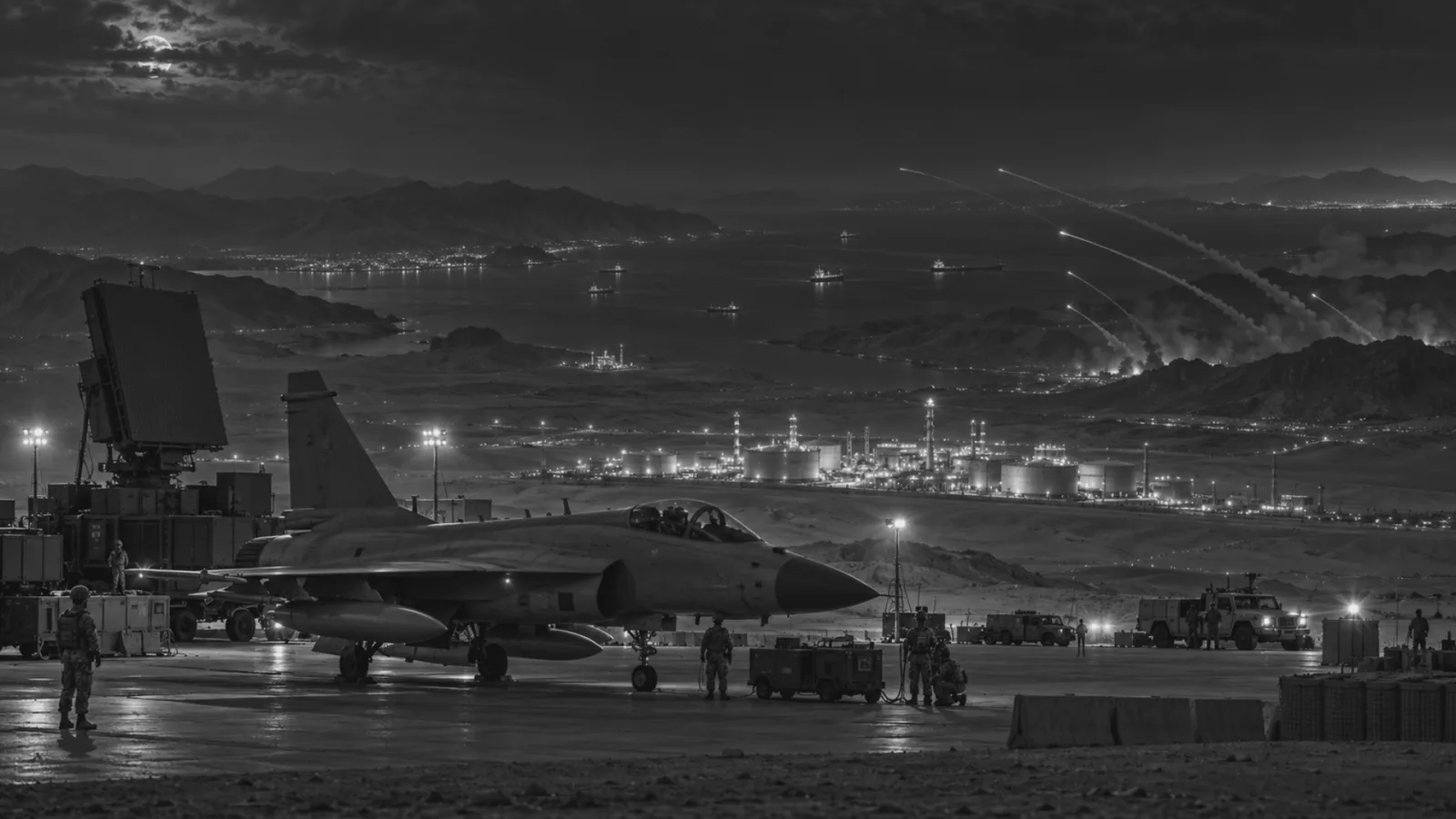
Recent reporting also indicates that Pakistani JF-17 combat aircraft, unmanned aerial systems and HQ-9 air defence systems deployed under earlier bilateral arrangements could be incorporated into the emerging trilateral framework. However, the precise composition, command arrangements and operational status of these deployments have not been comprehensively disclosed through official channels.⁹
This distinction is important because it suggests that the operationalisation of Makkah may initially involve the institutional absorption of existing bilateral military commitments rather than the immediate creation of entirely new multinational military formations. Pakistan and Saudi Arabia already possess experience in bilateral military deployments, training and security cooperation. Incorporating these arrangements into a common institutional framework could allow the alliance to establish an initial operational presence while its more complex command and coordination mechanisms are developed.
CNAWS's 18 October assessment further identified that Egypt's conditional offer of military assistance to Saudi Arabia reflected an emerging regional effort to strengthen Riyadh's defensive capabilities rather than an immediate decision to establish a multinational offensive coalition against the Houthis.¹⁰ The present emphasis on collective defence implementation remains consistent with this distinction. Nevertheless, continued attacks could increase pressure for broader military participation, particularly if existing defensive arrangements prove insufficient to protect Saudi territory and critical infrastructure.
Pakistan's Growing Exposure to Strategic Entanglement in West Asia
Pakistan's participation in the Makkah Defence Alliance has enhanced its geopolitical importance by positioning Islamabad as a formal security partner of Saudi Arabia and Türkiye. The appointment of a Pakistani retired lieutenant general as the alliance's first Secretary-General further strengthens Pakistan's institutional visibility. These developments could provide Islamabad with greater diplomatic influence, access to defence-industrial opportunities and an expanded role in West Asian security affairs.
However, Pakistan's increasing strategic relevance is accompanied by growing exposure to regional conflicts. Islamabad must balance its collective defence commitments to Saudi Arabia against its geographical proximity to Iran, continuing diplomatic engagement with Tehran and existing security requirements along its eastern and western borders. This dilemma becomes particularly pronounced when the security interests of Saudi Arabia require responses against actors aligned with Iran.
Pakistan's experience during the Saudi-led intervention in Yemen in 2015 provides an important historical precedent. On 10 April 2015, Pakistan's parliament adopted a resolution supporting neutrality in the Yemen conflict while reaffirming its commitment to Saudi Arabia's territorial integrity. The resolution reflected concerns over regional escalation, domestic sectarian sensitivities and the consequences of becoming involved in a prolonged external conflict.¹¹
Unlike in 2015, Pakistan now operates within a formal collective defence framework that establishes obligations extending beyond political solidarity. Although the agreement provides flexibility regarding the nature and extent of assistance, sustained requests from Saudi Arabia could progressively restrict Islamabad's ability to maintain a narrowly defined military commitment. The accumulation of successive defensive deployments could generate substantial demands on personnel, maintenance, logistical resources and military readiness even without Pakistan formally entering the Yemen conflict.
Türkiye faces comparable constraints, although its strategic circumstances differ from those of Pakistan. Turkish parliamentary deliberations established that the ratification of the Makkah agreement does not independently authorise the deployment of Turkish troops abroad, which would remain subject to separate parliamentary approval.¹² This demonstrates that the operationalisation of the alliance remains constrained by the domestic legal and political requirements of its individual members.
The principal uncertainty is therefore not whether Pakistan and Türkiye are willing to assist Saudi Arabia, but whether their respective governments can maintain clearly defined limits on that assistance as the regional security situation deteriorates.
Defence-Industrial Cooperation May Have More Enduring Consequences
While the immediate focus of the Islamabad meeting is expected to remain on collective defence implementation, the agreement's provisions concerning defence-industrial cooperation could have more consequential long-term implications for South Asian security. Article 7 establishes a framework for defence co-production, joint research and development, technological innovation, industrial expertise and human resource development. These provisions provide a formal institutional basis for expanding cooperation beyond conventional arms procurement.
In its 1 September 2026 SITREP on the Istanbul meeting, CNAWS assessed that the principal development was not the reported acquisition of individual Turkish weapons systems by Pakistan, but the establishment of an institutional mechanism capable of integrating military cooperation, technology development and joint production. The assessment further identified Pakistan's wartime replenishment capacity as an important variable for India, particularly in the context of military modernisation following Operation Sindoor.¹³
The publication of Article 7 substantiates the institutional component of this assessment. However, whether the framework will generate identifiable production facilities, funded development programmes or meaningful technology transfers remains unverified. Existing bilateral Pakistani–Turkish procurement arrangements cannot automatically be attributed to the Makkah agreement merely because they coincide with its institutional development.
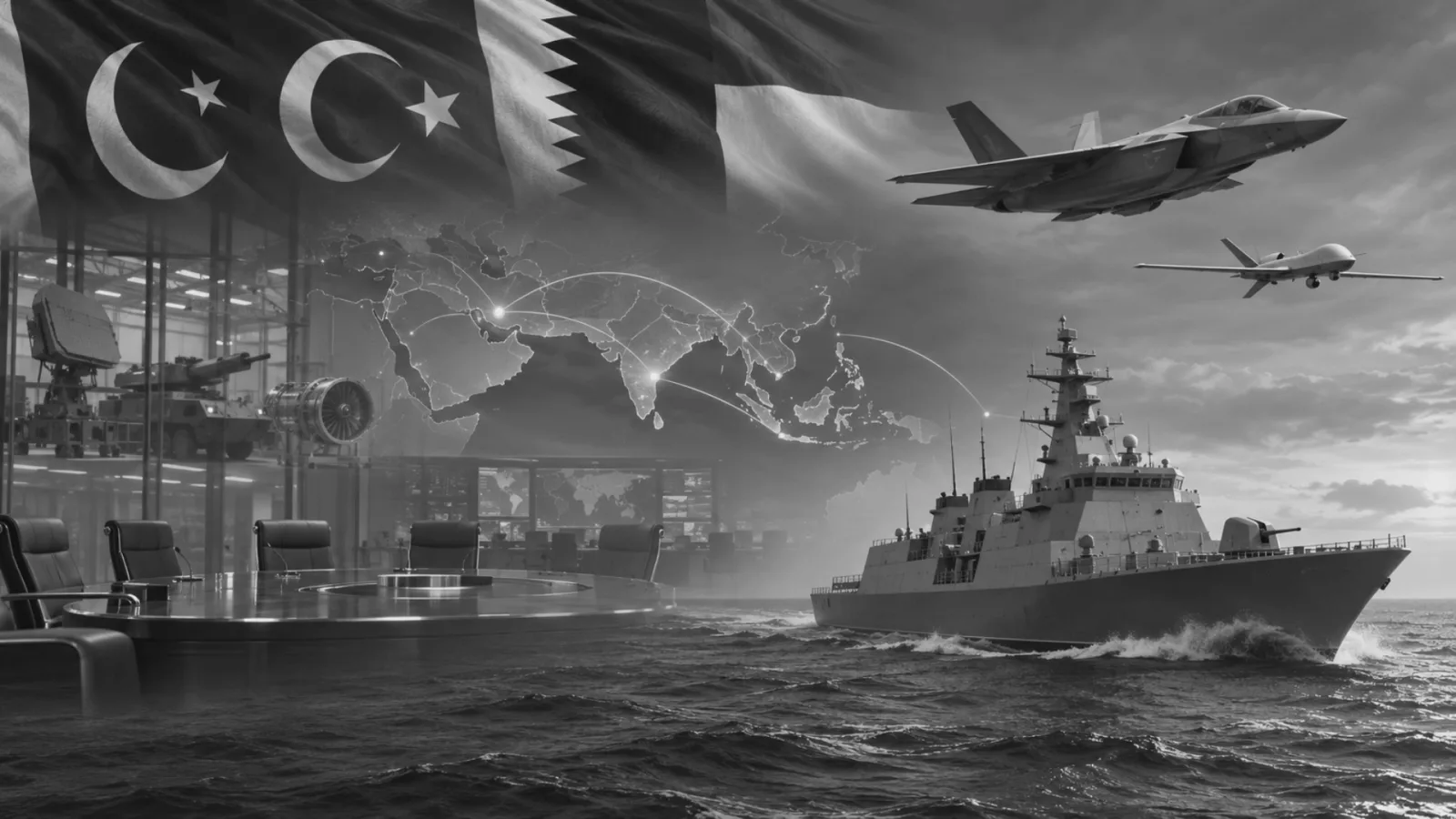
The agreement also needs to be examined alongside the Badr Memorandum of Understanding signed by Pakistan, Türkiye, Qatar and Indonesia on 21 October 2026. As CNAWS assessed on 5 November, Badr establishes a separate multilateral mechanism focused on defence manufacturing, technological cooperation, research and development, and technical training rather than collective defence obligations.¹⁴ Pakistan and Türkiye consequently occupy positions within two overlapping but institutionally distinct defence frameworks.
The potential convergence of these relationships could provide Pakistan with access to additional technological expertise, defence markets and industrial investment. Nevertheless, there is presently no evidence of a unified Makkah–Badr defence-industrial organisation or a coordinated financial mechanism through which Gulf countries have committed resources to specific Pakistani military modernisation programmes.
Implications for India's Strategic Environment
The publication of the complete Makkah agreement provides a stronger evidentiary basis for assessing its implications for India than was available in August. Article 2 confirms that the collective defence commitment is not restricted in its wording to a particular adversary or exclusively to conflicts in West Asia. However, the determination of military assistance remains subject to an assessment of the circumstances, national capabilities, applicable legal obligations and the exercise of self-defence under international law. Consequently, the agreement cannot be interpreted as establishing an automatic Saudi or Turkish military intervention in every future India–Pakistan confrontation.
The more consequential development for India is contained in Article 10. The inclusion of logistical assistance during wartime establishes a legal framework through which alliance members could support one another without necessarily becoming direct participants in hostilities. Such cooperation, if implemented during a future contingency involving Pakistan, could contribute to its ability to sustain military operations over an extended period. The actual availability of such assistance would depend on political decisions, compatibility, existing export restrictions and the willingness of Pakistan's partners to become involved.
Article 9 presents another dimension of concern. Pakistan's access to institutionalised intelligence-sharing arrangements with Saudi Arabia and Türkiye could broaden its exposure to regional threat assessments and security information. However, Türkiye's NATO membership and Saudi Arabia's extensive defence relationship with the United States should not be interpreted as providing Pakistan with automatic access to NATO or American intelligence. Existing information-security obligations and third-party dissemination restrictions would continue to apply.
These developments reinforce CNAWS's original assessment that Pakistan's participation in the Makkah agreement should be examined primarily through its potential to improve Pakistan's military capabilities, logistical resilience and defence-industrial capacity rather than exclusively through the prospect of foreign military intervention. The treaty provisions have now established an institutional and legal foundation for several of these possibilities, although their operational implementation remains incomplete.
For New Delhi, it is equally important to recognise that Saudi Arabia maintains substantial independent economic, energy, diplomatic and defence relationships with India. Riyadh's expanding military relationship with Pakistan does not necessarily indicate a corresponding deterioration in India–Saudi Arabia relations. The extent to which Pakistan can translate its participation in the alliance into strategic advantages against India will depend substantially on how Saudi Arabia and Türkiye interpret their obligations during an actual South Asian security crisis.
CNAWS Assessment
CNAWS assesses with high confidence that the Makkah Defence Alliance has progressed beyond a declaratory collective defence arrangement and is acquiring a permanent institutional structure. The establishment of the SPDC, creation of a secretariat, appointment of its first Secretary-General, publication of the complete agreement and completion of Türkiye's domestic ratification process collectively substantiate this assessment. These developments validate the institutionalisation trajectory identified by CNAWS immediately following the signing of the agreement in August 2026.
CNAWS assesses with moderate confidence that the immediate operational focus of the alliance will remain centred on strengthening Saudi Arabia's defensive capabilities and incorporating existing bilateral military arrangements into the emerging trilateral framework. The continuation of Houthi attacks could nevertheless generate pressure for additional military deployments and progressively expose Pakistan and Türkiye to deeper involvement in the Yemen conflict. The earlier CNAWS assessment concerning incremental mission expansion therefore remains relevant, although direct Pakistani participation in offensive operations inside Yemen has not been independently established.
For India, the most significant development is the emergence of a treaty-based architecture that explicitly encompasses intelligence sharing, wartime logistical assistance, defence production and military interoperability. These provisions substantiate several of the potential areas of cooperation identified in CNAWS's earlier assessments. However, the extent to which they will produce measurable improvements in Pakistan's military capabilities remains contingent upon subsequent implementation.
CNAWS will continue to monitor the establishment of permanent military planning institutions, the allocation of national military contributions, the operational status of intelligence-sharing mechanisms, the conclusion of logistical implementation protocols and the announcement of identifiable joint defence-industrial programmes. The geographical scope of collective defence exercises and the interpretation of Article 2 during future security crises will also remain important indicators of the alliance's evolving strategic orientation.
The Islamabad meeting is therefore significant not because it establishes a fully integrated multinational fighting force, but because it represents another attempt to close the gap between collective defence obligations and the institutional capabilities required to fulfil them. Whether the Makkah Defence Alliance ultimately becomes a credible regional military institution will depend upon its ability to reconcile the different strategic priorities of its members while translating treaty commitments into sustainable military cooperation.
Endnotes
1. Baqir Sajjad Syed and Agence France-Presse, “Makkah Pact Nations Look to Turn Pledges into Action,” Dawn, November 27, 2026, https://www.dawn.com/news/2047378; Reuters, “Pakistan, Saudi, Turkey to Hold Mecca Alliance Meeting in Islamabad Nov 27–28, Sources Say,” November 26, 2026, https://www.reuters.com/world/asia-pacific/pakistan-saudi-turkey-hold-mecca-alliance-meeting-islamabad-nov-27-28-sources-2026-11-26/.
2. Reuters, “Erdogan Completes Turkey's Ratification of Mecca Defence Pact,” November 27, 2026, https://www.reuters.com/world/asia-pacific/erdogan-completes-turkeys-ratification-mecca-defence-pact-2026-11-27/; “President Erdogan Signs Off on Mecca Defense Pact, Sealing Türkiye's Ratification,” Türkiye Today, November 27, 2026, https://www.turkiyetoday.com/nation/president-erdogan-signs-off-on-mecca-defense-pact-sealing-turkiyes-ratification-3233295.
3. CNAWS Research Team, “Saudi Arabia, Turkey and Pakistan Mutual Defence Pact: What the Mecca Agreement Means for West Asia and India,” Centre for New Age Warfare Studies, August 8, 2026, https://cnaws.in/situational-reports/saudi-arabia-turkey-and-pakistan-mutual-defence-pact-what-the-mecca-agreement-means-for-west-asia-and-india.
4. Ministry of Foreign Affairs, Republic of Türkiye, “Strategic Political and Defence Committee of the Makkah Agreement for Joint Defence, Joint Statement,” August 31, 2026, https://www.mfa.gov.tr/strategic-political-and-defence-committee-of-the-makkah-agreement-for-joint-defence--joint-statement--31-august-2026.en.mfa.
5. Ministry of Foreign Affairs, Government of Pakistan, “Joint Statement: Emergency Meeting of the Strategic Political and Defense Committee of the Makkah Alliance for Defense, Riyadh,” October 5, 2026, https://mofa.gov.pk/press-releases/joint-statementemergency-meeting-of-the-strategic-political-and-defense-committee-of-the-makkah-alliance-for-defense-riyadh-5-october-2026.
6. Grand National Assembly of Türkiye, Draft Law on the Approval of the Makkah Agreement for Joint Defence and Foreign Affairs Committee Report, Bill No. 2/3961, Parliamentary Document No. 295, October 30, 2026, https://cdn.tbmm.gov.tr/KKBSPublicFile/D28/Y5/T2/DosyaKomisyonRaporunuVerdi/cd70ebe9-711b-42fe-8baf-896ee6b8eb29.pdf; Lizzie Porter, “Revealed: Full Text of Makkah Defence Pact between Saudi Arabia, Turkey and Pakistan,” The National, October 21, 2026, https://www.thenationalnews.com/news/mena/2026/10/21/revealed-full-text-of-makkah-defence-pact-between-saudi-arabia-turkey-and-pakistan/.
7. CNAWS Research Team, “Pakistan Warns Iran as Houthi Attacks Test Its Saudi Defence Commitment,” Centre for New Age Warfare Studies, September 10, 2026, https://cnaws.in/situational-reports/pakistan-warns-iran-as-houthi-attacks-test-its-saudi-defence-commitment.
8. Ministry of Foreign Affairs, Government of Pakistan, “Transcript of the Press Briefing by the Spokesperson on Friday 09th October, 2026,” October 9, 2026, https://mofa.gov.pk/press-releases/transcript-of-the-press-briefing-by-the-spokesperson-on-friday-09th-october-2026.
9. Syed and Agence France-Presse, “Makkah Pact Nations Look to Turn Pledges into Action,” Dawn, November 27, 2026, https://www.dawn.com/news/2047378.
10. CNAWS Research Team, “Egypt Signals Military Support for Saudi Arabia Against Houthis. Is the Yemen War Becoming a Regional Conflict?,” Centre for New Age Warfare Studies, October 18, 2026, https://cnaws.in/situational-reports/egypt-signals-military-support-for-saudi-arabia-against-houthis-is-the-yemen-war-becoming-a-regional-conflict.
11. National Assembly of Pakistan, The National Assembly of Pakistan Gazette, vol. 2, no. 8 (May 2015), 2, cited in CNAWS Research Team, “Pakistan Warns Iran as Houthi Attacks Test Its Saudi Defence Commitment,” Centre for New Age Warfare Studies, September 10, 2026, https://cnaws.in/situational-reports/pakistan-warns-iran-as-houthi-attacks-test-its-saudi-defence-commitment.
12. Associated Press, “Turkish Lawmakers Approve a 3-Nation Defense Pact with Saudi Arabia and Pakistan,” November 5, 2026, https://apnews.com/article/b17c570820e88891b2d46dd3fbc3a1f6; Directorate of Communications, Presidency of the Republic of Türkiye, “Turkish Parliament's Foreign Affairs Committee Gives Green Light to Mecca Agreement,” October 2026, https://www.iletisim.gov.tr/English/dis_basinda_turkiye/detay/turkish-parliaments-foreign-affairs-committee-gives-green-light-to-mecca-agreement-isna.
13. CNAWS Research Team, “Istanbul Trilateral Defence Meeting Pushes Pakistan–Türkiye Cooperation Toward Joint Production,” Centre for New Age Warfare Studies, September 1, 2026, https://cnaws.in/situational-reports/istanbul-trilateral-defence-meeting-pushes-pakistan-t-rkiye-cooperation-toward-joint-production.
14. CNAWS Research Team, “Badr Defence Agreement: Pakistan Building a New Defence-Industrial Network with Türkiye, Qatar and Indonesia,” Centre for New Age Warfare Studies, November 5, 2026, https://cnaws.in/situational-reports/badr-defence-agreement-pakistan-building-a-new-defence-industrial-network-with-t-rkiye-qatar-and-indonesia.
Tags
Author