Department of Strategic Foresight & Scenario Planning · Articles · Defence Technology ·
Exercise Pitch Black 2026: What the World's Largest Air Combat Exercise Reveals About the Future of Modern Warfare
Exercise Pitch Black 2026 represents far more than a multinational air combat exercise; it serves as a strategic testbed for the future of coalition warfare in the Indo-Pacific. Bringing together over 100 aircraft and personnel from 20 nations, the exercise evaluates how allied forces integrate advanced airpower, resilient command-and-control networks, electronic warfare, intelligence sharing, and dispersed operations in contested environments. As military competition increasingly emphasizes information dominance and interoperability rather than platform superiority alone, Pitch Black offers valuable insights into the operational concepts, technological integration, and coalition readiness that are likely to define modern air warfare in future high-intensity conflicts.
From 20 July to 7 August 2026, the skies above Australia's Northern Territory will once again host one of the world's most sophisticated multinational air combat exercises. Exercise Pitch Black 2026, organized by the Royal Australian Air Force (RAAF), will bring together more than 100 aircraft and approximately 2,500 military personnel from 20 participating nations. At first glance, the exercise appears to be a demonstration of military aviation, with formations of advanced fighter aircraft conducting complex combat scenarios across one of the largest military training areas in the world. Yet focusing solely on the aircraft would miss the broader significance of what Pitch Black represents.
Modern warfare has fundamentally changed. Airpower is no longer measured primarily by the speed of an aircraft, the range of its missiles, or the number of bombs it can carry. Instead, contemporary military effectiveness depends upon the ability to collect information, distribute it securely, maintain command under electronic attack, sustain dispersed operations over long distances, and integrate multinational forces into a single operational network. In this environment, exercises such as Pitch Black function less as flying demonstrations and more as laboratories where emerging concepts of warfare are tested under realistic conditions.
The strategic relevance of Pitch Black has grown alongside the changing security environment in the Indo-Pacific. Increasing military modernization across the region, expanding missile capabilities, sophisticated electronic warfare systems, and the growing likelihood that any future conflict would involve multiple coalition partners have transformed the requirements of air operations. Modern air forces must now prepare to fight in contested electromagnetic environments while coordinating with allies that operate different aircraft, communications systems, doctrines, and command structures. Pitch Black provides one of the few opportunities where these challenges can be addressed simultaneously.
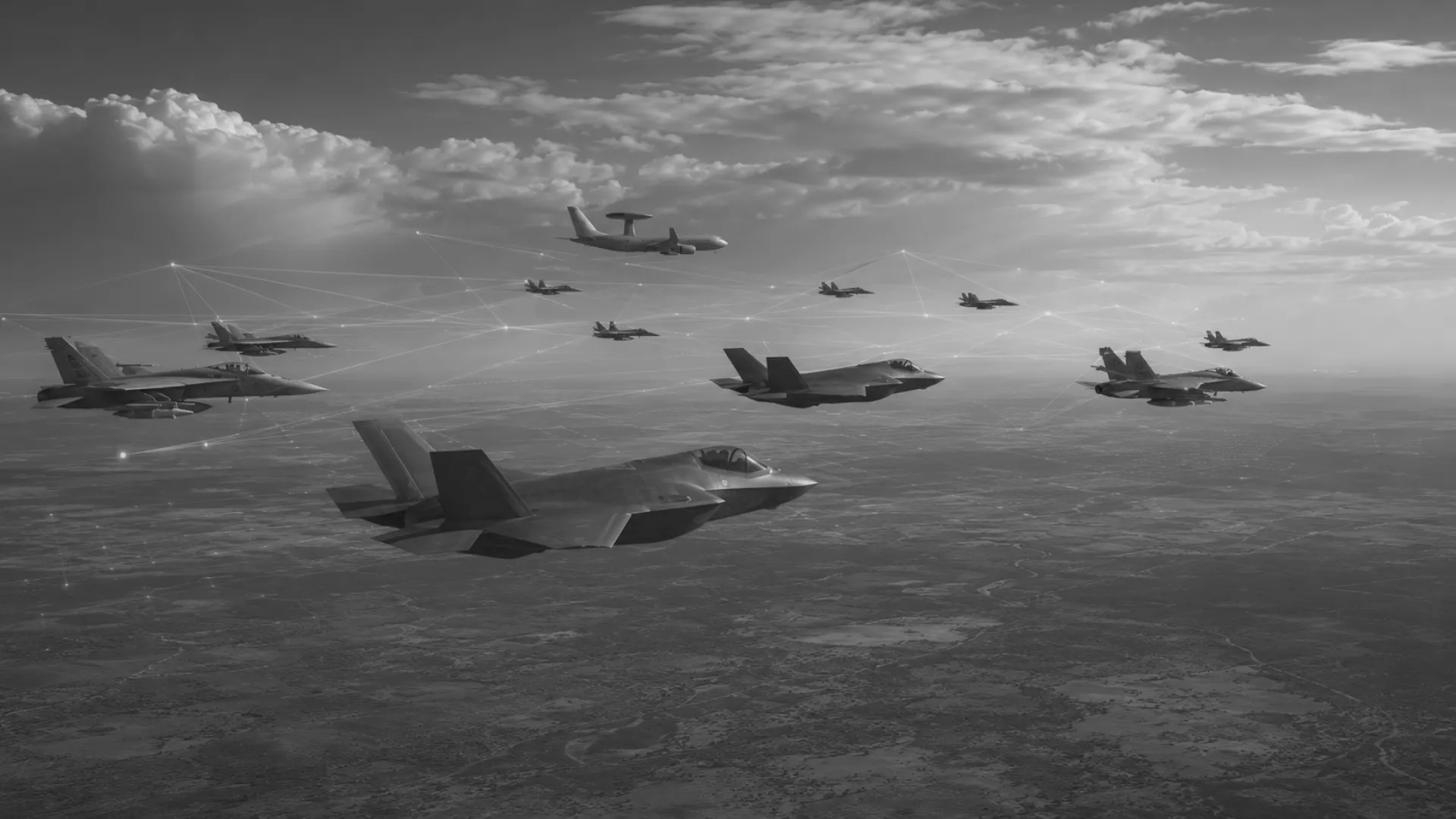
Perhaps the most important transformation reflected in Pitch Black is the changing role of combat aircraft themselves. During much of the twentieth century, fighters operated primarily as individual weapons platforms. Success depended upon the pilot's skill, aircraft performance, and weapon capabilities. Fifth generation airpower has fundamentally altered this relationship. According to Layton (2021), fifth generation aircraft should no longer be viewed simply as fighters but rather as information nodes within an integrated combat network. Aircraft such as the F-35 Lightning II continuously collect information from radar, infrared sensors, electronic support measures, and other onboard systems before fusing these inputs into a comprehensive picture of the battlespace.
The value of this information extends far beyond the aircraft carrying the sensors. Through secure tactical data links, this situational awareness can be shared across multiple platforms, allowing coalition aircraft to operate using a common operational picture rather than relying solely on their individual sensors. This evolution has given rise to the concept often described as the "combat cloud," where every participating platform contributes to and benefits from a shared information environment (Layton, 2021).
Pitch Black 2026 provides an ideal setting for testing this concept because of its diverse aircraft inventory. Advanced stealth platforms such as the F-35 operate alongside fourth and fourth-and-a-half generation aircraft including the Rafale, Eurofighter Typhoon, F-16, and other coalition fighters. Rather than replacing older aircraft, modern operational doctrine increasingly emphasizes combining their complementary strengths. Fifth generation aircraft penetrate contested airspace while minimizing detection, identify high value targets, and transmit targeting information to legacy aircraft operating outside heavily defended zones. Those legacy platforms often carry larger missile loads, allowing them to act as the primary shooters while stealth aircraft function as forward sensors (Guastella, 2023).
This evolution demonstrates that technological superiority today depends less upon possessing the most advanced individual platform than upon integrating multiple systems into a coherent network. A coalition that shares information effectively gains advantages in detection, decision making, targeting, and survivability. Conversely, a technologically advanced aircraft operating in isolation cannot fully exploit its capabilities. Modern air superiority increasingly belongs to the force that processes and distributes information faster than its opponent.
This emphasis on information naturally elevates the importance of command and control. In any large multinational exercise, the greatest challenge is rarely convincing aircraft to fly together. The greater challenge lies in ensuring that pilots, airborne warning aircraft, ground controllers, and command centres maintain synchronized situational awareness while operating under conditions designed to simulate modern electronic warfare.
Future conflicts are expected to involve extensive attempts to disrupt communications, degrade satellite navigation, interfere with radar systems, and isolate military formations through electronic attack. Alkire et al. (2018) argue that traditional centralized command structures become increasingly vulnerable in such environments because decision making slows dramatically when communications are degraded. Modern air operations therefore rely more heavily upon decentralized execution guided by clearly defined commander's intent.
Exercises like Pitch Black expose participating forces to these operational realities. Simulated GPS denial, communications jamming, radar deception, and electronic interference force pilots and controllers to adapt their decision making under conditions that closely resemble modern peer conflict. Rather than depending upon continuous guidance from higher headquarters, tactical formations must retain sufficient autonomy to continue executing their assigned missions despite degraded communications.
Preparing for these scenarios begins long before aircraft arrive in Australia. Synthetic collective training has become an increasingly important component of multinational exercises. Advanced distributed simulation networks allow pilots, air battle managers, and command staffs located in different countries to rehearse complex scenarios before conducting live flying operations. Best (2012) notes that synthetic training significantly enhances operational readiness while allowing commanders to replicate situations that would be impractical or prohibitively expensive during live exercises. Crane (2010) similarly emphasizes the growing importance of distributed simulation in preparing air forces for large force employment scenarios involving multiple nations.
By combining extensive simulation with live flying, exercises such as Pitch Black create opportunities to evaluate command relationships, communications procedures, and coalition coordination before these systems are tested under real operational pressures. This layered approach reflects a broader recognition that command and control is increasingly an information management challenge rather than simply an organizational function.
The geographical setting of Pitch Black also illustrates another major shift in contemporary military thinking. For decades, airpower relied heavily upon large centralized airbases capable of supporting sustained combat operations. These installations concentrated aircraft, maintenance facilities, fuel supplies, and command infrastructure in relatively secure locations. However, the emergence of long-range precision strike weapons has fundamentally altered this assumption.
Potential adversaries now possess ballistic missiles, cruise missiles, hypersonic weapons, and long-range unmanned systems capable of striking fixed military infrastructure during the opening stages of conflict. Large airbases have consequently become highly attractive targets. Fuell (2014) argues that future conflicts involving technologically advanced adversaries are likely to begin with attempts to neutralize airpower before aircraft even become airborne.
In response, air forces across the Indo-Pacific have increasingly embraced Agile Combat Employment. Rather than concentrating aircraft at a limited number of major installations, forces disperse across multiple operating locations, including smaller military facilities and, where feasible, civilian airfields. Aircraft frequently relocate between locations, reducing predictability while complicating enemy targeting.
Northern Australia provides an exceptionally valuable environment for testing this concept. The enormous distances separating regional airfields create realistic logistical challenges that closely resemble those likely to be encountered during operations across the Indo-Pacific. Reynolds (2024) observes that northern Australia's geography provides both strategic depth and significant sustainment difficulties. Maintaining combat aircraft across dispersed operating locations requires fuel distribution, spare parts management, maintenance support, munitions handling, and secure communications over thousands of kilometres.
Pitch Black therefore examines much more than tactical aviation. It evaluates whether coalition logistics can sustain distributed combat operations across a theatre where infrastructure is limited and distances are immense. Success depends upon engineers, logistics specialists, maintenance crews, communications personnel, and planners as much as fighter pilots. Modern warfare increasingly rewards organizations capable of sustaining dispersed operations rather than simply generating impressive combat sorties.
The multinational character of Pitch Black further illustrates the growing importance of coalition interoperability. Twenty participating nations bring together different operational doctrines, aircraft types, communications architectures, maintenance procedures, and national command authorities. Building an effective coalition therefore requires much more than diplomatic cooperation. It requires technical interoperability, procedural standardization, and mutual trust developed through repeated operational interaction.
Exercises provide the environment in which these relationships mature. Pilots learn how partner nations conduct missions. Command staffs refine decision making processes. Communications specialists identify compatibility problems before they become operational failures. Logistics organizations practice supporting foreign aircraft. Intelligence personnel establish common methods for information sharing. These seemingly routine interactions create the practical foundations upon which future coalition operations depend.
This aspect has become increasingly important within the Indo-Pacific security architecture. Australia's defence strategy emphasizes working closely with regional and extra regional partners to preserve a stable balance of power across the region. Rather than preparing for unilateral military action, Australian planning increasingly assumes that any major contingency would involve extensive multinational cooperation.
Pitch Black reflects this strategic reality by bringing together countries from North America, Europe, Southeast Asia, South Asia, and the Pacific. Participants include members of established alliances alongside emerging security partners that may not routinely operate together. The exercise therefore contributes not only to tactical proficiency but also to broader strategic integration across an increasingly interconnected security environment.
Within this framework, the concept of integrated deterrence becomes particularly relevant. Traditional deterrence often relied upon demonstrating superior military strength. Contemporary deterrence increasingly depends upon demonstrating that potential adversaries would face a unified and coordinated coalition capable of responding collectively. Walia (2024) argues that Australia's National Defence Strategy increasingly adopts a strategy of denial, seeking to convince potential adversaries that military aggression would impose unacceptable costs while offering limited prospects for success.
Exercises such as Pitch Black contribute directly to this objective. They demonstrate that participating nations possess not only advanced military capabilities but also the practical experience required to integrate those capabilities under realistic operational conditions. This credibility matters because coalition effectiveness cannot be improvised during crises. Trust, interoperability, communications procedures, and command relationships must be developed through years of repeated cooperation.
Another often overlooked dimension of Pitch Black concerns the evolution of the battlespace itself. Air combat today extends well beyond aircraft manoeuvring through physical airspace. Every mission unfolds simultaneously across multiple interconnected domains including cyberspace, the electromagnetic spectrum, space-based communications, intelligence networks, and logistics systems. An aircraft's effectiveness increasingly depends upon satellite connectivity, secure data transmission, resilient software, electronic protection, and uninterrupted access to information.
Consequently, modern air superiority is becoming multidimensional. Destroying enemy aircraft remains important, but disrupting command networks, denying information, degrading navigation systems, or interfering with logistics may achieve similar operational effects without direct kinetic engagement. Pitch Black's increasingly sophisticated electronic warfare scenarios reflect this changing character of conflict by exposing participants to operational environments where information itself becomes a contested resource.
Viewed through this broader perspective, Exercise Pitch Black 2026 is not simply preparing pilots for future wars. It is preparing entire military organizations for a form of warfare where success depends upon integrating technology, logistics, command systems, alliances, and operational adaptability into a single coherent capability. Aircraft remain essential, but they now represent only one component within a much larger system.
The enduring value of Pitch Black therefore lies not in showcasing advanced fighter aircraft but in demonstrating how modern militaries intend to fight together under the demanding conditions expected in future conflicts. It recognizes that information must move faster than missiles, logistics must keep pace with manoeuvre, command structures must survive electronic disruption, and coalitions must function as unified operational networks rather than collections of independent national forces.
As the Indo-Pacific continues to emerge as one of the world's most strategically significant regions, exercises of this scale will become increasingly important. They provide opportunities not only to improve tactical competence but also to refine the operational concepts that are likely to define future warfare. Exercise Pitch Black 2026 ultimately serves as a reminder that airpower in the twenty first century is no longer defined solely by aircraft performance. It is defined by the ability to connect people, platforms, information, and nations into a resilient and adaptive combat system capable of prevailing in one of the most complex operational environments modern militaries have ever faced.
References
- Alkire, B., Lingel, S., Baxter, C., Carson, C., Chen, C., Gordon, D., Hanser, L., Menthe, L., & Romano, D. (2018). Command and Control of Joint Air Operations in the Pacific: Methods for Comparing and Contrasting Alternative Concepts. RAND Corporation.
- Best, C. (2012). Air Force Synthetic Training Effectiveness Research in the Australian Context. NATO Science and Technology Organization.
- Crane, P. (2010). Preparing for Large Force Exercises with Distributed Simulation: A Panel Presentation. Defense Technical Information Center.
- Fuell, L. (2014). Broad Trends in Chinese Air Force Modernization. U.S. China Economic and Security Review Commission.
- Guastella, J. (2023). Accelerating Fifth Generation Airpower: Bringing Capability and Capacity to the Merge. Mitchell Institute for Aerospace Studies.
- Layton, P. (2021). Fifth Generation Air Warfare. Royal Australian Air Force Air Power Development Centre.
- Reynolds, C. (2024). Potential use of civilian airfields to improve resilience of air operations in Northern Australia. The Forge, Australian Defence College.
- Walia, S. (2024). Australia's National Defence Strategy through the Lens of India in the Indo-Pacific Region. Centre for Air Power Studies.
Tags
- #artificial intelligence in warfare
- #Defence Technology and Future Warfare
- #fifth generation fighter
- #future air warfare
- #future warfare
- #India fighter aircraft
- #Indian Air Force
- #kill web warfare
- #modern warfare
- #Modern Warfare and Air Defence
- #multi-domain warfare
- #Multi-layered Air Defence
- #network centric warfare
- #next generation warfare
- #precision strike warfare
- #Rafale fighter jets
- #Space Warfare
- #warfare technology
Author
Sushant Pawar
Sushant serves as the Intelligence/ Lead Analyst for the Pakistan Security Desk at CNAWS, specializing in the Balochistan insurgency and Tehrik-e-Taliban Pakistan (TTP). His work spans monitoring the broader regional security environment , including insurgency trends, militant networks, and cross-border dynamics, to assess their impact on stability across South Asia. Beyond terrorism analysis, Sushant tracks Pakistan's evolving political and security landscape, delivering insights that inform regional stability and India's national security priorities.