
India's Land Warfare Doctrine 2026 Explained: How the Indian Army Plans to Fight Future Wars
1. What Is a Land Warfare Doctrine, and Why Does It Matter?
A military doctrine is a framework of authoritative principles that guides how armed forces understand, prepare for and conduct military operations. Unlike a national security strategy, which identifies broader political and security objectives, a land warfare doctrine primarily addresses how ground forces should be organised, trained, equipped and employed to accomplish military objectives. It provides conceptual direction for operational planning, force development, military education, procurement priorities and coordination between different combat arms and supporting services. Doctrine does not necessarily prescribe a rigid sequence of actions for every contingency; rather, it establishes a common understanding of how military power should be applied while allowing commanders to exercise judgement according to the operational environment. A well-developed doctrine must therefore reconcile two competing requirements: sufficient standardisation to ensure organisational coherence and adequate flexibility to respond to unforeseen battlefield circumstances.
For the Indian Army, the importance of land warfare doctrine is closely associated with the country's geographical and strategic circumstances. India maintains extensive and disputed land frontiers with China and Pakistan, operates across exceptionally diverse terrain ranging from high-altitude mountains to deserts and densely populated areas, and continues to undertake counterterrorism and internal security responsibilities. These operational conditions require military formations capable of conducting conventional operations, border defence, limited military responses, counterterrorism missions and other activities across the spectrum of conflict. The increasing influence of emerging technologies adds another layer of complexity because the effectiveness of traditional ground formations can now be affected by cyberattacks, satellite surveillance, electronic interference and relatively inexpensive unmanned systems. Consequently, a contemporary land warfare doctrine must address not only how the Army fights on the ground but also how it operates within a broader military environment shaped by capabilities that may be controlled by other services or national agencies.
2. Evolution of India's Land Warfare Doctrine: From Conventional Warfare to Multi-Domain Operations
India's approach to land warfare has evolved through successive doctrinal revisions, reflecting changes in military technology, geopolitical conditions and the nature of threats confronting the country. Earlier doctrinal publications appeared in 1998 and 2004, while subsequent developments included the Joint Doctrine of the Indian Armed Forces in 2017 and the Indian Army's Land Warfare Doctrine in December 2018. The evolution of these frameworks must also be understood against the experience of the 1971 India–Pakistan War, the 1999 Kargil conflict and the prolonged military mobilisation undertaken during Operation Parakram in 2001–2002. While earlier conventional military planning placed considerable emphasis on large formations, mobilisation and territorial objectives, the emergence of nuclear weapons in South Asia created additional constraints on the duration, scale and political management of military operations. These developments increasingly encouraged doctrinal thinking about rapid mobilisation, limited military objectives and the integration of different combat capabilities.³
The debate surrounding the Indian Army's so-called Cold Start concept reflected these pressures. Emerging in the aftermath of Operation Parakram, the concept was widely associated with proposals for rapidly deployable, integrated forces capable of undertaking limited conventional operations against Pakistan before international diplomatic intervention or nuclear escalation could constrain military options. Its precise status, feasibility and implementation remained contested, however, and the concept should not be confused with a uniformly implemented or uncontested official operational plan. The underlying challenge was nevertheless significant: India required military options that were sufficiently rapid and credible to deter or respond to aggression while remaining politically controllable in an environment characterised by nuclear deterrence. As strategic analyst Shashank Joshi argued in his study of India's limited-war doctrine, the effectiveness of doctrinal innovation depended not merely on conceptual changes but also on overcoming structural, organisational and political obstacles to implementation.⁴
The Land Warfare Doctrine 2018 expanded the Army's conceptual understanding of future conflicts by explicitly addressing collusive threats, hybrid warfare, multi-domain operations and the technological transformation of the battlefield. It envisaged a greater role for Integrated Battle Groups, improvements in intelligence, surveillance and reconnaissance (ISR), precision strikes, inter-theatre mobility and the integration of soldiers with artificial intelligence and robotic systems. It also recognised the importance of cyber warfare, electronic warfare, space-based capabilities, psychological operations and information warfare across both conventional and sub-conventional environments. Particularly relevant was its recognition that future conflicts could unfold within a grey zone in which states were neither fully at peace nor engaged in declared war, and where conventional military power would increasingly interact with non-contact and irregular forms of conflict. These provisions demonstrate that the intellectual foundations of the 2026 transformation were already present in India's earlier doctrine, even though the technologies available to implement them have evolved considerably.⁵
The fundamental difference between 2018 and 2026 is therefore best understood as a possible shift in emphasis from recognising technological change to institutionalising the means of operating in a technologically contested battlespace. Whereas the 2018 doctrine identified artificial intelligence, robotic systems, precision weapons and multi-domain warfare as important elements of future combat, the 2026 framework has emerged in an environment where inexpensive drones can threaten expensive armoured platforms, electronic warfare can disrupt communications at tactical level, and intelligence gathered through commercial or military sensors can influence the battlefield in near real time. The challenge for the Indian Army is no longer confined to developing conceptual awareness of these technologies; it increasingly involves incorporating them into everyday training, operational planning, formation structures, logistics and battlefield decision-making.
3. Why Did India Need a New Land Warfare Doctrine in 2026?
The strategic environment confronting the Indian Army has changed substantially since the publication of the 2018 doctrine. The military confrontation between India and China in eastern Ladakh beginning in 2020 demonstrated the continuing relevance of territorial disputes, high-altitude deployments, strategic mobility and sustained military preparedness. The violent confrontation in the Galwan Valley exposed the possibility of serious military escalation even under an established framework of bilateral agreements and confidence-building measures. The subsequent deployment of substantial military resources and the requirements of maintaining formations in difficult terrain reinforced the importance of infrastructure, logistics, surveillance and rapid reinforcement. Although India and China reached an understanding concerning disengagement in Depsang and Demchok in October 2024, the experience highlighted the limits of assuming that diplomatic mechanisms alone could prevent sudden changes in the operational environment.⁶
The Russia–Ukraine war has provided another important reference point for contemporary land warfare, particularly regarding the relationship between surveillance, precision weapons, electronic warfare and traditional manoeuvre operations. The widespread employment of reconnaissance drones, first-person-view (FPV) attack drones, loitering munitions and electronic warfare systems has altered the conditions under which military formations move, concentrate and engage enemy forces. Armoured vehicles, artillery positions, logistics installations and troop concentrations face greater exposure when adversaries can maintain persistent observation over large portions of the battlefield. Research undertaken by the Royal United Services Institute (RUSI) has documented the continuous adaptation of Russian and Ukrainian forces, including changes in ground combat, fire support, engineering, air defence and logistics. Importantly, the Ukraine experience does not demonstrate that traditional platforms have become obsolete; rather, it shows that their survivability increasingly depends on how effectively they are integrated with reconnaissance, electronic protection, camouflage, air defence and supporting systems.⁷
For India, Operation Sindoor in May 2025 provided a more immediate operational context. Following the terrorist attack in Pahalgam on 22 April 2025, India conducted military strikes against targets it identified as terrorist infrastructure in Pakistan and Pakistan-occupied Jammu and Kashmir. The confrontation subsequently expanded to include aerial attacks, missiles, drones, electronic warfare, air defence operations and cross-border artillery engagements. Indian government accounts highlighted the importance of integrated counter-unmanned aerial systems, layered air defence, indigenous weapons and inter-service coordination. The episode demonstrated the challenges of conducting politically calibrated military operations in an environment where precision strikes can be followed by rapid counteraction and escalation across multiple domains. It also illustrated why modern land operations cannot be separated from air defence, intelligence integration, electronic warfare and strategic communication. These lessons remain particularly relevant because India's future military confrontations may involve limited periods of intense combat rather than the prolonged mobilisation and territorial campaigns traditionally associated with conventional warfare.⁸
4. What Does India's Land Warfare Doctrine 2026 Actually Envisage?
The Ministry of Defence's official announcement of 23 October 2026 described the revised doctrine as an overarching framework intended to prepare the Indian Army for future conflicts and the evolving character of warfare. During its release, Defence Minister Rajnath Singh emphasised the necessity of developing a strategic vision extending over the next two to three decades while retaining the flexibility to respond to immediate threats. He also identified artificial intelligence, autonomous systems, data analytics, cybersecurity, secure communications, operational integration and indigenous defence capabilities as important areas requiring accelerated development. Significantly, the Defence Minister maintained that land warfare and ground forces would remain indispensable despite the increasing military importance of air, maritime, cyber and space capabilities. These statements establish the officially confirmed direction of India's contemporary military transformation, although they do not constitute a comprehensive disclosure of the doctrine's detailed provisions.¹
Contemporary reporting based on military sources provides additional information about the revised framework. According to The Times of India, the doctrine places emphasis on technologically enabled operations, precision warfare, human leadership, manned–unmanned teaming, operational flexibility, resilient logistics and a whole-of-nation approach to national defence. The reporting also suggests that commanders are expected to adapt their operational approaches to changing threats, terrain and mission requirements while retaining the ability to function in technologically contested environments. Meanwhile, The Tribune reported the development of a five-year roadmap for multi-domain training, a three-level artificial intelligence skills programme for officers and an initiative to make drone operations a secondary skill across the Army. These reported measures indicate an institutional effort to move technological capabilities beyond specialised formations and incorporate them into wider military practice. However, until the complete doctrine becomes available for independent examination, the precise status, scope and implementation mechanisms of individual provisions should be treated with appropriate caution.⁹ ¹⁰
The emerging doctrinal direction nevertheless suggests a broader understanding of military effectiveness in which land power is supported by superior information processing, distributed sensing, responsive precision fires, adaptive command arrangements and the ability to continue operations despite technological disruption. Rather than viewing emerging systems as isolated additions to conventional military equipment, the Army appears increasingly focused on integrating technology with existing combat formations, training structures and operational procedures. The success of this approach will ultimately depend on whether the integration generates measurable improvements in military capability rather than merely increasing the number of technological systems available to individual formations.
5. Multi-Domain Operations: Why Future Land Wars Will Not Be Fought on Land Alone
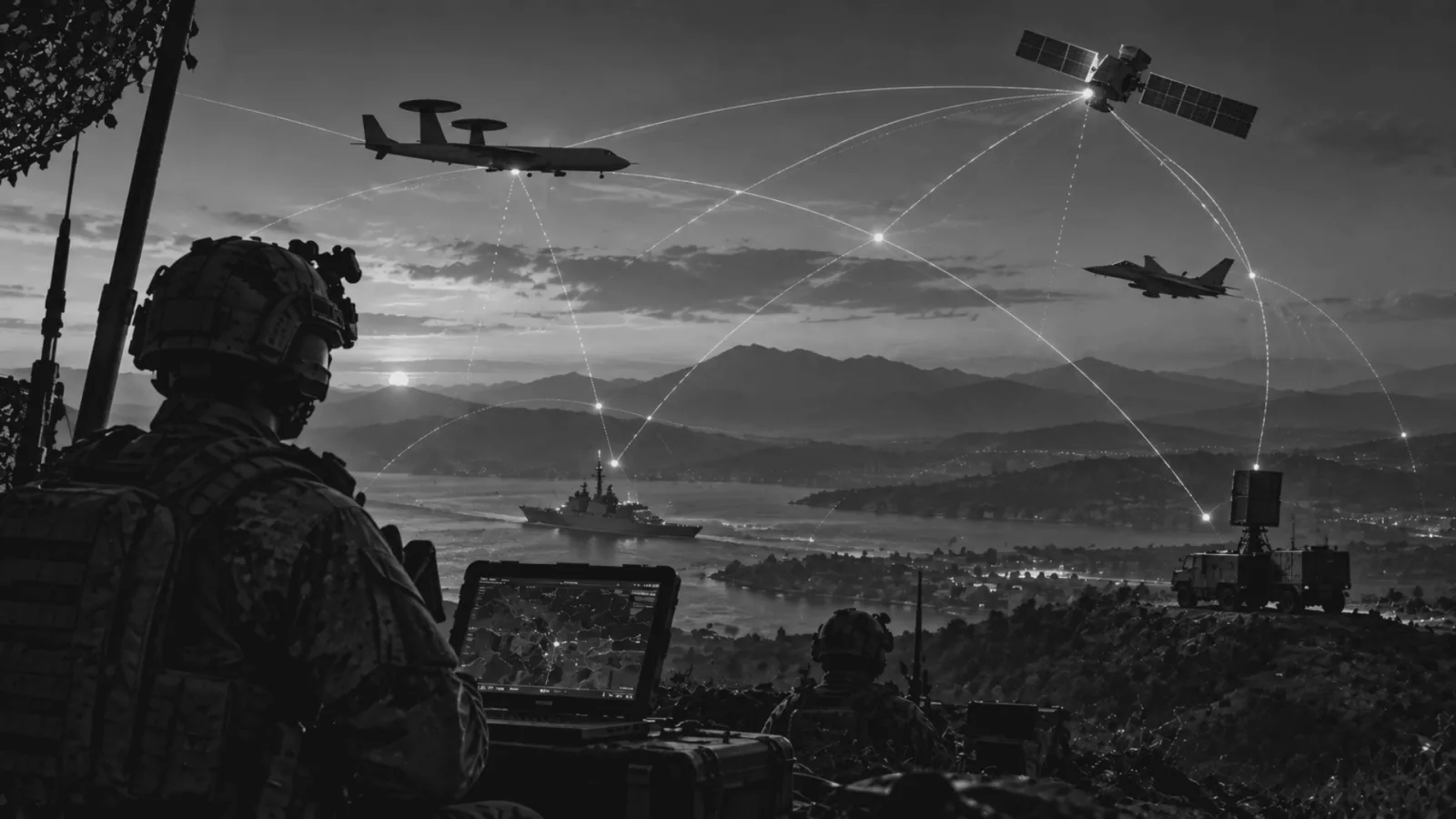
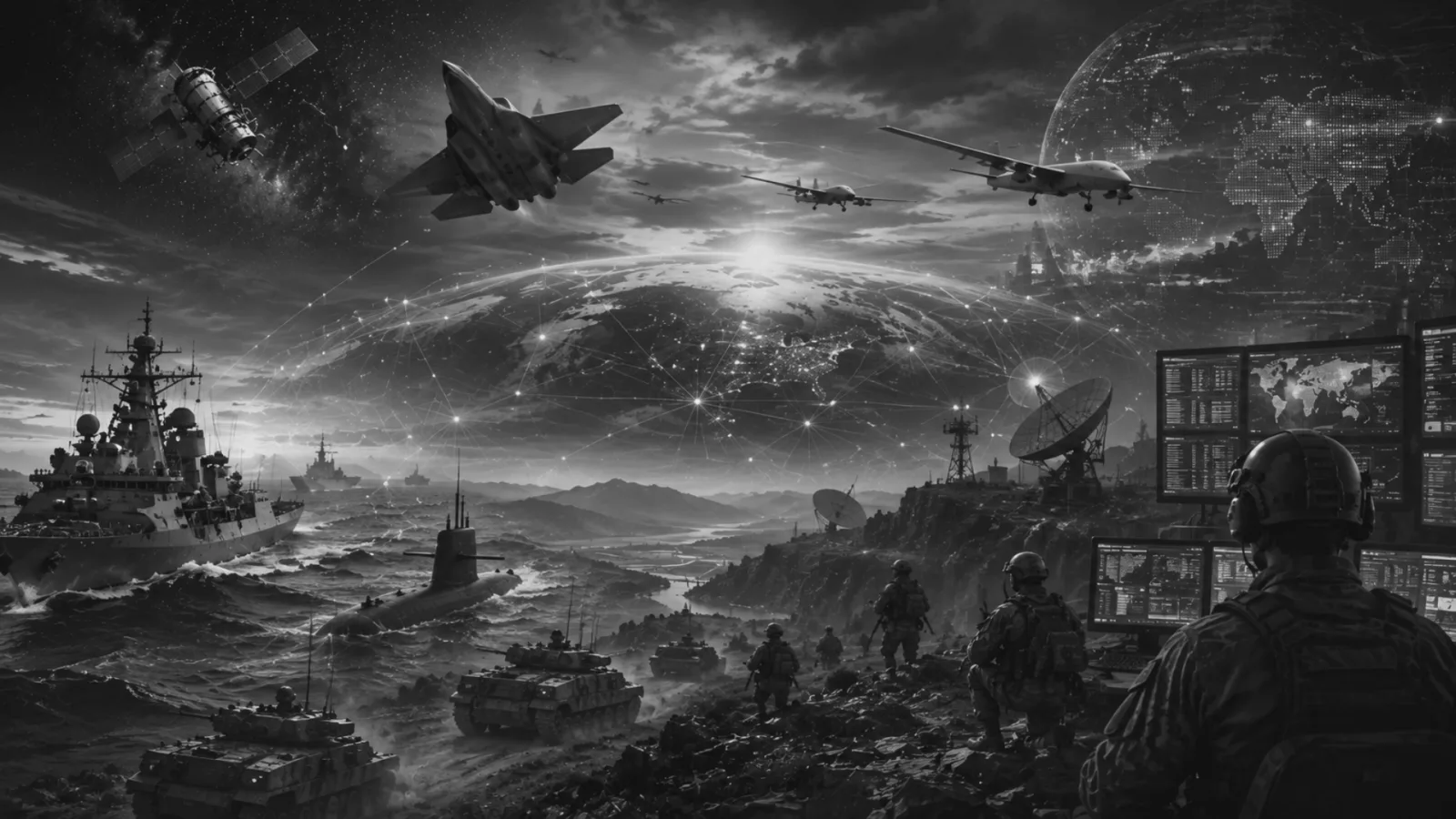
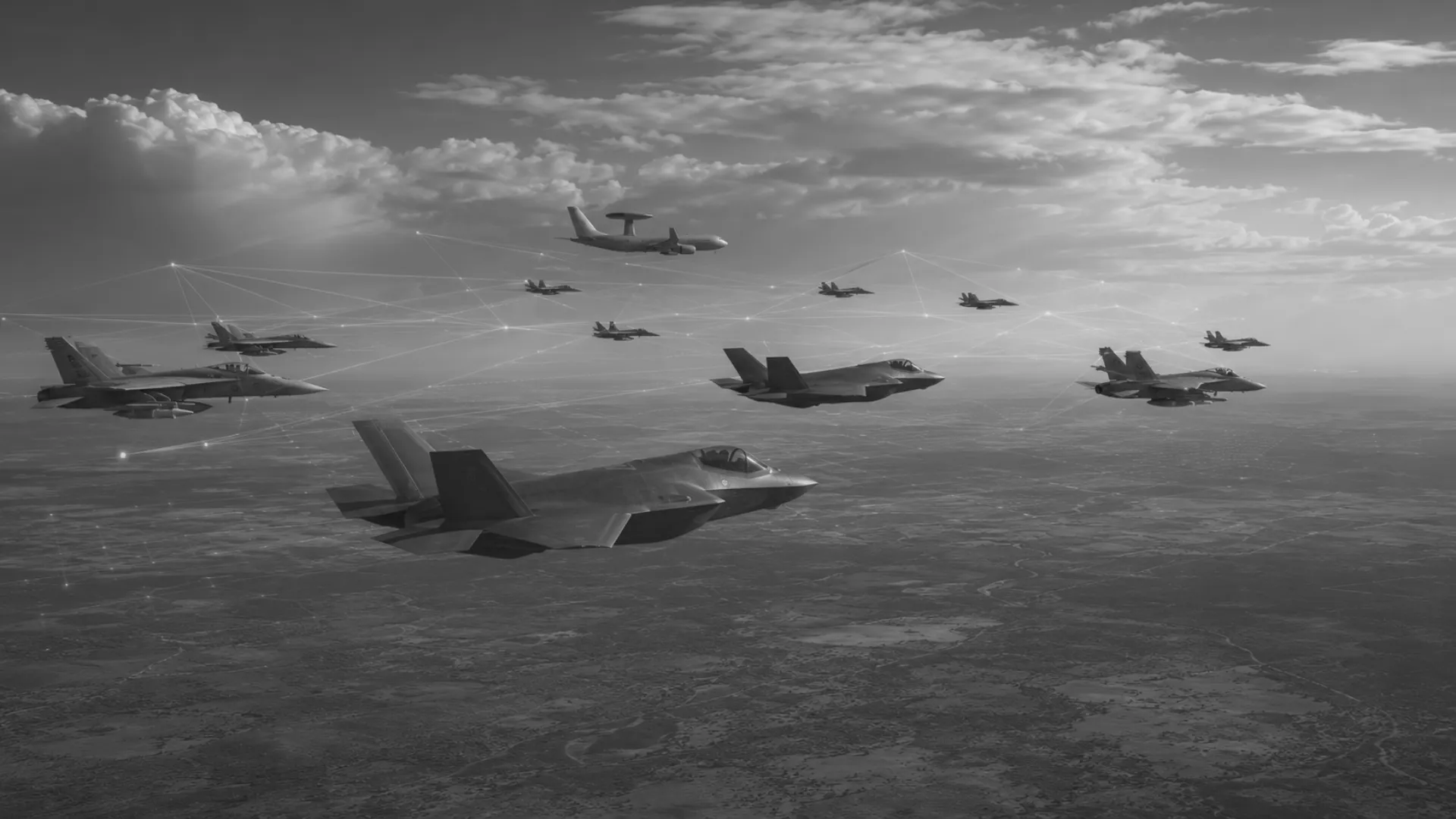
Multi-domain operations refer to the coordinated employment of military capabilities across several operational environments, including land, air, maritime, space and cyberspace, while accounting for the electromagnetic and information dimensions of conflict. The underlying principle is that actions undertaken in one domain can create opportunities, impose constraints or generate decisive effects in another. For example, ground forces may depend on satellite-enabled surveillance for situational awareness, aircraft for reconnaissance and close support, electronic warfare systems for protection against hostile communications and drones, and cyber-secure networks for coordinating dispersed military units. The effectiveness of these capabilities increasingly depends on their interoperability rather than their independent technical sophistication. Consequently, an Army formation equipped with modern weapons but unable to exchange timely information with supporting capabilities may remain operationally disadvantaged against a more effectively integrated opponent.
India's doctrinal transition towards multi-domain warfare predates the 2026 land doctrine. On 27 August 2025, Defence Minister Rajnath Singh released the Joint Doctrine for Multi Domain Operations during the RAN SAMWAD seminar at the Army War College in Mhow. The initiative formed part of broader efforts to strengthen jointness among India's armed forces and develop a shared approach to future military operations. The 2026 Land Warfare Doctrine should therefore be understood within this larger doctrinal and organisational transformation rather than as an isolated Army-level initiative. Its significance lies in the potential alignment of ground-force capabilities with the requirements of joint military operations, particularly the integration of surveillance, targeting, command arrangements, communications and logistics across service boundaries.¹¹
The practical challenge, however, is that multi-domain operations require more than compatible military doctrines. They depend on the development of interoperable communications systems, common operational pictures, reliable information-sharing arrangements and clearly defined command responsibilities. The discussion surrounding integrated theatre commands is therefore relevant, although the concept of multi-domain warfare should not be treated as synonymous with theatreisation. An integrated theatre command is an organisational arrangement intended to bring designated military capabilities under unified operational command, whereas multi-domain operations describe a method of coordinating effects across operational environments. The Indian Armed Forces can improve multi-domain integration through joint planning, training and interoperability even before completing major command reforms, but unresolved questions about authority, resource allocation and command relationships may constrain the full exploitation of these capabilities.
6. Drones and Manned–Unmanned Teaming: Transforming the Battlefield
Perhaps the most visible transformation in contemporary land warfare has been the rapid proliferation of unmanned aerial systems. Drones have evolved from relatively specialised reconnaissance platforms into a diverse collection of systems capable of surveillance, target acquisition, communications support, electronic reconnaissance and precision attack. Small commercial quadcopters can provide local battlefield awareness, FPV drones can engage individual vehicles or positions, while larger unmanned platforms and loitering munitions offer extended surveillance and strike capabilities. Their proliferation has reduced some of the technological and financial barriers associated with acquiring battlefield reconnaissance and precision-attack capabilities, enabling even comparatively resource-constrained military actors to threaten expensive equipment and established defensive positions. Nevertheless, drones remain vulnerable to electronic warfare, adverse weather, physical interception and the disruption of supporting communications, meaning that they complement rather than universally replace conventional military platforms.
For the Indian Army, the doctrinal importance of unmanned systems extends beyond the acquisition of additional drones. A more consequential transformation involves integrating unmanned platforms into the planning and conduct of regular military operations. Manned–unmanned teaming describes the coordinated employment of human-operated platforms and unmanned systems to improve situational awareness, reduce exposure to hostile fire and expand the range of available tactical options. In practical terms, unmanned reconnaissance systems may improve the ability of infantry and armoured formations to detect threats before committing personnel or equipment, while robotic ground platforms may eventually support selected reconnaissance, engineering and logistical functions. The effectiveness of these arrangements will depend on training, reliability, operational coordination and the resilience of communications under hostile electronic conditions. The 2026 reporting on drone-related training is therefore significant because it suggests an effort to make unmanned operations a widely understood military competence rather than a capability confined to specialist personnel.¹²
The proliferation of drones has simultaneously increased the importance of counter-unmanned aerial systems and short-range air defence. Traditional air defence architectures were largely designed around threats such as aircraft, helicopters and missiles, whereas modern ground formations must also contend with numerous small, low-flying and potentially inexpensive aerial platforms. Protecting troops, vehicles and military installations against such threats requires an appropriate combination of detection systems, electronic countermeasures, interception capabilities and defensive procedures. The economic dimension is equally important because repeatedly employing expensive interceptors against low-cost drones can impose substantial financial and logistical burdens. This creates a requirement for layered defensive systems capable of responding proportionately to threats of different sizes, characteristics and operational significance. The ability to protect military formations while maintaining freedom of movement is likely to become an increasingly important measure of battlefield effectiveness.
7. Artificial Intelligence and the Future of Military Decision-Making
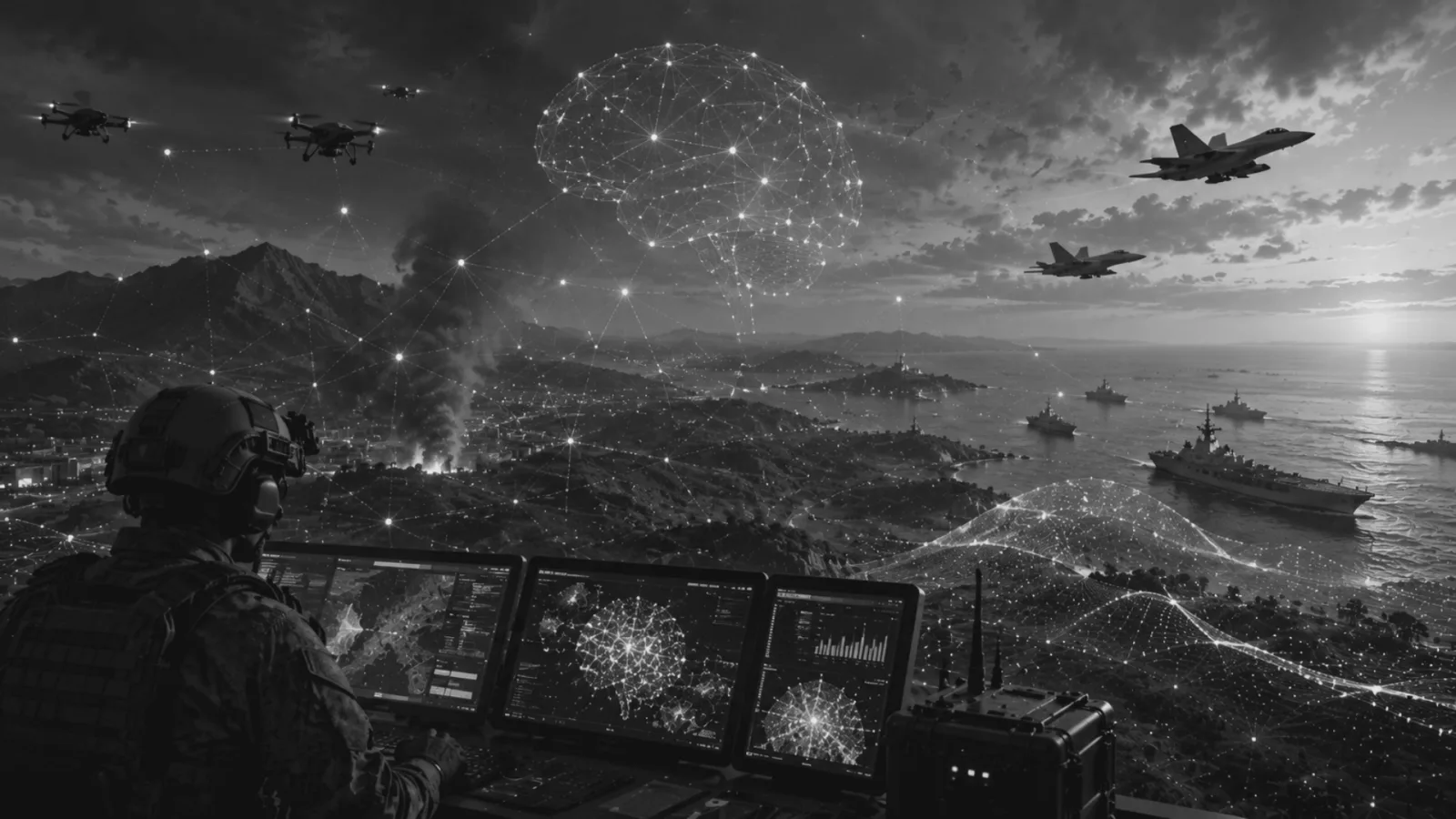
Artificial intelligence is becoming relevant to military operations because contemporary armed forces must process increasing volumes of information generated by satellites, drones, sensors, communications networks and intelligence systems. Military applications of AI can include imagery analysis, automated data classification, intelligence correlation, equipment maintenance forecasting, logistical planning and decision-support systems. These technologies may assist commanders in identifying relevant information, recognising patterns and evaluating possible courses of action within compressed decision-making timelines. However, the effectiveness of military AI depends heavily on the quality of its underlying data, the security of its computational infrastructure, the accuracy of its models and the ability of personnel to interpret its outputs. Poor-quality information, deliberate adversarial deception or inappropriate reliance on automated recommendations can produce misleading assessments and potentially serious operational consequences.
The reported three-level AI training programme associated with the Army's evolving doctrine is particularly noteworthy because it recognises that effective military adoption requires institutional knowledge as well as technological procurement. Training officers to understand AI-supported systems could improve the quality of decision-making, facilitate cooperation between military personnel and technical specialists, and reduce unrealistic expectations about automation. The Army's wider technological transformation had already received public emphasis in August 2025, when the Defence Minister acknowledged plans to extend drone-related training across the force by 2027 and highlighted new formation initiatives, including the Rudra Brigade, ShaktiBaan Regiment, Divyastra Battery, Drone Platoon and Bhairav Battalion. These developments indicate a broader pattern of organisational experimentation, although the existence of new formations or training initiatives should not automatically be interpreted as proof that their intended capabilities have reached full operational maturity.¹³
An equally important distinction must be maintained between AI-assisted decision-making and autonomous weapon systems capable of selecting and engaging targets without further human intervention. The application of artificial intelligence to military intelligence, communications or logistics does not necessarily involve delegating lethal decisions to machines. Such delegation raises significant legal, ethical and operational concerns, particularly regarding target identification, civilian protection, accountability and the potential for unintended escalation. India's technological modernisation must therefore be accompanied by appropriate safeguards, human oversight and clear operational responsibilities. The advantages associated with faster information processing should not be pursued at the expense of sound military judgement, especially when decisions may carry consequences extending far beyond the immediate battlefield.
8. The Networked Battlefield: Surveillance, Precision Strikes and Electronic Warfare
One of the defining characteristics of contemporary warfare is the increasing integration of reconnaissance systems with precision-strike capabilities. Traditionally, the identification, verification and engagement of military targets could involve relatively lengthy intelligence and command procedures. Modern sensors, secure digital communications and precision-guided weapons can reduce the interval between detecting a target and engaging it, creating what is commonly described as a sensor-to-shooter network or reconnaissance-strike complex. Such systems may involve information collected through unmanned aerial vehicles, satellites, ground-based sensors and other intelligence sources before being processed and transmitted to appropriate military capabilities. The operational advantage lies not simply in possessing accurate weapons but in the ability to locate, classify and engage relevant military objectives while maintaining awareness of the wider battlefield.
The increasing dependence on digital connectivity also creates new vulnerabilities. An adversary capable of disrupting communications, interfering with satellite navigation, degrading sensors or manipulating information can potentially undermine technologically sophisticated military formations without directly destroying their principal combat platforms. Electronic warfare therefore becomes both an offensive and defensive component of land operations, while cyber resilience, communications redundancy and the ability to operate with incomplete information become essential elements of military preparedness. The 2018 Land Warfare Doctrine had already recognised the importance of intelligence, surveillance, reconnaissance, cyber warfare, electromagnetic capabilities and precision strikes, including the requirement to maintain operational effectiveness in a disrupted cyber environment. The revised doctrinal emphasis should consequently be evaluated in terms of how effectively these capabilities are integrated and exercised under realistic conditions rather than simply whether they appear in official military publications.¹⁴
This has substantial implications for command philosophy. Military formations operating under persistent surveillance and communications interference may need greater freedom to execute previously understood objectives without continuous direction from higher headquarters. Decentralised decision-making can improve adaptability and resilience, but it also requires better training, reliable professional judgement and a clear understanding of the commander's intent. The challenge for the Indian Army is to combine the informational advantages of networked operations with the organisational flexibility required to function when those networks are degraded or temporarily unavailable.
9. Organisational Transformation: From Large Formations to Agile Combat Structures
The changing battlefield has renewed attention to the organisation and employment of military formations. Traditional armies rely on combined-arms operations involving infantry, armour, artillery, engineers, air defence and logistical support, but the integration of these capabilities at different command levels can influence mobilisation speed, operational flexibility and responsiveness. India's earlier emphasis on Integrated Battle Groups reflected an attempt to develop more agile, mission-oriented formations with capabilities appropriate to specific operational requirements. The 2018 doctrine explicitly envisaged the employment of IBGs and the development of mobile, technologically enabled forces capable of responding across multiple fronts. Consequently, the revised doctrinal direction should not be interpreted as the beginning of India's transition towards integrated formations; rather, it provides an opportunity to reconsider how such formations should operate when surveillance, electronic warfare and unmanned systems have become routine features of conflict.
Public reporting on the 2026 doctrine suggests continued emphasis on empowering commanders, retaining human leadership and ensuring operational flexibility according to the threat, terrain and mission. This is relevant because India's operational geography does not support a uniform organisational solution. Military units deployed in the high mountains along the Line of Actual Control confront different mobility, sustainment and combat requirements from formations operating in the plains and deserts along the western frontier. Similarly, counterterrorism and border security operations demand capabilities that may differ substantially from those required during a conventional military offensive. The operational value of organisational reform will therefore depend on the ability to adapt formation structures, technological equipment and support arrangements to distinct contingencies without sacrificing interoperability or complicating the broader command system.¹⁵
The human dimension of this transformation must also be recognised. The increasing technical complexity of military operations places greater demands on personnel who must understand not only traditional combat skills but also electronic threats, unmanned systems, digital communications and the limitations of automated decision-support tools. A technologically advanced Army will still depend on competent commanders, experienced junior leaders, effective maintenance personnel and soldiers capable of functioning under physical and psychological stress. Technology can expand military capability, but the battlefield remains fundamentally dependent on human judgement, discipline, cohesion and organisational adaptability.
10. What Does the Doctrine Mean for a Future India–China Conflict?
The implications of India's doctrinal transformation are particularly significant along the Line of Actual Control, where geography, infrastructure, surveillance and rapid military reinforcement shape the operational environment. The 2020 confrontation in eastern Ladakh demonstrated the importance of maintaining forces in difficult high-altitude terrain while ensuring the availability of roads, communications, ammunition, equipment and medical support. Although diplomatic and military negotiations subsequently produced disengagement arrangements in certain areas, the possibility of renewed border confrontations remains a central consideration in Indian defence planning. Any future India–China military contingency would involve not only the direct capabilities of opposing ground formations but also the supporting contributions of aerospace surveillance, electronic warfare, precision weapons, cyber operations and strategic logistics.¹⁶
China's military modernisation creates additional challenges because the People's Liberation Army has devoted considerable attention to information-enabled operations, long-range precision capabilities, unmanned systems and the coordination of military effects across domains. For Indian ground forces, the ability to maintain situational awareness and operational effectiveness under conditions of intensive surveillance and electronic interference is therefore critical. High-altitude operations impose further restrictions because extreme weather, difficult terrain, limited mobility and the challenges of sustaining dispersed formations can reduce the practical effectiveness of technologies that perform well in less demanding environments. Although drones and advanced sensors may improve reconnaissance, their employment will still be constrained by environmental conditions, communications reliability and logistical support. Similarly, long-range precision capabilities may contribute to deterrence, but their operational utility depends on accurate intelligence, secure targeting processes and the availability of adequate stocks.
The larger strategic issue is whether India can develop an integrated system capable of combining local military preparedness with theatre-wide surveillance, responsive reinforcement and credible deterrence. A doctrinal framework emphasising multi-domain operations could improve the coordination of ground formations with supporting military capabilities, but its practical effectiveness will depend on investment in infrastructure, command interoperability, survivable communications and the resilience of military supply chains. In this context, India's land warfare transformation should not be evaluated solely through the induction of sophisticated equipment. The more important question is whether its forces can maintain operational coherence and combat effectiveness under the conditions most likely to characterise an intense confrontation with a technologically capable adversary.
11. Implications for India–Pakistan Conflicts: Limited War, Precision Strikes and Escalation Management
The implications of the revised doctrine for Pakistan differ considerably from those associated with China because the western security environment combines conventional military competition, cross-border terrorism, irregular warfare and nuclear deterrence. India's military responses to major terrorist attacks have increasingly involved consideration of limited and politically calibrated military options, as illustrated by the 2016 cross-Line of Control operations, the 2019 Balakot airstrike and Operation Sindoor in May 2025. These episodes reflect the continuing importance of military responses designed to achieve specific political and security objectives without necessarily initiating a prolonged conventional war. Nevertheless, the assumption that limited strikes can always remain limited is strategically hazardous, particularly when both states possess nuclear weapons and may interpret military actions differently.
Operation Sindoor demonstrated the growing significance of precision weapons, integrated air defence, unmanned systems and information management in this environment. The Indian government's account of the confrontation emphasised the role of coordinated military capabilities in carrying out strikes and responding to subsequent Pakistani military actions. It also highlighted the employment of drones and missiles during the confrontation and the importance of air defence arrangements in protecting military installations and other vulnerable locations. Although individual claims regarding military losses, operational effectiveness and battlefield outcomes require independent scrutiny, the wider episode illustrates how even relatively short conflicts can generate intense requirements for intelligence, communications, air defence, logistics and escalation management.¹⁷
The revised doctrine's emphasis on advanced technology and multi-domain integration could strengthen India's ability to respond across different levels of confrontation, but this advantage should not be understood as eliminating strategic constraints. Precision weapons do not automatically guarantee political control over escalation, while superior surveillance cannot completely remove uncertainty regarding an adversary's intentions or responses. Furthermore, the increasing availability of drones and other relatively inexpensive technologies could allow hostile actors to impose additional defensive burdens on Indian forces and critical infrastructure. The challenge for India's military planning is therefore to maintain credible deterrence and flexible conventional options while ensuring that military operations remain aligned with achievable political objectives and realistic assessments of escalation risk.
12. The Two-Front Challenge and the Continuing Importance of Hybrid Warfare
The possibility of simultaneous or sequential military pressure from China and Pakistan has long influenced India's strategic planning. The Land Warfare Doctrine 2018 explicitly recognised collusive threats and envisaged the development of inter-theatre reserves, strategic mobility and capabilities capable of responding to multiple contingencies. The emergence of technologically intensive warfare complicates this requirement because modern forces depend on a range of high-value systems, including surveillance assets, electronic warfare capabilities, precision weapons and advanced air defence equipment, which may not be available in sufficient quantities for unrestricted employment across multiple fronts. The allocation and sustainment of these capabilities could therefore become as important as the numerical strength of deployed combat formations.
The challenge of a collusive threat should not be interpreted as evidence that China and Pakistan necessarily possess a fully integrated plan for simultaneous conventional war against India. Their strategic priorities, military objectives and escalation calculations remain distinct, even though their defence relationship and shared interests can complicate India's security environment. A credible two-front preparedness framework must therefore account for a range of possibilities, from diplomatic and military pressure on one frontier during a conflict on the other to more serious forms of coordinated or opportunistic military action. The requirement is not simply to maintain substantial forces in both theatres but to develop the strategic mobility, intelligence integration, operational reserves and industrial capacity necessary to manage uncertain and potentially overlapping contingencies.
Hybrid and grey-zone warfare further complicate this problem because hostile activities may occur below the threshold of conventional military conflict. Cyber intrusions, information manipulation, psychological operations, proxy violence, coercive military posturing and economic pressure can influence the security environment without producing an immediately recognisable transition to war. The 2018 doctrine had already identified hybrid warfare and information operations as important components of future conflict, demonstrating that these concerns are not new. The contemporary challenge lies in their increasing integration with digital technologies, widespread social media platforms and the ability to influence public perceptions at considerable speed. For the Indian Army, effective preparedness requires coordination with intelligence agencies, cyber authorities, other military services and relevant civilian institutions, while ensuring that responses remain proportionate and consistent with the country's broader political and security objectives.¹⁸
13. Defence Self-Reliance, Logistics and the Capacity to Sustain War
One of the most consequential aspects of military modernisation is the relationship between technological sophistication and the industrial capacity required to sustain prolonged military operations. Recent conflicts have demonstrated that advanced weapon systems are of limited value when ammunition stocks, replacement components, maintenance facilities or production capacity cannot meet operational requirements. This problem becomes particularly important in technology-intensive warfare because unmanned systems, precision weapons, electronic equipment and communications platforms may experience substantial rates of consumption, damage or technological obsolescence. A military that possesses sophisticated systems but depends heavily on vulnerable international supply chains could face serious difficulties during an extended confrontation or a period of disrupted global trade.
The 2026 doctrinal reporting places importance on indigenous defence capabilities, resilient logistics, national infrastructure and coordination with institutions beyond the military. This corresponds with India's broader policy emphasis on Aatmanirbharta in defence. During the doctrine's release, Defence Minister Rajnath Singh stated that Indian defence production reached approximately ₹1.78 lakh crore during financial year 2025–26, while defence exports approached ₹38,000 crore. These figures indicate the expansion of India's defence industrial activity, but aggregate production and export values should not be equated automatically with self-sufficiency in every strategically important technology. The more important considerations include domestic control over critical components, production scalability, repair and maintenance capability, reliable access to raw materials and the ability to replenish equipment and ammunition under wartime conditions.¹⁹
For the Indian Army, the logistics challenge is particularly demanding because the country must sustain military operations across high mountains, deserts, plains and remote border regions. Strategic mobility depends on the availability of transportation infrastructure, fuel, storage facilities, maintenance networks and reliable communications, while the maintenance of technologically advanced systems requires specialised personnel and replacement components. Future military readiness must therefore be assessed through the relationship between combat power and sustainment capacity. The ability to deploy advanced weapons is important, but the ability to keep those weapons operational after weeks of intensive use may prove equally decisive.
14. The Central Challenge: Translating Doctrinal Ambition into Operational Capability
The effectiveness of the Land Warfare Doctrine 2026 will ultimately depend on implementation. India's armed forces have repeatedly identified the importance of joint operations, modernisation, technological integration and organisational reform, but doctrinal recognition does not automatically resolve the practical difficulties associated with procurement, institutional coordination, training or resource allocation. The introduction of advanced technologies can also generate additional complexity when equipment is acquired from multiple suppliers, employs incompatible technical standards or requires maintenance arrangements that have not been adequately integrated into existing military structures. Consequently, the success of India's doctrinal transformation should be evaluated through measurable operational improvements rather than the number of new concepts or technologies adopted.
A particularly important challenge involves balancing traditional military capabilities with emerging systems. The experience of the Russia–Ukraine war demonstrates that technologically enabled surveillance and precision attacks can impose serious restrictions on manoeuvre operations, but it does not establish that infantry, armour, artillery or other conventional combat capabilities have lost their relevance. Instead, it suggests that the survivability and effectiveness of traditional formations increasingly depend on their integration with appropriate protective, reconnaissance and supporting systems. Indian military planners must therefore avoid the assumption that inexpensive drones or automated technologies can independently substitute for the broader range of capabilities required to conduct and sustain land warfare. The challenge is to achieve an appropriate balance between technological innovation, force protection, operational endurance and the ability to conduct combined-arms operations under different battlefield conditions.
Another challenge concerns the expanding dependence on artificial intelligence and digital decision-support systems. The military advantages associated with faster information processing must be weighed against the risks of inaccurate data, deliberate deception, algorithmic error and excessive reliance on automated recommendations. International humanitarian law also remains applicable to the employment of autonomous weapon systems, including the requirements concerning distinction, proportionality and precautions during attacks. The International Committee of the Red Cross has emphasised the risks associated with systems capable of selecting and applying force without further human intervention, particularly where technological characteristics limit the ability of military personnel to anticipate or control their effects. Responsible technological integration must therefore include appropriate safeguards, legal review, accountability and effective human judgement in decisions involving the use of force.²⁰
The most important test of the revised doctrine will be whether the Indian Army can reconcile technological ambition with the realities of its operating environment. Training, communications resilience, joint command arrangements, indigenous production, maintenance systems and operational adaptability will all influence the effectiveness of future military capabilities. Equally important will be the capacity to learn from exercises, operational experience and emerging conflicts without assuming that the characteristics of one battlefield can be reproduced universally across different geographical and strategic conditions.
15. Conclusion: Is the Land Warfare Doctrine 2026 a Fundamental Shift in India's Military Thinking?
India's Land Warfare Doctrine 2026 should be understood as part of a broader and continuing transformation of the Indian Army rather than an abrupt replacement of its earlier military philosophy. The principal concepts associated with contemporary warfare—including multi-domain operations, hybrid conflict, precision strikes, artificial intelligence, human–machine teaming and the importance of joint military capabilities—were already recognised in the 2018 doctrine. What has changed is the operational environment in which these concepts must now be implemented. The proliferation of relatively inexpensive unmanned systems, the increased accessibility of persistent surveillance, the growing importance of electronic warfare and the experience of contemporary conflicts have made technological adaptation an immediate military necessity rather than a distant modernisation objective.
The revised doctrine's reported emphasis on training, manned–unmanned teaming, operational flexibility, secure communications, resilient logistics and defence self-reliance suggests an effort to close the gap between conceptual recognition and practical military preparedness. Nevertheless, the availability of the complete doctrinal text remains important for determining the precise nature and extent of this transformation. The ability to make confident assessments regarding changes in force employment, command philosophy and operational priorities will depend on further official disclosures and evidence of implementation.
For India, the ultimate requirement is not merely to develop a technologically sophisticated Army, but to ensure that technological capabilities enhance the effectiveness of ground forces under the specific conditions of a future conflict. This includes the ability to operate against a more technologically capable adversary along the northern frontier, conduct calibrated military operations under the constraints of nuclear deterrence on the western front, and sustain military preparedness during periods of simultaneous pressure. The central challenge lies in integrating conventional military power with emerging technologies while preserving organisational resilience, logistical endurance and sound military judgement.
The true significance of the Land Warfare Doctrine 2026 will therefore be determined not by the technological concepts it introduces, but by the Indian Army's ability to translate doctrinal ambition into credible, sustainable and operationally effective military capability.
Endnotes and References
1. Ministry of Defence, Government of India, “Need to Operate with Long-Term Strategic Vision and Remain Equally Prepared to Respond to Immediate & Emerging Challenges: Raksha Mantri to Army Commanders,” Press Information Bureau, October 23, 2026. Official press release.
2. Janes, “India Releases Land Warfare Doctrine 2026,” October 2026. Janes Defence News.
3. The New Indian Express, “Army Set to Adopt New Land Warfare Doctrine,” October 21, 2026. Article.
4. Shashank Joshi, “India's Military Instrument: A Doctrine Stillborn,” Journal of Strategic Studies 36, no. 4 (2013): 512–540. https://doi.org/10.1080/01402390.2013.766598.
5. Indian Army, Land Warfare Doctrine 2018 (New Delhi: Indian Army, 2018). Full doctrine PDF.
6. Ministry of Defence, Government of India, “Year End Review 2024,” Press Information Bureau, December 26, 2024. Official review.
7. Jack Watling and Nick Reynolds, Tactical Developments During the Third Year of the Russo–Ukrainian War (London: Royal United Services Institute, February 14, 2025). RUSI research report.
8. Ministry of Information and Broadcasting, Government of India, “Operation SINDOOR: The Rise of Aatmanirbhar Innovation in National Security,” Press Information Bureau, May 14, 2025. Official report.
9. Surendra Singh, “Army's Land Warfare Doctrine 2026, Released by Rajnath, Draws Lessons from Recent Conflicts,” The Times of India, October 23, 2026. Article.
10. Ajay Banerjee, “Indian Army Doctrine Released, Puts AI, Drones at Centre of Future Wars,” The Tribune, October 24, 2026. Article.
11. Ministry of Defence, Government of India, “Mastering Existing Tech & Staying Ready for New Innovations & Unforeseen Challenges Is Key to Effectively Tackle Complexities of Modern-Day Warfare,” Press Information Bureau, August 27, 2025. Official release on the Joint Doctrine for Multi Domain Operations.
12. Banerjee, “Indian Army Doctrine Released.” The Tribune.
13. Ministry of Defence, “Mastering Existing Tech & Staying Ready for New Innovations,” August 27, 2025. Press Information Bureau.
14. Indian Army, Land Warfare Doctrine 2018, sections on capability development, ISR, cyber warfare and electronic warfare. Full doctrine PDF.
15. Singh, “Army's Land Warfare Doctrine 2026.” The Times of India.
16. Ministry of Defence, “Year End Review 2024.” Press Information Bureau.
17. Ministry of Information and Broadcasting, Government of India, “Operation SINDOOR: Forging One Force—The Synergy of India's Armed Forces,” Press Information Bureau, May 18, 2025. Official report.
18. Indian Army, Land Warfare Doctrine 2018, sections on collusive threats, non-contact operations, hybrid warfare and information warfare. Full doctrine PDF.
19. Ministry of Defence, “Need to Operate with Long-Term Strategic Vision,” October 23, 2026. Press Information Bureau.
20. International Committee of the Red Cross, “Autonomous Weapon Systems and International Humanitarian Law: Selected Issues,” March 3, 2026. ICRC briefing paper.
Tags

Author