
China’s Maritime Militia in the South China Sea: How Grey-Zone Coercion is Reshaping the Philippines Dispute
China's maritime militia has emerged as an important instrument of grey-zone coercion in the South China Sea, allowing Beijing to maintain a persistent presence and pressure rival claimants without resorting to conventional military confrontation. Through the deployment of professional militia vessels and civilian fishing fleets, China has sought to influence maritime access and consolidate practical control over disputed features. Examining the Scarborough Shoal and Second Thomas Shoal confrontations, this article assesses how sustained maritime presence can constrain Philippine operations, complicate deterrence and test the limits of the US–Philippines alliance. It also considers the limitations of militia-based coercion and the conditions under which China's numerical advantage could translate into lasting strategic influence.
1. Introduction
In contested waters of the Indo-Pacific region, maritime laws of international nature often clash with historical revisionism practiced by Beijing.
The core of the conflict between Beijing’s vision and international maritime laws is Maritime Militia used by Beijing to justify the normalization of control over the Philippines’ Exclusive Economic Zone and protection of Beijing from any potential retaliation from its allies.
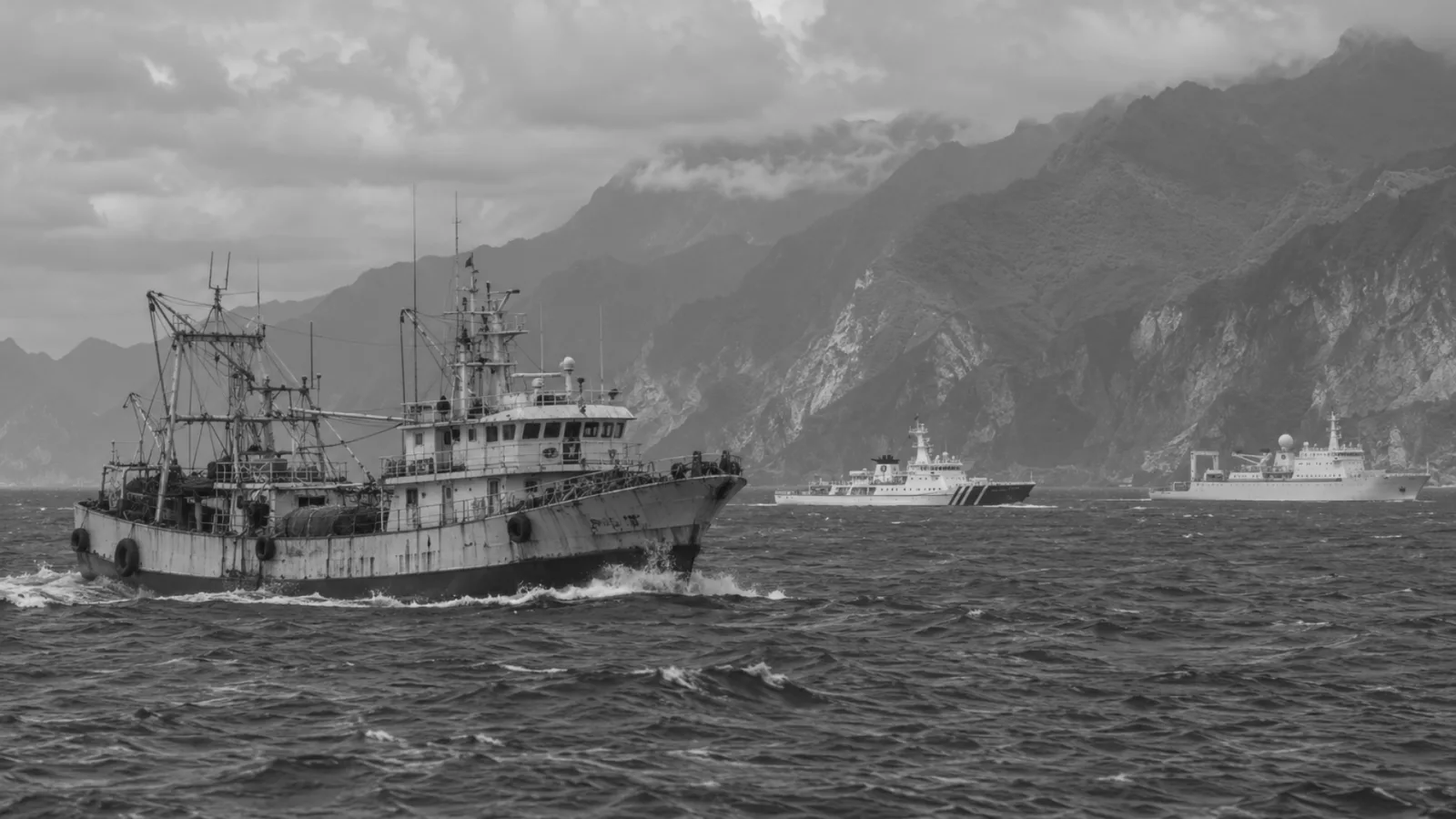
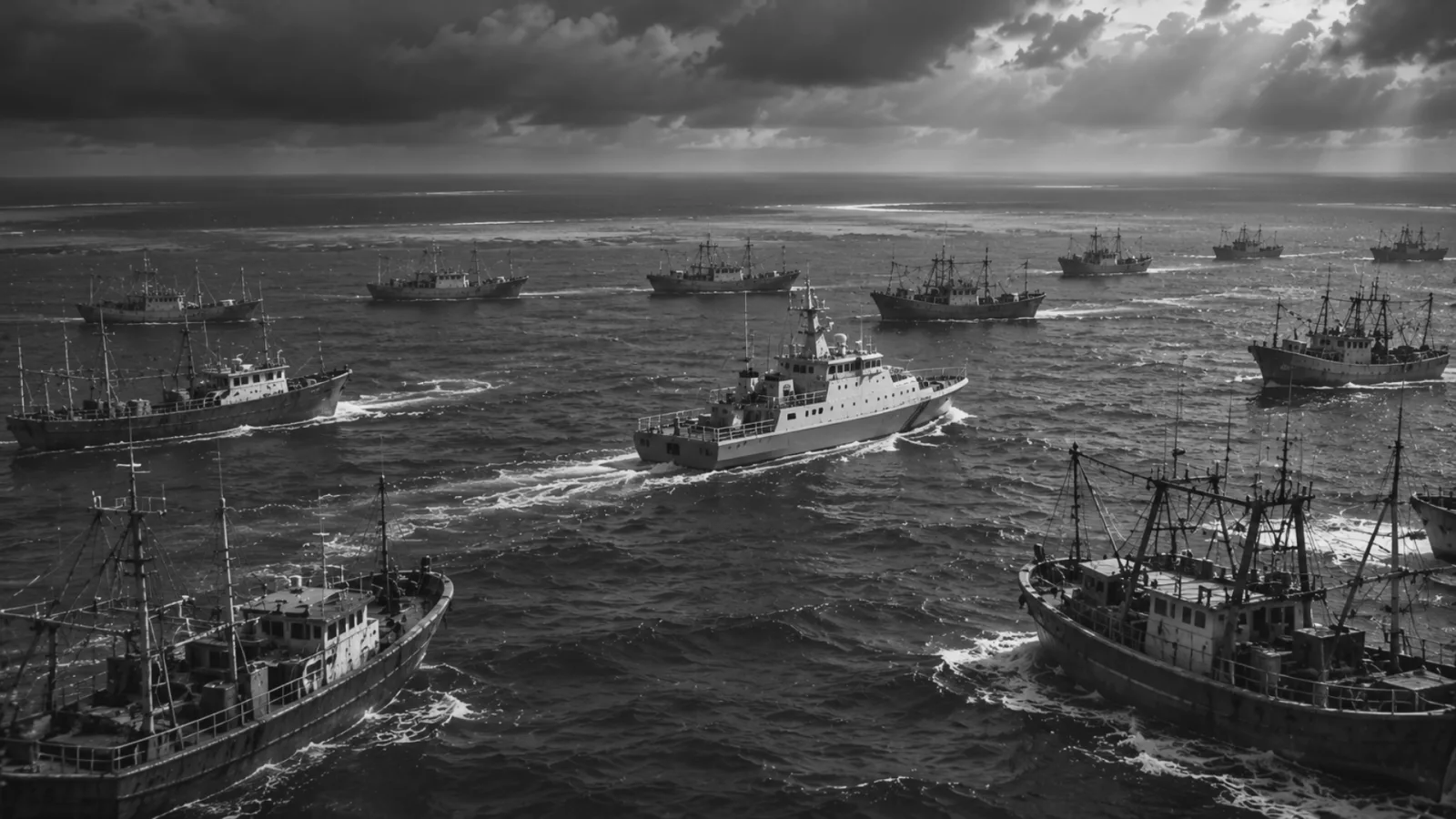
China's maritime militia comprises two broad categories of vessels: purpose-built professional Maritime Militia Fishing Vessels and civilian Spratly Backbone Fishing Vessels (SBFVs). The professional vessels are generally purpose-built, usually state-owned and funded by local, provincial and central governments. SBFVs, by contrast, are primarily privately owned civilian fishing vessels that form part of China's state-supported fishing fleet and receive government assistance. Although both categories contribute to China's maritime presence in the South China Sea, their operational roles differ. Professional militia vessels are more likely to undertake direct confrontations with foreign government vessels, whereas SBFVs are primarily used to maintain a persistent presence around disputed maritime features through large-scale deployments.
The increased use of the militia is a strategic challenge. The usage of fishing vessels that look like ordinary boats to have a constant presence and press other claimant states in the disputed areas helps China to exert influence in the area without any direct military confrontation. This problem makes it very difficult to respond since the competing nations simply do not possess sufficient numbers of maritime vessels to match up to China’s militia. Moreover, foreign countries wishing to deter maritime coercion by sending their navy usually face difficulty in deploying warships against seemingly innocent-looking fishing vessels since doing so would make the situation worse, making it disproportionate in nature.
Therefore, the problem of imbalance exists as far as operation goes since China will be capable of maintaining the pressure on its rivals through a large number of civilian vessels while the latter find themselves hampered in their attempts to respond.
Applying pressure, intimidation or even taking other calculated measures without crossing the threshold of war in an attempt to compel another country to alter its behaviour or the state of affairs on land or at sea, is frugal as well as tactically shrewd compared to other options. But then again, the more important question is not whether the use of state-sponsored, militarily trained militia by China is a frugal move but whether China can improve its grip on the disputed waters by applying pressure without going to the threshold of war as compared to employing its navy for waging a conventional war. The key question is not whether to find out whether China possesses a strong maritime militia. But rather, in which circumstances this force influences the decisions of the Philippines.
2. China and the South China Sea Dispute
The South China Sea has long been a geopolitical flash point, but the situation has grown even more volatile in recent months. However, the tensions have escalated significantly in the past months. Several nations have clashed in the past for years due to disputes of territories in the South China Sea. These disputes have resulted in military confrontation between China and its neighbouring countries.
Since the 1970s, several coastal nations of the South China Sea including China, Philippines, Vietnam, Malaysia, Taiwan and Brunei have claimed the territory of several islands, reefs, atolls and seas of the South China Sea. In this manner, there exist numerous disputes over territories, especially regarding the four main island groups; which include the Spratly Islands, Paracel Islands, Pratas Islands and Scarborough Shoal.
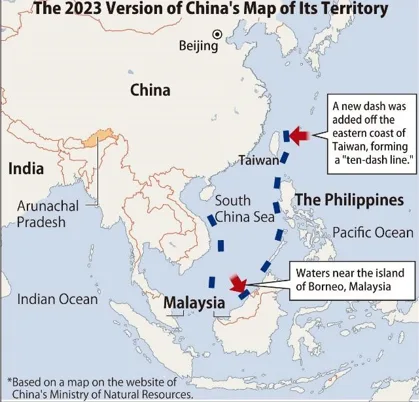
China's 2023 edition of the official Standard Map retained the existing Nine-Dash Line around the South China Sea while introducing an additional tenth dash east of Taiwan. Released by China's Ministry of Natural Resources on 28 August 2023, the map renewed regional concerns over Beijing's territorial claims. While the original nine dashes represent China's disputed claims in the South China Sea, the additional dash drew attention to Taiwan and was interpreted by some analysts as reinforcing Beijing's sovereignty claim over the island.
For most of the surrounding nations, the South China Sea is an important resource for their survival. It has abundant stocks of fish, which make it important for food and trade in the region; along with huge deposits of oil and natural gas under the sea bed. Apart from being an important resource for stability in the region, the South China Sea is significant on a global level. As a trade route, the issues arising in these waters have the potential of having a great impact on global economy. For China, the issue goes beyond.
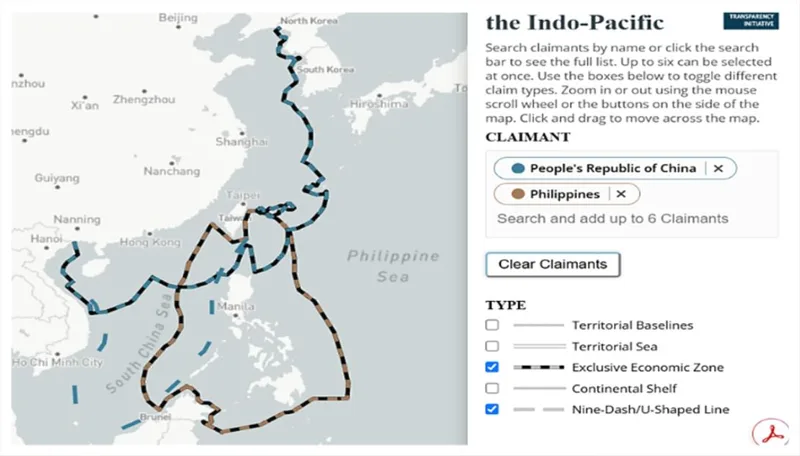
The 2016 arbitral ruling in the Philippines v. China case under UNCLOS marked an important legal development in the South China Sea dispute. On 12 July 2016, the tribunal rejected China's claims to historic rights within the Nine-Dash Line insofar as they exceeded the maritime entitlements permitted under UNCLOS. It also clarified the legal status of several disputed maritime features and found that China had violated the Philippines' sovereign rights and certain environmental obligations through its activities in the region. However, the tribunal did not determine sovereignty over the disputed islands or declare the entire Nine-Dash Line illegal. Importantly, China's artificial-island construction had already begun before the ruling. Large-scale land reclamation in the Spratly Islands started around late 2013 and expanded significantly during 2014–2015, particularly at Fiery Cross, Subi and Mischief Reefs. Although the 2016 ruling challenged the legality of several Chinese activities, Beijing continued developing infrastructure and military facilities on the reclaimed features. This illustrates the gap between international legal decisions and their enforcement, as China continued consolidating its physical presence despite the tribunal's findings.
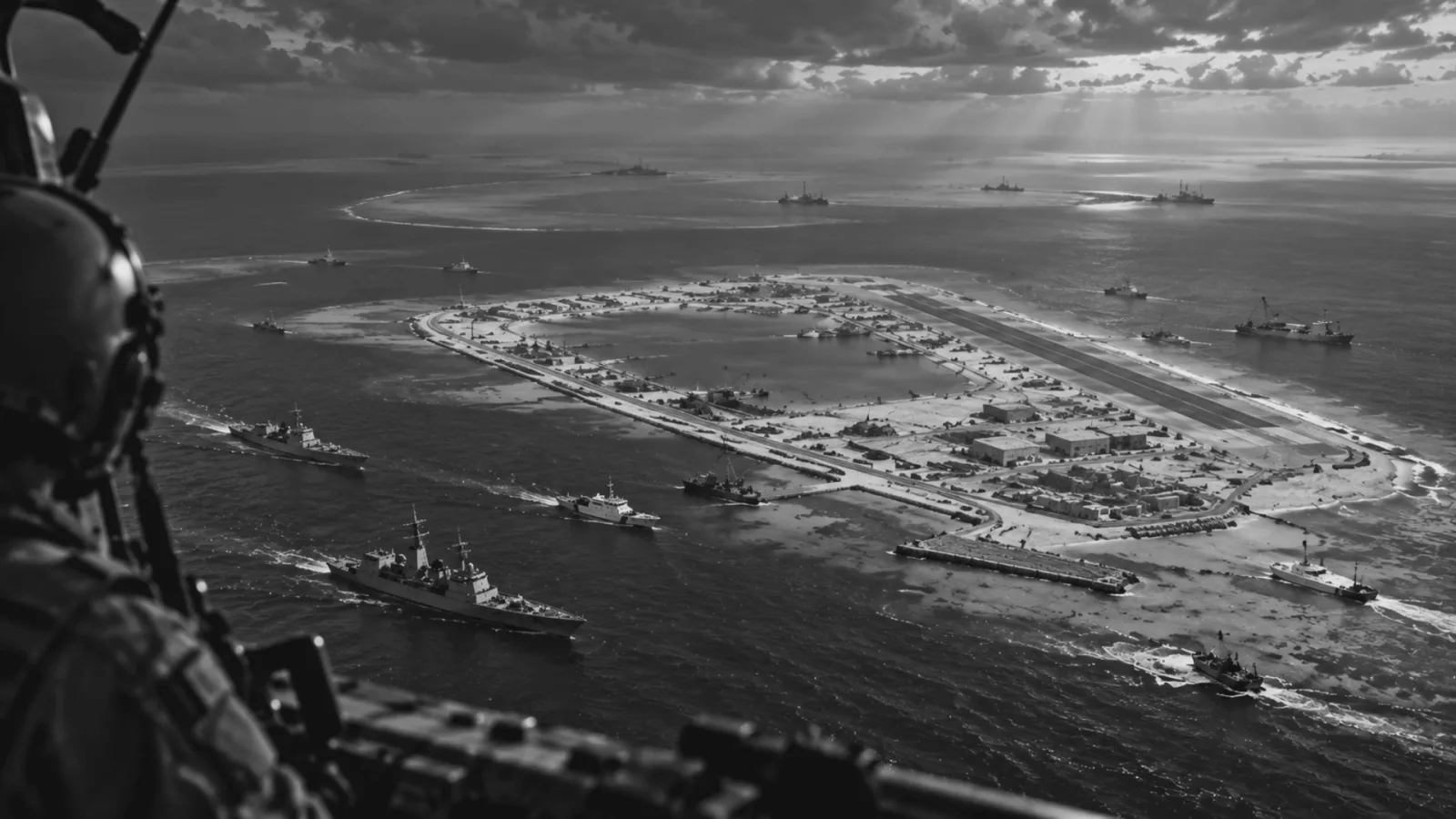
Time and again, the maritime militia of China, coast guard, and naval fleet have penetrated the territories of the neighbouring countries and harassed fishermen and coast guards of other countries while exercising dominance over crucial regions. Chinese maritime forces, particularly the China Coast Guard, have repeatedly confronted Philippine vessels in disputed waters. Incidents involving water cannons, laser illumination and dangerous manoeuvres have heightened tensions and endangered Filipino crews. From helping with the seizing of territories to participating in sustained missions within the disputed seas, China’s fishing militia has developed through the years. It has been evident ever since the 1974 seizure of the Paracel Islands from South Vietnam. In 1985, the first militia unit was formed in Tanmen, Hainan, after which China built its first bases in the Spratly Islands in 1988. Towards the turn of the millennium, militia ships had already started harassing the operations of the US Navy, but it was during the next decade that they became more active in maritime standoffs. They helped China assert control over Scarborough Shoal in 2012 and took part in the standoff between China and Vietnam in 2014 because of the oil rig dispute. After completing its artificial islands in 2016, the deployment of militia has become more common and large-scale. Almost 100 boats have clustered around Thitu Island in 2018, and about 200 ships have gathered near Whitsun Reef in 2021. In the current time, the militia has managed to ensure its presence in the South China Sea through ports in Guangdong and Hainan. The scale of China's maritime militia presence in the South China Sea is reflected in AMTI's satellite imagery analysis, which recorded an average of 241 militia vessels per day across 12 monitored reef locations during 2025. The vessels included both professional militia units and civilian members of China's Spratly Backbone Fishing Fleet. The findings also revealed a growing concentration of vessels around Mischief and Whitsun Reefs, which together accounted for nearly half of the recorded presence. Such deployments allow China to maintain a persistent maritime presence around disputed features and exert pressure on other claimant states without relying exclusively on conventional naval forces. AMTI's 241 figure measures observed deployment patterns, not the total number of vessels China possesses or can mobilise.
3. How Grey-Zone Coercion is Reshaping the Philippines Dispute
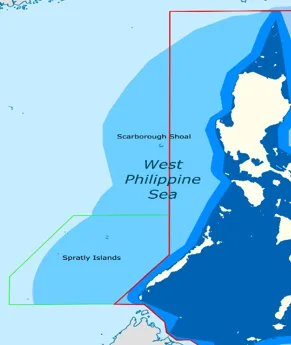
The conflict lies in the eastern part of the South China Sea that is referred to as the West Philippine Sea by the Filipino government. In accordance with the United Nations Convention on the Law of the Sea (UNCLOS), each coastal state has an Exclusive Economic Zone (EEZ) of up to 200 nautical miles from its baselines, where the state has the right to exploit natural resources such as fish and hydrocarbons. Nevertheless, China continues to assert extensive maritime claims through its Nine-Dash Line, which has been contested by neighbouring states and challenged under the framework of UNCLOS.
Case I:
Scarborough Shoal is one such example of grey-zone coercion. Located around 120 nautical miles west of Luzon, the standoff that took place between China and Philippines in 2012 saw the former gain control over the area by virtue of Philippine ships withdrawing from the area, enabling China to continue with coast guard presence at the shoal. It was a significant development in the bilateral relationship that ultimately made Philippines seek arbitration through international courts. What is more important about this case is how a state can exercise control over a disputed maritime feature without making any claim of sovereignty or deploying its military.
Case II:
The above measures present Manila with a dilemma on how to approach the matter. The 1951 US–Philippines Mutual Defense Treaty (MDT), particularly Articles IV and V, provides for mutual defence in the event of an armed attack against either country, including attacks on its armed forces, public vessels or aircraft in the Pacific. An important clarification came through the 2023 Bilateral Defense Guidelines, which explicitly reaffirmed that an armed attack against either country's armed forces, including its coast guard, aircraft or public vessels anywhere in the South China Sea would invoke mutual defence commitments under the treaty. The Guidelines also recognise the growing importance of asymmetric, hybrid and grey-zone tactics in the evolving security environment. However, the distinction between grey-zone coercion and an armed attack remains important. Actions such as maritime blockades, water cannons, dangerous manoeuvres and vessel harassment can exert considerable pressure on Philippine forces without necessarily meeting the threshold of an armed attack under the MDT. The Guidelines do not automatically classify every such incident as an armed attack; rather, they provide for consultations to assess the circumstances and relevant considerations. Consequently, China's use of coercive tactics creates uncertainty over the circumstances in which the United States would be expected to respond. Hence, China's use of coercive measures introduces a doubt regarding the situations in which the United States will intervene.
The Philippines have been trying to prove their side of the story using the media to broadcast the events at sea. Additionally, the temporary resupply arrangement between China and Philippines in July 2024 proves that there is no necessity for conflict all the time. AMTI notes that there have been 13 resupply missions up to 4 March 2026, according to the Philippine government. Nevertheless, the tensions in Scarborough and Sabina Shoals suggest otherwise.
Ultimately, the strategy that China follows brings to light the contradiction between sovereignty and actual control. With increasing numbers of ships being deployed slowly but steadily, controlling access and also possibly consolidating itself via building up of infrastructure, China can change the practical situation in the disputed waters, without necessarily having to annex it. Over time, this may lead to reduced accessibility for the Philippines, increased doubt regarding the commitment of the US and increased strategic influence of China over the entire South China Sea. This will give the PLAN additional advantages over the waters and also the Pacific Ocean through the Luzon strait.
4. Possible Long-Term Scenarios
The situation will depend on the Philippines’ response and whether China can translate its maritime presence into lasting restrictions on Philippine access.
Scenario I: : Gradual Chinese Consolidation and reduced Philippine Access
It is possible for China to maintain forces at the contested areas, and hence make fishing and resupplying of patrol forces difficult for the Philippines. The experience of Scarborough Shoal shows that consistent presence shapes practical access, and that of Second Thomas Shoal shows how vulnerable such outposts are without consistent resupply. Lack of enough Filipino naval vessels, funds, or political will could also make the Philippine maritime presence weaker and hence allow China practical control without establishing any sovereign right.
Scenario II: Sustained Philippine Resistance and a Prolonged Standoff
It would help for the Philippines to beef up surveillance and coast guard patrolling, publicize the clashes, and cooperate more with the United States, Japan, and other partners. This strategy is unlikely to force the Chinese vessels away, but may keep them from taking over and increase the price of their pressure on the islands. The consequence would be an ongoing stand-off, along with disagreements among the ASEAN countries about how to react to China.
Scenario III: A Serious Maritime Incident Triggers a Wider Crisis
Close calls could escalate into a collision, leading to damage to ships, injury, or even loss of life. Should an incident occur between vessels belonging to or staffed by members of the Philippine government or armed forces, this could lead to national calls for retribution.
5. Limitations
Nonetheless, China’s maritime militia has certain constraints that might reduce the effectiveness of this force as a grey-zone coercive instrument.
First, the militia cannot substitute the traditional navy. While fishing vessels can help China maintain its presence in the contested regions and disrupt the activities of other ships, they lack firepower and protection, not to mention that they have no state-of-the-art military technologies as the traditional navy does.
Second, the efficiency of the operations carried out by the maritime militia is related to the element of ambiguity in respect of the nature of the vessels, organization, and intentions behind these activities. Nevertheless, the effectiveness of this strategy might be affected by the fact that satellites, vessel-tracking technologies, pictures, official documentation, and regular activities enable external players to detect and trace militia vessels and the activities conducted by them.
Third, the employment of militia ships in clashes is accompanied by the danger of accidental escalation. Such things as collisions, injuries, damage to ships, or resorting to the use of weapons can turn a rather low-key maritime clash into a serious diplomatic or military incident. The use of apparently civilian vessels for fishing may affect how an enemy responds, but it cannot prevent escalation from happening.
These difficulties should be considered when trying to evaluate the impact of the maritime militia in the China’s maritime strategy. Its existence can be used as a sign of consistent activity as well as a tool of coercion, but the analysts need to differentiate between the ability to recognize the vessels as part of the militia, recognizing their participation in a particular episode, and the fact that the episode was a part of the China’s strategic actions.
Conclusion
China may consolidate its practical control over one location even as it encounters Philippine opposition to its activities at another. An ongoing deadlock may result in an incident that may lead to a broader crisis. The key issue is whether China is able to translate the advantages it has in terms of coordinating, persevering, and integrating its maritime militia into practical control over the disputed areas through the use of numerical superiority. This will depend not only on China’s capability but also on the ability of the Philippines to continue gaining access and conducting surveillance of the area. In light of all of the above, future analysis should concentrate on any visible signs of change rather than the assumption that technological innovation would automatically result in an increased Chinese presence. Greater coordination of deployments, greater periods spent in the area, and repeated restrictions on Philippine activity would provide evidence that the approach used by China has been successful. On the other hand, continued Philippine access, more efficient monitoring, and continued regional cooperation would indicate that constraints do exist. Another aspect to consider is the risk of a maritime confrontation resulting from increasing presence, which might lead to clashes between rival ships.
The crucial thing to watch, therefore, is not just whether the number of China's militia ships increases but whether the ability to coordinate, sustain presence and affect access is improved.
References:
All together now: China’s militia in 2025 | Asia maritime transparency initiative. (2026, February 23). Asia
Maritime Transparency Initiative. https://amti.csis.org/all-together-now-chinas-militia-in-2025/
Fact sheet: U.S.-Philippines bilateral defense guidelines. (2025). U.S. Department of War.
Flash point in the South China Sea. (2025, April 14). International Reports.
Green, M. J., Schaus, J., Douglas, J., Hicks, K. H., & Cooper, Z. (2026, March 5). Countering coercion in Maritime
Asia. Center for Strategic and International Studies. CSIS. https://www.csis.org/analysis/countering-coercionmaritime-asia
Gregory B. Poling, Harrison Prétat, Tabitha Grace Mallory, and Center for Advanced Defense Studies. (2021).
Pulling Back the Curtain on China’s Maritime Militia.
Liu Xiaobo. (2026, March 23). Divergence and tacit understanding in the China–Philippines provisional
arrangement at second Thomas Shoal. Asia Maritime Transparency Initiative.
Maps of the Asia Pacific. (n.d.). Asia Maritime Transparency Initiative. Retrieved 27 October 2026, from
Portugal, A., & Lema, K. (2026, July 10). A decade after historic ruling, Philippine fishermen say driven away from disputed shoal by China. Reuters. https://www.reuters.com/world/asia-pacific/decade-after-historic-rulingphilippine-fishermen-say-driven-away-disputed-shoal-2026-07-10/
United Nations. (2019). Preamble to the united nations convention on the law of the sea. Un.Org.
https://www.un.org/depts/los/convention_agreements/texts/unclos/part5.htm
Wherever they may roam: China’s militia in 2023 | Asia maritime transparency initiative. (2024, February 28).
Asia Maritime Transparency Initiative. https://amti.csis.org/wherever-they-may-roam-chinas-militia-in-2023/
US Department of Defense and Philippine Department of National Defense, The United States and the Republic
of the Philippines Bilateral Defense Guidelines, 3 May 2023, paras. 14–15 and 1(e)–(f). PDF
Mutual Defense Treaty Between the United States of America and the Republic of the Philippines, 30 August
1951, Articles III–V. TREATY
US Department of Defense, Joint Statement on the Philippines-United States Fourth 2+2 Ministerial Dialogue, 30 July 2024. OFFICIAL STATEMENT
China’s new ‘standard map’ does not mean what you think it means. (n.d.). Thediplomat.Com. Retrieved 8
November 2026, from https://thediplomat.com/2023/09/chinas-new-standard-map-does-not-mean-what-youthink-it-means/
Congressional Research Service. (2012, October 22). U.S.-China strategic competition in south and East China
seas: Background and issues for Congress. EveryCRSReport.
Congressional Research Service. (2015, June 16). Chinese land reclamation in the South China Sea: Implications
and policy options. EveryCRSReport. https://www.everycrsreport.com/reports/R44072.html
Foreign Ministry Spokesperson Wang Wenbin. (2023, August 31). Foreign Ministry spokesperson Wang Wenbin’s
regular press conference on august 31, 2023. Chinese Ministry of Foreign Affairs (Cy_Eng). https://cy.chinaembassy.gov.cn/eng/fyrth/202308/t20230831_11136375.htm
Singh, A. (2024, December 20). China’s ten-dash line: Deciphering disputes in the South China Sea. OBSERVER
RESEARCH FOUNDATION ( ORF ). Orfonline.Org. https://www.orfonline.org/expert-speak/china-s-ten-dash-linedeciphering-disputes-in-the-south-china-sea
The views expressed are those of the authors and do not represent the views of CNAWS.
ImageSource: ChatGPT
Tags

Author
Nitika Dhiman
Nitika is a student with a keen academic interest in China, particularly its political landscape, foreign policy, international relations, and evolving role in global affairs. She is interested in exploring contemporary geopolitical developments and analysing China's influence on the changing dynamics of international politics. Through her writing, she aims to develop informed perspectives on issues shaping the global order.