
Strategic Non-Nuclear Weapons (SNNWs) Explained: How Precision Strikes Are Reshaping Deterrence
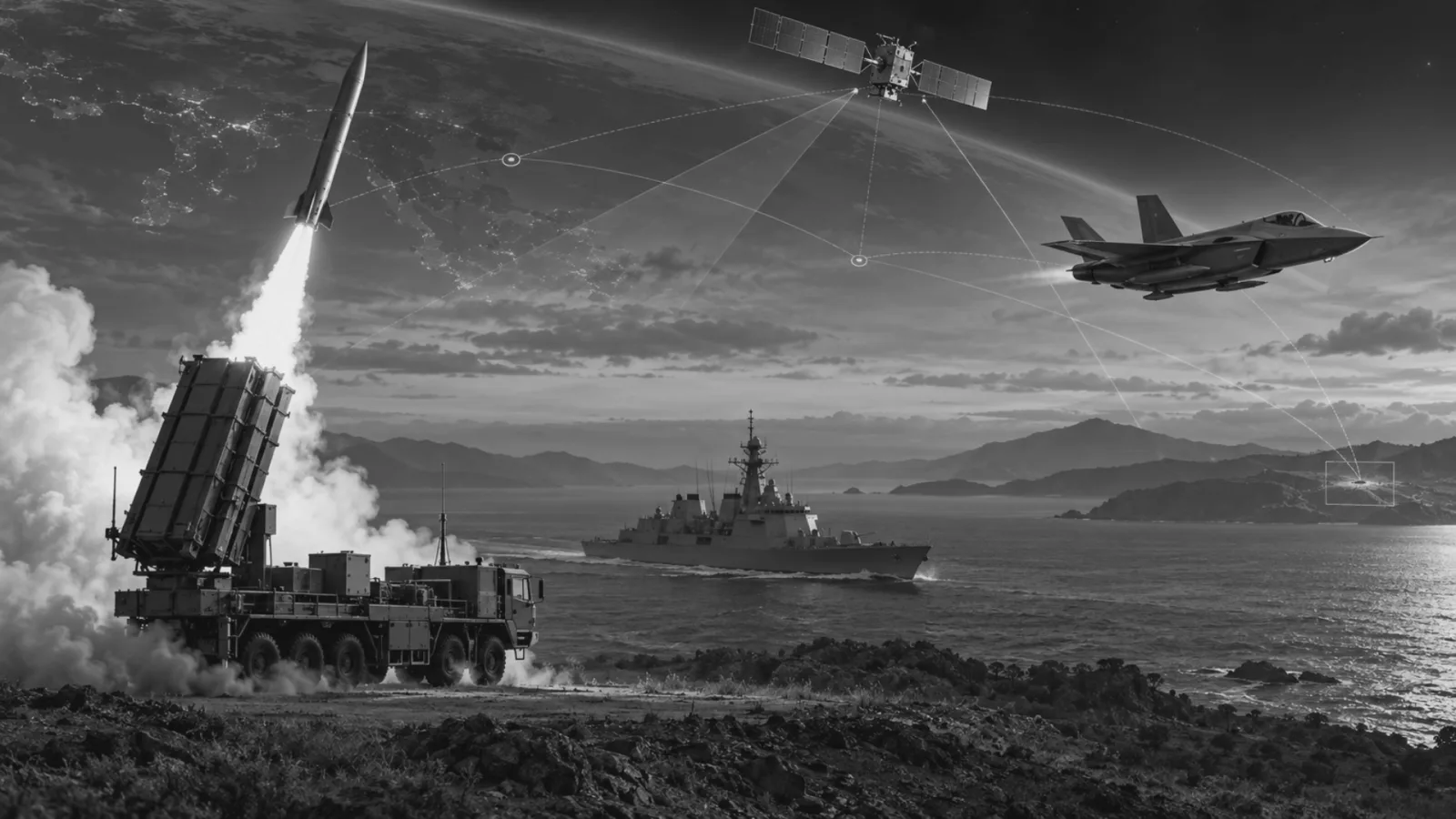
Strategic Non-Nuclear Weapons (SNNWs) represent an increasingly important development in modern warfare, enabling states to threaten strategically significant military targets without employing nuclear warheads. Advances in precision-guided missiles, hypersonic technology, satellite reconnaissance, intelligence integration and artificial intelligence have expanded the military and political effects that conventional weapons can potentially achieve. Although conventional precision strike has existed for decades, its growing ability to threaten high-value military infrastructure, command-and-control systems and elements of nuclear deterrent forces has intensified concerns about the boundary between conventional and nuclear warfare. The United States, Russia and China have pursued different approaches to long-range conventional strike, while countries such as India are expanding their precision-strike capabilities. However, the strategic value of SNNWs should not be confused with an ability to replace nuclear weapons. Their effectiveness remains dependent on accurate intelligence, target vulnerability, penetration of defences and sufficient conventional destructive power. More importantly, the growing interaction between nuclear and non-nuclear capabilities introduces new escalation risks. SNNWs may provide governments with alternatives to nuclear retaliation, but they may also convince adversaries that their strategic deterrent is vulnerable to a disarming conventional attack.
Introduction: The Changing Meaning of Strategic Weapons
For much of the Cold War, strategic weapons were associated predominantly with nuclear arsenals. Intercontinental ballistic missiles, submarine-launched ballistic missiles and long-range strategic bombers constituted the principal instruments through which nuclear-armed states sought to deter existential threats. Conventional military capabilities, despite their importance in warfighting, were generally understood as instruments for achieving tactical or operational objectives. The distinction was never absolute, but nuclear weapons occupied a unique position because of their unparalleled destructive capacity and ability to threaten the survival of an adversary's state and society.
Technological developments have progressively complicated this division. Modern conventional weapons can strike distant targets with considerable accuracy, while intelligence and surveillance systems make it increasingly possible to identify military assets that were once difficult to locate or engage. Precision-guided missiles can threaten strategically important infrastructure, including military command facilities, airbases and selected components of a state's deterrent forces. Under certain circumstances, such operations may produce consequences that extend well beyond the immediate destruction caused by the conventional warhead. Fabian Hoffmann's research on strategic non-nuclear weapons emphasises that the significance of these systems cannot be understood solely through technological sophistication; their strategic utility depends on their ability to threaten targets that matter to an adversary's security and deterrence posture.¹
This transformation has produced an important paradox. On one hand, SNNWs potentially offer governments military options that impose significant costs without resorting to nuclear weapons. They may thereby strengthen conventional deterrence, provide more flexible instruments of retaliation and reduce dependence on nuclear threats during crises. On the other hand, their ability to threaten strategically important military systems may undermine confidence in second-strike capabilities and increase incentives for pre-emption. The Stockholm International Peace Research Institute (SIPRI) has argued that the growing interaction between nuclear and non-nuclear technologies is creating additional pathways through which conventional conflict could escalate towards nuclear use.²
Understanding SNNWs therefore requires an examination of their historical origins, technical characteristics, doctrinal significance and interaction with nuclear deterrence. The central issue is not whether conventional weapons have become as destructive as nuclear weapons, but whether they can now generate strategically consequential effects that alter an adversary's calculations during peace, crisis or war.
1. What Are Strategic Non-Nuclear Weapons?
Strategic Non-Nuclear Weapons are conventionally armed weapons capable of producing effects of strategic significance. Such significance may arise from threatening an adversary's essential military capabilities, disrupting strategically important systems or creating political and military consequences that affect the broader outcome of a conflict. Unlike nuclear weapons, SNNWs do not rely upon nuclear explosive effects. Unlike ordinary tactical conventional weapons, their intended or potential effects extend beyond a limited battlefield engagement.
However, SNNW is not a universally standardised category adopted identically by all states. Russian strategic literature frequently employs the concept of non-nuclear deterrence, whereas the United States has traditionally discussed capabilities such as Conventional Prompt Global Strike and long-range conventional precision strike. Chinese strategic thinking places considerable emphasis on conventional missile forces, integrated operations and the ability to hold important military targets at risk. Hoffmann's 2021 study for the Foundation for Strategic Research provides a useful analytical framework by distinguishing advanced conventional weapons generally from those that possess meaningful strategic utility, particularly against military assets important to nuclear deterrence.³
Four characteristics are particularly relevant when evaluating whether a conventional weapon qualifies as strategically significant. The first is range and reach, which determine whether the weapon can threaten important targets beyond an immediate theatre of operations. The second is precision and destructive effectiveness, which determine whether a conventional warhead can reliably damage its intended target. The third is penetration and survivability, referring to the weapon's ability to reach defended areas despite interception, electronic warfare or other countermeasures. The fourth, and most consequential, is target significance: whether the destruction or disruption of the target would substantially influence an adversary's military capabilities, deterrence credibility or political decision-making.
Consequently, a conventional missile capable of striking a strategically important military facility may possess greater strategic relevance than a longer-range weapon employed against an ordinary battlefield target. A weapon's range, speed or accuracy alone does not establish its status as an SNNW. Strategic significance emerges from the interaction between the weapon, the target, the operational context and the adversary's perception of the threat.
1.1 How SNNWs differ from other weapons
Characteristic | Tactical conventional weapons | Strategic non-nuclear weapons | Nuclear weapons |
|---|---|---|---|
Primary purpose | Achieve battlefield objectives | Produce strategically consequential effects without nuclear use | Nuclear deterrence, retaliation or nuclear warfighting |
Destructive mechanism | Conventional explosives or kinetic effects | Conventional explosives, kinetic effects or other relevant non-nuclear mechanisms | Nuclear explosive effects |
Typical targets | Battlefield forces and local military facilities | High-value military systems, important infrastructure and strategic assets | Strategic, military or other targets specified in nuclear doctrine |
Range | Usually local or theatre-level | Often extended, but no universal minimum | Tactical to intercontinental |
Principal limitation | Battlefield reach and effectiveness | Intelligence, penetration, warhead effects and target vulnerability | Catastrophic humanitarian consequences and nuclear-escalation risks |
Strategic risk | Conventional escalation | Nuclear-conventional entanglement and misinterpretation | Nuclear escalation and potentially catastrophic destruction |
Table 1. Conceptual comparison. These categories overlap: a dual-capable missile may deliver either a nuclear or conventional warhead, and tactical weapons can sometimes produce strategic effects.
2. Historical Evolution: From Nuclear Deterrence to Precision Conventional Strike
2.1 The Cold War: Nuclear Weapons and the Search for Conventional Alternatives
The origins of modern SNNW thinking can be traced to the technological and doctrinal competition of the Cold War. After 1945, nuclear weapons became central to strategic deterrence, particularly as the United States and Soviet Union developed increasingly sophisticated missile forces and second-strike capabilities. Nevertheless, both powers continued seeking ways to improve conventional military effectiveness. By the 1970s and 1980s, improvements in sensors, computing, navigation, communications and guided weapons began to make precise conventional attacks against important military targets more feasible.
Soviet military theorists, particularly those associated with Marshal Nikolai Ogarkov, recognised that precision-guided conventional weapons, when integrated with reconnaissance and automated command systems, could transform the conduct of military operations. Soviet concepts such as the reconnaissance-strike complex envisaged the integration of surveillance, target identification and strike assets to attack valuable enemy formations and facilities with greater speed and accuracy. In parallel, American military development emphasised precision-guided munitions, airborne surveillance, electronic warfare and the integration of sensors with strike platforms. These developments created the technological foundations for later strategic conventional strike capabilities.
2.2 The Gulf War: Demonstrating the Military Value of Precision
The 1991 Gulf War provided an important demonstration of precision-guided conventional warfare. Coalition forces employed laser-guided bombs, cruise missiles, advanced surveillance systems and electronic warfare against Iraqi military infrastructure, air defences, command facilities and deployed forces. Precision weapons constituted a minority of the total ordnance employed, yet their ability to attack selected high-value targets demonstrated the advantages of combining accurate weapons with detailed intelligence and coordinated air operations. The campaign also revealed important limitations, including weather sensitivity, target-identification errors and the difficulty of engaging concealed or mobile assets.⁴
The strategic significance of the Gulf War was not that conventional weapons had become equivalent to nuclear weapons. Rather, it demonstrated that certain military objectives previously requiring large-scale conventional attacks could be pursued through more selective precision operations. This encouraged further investment in cruise missiles, stealth aircraft, surveillance networks and precision targeting.
2.3 The Post-Cold War Period: Extending Conventional Strike Range
During the 1990s and 2000s, the development of satellite navigation, increasingly accurate cruise missiles, improved intelligence networks and precision airpower expanded the reach of conventional attacks. NATO's 1999 campaign against Yugoslavia reinforced the importance of precision air operations and politically constrained military campaigns, although the relationship between bombing and political outcomes remained contested.
An important arms-control background to these developments was the 1987 Intermediate-Range Nuclear Forces (INF) Treaty, which eliminated US and Soviet ground-launched ballistic and cruise missiles with ranges between 500 and 5,500 kilometres, regardless of whether they were equipped with nuclear or conventional warheads. Although not specifically a treaty on SNNWs, it illustrated how missile range, delivery systems and nuclear-conventional ambiguity were already interconnected in strategic stability discussions.⁵
By the 2010s, Russia had formally incorporated non-nuclear deterrence into its strategic thinking, while the United States pursued advanced long-range conventional strike capabilities. Russian military doctrine in 2014 defined a non-nuclear deterrence framework that encompassed foreign-policy, military and military-technical measures to prevent aggression without reliance on nuclear weapons. Its precision-strike programmes nevertheless continued to coexist with a substantial nuclear arsenal, indicating a complementary rather than substitutive relationship.⁶
American interest in Conventional Prompt Global Strike similarly reflected a desire to develop rapid conventional options against distant, defended or time-sensitive targets. The Congressional Research Service traces US hypersonic-weapon development to these efforts in the early 2000s, although the operational utility, costs and potential escalation consequences of such weapons have remained subjects of debate.⁷
The historical trajectory demonstrates that SNNWs did not emerge suddenly with hypersonic missiles. They are the culmination of several decades of technological progress in conventional precision strike, reconnaissance, missile guidance and networked warfare.
3. Why Are Conventional Weapons Becoming Strategically Important?
The growing strategic importance of conventional weapons is the result of several mutually reinforcing technological developments rather than any single breakthrough. Earlier conventional forces often required massed attacks to destroy heavily defended targets, with considerable uncertainty about whether the intended objective would be achieved. Modern precision-strike systems potentially allow military planners to concentrate destructive effects against selected targets with fewer weapons, particularly when the targets are accurately located and vulnerable to conventional attack. This capability has altered the relationship between firepower, military effectiveness and strategic consequences.
Precision is the first important development. Advanced navigation and guidance technologies have substantially improved the accuracy of many missiles and guided munitions. Yet accuracy should not be confused with effectiveness: a weapon may strike its intended coordinates precisely while failing to destroy a hardened, concealed or misidentified target. Range is the second factor because longer-range conventional systems can threaten assets that were previously protected by geographic distance. Speed and manoeuvrability constitute the third dimension, potentially complicating defensive interception and shortening the time available for military and political decisions.
The fourth factor is the improvement in intelligence, surveillance and reconnaissance. Satellite imagery, airborne sensors, signals intelligence and other sources can provide information about strategically important military assets. Their integration into modern command-and-control systems can enable more timely conventional engagements. Hoffmann's analysis makes a particularly important point: the strategic relevance of these improvements is most evident when they create credible threats against valuable military assets, including elements of an adversary's nuclear forces.⁸
The fifth and increasingly influential factor is the integration of artificial intelligence and automation into military systems. AI can assist with processing sensor information, correlating observations and supporting decisions, while autonomous capabilities may alter how military operations are conducted. These developments can increase the apparent effectiveness of conventional strike systems, but they may also introduce unreliable assessments, automation bias and greater pressure to act quickly. SIPRI has identified such interactions as a potential source of nuclear escalation risk even when AI is employed exclusively in non-nuclear military applications.⁹
Consequently, SNNWs are becoming strategically important because advanced conventional weapons are increasingly integrated into systems capable of identifying, tracking and potentially threatening targets of national military significance. Their strategic utility depends as much on intelligence, decision-making and the vulnerability of the target as on the characteristics of the weapon itself.
4. What Types of Weapons Can Qualify as SNNWs?
Strategic non-nuclear capabilities encompass several categories of weapons, although their classification depends on doctrinal context and the strategic effects they can produce.
Conventional ballistic missiles follow powered trajectories before descending towards their targets, with some modern systems incorporating manoeuvrable re-entry vehicles or other features that complicate interception. Conventionally armed ballistic missiles can provide rapid strike options against important military facilities and infrastructure. However, their strategic significance depends on the target, accuracy, reliability and destructive effectiveness rather than range alone.
Cruise missiles typically employ sustained aerodynamic flight and may travel at subsonic or supersonic speeds. Advanced cruise missiles can approach targets from different directions, exploit terrain and employ guidance systems designed for precise engagement. Long-range land-attack cruise missiles are particularly relevant to SNNW discussions because they can threaten selected military assets while allowing launching platforms to remain outside heavily defended airspace.
Hypersonic weapons have received considerable attention because of their speed and, in some designs, manoeuvrability. Hypersonic glide vehicles are generally accelerated by rockets before manoeuvring towards their targets, whereas hypersonic cruise missiles employ high-speed propulsion during powered flight. Although hypersonic weapons operate at speeds of at least Mach 5, speed alone does not make a weapon strategically important. Conventional ballistic missiles can also reach hypersonic speeds. What distinguishes some newer systems is their combination of speed, flight profile and manoeuvrability, which may complicate interception and early warning.¹⁰
Long-range conventional airpower constitutes another important category. Stealth aircraft, strategic bombers and other strike platforms equipped with precision-guided conventional weapons can threaten significant military infrastructure. These systems may possess advantages in flexibility, recallability and target selection compared with some missile systems, although their effectiveness remains dependent on survivability, supporting intelligence and available weapons.
Maritime precision-strike systems can also generate strategic effects. Surface warships, submarines and maritime aircraft equipped with long-range conventional missiles can threaten military installations or naval assets while operating from distant locations. Their contribution becomes especially significant when they expand the geographic directions from which an adversary must anticipate attack.
Finally, cyber, electronic warfare and counter-space capabilities can produce effects of strategic significance without employing nuclear weapons. However, these should not automatically be placed in the same category as conventional precision-strike missiles. Russia's concept of non-nuclear deterrence, for example, encompasses a broader combination of kinetic, electronic and other military capabilities. The distinction between an SNNW, a strategic non-kinetic capability and an enabling technology must therefore remain explicit.¹¹
The common characteristic of these systems is not their technological similarity but their potential ability to impose strategically important costs without nuclear use.
5. How Do Strategic Non-Nuclear Weapons Work?
The effectiveness of an SNNW depends on a wider military architecture that integrates intelligence collection, command-and-control, weapons employment and operational assessment. A sophisticated missile may offer considerable range and accuracy, yet its military utility can be severely constrained if the launching state lacks reliable information about the target or cannot determine whether an engagement has achieved its objective.
At the conceptual level, modern precision-strike operations involve several interconnected functions. Intelligence and surveillance systems first establish awareness of potentially relevant military assets. Information from different sources is then assessed and correlated to reduce uncertainty. Command authorities evaluate the military objective, applicable legal requirements, operational risks and wider strategic implications before authorising an engagement. Following the employment of an appropriate weapon, available information is used to assess the results and determine their significance.
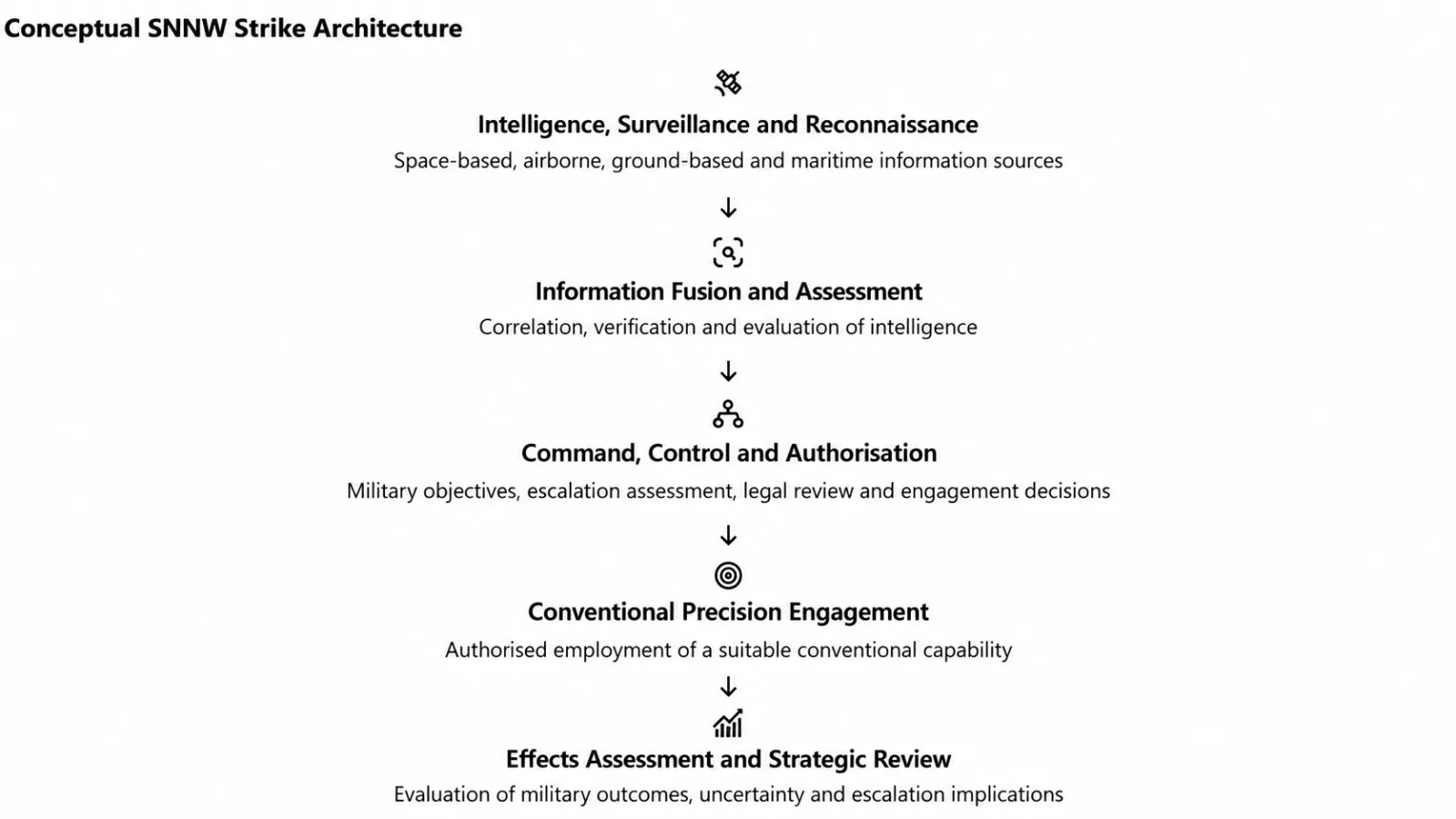
Figure 1. Simplified conceptual architecture; not a representation of a particular country's operational targeting system.
Modern systems may use automation and AI to support several of these functions, particularly in the management of large quantities of information. However, improved technical processing does not eliminate uncertainty about an adversary's intentions or likely political response. SIPRI's research distinguishes between the ability of AI systems to organise and analyse observable data and their much less reliable capacity to infer political intentions or predict escalation decisions.¹²
This distinction is essential to understanding SNNWs. Their effectiveness depends upon the wider reconnaissance, communications, command and strike ecosystem, but their strategic consequences ultimately depend upon human political judgement.
6. How Do Major Powers View Strategic Non-Nuclear Weapons?
6.1 United States: Conventional Prompt Strike and Global Military Reach
American interest in strategic conventional strike has developed around the requirement to engage important targets rapidly at considerable distances without necessarily employing nuclear weapons or relying on forward-deployed forces. The Conventional Prompt Global Strike concept sought to provide responsive conventional options against targets that were distant, heavily defended or time-sensitive. Although some proposals raised questions about missile-launch ambiguity, the programme reflected a broader attempt to increase flexibility in American strategic military options.
The development of advanced hypersonic weapons represents a continuation of this approach. The US Army's Long-Range Hypersonic Weapon, known as Dark Eagle, and the US Navy's Conventional Prompt Strike programme exemplify efforts to expand long-range conventional precision capabilities. Congressional Research Service assessments describe Dark Eagle as a system intended for time-sensitive and heavily defended targets, while also recording important issues concerning testing, cost and operational effectiveness.¹³
American SNNW-related thinking should therefore be understood within the broader context of conventional military superiority, force projection and deterrence, rather than as a formal rejection of nuclear weapons. Washington continues to regard nuclear forces as essential to deterring nuclear attack, while developing conventional capabilities that may offer additional strategic options.
6.2 Russia: Strategic Non-Nuclear Deterrence as an Explicit Doctrine
Russia offers one of the clearest examples of a state formally incorporating non-nuclear deterrence into its strategic vocabulary. The country's 2014 Military Doctrine recognised non-nuclear deterrence as a combination of measures intended to prevent aggression through non-nuclear means. This approach emerged alongside investment in cruise missiles, precision strike, electronic warfare and integrated military capabilities.
Russian strategic thought treats nuclear and non-nuclear instruments as complementary components of a broader deterrence framework. Long-range conventional weapons can support coercion, deterrence and conventional warfighting, while nuclear capabilities remain central to the prevention of existential threats. Valeriy Akimenko's study for Chatham House demonstrates that the Russian concept is deliberately expansive and contains significant ambiguity regarding the relationship between deterrence, coercion and actual military employment.¹⁴
Russia's experience also illustrates the limitations of advanced strike capabilities. Possessing sophisticated missiles does not guarantee strategic success, particularly when the adversary can disperse critical assets, sustain operations, employ air defences and adapt politically to prolonged attacks.
6.3 China: Conventional Missile Forces and Regional Deterrence
China's approach is distinguished by the integration of conventional precision-strike capabilities into its broader military modernisation and regional deterrence posture. The People's Liberation Army Rocket Force operates a variety of ballistic and cruise missile systems that support conventional military operations while also maintaining nuclear responsibilities.
One particularly important example is the DF-26 intermediate-range ballistic missile, which the Center for Strategic and International Studies identifies as capable of carrying either conventional or nuclear warheads. Its dual-capable character illustrates the difficulties that arise when the same family of delivery systems is associated with different forms of strategic attack.¹⁵
In the Indo-Pacific, Chinese conventional precision-strike capabilities have implications for military bases, naval deployments, regional force projection and the ability of external powers to operate during a crisis. However, it would be misleading to equate all Chinese conventional missiles with SNNWs. Their strategic significance depends on their missions, targets, employment concepts and relationship with China's nuclear forces.
7. Where Does India Stand in the Development of SNNWs?
India's developing precision-strike capabilities are increasingly relevant to the global debate over strategic conventional weapons, particularly because the country faces two nuclear-armed neighbours with different military capabilities, territorial disputes and escalation dynamics. However, India does not publicly maintain a comprehensive, formally designated SNNW doctrine comparable to Russia's broader concept of non-nuclear deterrence. Its emerging capabilities must therefore be assessed through their operational roles and potential strategic effects rather than assigned an official doctrine that has not been publicly established.
The BrahMos supersonic cruise missile is an important component of India's precision-strike capabilities. Its land, sea and air-launched configurations provide different operational options, while the integration of air-launched BrahMos with the Su-30MKI expands the geographical reach of conventional strikes. Official Indian statements have described the missile's ability to engage targets at stand-off distances and provide precision-strike capabilities over land and sea.¹⁶
The development of Pralay adds another dimension to India's conventional missile capabilities. Pralay is a solid-fuel, quasi-ballistic missile employing advanced navigation and guidance systems. In July 2025, the Defence Research and Development Organisation conducted two flight tests as part of user evaluation trials, validating the system's performance across the tested range envelope. Although Pralay is primarily associated with theatre-level conventional strike, its potential strategic relevance depends upon the particular military targets and operational circumstances involved.¹⁷
India has also advanced research into longer-range and more sophisticated missile systems. In November 2024, DRDO announced the successful flight trial of an indigenous long-range hypersonic missile designed for ranges greater than 1,500 kilometres. The test represented an important technological milestone, but one successful developmental test should not be equated with a fully operational, mature strategic strike capability.¹⁸
The maritime dimension is becoming increasingly important as well. In October 2026, India's Ministry of Defence announced a contract for BrahMos fire-control systems and launchers for Indian Navy vessels, describing BrahMos as a major surface-to-surface missile system for maritime strike operations. This illustrates how precision strike is expanding across India's land, air and maritime forces.¹⁹
India's long-term strategic challenge will be integrating these capabilities with dependable intelligence, resilient communications, credible defensive systems and a coherent understanding of escalation. With Pakistan, conventional precision weapons may offer greater retaliatory flexibility, but geographic proximity and the potential for rapid crisis escalation complicate their employment. With China, India's conventional strike capabilities must be understood within a much larger military and technological asymmetry involving missile forces, air and missile defence, surveillance and nuclear deterrence.
8. What Have Recent Conflicts Demonstrated?
Contemporary conflicts provide important evidence about the military value of precision strike, but they also demonstrate the difference between technological capability and strategic outcomes.
The Russia–Ukraine war has highlighted the importance of long-range conventional attacks, unmanned systems, electronic warfare, intelligence integration and the ability to sustain military operations under persistent surveillance. Ukraine's deep-strike campaigns have demonstrated that relatively low-cost systems can threaten valuable facilities at considerable distances, provided they are supported by sufficient intelligence and organisational adaptation. At the same time, Russian missile and drone attacks have illustrated the continuing challenges of air defence, ammunition expenditure, infrastructure resilience and the difficulty of translating physical damage into decisive political outcomes. CSIS research emphasises that deep-strike campaigns involve extensive intelligence, planning and assessment rather than the simple employment of sophisticated weapons.²⁰
A particularly important development occurred in June 2025, when Ukraine's Operation Spider Web targeted Russian airbases using unmanned aircraft. Some of the aircraft involved had roles in Russia's nuclear-capable strategic aviation forces. SIPRI identifies the operation as an illustration of how conventional military actions can affect assets relevant to nuclear deterrence, even when the immediate military objectives belong to an ongoing conventional conflict.²¹
The May 2025 India–Pakistan crisis offers another significant case study. Both countries employed stand-off strike capabilities during the confrontation, and the conflict demonstrated the growing relevance of precision missiles, drones, air defences and conventional retaliation between nuclear-armed adversaries. Christopher Clary's assessment for the Stimson Center highlights how the crisis crossed previous thresholds in the geographical reach and types of weapons employed, while also noting substantial uncertainty and misinformation surrounding several claims made by both sides.²²
These cases suggest three important lessons. First, relatively precise conventional attacks can have consequences far beyond the immediate battlefield, particularly when they affect politically or strategically sensitive assets. Second, defensive measures, survivability and the ability to sustain military operations remain essential. Third, precision does not guarantee escalation control. Even technically successful attacks may generate political consequences that the attacking state cannot reliably anticipate.
9. How Are SNNWs Changing Traditional Nuclear Deterrence?
The most consequential debate surrounding SNNWs concerns their potential effect on nuclear deterrence. Traditional nuclear deterrence depends substantially upon the credibility of retaliation. A nuclear-armed state must convince an adversary that it retains the capability and political resolve to impose unacceptable costs following an attack. This requirement is particularly important for second-strike deterrence, which depends upon the survival of sufficient nuclear forces and their associated command systems.
Advanced conventional strike capabilities introduce the possibility that selected components of a nuclear deterrent might be threatened without nuclear weapons being employed. Conventional attacks against strategically important military infrastructure could, in certain circumstances, disrupt command networks, damage supporting facilities or threaten assets associated with nuclear forces. Hoffmann's research identifies the potential to undermine nuclear retaliatory capability as a defining concern in the strategic-stability implications of SNNWs.²³
This creates a problem commonly described as nuclear-conventional entanglement. Military systems are often not neatly divided between nuclear and non-nuclear functions. Aircraft, missile launchers, sensors, communications systems and military infrastructure may support both conventional and nuclear operations. Consequently, a conventional attack intended to achieve a limited military objective could be interpreted as an attempt to weaken an adversary's nuclear retaliatory capability.
Three escalation mechanisms are especially important.
The first is launch ambiguity. An adversary detecting a missile launch may not immediately know whether the incoming weapon carries a conventional or nuclear warhead. This is particularly problematic where delivery systems are dual-capable, or where the available warning period is short.
The second is target ambiguity. A state conducting conventional operations may attack a military facility because of its immediate operational importance. However, the defending state may regard the same facility as essential to nuclear command, warning or retaliation. The attack may therefore be interpreted as strategically escalatory even when the attacker believes it is conducting a limited conventional operation.
The third is inadvertent escalation through perceived vulnerability. If a nuclear-armed state believes that an adversary is gradually degrading its ability to retaliate, it may face increasing pressure to adopt more aggressive alert measures, disperse its forces or consider escalation before those capabilities become less effective. SIPRI's 2026 assessment of multidomain escalation risk highlights precisely these problems arising from the growing interaction between conventional military operations and nuclear capabilities.²⁴
Nevertheless, SNNWs may also have stabilising effects. Credible conventional precision-strike options can provide military alternatives to nuclear retaliation, potentially allowing governments to respond to aggression without immediately crossing the nuclear threshold. Their strategic value therefore involves a fundamental tension: the same weapons that expand options below nuclear use may increase fears that nuclear deterrent forces are vulnerable to conventional attack.
Whether SNNWs ultimately strengthen or weaken strategic stability depends upon the survivability of nuclear forces, command-and-control arrangements, weapons characteristics, communication between adversaries and the political context in which they are employed.
10. Can SNNWs Replace Nuclear Weapons?
Despite advances in conventional technology, it would be premature to suggest that SNNWs can replace nuclear weapons as the principal instruments of existential deterrence. Nuclear weapons possess destructive characteristics that remain fundamentally different from conventional warheads, particularly in their capacity to cause enormous physical destruction through a single detonation.
Conventional precision weapons can be highly effective against targets that are accurately identified and vulnerable to their destructive mechanisms. However, hardened facilities, dispersed nuclear forces, mobile launchers and submarines present different operational challenges. A conventional attack intended to neutralise an adversary's nuclear deterrent would require not only effective weapons but extraordinarily reliable intelligence and confidence that relevant retaliatory capabilities had been sufficiently degraded.
Furthermore, the possession of accurate conventional missiles does not necessarily produce the political effect sought by the attacking state. An adversary may absorb substantial damage while retaining the military and political will to continue a conflict. Nuclear deterrence, by contrast, depends substantially on the potential for catastrophic retaliation rather than the expectation that particular military targets can always be destroyed.
The relationship is therefore better understood as one of complementarity, competition and potential entanglement rather than straightforward replacement. SNNWs expand the range of military options available below nuclear use, but they do not eliminate the distinct deterrent role of nuclear weapons. SIPRI's analysis of AI-enhanced counterforce capabilities similarly cautions that even advanced systems are unlikely to neutralise the survivable nuclear forces of technologically sophisticated nuclear powers with high confidence in the near term.²⁵
11. The Technological and Operational Limitations of SNNWs
The strategic significance of SNNWs should not obscure their technological and operational limitations. Three problems are particularly important: the difficulty of finding and identifying targets, the challenge of ensuring weapon penetration and the uncertainty of achieving the intended military effects.
The first limitation concerns intelligence. A weapon may possess exceptional accuracy yet remain ineffective if its target information is outdated, incomplete or incorrect. Mobile missile launchers, concealed facilities, decoys and rapidly changing military environments complicate the ability to identify valuable targets reliably.
The second limitation is the survivability of the weapon itself. Advanced air and missile defences, electronic warfare and other defensive capabilities can interfere with precision-strike operations. Hypersonic weapons may present difficult interception problems, but they are not inherently unstoppable. Technical challenges involving guidance, testing, reliability and cost also complicate their development and operational deployment. The Congressional Research Service has noted that some critics question whether hypersonic weapons provide sufficient additional military utility to justify their costs.²⁶
The third limitation is the difficulty of converting individual successful strikes into broader strategic success. The destruction of an important military installation may degrade an adversary's capabilities, but its strategic significance depends upon the availability of alternative facilities, redundancy, repair capacity, operational adaptation and political resolve. The Russia–Ukraine war has repeatedly demonstrated the importance of resilience, industrial capacity and the ability to sustain military operations despite persistent conventional attacks.²⁷
These limitations challenge the idea that conventional precision strike offers a guaranteed means of achieving strategic objectives. Even highly advanced weapons remain subject to uncertainty, defence and operational failure.
12. The Future: AI, Autonomous Weapons, Space and Strategic Stability
The future development of SNNWs will increasingly depend upon the integration of different technologies rather than improvements to individual missile systems alone. Advances in satellite reconnaissance, autonomous systems, AI-assisted intelligence analysis, resilient communications and long-range precision weapons are likely to alter the speed and complexity of military decision-making.
Artificial intelligence may improve the ability of military organisations to process information from multiple sources and identify patterns that would otherwise be difficult to recognise. However, greater reliance on machine-generated assessments creates the possibility of errors, bias and misplaced confidence. These risks become particularly consequential when decisions occur under time pressure or involve capabilities associated with nuclear forces. SIPRI's 2025 research warns that AI-enabled military decision support may increase nuclear escalation risks even when human decision-makers retain formal responsibility for critical decisions.²⁸
Space-based systems are another important component of this emerging strategic environment. Satellites support communications, navigation, early warning and intelligence collection, making them valuable to both conventional military operations and nuclear deterrence. The disruption of dual-use space systems during a conventional conflict could therefore produce consequences that extend into the nuclear domain. Similar concerns arise from cyber operations against communications networks and other military infrastructure supporting both conventional and strategic functions.²⁹
These developments indicate that the next stage of strategic conventional warfare may be defined less by the range or speed of individual weapons and more by the integration of information, decision-making and military effects across multiple operational domains.
The expansion of these capabilities also creates important legal and humanitarian considerations. The use of conventional weapons does not remove obligations under international humanitarian law. Attacks during armed conflict remain subject to applicable rules governing distinction, proportionality and precautions. The International Committee of the Red Cross has emphasised that these principles also apply to cyber operations conducted during armed conflict.³⁰
From a strategic-stability perspective, nuclear-armed states will increasingly need to consider measures that reduce the risks associated with dual-capable weapons, shared military infrastructure and compressed decision-making timelines. Greater transparency regarding the conventional or nuclear roles of certain systems, military communication mechanisms, confidence-building measures and improved understanding of escalation pathways could all contribute to reducing uncertainty.
Conclusion: Are Strategic Non-Nuclear Weapons Making Nuclear Deterrence More Stable or More Dangerous?
Strategic Non-Nuclear Weapons represent an important evolution in the relationship between military technology, conventional warfare and nuclear deterrence. Their development reflects decades of advances in precision guidance, intelligence collection, long-range strike capabilities, command-and-control systems and increasingly integrated military operations. These capabilities have created additional options for states seeking to impose strategic costs without immediately employing nuclear weapons.
Nevertheless, the growing strategic importance of conventional weapons does not mean that nuclear weapons are becoming obsolete. The ability of SNNWs to produce strategically consequential effects remains conditional upon target vulnerability, reliable intelligence, operational effectiveness and the ability to overcome an adversary's defensive measures. Nuclear weapons continue to possess a distinct role because of their unparalleled destructive effects and the credibility of catastrophic retaliation.
The principal challenge is that conventional precision-strike capabilities are increasingly capable of threatening systems that also support nuclear deterrence. This interaction creates uncertainty about the intentions behind military operations, the significance of particular targets and the thresholds that could trigger escalation. Weapons intended to provide greater flexibility during crises may therefore generate additional incentives for pre-emption or nuclear signalling.
The central lesson is that technological precision does not necessarily translate into strategic control. The capacity to strike an adversary's valuable military assets accurately is not equivalent to the capacity to predict its political response. Future strategic stability will depend not only upon the technological sophistication of nuclear and conventional forces but also upon the ability of states to distinguish between them, communicate their intentions and manage the risks of escalation.
SNNWs are not replacing nuclear deterrence. They are transforming the military environment in which nuclear deterrence operates, simultaneously expanding the possibilities for conventional retaliation and complicating the assumptions upon which strategic stability has traditionally depended. As SIPRI's recent research demonstrates, understanding these multidomain interactions is becoming essential to preventing conventional military crises from developing into nuclear confrontations.³¹
Endnotes
Fabian Hoffmann, “Strategic Non-Nuclear Weapons and Strategic Stability: Promoting Trust through Technical Understanding,” Foundation for Strategic Research, November 15, 2021. https://www.frstrategie.org/en/programs/npt-and-the-p5-process/strategic-non-nuclear-weapons-and-strategic-stability-promoting-trust-through-technical-understanding-2021
Wilfred Wan, Addressing Multidomain Nuclear Escalation Risk (Stockholm: Stockholm International Peace Research Institute, January 2026). https://www.sipri.org/publications/2026/policy-reports/addressing-multidomain-nuclear-escalation-risk
Hoffmann, “Strategic Non-Nuclear Weapons and Strategic Stability.” https://www.frstrategie.org/en/programs/npt-and-the-p5-process/strategic-non-nuclear-weapons-and-strategic-stability-promoting-trust-through-technical-understanding-2021
Air University Press, “Aerial-Precision Development,” in an Air University historical study of precision air warfare. https://www.airuniversity.af.edu/Portals/10/AUPress/Papers/t_0006_murray_moral_and_ethical_implications.pdf
US Department of State, “Intermediate-Range Nuclear Forces Treaty (INF Treaty),” December 8, 1987. https://2009-2017.state.gov/t/avc/trty/102360.htm
Valeriy Akimenko, Russia and Strategic Non-Nuclear Deterrence: Capabilities, Limitations and Challenges (London: Chatham House, July 29, 2021). https://www.chathamhouse.org/2021/07/russia-and-strategic-non-nuclear-deterrence
Congressional Research Service, Hypersonic Weapons: Background and Issues for Congress, R45811, updated May 5, 2025. https://www.everycrsreport.com/files/2025-05-05_R45811_347264afd5a603530a37629e36baea8b48882dc4.html
Hoffmann, “Strategic Non-Nuclear Weapons and Strategic Stability.” https://www.frstrategie.org/en/programs/npt-and-the-p5-process/strategic-non-nuclear-weapons-and-strategic-stability-promoting-trust-through-technical-understanding-2021
Vladislav Chernavskikh and Jules Palayer, Impact of Military Artificial Intelligence on Nuclear Escalation Risk (Stockholm: Stockholm International Peace Research Institute, June 2025). https://www.sipri.org/publications/2025/sipri-insights-peace-and-security/impact-military-artificial-intelligence-nuclear-escalation-risk
Congressional Research Service, Hypersonic Weapons: Background and Issues for Congress. https://www.everycrsreport.com/files/2025-05-05_R45811_347264afd5a603530a37629e36baea8b48882dc4.html
Akimenko, Russia and Strategic Non-Nuclear Deterrence. https://www.chathamhouse.org/2021/07/russia-and-strategic-non-nuclear-deterrence/russias-strategic-non-nuclear-deterrent
Chernavskikh and Palayer, Impact of Military Artificial Intelligence on Nuclear Escalation Risk. https://www.sipri.org/publications/2025/sipri-insights-peace-and-security/impact-military-artificial-intelligence-nuclear-escalation-risk
Congressional Research Service, “The U.S. Army's Long-Range Hypersonic Weapon (LRHW): Dark Eagle,” updated April 29, 2026. https://www.everycrsreport.com/files/2026-04-29_IF11991_937112f05e67689e7630942387d534ce39c8625b.html
Akimenko, Russia and Strategic Non-Nuclear Deterrence. https://www.chathamhouse.org/2021/07/russia-and-strategic-non-nuclear-deterrence
Center for Strategic and International Studies, Missile Threat, “DF-26,” updated April 23, 2024. https://missilethreat.csis.org/missile/dong-feng-26-df-26/
Government of India, Ministry of Defence, “Successful Firing of BrahMos Air Launched Missile from Su-30 MKI Aircraft,” December 17, 2019. https://www.pib.gov.in/PressReleasePage.aspx?PRID=1596778&lang=2®=48
Government of India, Ministry of Defence, “DRDO Successfully Conducts Two Consecutive Flight-Tests of Pralay Missile,” July 29, 2025. https://www.pib.gov.in/PressReleaseIframePage.aspx?PRID=2149610&lang=2®=48
Government of India, Ministry of Defence, “DRDO Carries Out Successful Flight-Trial of India's First Long-Range Hypersonic Missile off the Odisha Coast,” November 17, 2024. https://www.pib.gov.in/Pressreleaseshare.aspx?PRID=2073994&lang=2®=48
Government of India, Ministry of Defence, “MoD Signs Rs 661 Crore Contract to Procure BrahMos Fire Control System and Launchers for Indian Navy Ships,” October 6, 2026. https://www.pib.gov.in/PressReleasePage.aspx?PRID=2319502&lang=1®=48
Center for Strategic and International Studies, “Seven Contemporary Insights on the State of the Ukraine War.” https://www.csis.org/analysis/seven-contemporary-insights-state-ukraine-war
Wan, Addressing Multidomain Nuclear Escalation Risk. https://www.sipri.org/publications/2026/policy-reports/addressing-multidomain-nuclear-escalation-risk
Christopher Clary, Four Days in May: The India-Pakistan Crisis of 2025 (Washington, DC: Stimson Center, May 28, 2025). https://www.stimson.org/2025/four-days-in-may-the-india-pakistan-crisis-of-2025/
Hoffmann, “Strategic Non-Nuclear Weapons and Strategic Stability.” https://www.frstrategie.org/en/programs/npt-and-the-p5-process/strategic-non-nuclear-weapons-and-strategic-stability-promoting-trust-through-technical-understanding-2021
Wan, Addressing Multidomain Nuclear Escalation Risk. https://www.sipri.org/publications/2026/policy-reports/addressing-multidomain-nuclear-escalation-risk
Chernavskikh and Palayer, Impact of Military Artificial Intelligence on Nuclear Escalation Risk. https://www.sipri.org/publications/2025/sipri-insights-peace-and-security/impact-military-artificial-intelligence-nuclear-escalation-risk
Congressional Research Service, Hypersonic Weapons: Background and Issues for Congress. https://www.everycrsreport.com/files/2025-05-05_R45811_347264afd5a603530a37629e36baea8b48882dc4.html
Center for Strategic and International Studies, “Seven Contemporary Insights on the State of the Ukraine War.” https://www.csis.org/analysis/seven-contemporary-insights-state-ukraine-war
Chernavskikh and Palayer, Impact of Military Artificial Intelligence on Nuclear Escalation Risk. https://www.sipri.org/publications/2025/sipri-insights-peace-and-security/impact-military-artificial-intelligence-nuclear-escalation-risk
Wan, Addressing Multidomain Nuclear Escalation Risk. https://www.sipri.org/publications/2026/policy-reports/addressing-multidomain-nuclear-escalation-risk
International Committee of the Red Cross, “IHL Limits the Conduct of Cyber Operations.” https://www.icrc.org/en/document/international-humanitarian-law-limits-cyber-operations
Wan, Addressing Multidomain Nuclear Escalation Risk. https://www.sipri.org/publications/2026/policy-reports/addressing-multidomain-nuclear-escalation-risk
Tags

Author