
The Lateef Bhat Case: One Terrorist, Many Outfits and Pakistan’s Cognitive Warfare in Kashmir
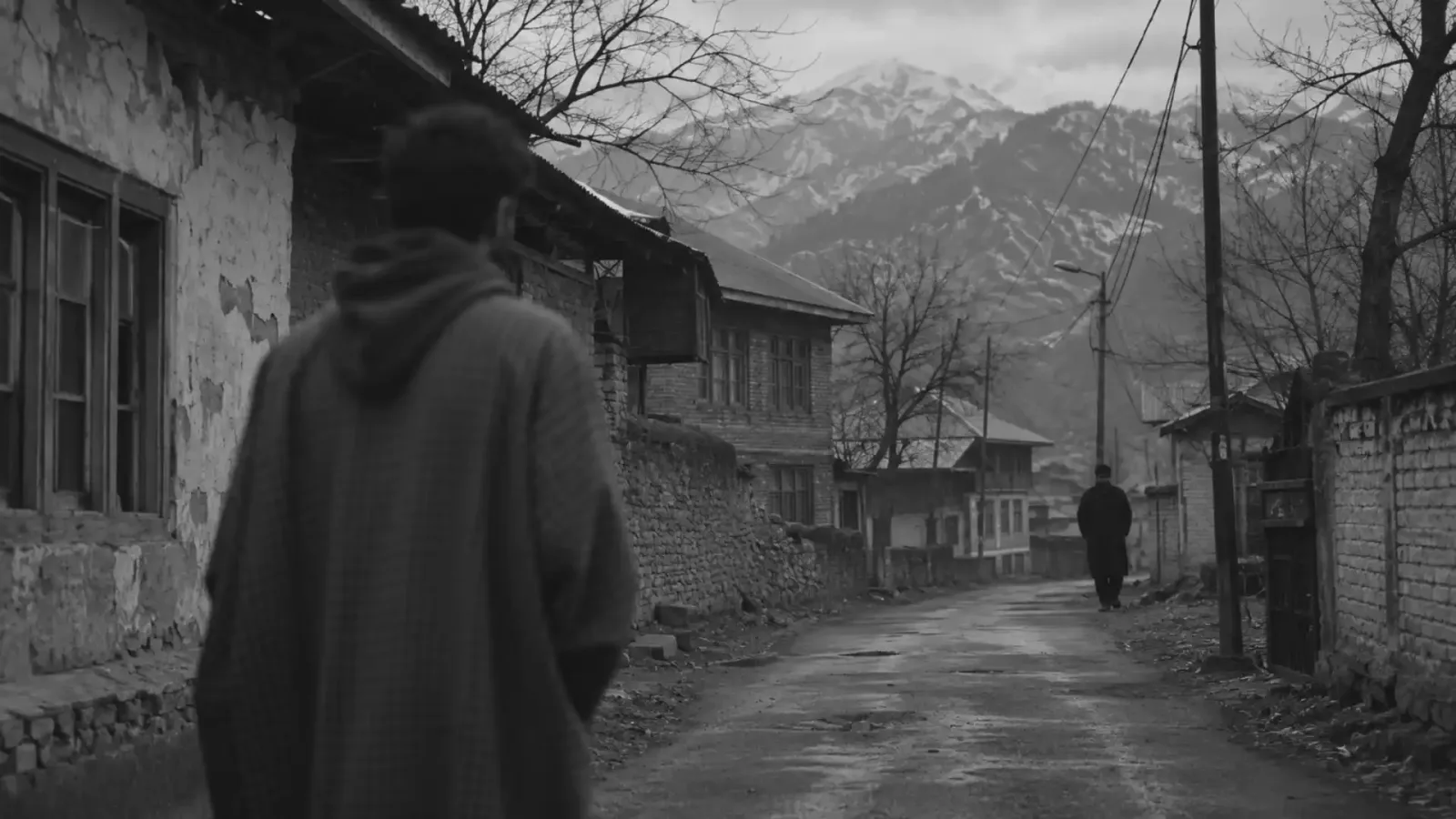
The killing of Mohammad Lateef Bhat in November 2026 exposes a broader pattern in Pakistan-sponsored terrorism in Jammu and Kashmir, where multiple proxy outfits claim responsibility for attacks and selectively acknowledge eliminated terrorist cadres. This commentary examines how overlapping organisational identities serve as instruments of cognitive warfare, creating confusion over attribution, exaggerating the perceived strength of terrorist networks and projecting an indigenous character onto Pakistan-backed violence. It further analyses the strategic importance of local recruitment and how the deaths of Kashmiri terrorists can be exploited to generate sympathy, sustain insurgency narratives and facilitate further radicalisation. The central argument is that eliminating armed terrorists alone is insufficient without dismantling the recruitment networks and information operations that sustain terrorism in Kashmir.
When Mohammad Lateef Bhat joined Lashkar-e-Taiba (LeT) in November 2025, Kashmir Revolutionary Army (KRA) announced his induction. Months later, Bhat was accused of killing a Jammu and Kashmir Police head constable in Anantnag on 22 July 2026. The attack was claimed by the United Liberation Council (ULC) and Falcon Squad associated with The Resistance Front (The Resistance Front). On 31 July, two migrant workers were killed in Kulgam in another attack attributed to Bhat, with TRF reportedly claiming responsibility. When Bhat and his associate attacked CRPF personnel in Kulgam on 11 November, yet another fresh organisation, Pasdaran-e-Hurriyat Kashmir, emerged to claim the attack. Following Bhat's elimination on 18 November, a statement attributed to ULC reportedly memorialised him.¹
The changing organisational identities surrounding a single terrorist raise questions that extend beyond Bhat's activities. How many of these organisations possess independent operational structures, cadres and command hierarchies? And how many exist primarily as names through which established Pakistan-based terrorist organisations communicate, claim violence and shape public perceptions? Bhat's case offers an opportunity to examine two interconnected dimensions of the terrorist threat in Kashmir. The first is the proliferation of proxy identities as an instrument of cognitive warfare. The second is the continuing importance of locally recruited militants in giving Pakistan-sponsored terrorism the appearance of an indigenous insurgency.
The emergence of multiple militant identities is not entirely new. Following the abrogation of Article 370 in August 2019, organisations such as TRF, People's Anti-Fascist Front (PAFF) and Kashmir Tigers began appearing in responsibility claims and propaganda. The terminology was significant. Names invoking resistance, liberation and opposition to fascism replaced the overtly Islamist identities associated with organisations such as LeT and Jaish-e-Mohammed (JeM). This was not merely a change in branding. It provided Pakistan-based terrorist networks with a vocabulary through which violence could be presented as an indigenous political struggle rather than an extension of cross-border terrorism. In July 2025, the United States formally recognised TRF and several related names as aliases of LeT, establishing a documented precedent for this organisational camouflage.²
It is important to recognise that the proliferation of militant identities in Jammu and Kashmir is not a recent development. KRA has maintained a presence in the digital domain since at least 2021, whereas the ULC, whose name bears a resemblance to the United Jihad Council (UJC), emerged in 2026. Before ULC, another organisation calling itself the United Liberation Front (ULF) frequently claimed responsibility for attacks and identified militants otherwise associated with TRF, PAFF and Kashmir Tigers as its cadres. Much like the UJC, which reportedly functioned as an umbrella organisation for Pakistan-based militant groups such as LeT and JeM and Hizbul Mujahideen, both ULC and ULF have projected themselves as representative platforms for multiple militant organisations operating in Jammu and Kashmir.
The overlapping organisational claims surrounding Mohammad Lateef Bhat should therefore be understood as part of a pattern that has been visible since at least 2020, rather than an isolated development. Different militant identities have frequently been associated with different categories of violence, even when the underlying networks or perpetrators reportedly overlapped. Targeted killings of civilians and security personnel in Kashmir by one group were often claimed under the TRF banner, whereas more complex attacks, including ambushes targeting security forces in the Kashmir Valley and Jammu region by the same group, were frequently attributed to PAFF. This apparent differentiation in public attribution raises the possibility that organisational identities were being used not merely to acknowledge attacks, but also to shape how particular acts of violence were perceived, classified and communicated to different audiences.
Furthermore, a substantial body of evidence suggests that PAFF has followed a selective pattern in acknowledging terrorists killed during encounters with security forces. Its post-encounter statements have frequently focused on locally recruited Kashmiri terrorists while omitting Pakistani nationals killed in the same operations. For instance, when an encounter resulted in the deaths of two local cadres and one Pakistani terrorist, PAFF would acknowledge only the two local cadres as its members. This selective attribution appears consistent with an effort to reinforce the organisation’s projected indigenous character while concealing its connections to Pakistan-based terrorist networks.
The proliferation of such names serves several purposes. First, it can manufacture an impression of organisational depth. A single network issuing statements through multiple identities may appear to represent several independent militant formations, suggesting a broader constituency and greater operational capacity than actually exists. Second, competing responsibility claims can create uncertainty in public attribution. When an incident is claimed by one organisation, but investigators identify individuals connected to another, the resulting ambiguity can complicate public understanding even when investigators have a clearer picture of the perpetrators. Third, the repetition of claims and threats through different identities can amplify the perceived scale and persistence of terrorism without requiring a corresponding increase in armed manpower.
These functions place organisational rebranding within the broader framework of cognitive warfare. The objective is not necessarily to deceive security agencies about the identity of an attacker, but to influence how different audiences interpret an incident. For local communities, repeated claims can create an impression of widespread terrorist presence. For potential recruits, multiple banners may suggest a continuing and expanding movement. For international audiences, ostensibly indigenous organisational names can obscure relationships with internationally designated terrorist groups. The same act of violence therefore becomes an opportunity to influence several audiences simultaneously.
The ULC's activities during August 2026 provide a particularly revealing example. Statements attributed to the organisation threatened Kashmiri Pandit employees working in the Valley and disclosed personal information about some individuals. These threats followed the killing of two migrant workers from Chhattisgarh in Kulgam on 31 July. The warnings reportedly prompted precautionary arrangements affecting some Kashmiri Pandit employees.³ The significance lies in the psychological effect. An organisation need not possess a large armed presence to generate considerable insecurity. A threatening statement, particularly after a real attack, can influence perceptions of personal safety, restrict everyday movement and undermine confidence in the security environment. Multiple organisational names can further reinforce the impression that threats originate from several sources rather than potentially overlapping networks.
Bhat's reported network also demonstrates why the proliferation of organisational identities cannot be examined separately from local recruitment. He was associated with Zakir Ahmad Ganai, an LeT-linked terrorist with whom he was captured on CCTV in Shopian on 2 July 2026. Ganai was killed on 8 July, while Bhat escaped. By November, Bhat had developed a relationship with Umar Nisar Dar, a local youth who reportedly provided shelter and logistical assistance for several months before participating in the 11 November attack. Dar was killed on 16 November, followed by Bhat two days later.⁴
This sequence suggests a potentially important pattern of recruitment continuity. The elimination of one terroristt does not necessarily terminate the network through which he influenced or recruited others. According to a subsequent investigation, communications recovered from Bhat's phone indicated that Pakistan-based handlers were pressuring him to conduct attacks and recruit additional Kashmiri youths. Investigators reportedly discovered that three more youths were expected to be inducted and armed following the November attack.⁵ Although these findings remain based on security-source accounts, they raise an important distinction between the number of officially listed armed militants and the wider pool of individuals vulnerable to recruitment.
This is where the elimination of locally recruited terrorists carries a different strategic and psychological dimension from that of foreign terrorists. Pakistani terrorists may be highly trained, difficult to locate and operationally dangerous. Their elimination is not necessarily easier in military terms. However, eliminating a foreign infiltrator generally carries a different local emotional consequence from the death of a Kashmiri youth whose family, friends and community are identifiable. Pakistan-backed propaganda networks can exploit these personal connections, selectively presenting an armed terrorist's death as evidence of collective victimhood while obscuring his involvement in terrorism and the role of those who recruited him.
Kashmir has experienced the consequences of this phenomenon before. The killing of Hizbul Mujahideen commander Burhan Wani on 8 July 2016 became a major mobilisation event, demonstrating how the death of a locally recognised terrorist could acquire significance beyond its immediate operational outcome. A security-agency assessment reported in 2018 found that 209 terrorists had been recruited between August 2016 and April 2018, compared with 115 killed during that period. Investigators also identified cases in which recruits had been influenced by Wani's death or subsequent encounters.⁶ Although the recruitment surge cannot be attributed exclusively to these killings, the findings illustrated how militant deaths could become instruments of mobilisation within an already receptive environment.
The circumstances of 2026 are substantially different from those of 2016. Local recruitment has declined sharply, the organisational infrastructure of militancy has weakened, and the security environment has changed. Bhat did not possess Wani's public profile or influence. Nevertheless, the underlying vulnerability deserves attention. A small number of local recruits can provide Pakistan-based terrorist organisations with something that foreign terrorists alone cannot easily generate, a recognisable local identity through which they can attempt to construct an insurgent narrative. The deaths of such recruits can subsequently be incorporated into propaganda to encourage others to follow the same path.
The elimination of Bhat and Dar represents a significant operational success. On 18 November, J&K Director General of Police Nalin Prabhat stated that local militant recruitment had fallen to nearly zero and that both remaining active local militants had been killed.⁷ Yet the reported recruitment efforts surrounding Bhat suggest that a favourable operational picture must be accompanied by continued vigilance against regeneration. The absence of listed local terrorists does not necessarily mean the disappearance of recruitment intermediaries, ideological influence, logistical support or online propaganda.
India's counterterrorism challenge therefore has two dimensions. Security agencies must continue identifying and dismantling the operational structures sustaining violence, while also confronting the information environment through which terrorist organisations exaggerate their strength and seek new recruits. This requires exposing the relationships between proxy organisations and their parent networks, verifying competing responsibility claims, countering threats against vulnerable communities and preventing the deaths of local militants from becoming recruitment spectacles. Equally important are credible local engagement, proportionate security practices and intervention before vulnerable youths move from clandestine association to armed activity.
The larger lesson from Lateef Bhat's case is that the decline of local militancy does not automatically eliminate the mechanisms capable of reviving it. Pakistan-backed terrorist networks may lose armed cadres while retaining the ability to manufacture organisational identities, spread fear and attempt fresh recruitment. For India, the objective must be not only to eliminate the militant carrying the weapon, but also to dismantle the network that recruits him and the narrative machinery that seeks to turn his death into another recruitment opportunity.
Endnotes
Mir Fareed, “Lashkar Terrorist Sighted in Anantnag,” India Today, December 25, 2025; Hakeem Irfan Rashid, “Police Head Constable Killed in Targeted Terror Attack in Anantnag,” The Economic Times, July 23, 2026; “New Militant Outfit Claims Responsibility for Kulgam CRPF Attack,” Bhaskar Digital, November 12, 2026.
US Department of State, “Amendment of the Specially Designated Global Terrorist Designation of Lashkar-e-Tayyiba,” Federal Register, July 18, 2025; Bashaarat Masood, “‘Last Local Militant’: Why a 22-Year-Old Kashmir Man Has Valley on Alert,” The Indian Express, August 14, 2026.
Bashaarat Masood, “After Threat Letter, Kashmiri Pandits Working in Kashmir Asked to Stay at Home,” The Indian Express, August 12, 2026; Arun Sharma, “Another Threat Letter with Details of Kashmiri Pandits Emerges,” The Indian Express, August 24, 2026.
Bashaarat Masood, The Indian Express, August 14, 2026; Ananya Bhardwaj, “Slain LeT Operative Sheltered Commander Lateef Bhatt for 6 Months,” ThePrint, November 17, 2026.
Ananya Bhardwaj, “A Dropped Phone, a CCTV Trail: How J&K Security Forces Tracked and Killed Lateef Bhatt,” ThePrint, November 18, 2026.
The Indian Express, “In 21 Months Since Burhan Wani's Death, 115 Militants Killed, 209 Recruited,” June 1, 2018; Muzamil Jaleel, “Local Recruits & Burhan Wani's Killing,” The Indian Express, June 4, 2018.
“Last Remaining, Active Local Terrorist Killed in Kulgam: DGP,”Greater Kashmir, November 19, 2026.
Note: Supporting evidence not cited in this article is retained by the author and can be made available upon request.
Tags
Author
Mohit Vashisth
Mohit Vashisth is a Doctoral Research Fellow at Jindal School of International Affairs, O.P. Jindal Global University, Haryana, India. He was earlier associated with Max Security Solutions as a coordinator at Global Security Operations Centre (GSOC). At MAX, he was responsible for intelligence gathering, analysis, travel & security operations, and risk mitigation on a global scale during routine and emergency. He also has three years of experience working in the renewable energy sector. He is an engineering graduate with a major in Electronics and Communications and holds a Master’s degree in Political Science and International Affairs. His research areas are critical and disruptive defence technologies, counter-terrorism and Open-Source Intelligence (OSINT).