
Strategic Blindness and Structural Rupture: The October 7 Attack, the Fallacy of "The Conception," and the Reconfiguration of Israeli Threat Perception
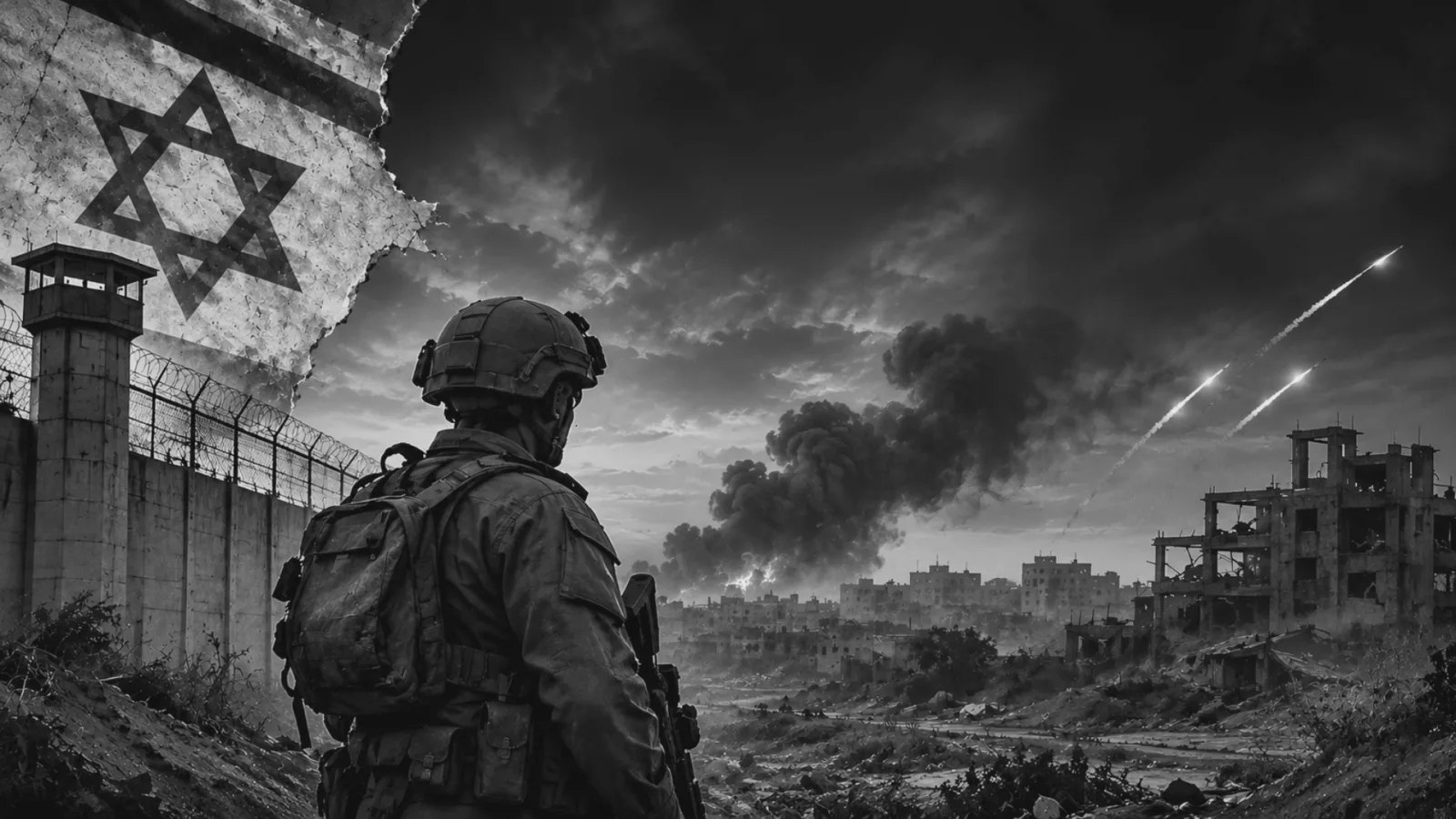
The October 7, 2023 Hamas attack exposed a profound failure in Israel's strategic threat assessment, challenging the assumptions that had shaped its security posture for years. This article examines the concept of “The Conception” — the belief that Hamas could be contained through deterrence, economic incentives and technological superiority — and explores how institutional assumptions and cognitive rigidity contributed to Israel's inability to adequately interpret and act upon warning signs.
It analyses the hierarchy of threats within Israeli strategic thinking, the intelligence warnings preceding the attack, and the institutional and psychological factors that prevented their effective assessment. The article further examines the transformation of Israeli threat perception after October 7, including the shift from containment towards pre-emptive action, territorial buffers and a broader understanding of regional threats.
It also considers the domestic consequences of the attack, particularly public trauma, political divisions and declining trust in political leadership. Ultimately, the article argues that October 7 revealed not merely an intelligence failure, but a deeper structural weakness in strategic thinking, demonstrating that technological superiority and external deterrence cannot compensate for institutional complacency and failures of threat perception.
Introduction
On 7th October 2023 at 06:29 AM, sirens sounded throughout the Southern part of Israel. By sunset, the Israeli security edifice, upon which its military establishment had been built for a generation, was in ruins. This was the worst day in the country's history, the worst day for Jews since the Holocaust. Its deeper meaning was what it revealed. A state with the strongest military in the region, a multi-billion dollar border wall, and a wealth of signs had underestimated what was about to come.
Operation Al-Aqsa Flood
The Hamas attack, dubbed Operation Al-Aqsa Flood, began with a barrage of 3,000 to 5,000 rockets, aimed to overload Israel's Iron Dome and paralyzing Israeli southern and central areas. The Qassam Brigades and the Palestinian Islamic Jihad (PIJ) struck a combined blow, in the form of an assault on land, air and sea, under that cover. Commercial drones were weaponized and destroyed sensor towers, communications masts and remotely controlled gun turrets. The $1 billion fortification at over three dozen locations was broken by explosive charges and bulldozers, and fighters came on motorized paragliders and fast boats.
The assault was made up of several waves of attackers, which included elite Nukhba commandos and lesser organized militants and opportunists who were able to slip through the cracks. The first wave hit military command structures such as the Gaza Division headquarters near the town of Re'im and inflicted damage on local command and control in minutes. Assault teams then went to some twenty communities and kibbutzim, including Be'eri, Kfar Aza and Nir Oz, and attacked the Nova music festival where hundreds of young people were hunted in the open fields.
At the time of its end, approximately 1,200 Israelis, plus foreign nationals, were killed, most of them civilians, and 251 were captured and brought to Gaza. The isolation battles lasted for hours and hours, and it took days for the army to establish itself in the border region. The thousands of reservists were mobilized with no formal orders. Some would be in uniform for hundreds of days of service.
The Hierarchy of Threats
The attack was not out of the blue. A hard-line hierarchy of enemies had been the cornerstone of Israeli strategic thinking for a long time. Ultimately, the existential threat was Iran, which had a nuclear program and network of proxies. The most dangerous current front was Hezbollah, which has a stockpile of precision-guided missiles. Hamas was far in the background: a sub-existential force which could be kept in check indefinitely by means of periodic military rounds, the "mowing of the lawn," and by economic inducements.
The ranking was followed by the policy. From 2018, Israel allowed monthly cash transfers into Gaza, a practice acknowledged by Prime Minister Benjamin Netanyahu as being designed to split Hamas and the Palestinian Authority and so help stave off pressure for a two-state solution. The policy presented Hamas as a governing body with an interest in stability and prosperity. 2021 fighting seemed to validate that it was deterred.
Technology fueled an even greater sense of complacency. The Iron Dome system and the smart barrier have fostered a sense among commanders and the public at large that technology can replace strategy. The trend was reflected in public opinion. From 2005 to 2013, there was a drop in the percentage of Israelis who viewed the chance of war as medium to high, dropping from 66% to 49%. Political speech, however, continued to be peppered with existential rhetoric, much of it directed at Iran. This combination of maximalist threat talk and waning felt danger is referred to as "deep securitization" by scholars.
The label that entered the fray for October 7 is "intelligence failure," meaning information was lacking. Otherwise, the score is recorded elsewhere. The problem was receiving. HaKonzepzia, Israelis say, "The Conception": the notion that Hamas was rational and could be deterred and economically pacified. Any information that contradicted it was not weighed; it was discarded. More aptly, it could be called intelligence ignorance: the inability of any system to meaningfully absorb what was not part of the narrative.
There were numerous warnings. For months, female border agents, known as “tatzpitaniyot”, of the Combat Intelligence Collection Corps have recorded what appeared to be preparations for an invasion: mock attacks on communities, identifying fence weaknesses, and conducting "take hostages" drills. Superiors rejected their reports as illusions. Israeli officials also dispute how their telephone call with Kamel, the head of Egyptian intelligence, has been described, but sources indicate he warned Netanyahu 10 days before the attack that an "unusual, terrible operation" was being prepared in Gaza. The same report says the UAE's top leader warned Netanyahu days ahead of the assault that Hamas was preparing for war, to which “the information was not passed on to Shin Bet.”
The alarm was just as loud inside the system. Some two and a half months before the attack, Chief of Staff Herzi Halevi is said to have written to Netanyahu that the strength of the Israel Defense Forces, social cohesion and the relationship with the U.S. were weakening Israel's deterrent power and that its enemies were bolder. The judicial overhaul crisis was the issue as the mass protests were, in the army's opinion, an advertisement of national weakness to its enemies.
There are two mechanisms that account for the lack of registration of this. The first is institutional. Military intelligence has never formally "securitised" Hamas, never issued it a declaration of the same existential level as the Jewish state, and thus the extraordinary measures that ensue have never been set in motion. After the war, the Chief of Staff admitted that Gaza and Hamas were not seen as an existential threat. It wasn't a threat the people underestimated; it was a threat that it wasn't categorized as. The second one is psychological. Feasibility studies were conducted based upon wishful thinking that turned a hoped-for outcome, that costly war could be avoided, into fact. In While Israel Slept, Yaakov Katz and Amir Bohbot say that belief in sensors and solid data became more important than human experience and firsthand accounts.
The Great Reversal
After October 7, the whole structure was overturned within hours. The shift in rhetoric, from ‘manage Hamas’, to ‘dismantle Hamas’, was akin to that towards ISIS. The securitizing process, which had not occurred before, was carried out by political leaders, and the threat frame broadened to integrate the Gaza, Hezbollah, West Bank and Iran into one complex.
The change was material as well as rhetorical. Defence expenditures grew from a share of GDP of around 4.5 % to almost 9 %. The army established buffer zones in Gaza, in southern Lebanon and in Syria, believing that a coordinated invasion cannot be stopped by technology and that a measure of physical distance gives time. Military assessments believe that thirty to sixty minutes more warning on October 7 could have cut down on the carnage. Israel was also more aggressive in acting before it could be read, that is, declared hostile intent for what it was worth, leading to more aggressive preemptive action on a number of fronts. A sign of the extent of the threat frame is that by September 2026, 77 % of Israelis believed the Palestinian Authority security forces could launch a similar attack.
There is no consensus among scholars on the extent of the shift. One school is undergoing a grand strategic transformation from comforts to force revisionism. Yet another view is that deterrence, early warning and decisive victory are the fundamental principles adapted. The most defensible interpretation is that both statements are somewhat correct: a dramatic shift in posture and resources in a strategic culture in which the underlying logic remains.
A Divided and Traumatized Public
The repercussions for ordinary Israelis have been a prolonged period of trauma. The number of people with probable post-traumatic stress disorder increased from approximately 16% to nearly 30% in the months following the attack.74% were concerned about an attack similar to October 7 taking place again in mid-2026 polling and almost half (48%) said it was not more secure today than it was a year ago.
But the most remarkable discovery is what Israelis consider to be dangerous. In one survey, 66% identified ‘internal conflicts’ as the country's main danger, not any external threat and 61% worried about the future of Israeli democracy. Trust in the military has ranged from about 78 to 90%, and trust in the political echelon is at a historic low.
That division comes from definite sources. The army has a huge shortage of manpower, and reservists have been serving for months without missing a beat with their families, livelihoods and financial status. The exemption of ultra-Orthodox citizens from conscription has been a flashpoint of resentment with regards to unequal sacrifice. Accountability is not a reality: The government has resisted an independent state commission of inquiry, and the "Qatargate" scandal, in which Qatari officials are accused of pushing the Prime Minister's agenda, has raised doubts about the pre-war Qatar policy. The poll indicates that the majority of Israelis reject the prime minister's own version of his “Gaza policy”.
The Lesson
October 7 was a day that revealed the extent to which we can be technically fortified, and the deadly power of cognitive rigidity. Since then, Israel has left behind the idea of containment for preemptive dismantlement and territorial buffers. But trickle-down borders do not guarantee a fractured society, overseen by a government that won't take responsibility for what has gone wrong. The most important lesson to be learned from the attack is that external deterrence goes hand in hand with internal unity. If the domestic schism and the crisis of accountability that resulted in the slaughter are not addressed, Israel’s strategic stance will continue to be vulnerable to the next surprise.
The views expressed are those of the authors and do not represent the views of CNAWS.
ImageSource: ChatGPT
Tags

Author
Chittari Saikrishna
Chittari Saikrishna is a student of International Conflict Studies at the University of Ladakh. Focusing on West Asian geopolitics, his work focuses on non-state actors, security shifts surrounding Israel, and the changing nature of regional (West Asia) warfare.