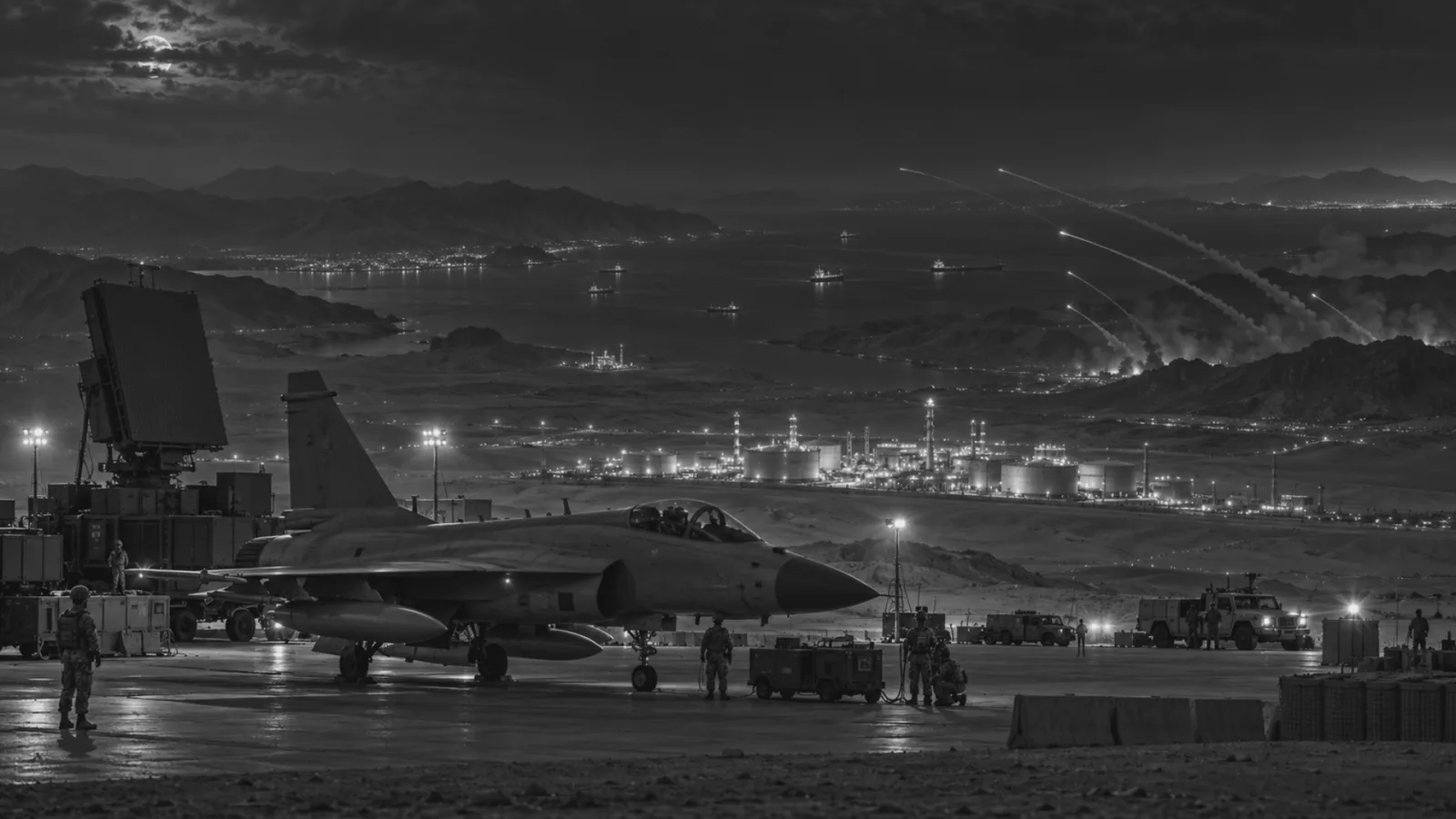

Iran's Strikes Damaged 26 US Military Sites: What Went Wrong with the US Air Defence?
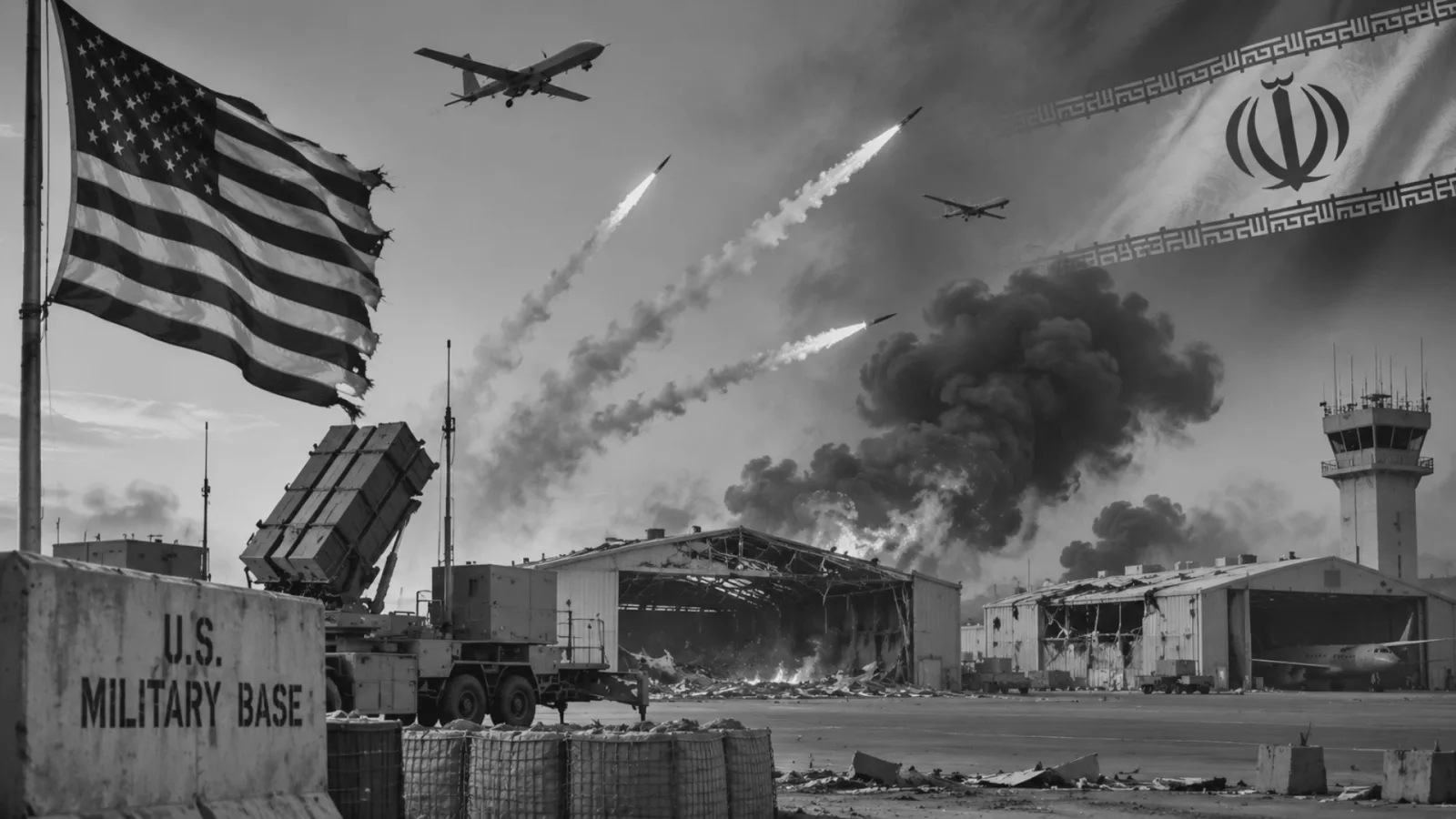
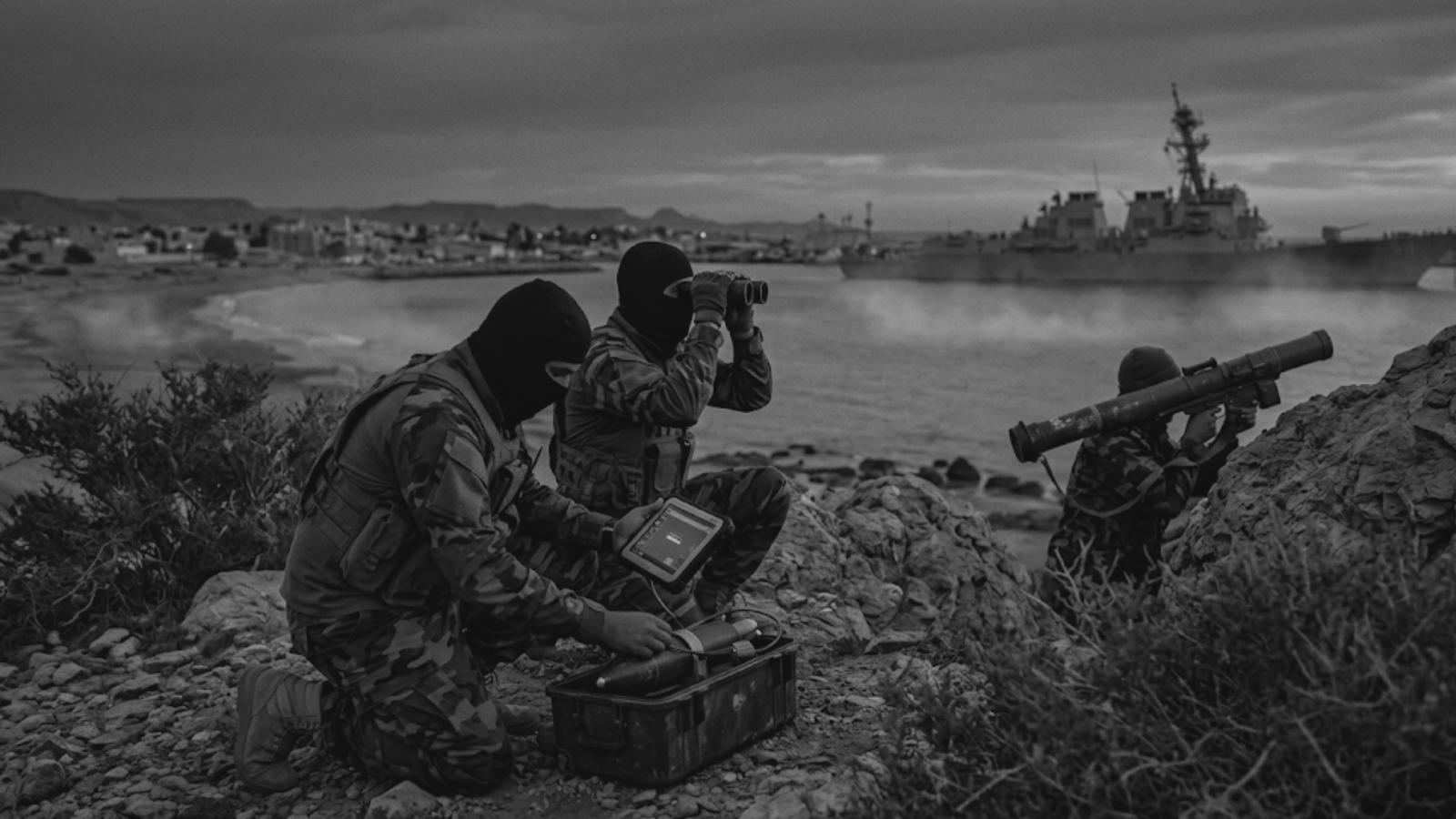
A new investigation by the Associated Press, published on 31 October 2026, has revealed extensive damage to American military infrastructure across the Middle East following months of Iranian missile and drone attacks. Satellite imagery and interviews with regional officials indicate that more than 115 strikes claimed by Iran or Iranian-backed militias damaged or destroyed structures at 26 military bases and other installations housing US equipment through August 2026. The attacks initially concentrated on early-warning radars and air defence infrastructure before expanding to aircraft, communications systems, warehouses and troop accommodations. The findings raise important questions about the ability of expensive, technologically advanced air defence networks to protect geographically dispersed military infrastructure against sustained precision-strike campaigns. However, the damage does not establish that US air defence systems failed comprehensively, as American forces continued to intercept numerous threats and maintain offensive operations.
The Development: A Systematic Campaign Against American Military Infrastructure
According to the Associated Press investigation, Iran's retaliatory campaign following the outbreak of the US–Israeli war against Iran on 28 February 2026 caused damage across American military facilities in Kuwait, Bahrain, Qatar, Saudi Arabia, the United Arab Emirates, Jordan, Iraq and Oman. Investigators used commercially available satellite imagery and interviews with four regional officials to document a pattern of attacks against military infrastructure.¹
Kuwait emerged as one of the worst-affected locations. Ali Al Salem Air Base reportedly suffered at least 30 strikes, damaging or destroying at least 15 aircraft hangars, numerous warehouses and several buildings near residential facilities. Camp Buehring experienced substantial destruction, including damage to hangars, troop facilities and support infrastructure. Elsewhere, Iranian strikes damaged satellite communications facilities at Naval Support Activity Bahrain, military installations at Prince Sultan Air Base in Saudi Arabia and aircraft infrastructure at Al Dhafra Air Base in the UAE.
The findings also align with a September 2026 report by the US Department of Defense's Office of Inspector General, which acknowledged that Iranian attacks had damaged or destroyed hundreds of structures at US bases across eight Middle Eastern countries.² A separate Wall Street Journal investigation published on 31 October identified 274 damaged structures at 24 installations during the war's first six months. These investigations used different methodologies and timeframes, and their figures should not be treated as directly interchangeable.³
What Went Wrong with American Air Defence?
1. Damage to Early-Warning and Radar Infrastructure
One of the most consequential findings concerns the reported targeting of radar systems that support America's layered air and missile defence architecture. Iranian strikes damaged radar installations at Camp Arifjan in Kuwait and Naval Support Activity Bahrain during the opening days of the conflict. Other attacks affected radar equipment at Prince Sultan Air Base and Muwaffaq Salti Air Base in Jordan.
The reported damage included a radar associated with the Terminal High Altitude Area Defense (THAAD) system in Jordan. Such sensors are critical to detecting, tracking and supporting engagements against incoming ballistic missiles. Their loss can reduce defensive coverage and complicate the coordination of subsequent interceptions.
The significance extends beyond the destruction of individual systems. Modern integrated air defence depends on interconnected sensors, communications, command-and-control networks and interceptors. Damage to one part of this architecture can degrade the effectiveness of other components, even when the interceptors themselves remain operational.⁴
2. The Challenge of Sustained Drone and Missile Attacks
Iran's campaign demonstrated the difficulty of maintaining comprehensive protection against repeated attacks involving different classes of aerial threats. Ballistic missiles, cruise missiles and one-way attack drones present distinct challenges in terms of detection, engagement and interception.
Although Patriot and THAAD systems provide sophisticated ballistic missile defence capabilities, protecting dispersed installations against sustained attacks also requires sufficient short-range air defence, counter-drone systems and passive protective measures.
An assessment published by the Center for Strategic and International Studies in July 2026 described US interception performance as generally effective but warned that prolonged operations were depleting expensive interceptor inventories. The difficulty therefore involves not simply whether incoming weapons can be intercepted, but whether defensive resources can be sustained over an extended conflict.⁵
3. Vulnerability of Fixed Military Infrastructure
The attacks also exposed the limitations of military infrastructure designed around relatively secure operating environments. Aircraft hangars, fuel facilities, communications centres, accommodation buildings and logistical installations remain vulnerable even when the surrounding region is protected by sophisticated air defence systems.
Iranian strikes reportedly damaged aircraft, including an E-3 Sentry airborne early-warning aircraft at Prince Sultan Air Base, alongside aerial refuelling aircraft and other valuable equipment. Such losses are strategically significant because their consequences extend beyond replacement costs to maintenance, availability and operational flexibility.
The Royal United Services Institute had previously highlighted the need for scalable short-range air defence, effective counter-drone protection and greater passive hardening at forward military installations. The latest findings reinforce that assessment.⁶
Strategic Implications: A Challenge to US Military Presence in West Asia
The destruction of infrastructure does not necessarily translate into an equivalent reduction in military effectiveness. American forces retained significant offensive capabilities throughout the conflict, while successful interceptions prevented additional damage. Nevertheless, the cumulative cost of protecting and repairing dispersed installations creates a long-term burden.
According to the Associated Press, regional officials reported that the United States had relocated various military assets away from the Persian Gulf, including aircraft, air defence equipment and communications systems. Such repositioning could reduce exposure to Iranian attacks, but it may also increase operational distances and logistical requirements.
The implications extend beyond West Asia. The campaign provides an important case study for military planners examining the vulnerability of concentrated air bases, expensive sensors and fixed infrastructure during prolonged precision-strike conflicts. For India, the experience reinforces the importance of layered air defence, affordable counter-drone capabilities, resilient command-and-control networks and the protection of strategically important military infrastructure against threats involving both conventional missiles and unmanned systems.
CNAWS Assessment and Outlook
The principal lesson from Iran's campaign is not that advanced American air defence technology has become ineffective, but that even a sophisticated defence architecture cannot guarantee uninterrupted protection of dispersed military infrastructure against sustained attacks. Iran demonstrated an ability to impose significant material costs by damaging sensors, aircraft and support facilities despite operating against a technologically superior military adversary.
The attacks also reveal an emerging imbalance between the cost of maintaining comprehensive protection and the ability of an adversary to sustain attacks using a combination of relatively inexpensive drones and more capable precision weapons. However, publicly available evidence does not establish exactly how individual weapons penetrated US defences, and the effectiveness of specific interception systems cannot be determined from satellite imagery alone.
For Washington, the immediate challenge is whether to rebuild damaged installations, further disperse high-value assets or fundamentally reconsider its regional military posture. For other major military powers, including India, the broader lesson concerns the growing importance of survivability, redundancy, distributed basing and sustainable air defence capacity.
If US–Iran hostilities intensify again, the resilience of American military infrastructure and the availability of interceptor inventories will remain important indicators of the conflict's trajectory.
Endnotes:
M. Reo, Samy Magdy, and Konstantin Toropin, “Iran Targeted US Air Defenses Then Hit Aircraft and Buildings on Mideast Bases, AP Analysis Finds,” Associated Press, October 31, 2026. https://apnews.com/article/iran-war-us-base-damage-trump-26e0f05e01d6f56ff46f7c1a14384f7c.
US Department of Defense, Office of Inspector General, Lead Inspector General Report to the United States Congress: Operation Epic Fury, April 1–June 30, 2026, September 14, 2026. Official report.
Anika Arora Seth et al., “The Methodology Behind the Journal's Investigation of Damage to U.S. Bases,” The Wall Street Journal, October 31, 2026. https://www.wsj.com/world/middle-east/how-the-journal-investigated-iran-damage-bases-18cbd9ee.
Reo, Magdy, and Toropin, “Iran Targeted US Air Defenses”; see also Evan Hill et al., “Iran Has Hit Far More U.S. Military Assets Than Reported, Satellite Images Show,” The Washington Post, updated May 7, 2026. https://www.washingtonpost.com/investigations/2026/05/06/iran-us-bases-satellite-images/.
Mark F. Cancian and Chris H. Park, “Renewed Iran War Would Test Diminished Interceptor Inventories,” Center for Strategic and International Studies, July 27, 2026. https://www.csis.org/analysis/renewed-iran-war-would-test-diminished-interceptor-inventories.
Royal United Services Institute, “Trump Is Hailing His Military Success. But Drones Have Exposed a Deadly US Weakness,” April 8, 2026, featuring analysis by Christoph Bergs. https://www.rusi.org/news-and-comment/in-the-news/trump-hailing-his-military-success-drones-have-exposed-deadly-us-weakness.
Tags

Author