Department of Hybrid Warfare & Irregular Conflict · Research Papers · Armed Conflicts · Defence Technology · Geopolitics ·
Mosaic Warfare and the Iran Israel Conflict: Understanding the Changing Nature of War in the Middle East
The ongoing confrontation involving Iran, Israel, and several actors across the Middle East represents a major transformation in the nature of contemporary warfare. Traditional interstate wars fought primarily through direct battlefield engagements are increasingly replaced by complex conflicts that combine military force with cyber operations, intelligence activities, economic pressure, and proxy networks. Defence scholars have described this transformation through the concept of mosaic warfare. Mosaic warfare refers to a strategic framework in which numerous smaller capabilities and actions combine to produce broader strategic effects. This research paper examines the Iran Israel confrontation through the theoretical lens of mosaic warfare. It analyses the historical development of tensions between the two states and evaluates how their rivalry operates across multiple domains including military, technological, economic, and political arenas. The paper also explores the global implications of the conflict and examines what strategic victory may mean for both sides. Particular attention is given to the strategic goals of the United States and Israel as well as Iran’s objectives. Finally, the study considers the implications of the conflict for India’s foreign policy and regional security interests. The analysis demonstrates that the Iran Israel confrontation illustrates the growing importance of distributed and networked strategies in modern warfare.
Introduction
The type of war has also evolved in the twenty first century. During the old days wars used to be waged by national armies on well-known battle grounds. Conflicts today are much more complicated. States employ military force, economic coercion, computer attacks, intelligence, and proxy organisations to accomplish their goals. A notable example of this change is the current confrontation between Iran and Israel. Despite having powerful traditional military forces, the two states engage in most conflict indirectly. Hostilities can include missiles, cyber-attacks, drone attacks, sanctions and allied militia in various nations.
This type of war is today referred to as mosaic warfare by many defence scholars. This idea shows the interplay of various aspects of power like mosaic pieces to create strategic impacts. Either action can seem constrained individually, but both of them are part of a combined approach. This framework can also be used to understand the Iran Israel conflict with the difference that the war continues to be fought by multiple countries and that the outcome of the war is not based on traditional battlefield wins.
What Is the Mosaic Warfare Perspective?
Mosaic warfare is where many smaller and interrelated pieces are used in a larger system. These aspects can consist of drones, cyber capabilities, intelligence communications, proxy actors, and economic tools. The goal is to develop flexibility and adaptability instead of depending on several massive military systems.[1]
This idea is of particular significance to the Iran Israel conflict since the war does not adhere to one pattern. It is neither exactly conventional, nor hybrid. Rather it works simultaneously in several areas. Israel employs strategic attacks, intelligence, and cyber-attacks whereas Iran employs proxy networks, missiles, and influence in the region. Economic pressure, control of information and diplomacy also play important roles. Each of these actions may appear limited on its own, but together they create continuous strategic pressure.
This is where the mosaic warfare lens comes in and can address the interconnection of these various actions and how they reinforce each other. It demonstrates that the struggle is not over a single decisive fight, but over how to organise many small and synchronised actions in time. This complicates the conflict, extending it and making it difficult to resolve on the grounds of a conventional military victory.
Historical Context
The conflict between Iran and Israel is a result of the evolution of rivalry between these countries during several decades and is conditioned by the differences in ideology and the competition of the strategies. Iran had rather stable diplomatic and economic ties with Israel before the Iranian Revolution in 1979. During the Shah, Iran was a friend of the western powers and considered Israel as an ally in a region of uncertainty. The state of affairs was entirely different following the revolution. The new Islamic leadership in Iran took a radical ideological stand towards Israel denying its legitimacy and taking sides with the Palestinian movement. This change made Iran one of the purest regional enemies of Israel. Ever since that time, the two states have been at loggerheads, although direct war was uncommon between them.[2]
The war eventually changed into what is arguably an indirect or proxy conflict. Iran increased its influence through sponsoring organisations like the Hezbollah in Lebanon and other organisations in the region. These organisations enabled Iran to indirect confront with Israel. In turn, Israel worked out a plan based on intelligence missions, cyber operations, and targeted attacks to restrict the Iranian influence and capabilities. One of the key developments in this competition has been the nuclear programme of Iran. Iran has always been a significant threat to Israel in regard to its nuclear ambitions. The fear that Iran might acquire nuclear weapons saw the Israelis adopt a preventative approach that involved covert operations and attacks on nuclear facilities. This is one of the most important problems continuing to raise tensions.[3]
The Syrian civil war added fuel into the conflict. Iran intensified its military intervention in Syria, assisting the Syrian government, and Israel conducted regular air attacks to prevent the establishment of permanent bases of the Iranian troops near Israeli borders.[4] This posed a direct security threat to Israel and raised the rate of military confrontation. The recent increase can be seen as a consequence of a number of overlapping factors. To begin with, Israel has repeatedly taken targeted measures to prevent the development of Iranian nuclear and missile weapons. Second, the growth of allied groups by Iran has provided it with an extended reach in the region, which Israel perceives as a growing threat. Third, the use of military, infrastructure, strategic assets attacks have resulted in retaliation cycles.[5]
Furthermore, geopolitical conflicts on a wider level with the United States and its allies have added to the situation. The economic sanctions on Iran, and the growing military collaboration between Israel and Western nations have escalated the situation.[6] All these aspects have changed an old-time rivalry into the more open and obvious confrontation. On the whole, the situation at hand is not the culmination of one event but the culmination of decades of strategic rivalry, ideological enmity, and mutual suspicion.
Current Situation
The current war between Iran and Israel is among the toughest stages in the years-long rivalry between the two countries. Another difference is that the confrontation has become more direct, more frequent and extended to various areas as differing to the past. A combination of military and non-military means is in active use by both sides, and this is indicative of the transition to a more intricate type of war.[7]
Israel has proceeded with its policy of controlled military action to diminish the Iranian strategic forces. These involve air strikes on Iranian affiliated sites in Syria where the Iran has attempted to develop military infrastructure near Israeli borders. The covert activities within Iran have also been associated with Israel such as the recent years of attack on nuclear plants and assassination of vital scientists and military personnel in Iran. All this is aimed at reducing the pace in the Iranian nuclear development and destabilizing their long-term military strategy.[8]
In its turn, Iran has not engaged in massive direct war yet exploited the regional system to the best of its ability. Through constant threat on the Israeli border to the north Hezbollah is one of the groups that have put immense pressure on Israel in Lebanon. Iran supported militias have attacked United States and allied posts, indirectly attacking the security structure of Israel, in Iraq and Syria. Groups who are the loyalists of Iran have also shown to be able to hit strategic targets in Yemen and this shows just how far the influence of Iran has gone.[9] The use of drones and missiles is also one of the major aspects of the conflict. Iran has created a big set of missiles and unmanned systems that have the capability of reaching the Israeli land or its strategic assets. In more recent conflicts, the two parties have employed these technologies in order to send signals of muscle without fully engaging in war.[10] These communications build up tension, but in many cases, they are very cautiously managed to prevent an immediate escalation.
Another significant aspect is cyber warfare. The two countries are Iran and Israel whose cyber capabilities have enhanced and have targeted the infrastructure, financial system, and the communication system of one another. Such operations are usually kept in secret but are very important in disempowering the internal systems of opponents. The conflict is also influenced by economic pressure. Iran remains heavily sanctioned by the international community which impacts negatively on its economy and constrained resources.[11] Meanwhile, Iran exercises its regional power to control energy flows and spreads unpredictability in the international oil markets. This introduces another economic dimension to this conflict which is not only limited to the region but the world at large.
The situation is especially complicated by the fact that all of these measures are taken simultaneously. All are linked to military attacks, proxy attacks, cyber-attacks, and economic policies. This forms a cycle of pressure and reaction as opposed to one decisive battle. In this respect, the war represents the concept of mosaic war in an obvious way. Every operation: drone strike, cyber-attack, proxy operation, etc. is a component of a greater plan. Combined, these activities determine the general character of the conflict and render it longer, more erratic, and challenging to solve.
Future Prospects
It is still unclear what will happen with the Iran Israel conflict, but the impact of this conflict on the world is no longer a hypothetical concept. They are already visible. The war is no longer a local problem, but it is currently actively influencing the energy markets, trade routes and geopolitical alliances globally.[12]
In the eyes of the United States, the policy will probably create an equilibrium between force and restraint. The US will not abandon Israel with military and intelligence assistance and will attempt to prevent a long-term large-scale war.[13] But the scenario has already posed grave threats to the global economy. Any interruption in the Strait, which transports approximately one fifth of global oil, has drastically limited tanker traffic and caused instability in energy markets. This restricts the extent to which the United States can go before causing broader economic effects.[14]
In the case of Israel, long term security is the priority. Israel will most probably maintain its policy of targeted strikes, computer attacks, and intelligence operations to undermine the Iranian nuclear and military position. Yet, the threat of multi front war is also looming over Israel because of the Iranian network in the region. This makes future very unsure as any intensification would easily spread out of a single theatre.[15]
The strategy of Iran can be influenced by survival together with strategic leverage. Iran does not want all scale direct war, but it already has shown that it can influence world orders. Iran has succeeded in transforming a local war into an international one by seizing control of the Strait of Hormuz and attacking shipping, thus making the war an international economic problem. According to the reports, tanker traffic has reduced drastically as ships have avoided the route owing to security threats and attacks. This is providing Iran with a lot of bargaining power without having to fight a conventional war.[16]
The worldwide effect is already drastic. Interference with this major shipping route has not only impacted oil but also gas and other products of importance. Global supply chains are currently experiencing shipping delays, diversion of ships, and high insurance premiums. Elsewhere, alternative routes can jump shipping time by ten
or fourteen days, adding to the cost and reducing the speed of trade. This indicates that the war is already transforming the patterns of trade in the world.
The energy crisis is no longer a possibility, but a reality. The price of oil has shot up because of a shortage of supply and a rise in risk, and analysts are complaining that further disruption might cause prices to rise to levels that would trigger a world recession. This is a state in both developed and developing economies, which raises inflation and strains governments all over the world.[xvii]
The conflict is also contributing to an international system that is increasingly polarised in terms of global order. The United States and its allies remain in favor of Israel, and the other major powers might assume more flexible or contrary positions. Meanwhile, nations are having to reconsider their reliance on key chokepoints like the Strait of Hormuz. This can cause permanent changes in global energy flows, investment in infrastructure and strategic partnerships.[xviii]
As of the future, there are two general possibilities. Further escalation is also one, and further attack and retaliation may result in a broader regional war. The alternative is a protracted and managed war, in which both parties still placed some pressure in an indirect manner. Considering the situation at hand, the latter seems the more probable scenario, as it does not enable either side to engage in chasing their goals which would lead to uncontrollable outcomes.
On the whole, the conflict has already demonstrated that the new war is capable of directly affecting the global economy. No longer is it restricted to military results. Rather, it determines the direction of energy flows, trading systems, and political affiliations. Here once more, it is important to consider the conflict through the prism of mosaic warfare when several related actions have extensive and far-reaching consequences.
What Is Victory in the United States and Israel?
In a more strategic sense, the triumph of the United States and Israel does not entail one or more military results. Rather it is about influencing long term balance of power in the Middle East in a manner that minimises threats and as well as stabilising the region favourably.
The short-term goal will be to ensure that Iran does not develop the capability of having nuclear weapons. Both Israel and the United States believe that a nuclear armed Iran would be a significant change in the balance of power. It would enhance deterrence by Iran, restrict the freedom of action of Israel and possibly create a nuclear arms competition in the Middle East. That is why the elimination or disarmament of the Iranian nuclear programme by means of a direct attack, a cyber operation, and intelligence collection is regarded as a key indicator of achievement.[xix]
The second goal is to restrict the influence of Iran in the region. Iran has established a sympathies coalition in Lebanon, Iraq, Syria and Yemen. These networks enable Iran to exercise power without face-to-face confrontation. In the eyes of Israel and the United States, destabilising these networks would lessen the capacity of the Iranians to intimidate Israel and destabilise the neighbouring countries. This encompasses attacking supply chains, leadership, and financial assistance systems related to these groups.[xx]
Deterrence is another dimension of victory. US and Israel are trying to explain to the world that there will be consequences to any actions that work against their interests. This involves attacks on military installations and in others, high-level leadership figures. This is to undermine the capabilities not only, but also to shape the future decision making in the leadership of Iran.
Strategic conversations have also included the concept of regime change, which is very complex and unpredictable. According to some experts, a shift in the political leadership of the Iranian government may result in a change in the foreign policy and the ensuing decrease in aggression towards the West and Israel. Others, however, caution that attempting to change the regime will bring a sense of instability and unintended effects such as civil war or emergence of more extreme leadership.[xxi]
In a broader sense, victory is also holding the credibility of the United States as a world power. Alliances and deterrence in other regional parts are valuable because of continued backing of Israel and influence over regional outcomes. Unless the United States manages the situation well, it can lose its stance in the world politics. Notably, there is no decisive moment in the context of the mosaic warfare. Rather it is quantified by the cumulative effects in the long run. It might be success in postponing the advancement of Iran to the nuclear level, those networks in the region and strategic superiority without plunging into an expensive large-scale war. This represents a change in the conventional concepts of triumph to the more gradual and multi-dimensional concept of success in contemporary war.
What Is Victory for Iran?
In the case of Iran, winning does not mean destroying Israel in a military manner. Rather, it is grounded on survival, strength, and capacity to survive and grow its strategic space despite intense competition by more superior players.
This is the most significant goal in the life of Iran, as the political system as we know it is currently alive. The Tehran leadership considers external influence of United States and Israel as a direct threat to the stability of the regime. Thus, even the fact that a person is still in power despite military attacks, economic sanctions, and political isolation can be considered a victory on its own. This is defensive yet long term strategic thinking.[xxii]
The other important objective is the perpetuation of its nuclear programme. It is not necessary that Iran should openly develop nuclear weapons in order to have strategic control. This capability to move towards nuclear capability provides a highly deterrent effect. It makes the military action against Iran more expensive and enhances its bargain at the bargaining table. In that regard, any partial advancement in nuclear development can be viewed as the strategic success.[xxiii]
Iran as well wants to sustain and increase its influence in the region. Iran has formed a network through alliances with their groups in Lebanon, Iraq, Syria, and Yemen which gives the country the ability to project power beyond its borders. These networks offer strategic profundity and give the chance to Iran to take on its adversaries indirectly. With such networks alive and functional, Iran will still be able to exert pressure on Israel and its allies without falling into an actual war.[xxiv]
Another significant tool is economic and political pressure. Iran has demonstrated its ability to drive the global energy markets and bring uncertainty to major routes of trade. Through raising risks in other sectors like the Strait of Hormuz, Iran is able to make costs on the global economy forcing pressure on its detractors. This strategy will enable Iran to leverage its geographical and strategic location.[xxv]
Besides this, Iran also wants to show deterrence. Iran sends a message that it can be neither easily weakened nor isolated by responding to attacks through missile attacks, drone operations, or proxy operations. This would serve to support its credibility in the country and abroad.
The Iranian approach is in the form of a distributed and adaptable strategy in the framework of mosaic warfare. Nothing can be accomplished with one decisive battle but with many little strategic advances the course of time gives. Victory, in general, in the case of Iran would be to withstand pressure, maintain its political system, and keep on influencing the regional environment to its favour, even against stronger military forces.
Long Term Strategic Question and Tactical Objectives
The key strategic issue in this conflict is about the balance of power in the Middle East and the long-term order in the region. Israel and United States seek to ensure that Iran is not a dominant power in the region especially under possession of nuclear arms and disrupting the influence of the Iranian proxy networks and ensuring that all alliances in the region are strong. Iran, in its turn, wants to guarantee the survival of the regime, its extension with the help of threats of allies, the ability to resist outside pressure without starting a fully-fledged war. Tactically, both parties are using the synergy of cyber-actions, intelligence operations, proxy forces, and small-scale military attacks. This is representative of the mosaic war logic, which is made up of small and coordinated actions that collectively form the outcomes of a strategy, as opposed to one major battle.[xxvi]
Impact on India and India’s View
Iran and Israel are already at war, and this has already impacted on India through uncertainty in the energy supply, rising world oil prices and interference with the trade routes that form the core of the Indian economy.[xxvii] The security of the millions of Indian citizens employed in the Middle East has become of increasing concern as well, since any increase in this case would threaten them and make evacuation and humanitarian operations more difficult. Israel is a strategic ally in defence and technology, and Iran is significant in the supply of energy and connectivity to the region, including the Chabahar port. India has thus chosen a middle ground and it has a good relationship with both of them and at the same time has acted strategically by making its own decisions independently without putting its hand on any external superpower. Through promoting diplomatic negotiation and peaceful conflict resolution, India safeguards its economic and strategic interests, curtails interference with trade routes and energy supply, and offers indirect support to the stability in the region, although it has a scope in its foreign policy.[xxviii]
Conclusion
Iran Israel conflict is a good example of how the development of the modern warfare has become more than a conventional battle between armies and a complex and multi-dimensional struggle. Sustained and directed by international forces such as the United States, the two nations are now in an operation of mosaic comprising of targeted military attacks, cyber-attacks, economic sanction, proxy networks, and intelligence attacks. This combined strategy implies that none of the actions can be considered in isolation to determine the result; rather, success can be achieved by adding the effect of a series of interactions in the various fields as time progresses. To Israel and United States, strategic success means containing Iran by its nuclear program, by its impact in the region, and by its deterrent, whereas to Iran, the survival of the regime, development of nuclear power and its influence in the region is the strategic success.
There is also conflict on the global scale. It has already broken energy markets and trade routes, and the Strait of Hormuz is becoming a key bottleneck that has a ripple effect on the economies of the whole world. Countries such as India have to take strategic alliances with Israel and Iran and strategic independence to safeguard the economies, energy stability, and the security of millions of people in this region. It is necessary to analyze this conflict according to the concept of mosaic warfare which describes the combination of traditional and unconventional weapons, the importance of indirect actions, and the duration of the conflict in the modern world. Finally, the Iran Israel confrontation highlights the fact that modern warfare is no longer characterised by the victories on the battlefield but the complex of political and economic and other strategic consequences which determine the stability in the region and the world order in general.
Endnotes:
[1] Clark, Bryan, Dan Patt, and Harrison Schramm. Mosaic Warfare: Exploiting Artificial Intelligence and Autonomous Systems to Implement Decision‑Centric Operations. Washington, DC: Center for Strategic and Budgetary Assessments, 2020. https://csbaonline.org/uploads/documents/Mosaic_Warfare.pdf
[2] Menashri, David. “Israel i. Relations with Iran.” Encyclopaedia Iranica. https://www.iranicaonline.org/articles/israel-i-relations-with-iran
[3] Williams, Heather, Doreen Horschig, and Bailey Schiff. “What Do the Israeli Strikes Mean for Iran’s Nuclear Program?” Center for Strategic and International Studies (CSIS), June 13, 2025. https://www.csis.org/analysis/what‑do‑israeli‑strikes‑mean‑irans‑nuclear‑program.
[4] Loft, Philip, and Esme Kirk‑Wade. The Syrian Civil War: Timeline, UK Aid and Statistics. Research Briefing CBP‑9381. London: House of Commons Library, UK Parliament, 19 December 2024. https://commonslibrary.parliament.uk/research‑briefings/cbp‑9381/
[5] Mens, Jay. “A War Without a Name: The Iran‑Israel Relationship in Historical Perspective.” Working paper, Belfer Center for Science and International Affairs, Harvard Kennedy School, 2024. https://www.belfercenter.org/research-analysis/war-without-name-iran-israel-relationship-historical-perspective
[6] Adaramola, Dr Ismail. “Geopolitical, Economic and Humanitarian Implications of the 2026 US–Israel–Iran Conflict.” Middle East Monitor, March 25, 2026. https://www.middleeastmonitor.com/20260325-geopolitical-economic-and-humanitarian-implications-of-the-2026-us-israel-iran-conflict/
[7] Nevola, Luca, Muaz Al Abdullah, Nasser Khdour, and Timothy Lay. Middle East Special Issue: March 2026. ACLED (Armed Conflict Location & Event Data Project), 4 March 2026. https://acleddata.com/update/middle-east-special-issue-march-2026
[8] Vatanka, Alex, Paul Salem, Charles Lister, F. Gregory Gause III, Brian Katulis, Karen E. Young, Colby Connelly, Iulia‑Sabina Joja, John Calabrese, Mohammed Soliman, Ross Harrison, and Fadi Nicholas Nassar. Special Briefing: Israel Strikes Iran’s Nuclear Program. Middle East Institute, June 13, 2025. https://www.mei.edu/publication/special‑briefing‑israel‑strikes‑irans‑nuclear‑program.
[9] Council on Foreign Relations. “What Is Hezbollah?” CFR Backgrounders. Updated October 29, 2024. https://www.cfr.org/backgrounders/what‑hezbollah/
[10] Feldstein, Steve, and Dara Massicot. “What We Know About Drone Use in the Iran War.” Emissary, Carnegie Endowment for International Peace, March 2, 2026. https://carnegieendowment.org/emissary/2026/03/iran‑drones‑shahed‑us‑lessons
[11] Jensen, Benjamin. “How Would Iran Respond to a U.S. Attack?” Center for Strategic and International Studies (CSIS), February 26, 2026. https://www.csis.org/analysis/how‑would‑iran‑respond‑us‑attack.
[12] ibid
[13] Jaafar, B. (2026). Middle East Geopolitical Dynamics and Their Impact on the Global Balance of Power. Springer.
[14] Hensel, N. D. (2022). The Interdependencies of the Energy and Defense Sectors Globally and among the Gulf Countries. Taylor & Francis.
[15] Institute for National Security Studies (INSS). Strategic Assessment, Volume 27, No. 1 (March 2024). Tel Aviv, Israel: Institute for National Security Studies (INSS). https://www.inss.org.il/wp-content/uploads/2024/07/Adkan27.1_Eng_4.pdf
[16] Saul, Jonathan, and Shariq Khan. “Iran War: See How Tanker Traffic Collapsed in the Strait of Hormuz.” Reuters, March 6, 2026. https://www.reuters.com/world/middle‑east/iran‑war‑see‑how‑tanker‑traffic‑collapsed‑strait‑hormuz‑2026‑03‑06/
[xvii] Shalal, Andrea, and Rodrigo Campos. “IMF Says Prolonged Increase in Energy Prices Could Boost Inflation, Lower Growth.” Reuters, March 19, 2026. https://www.reuters.com/world/imf-says-prolonged-increase-energy-prices-could-boost-inflation-lower-growth-2026-03-19/
[xviii] Vanguard. “The Potential Impact of High Oil Prices on Economies.” Vanguard, March 10, 2026. https://corporate.vanguard.com/content/corporatesite/us/en/corp/articles/potential‑impact‑high‑oil‑prices‑economies.html
[xix] Cordesman, Anthony H., and Grace Hwang. Iran and the Changing Military Balance in the Gulf — Net Assessment Indicators. Washington, DC: Center for Strategic and International Studies (CSIS), March 26, 2020. https://www.csis.org/analysis/iran‑and‑changing‑military‑balance‑gulf‑net‑assessment‑indicators.
[xx] Maloney, Suzanne. “The Path Forward on Iran and Its Proxy Forces.” Brookings Institution, March 1, 2024. https://www.brookings.edu/articles/the-path-forward-on-iran-and-its-proxy-forces/
[xxi] Posen, Barry. Restraint: A New Foundation for US Strategy. Ithaca, NY: Cornell University Press, 2014.
[xxii] ibid
[xxiii] International Atomic Energy Agency. Report by the Director General on Verification and Monitoring in the Islamic Republic of Iran in Light of United Nations Security Council Resolution 2231 (GOV/2023/57). Board of Governors document, 15 November 2023. https://www.iaea.org/sites/default/files/documents/gov2023-57.pdf
[xxiv] ibid
[xxv] ibid
[xxvi] Sainz Caparroso, Santiago. Analysis of Maritime Geopolitics on Early 2026: The Red Sea Factor. 2026. Independent research paper, International Sustainable Development Observatory (ISDO). https://www.academia.edu/161294074/Analysis_of_maritime_geopolitics_on_early_2026_The_Red_Sea_Factor
[xxvii] “The 2026 Iran Conflict.” Encyclopaedia Britannica. Last updated March 2026. https://www.britannica.com/event/2026-Iran-Conflict
[xxviii] Navale, Revannath S. “Impact of the Iran–Israel Conflict on the Indian Economy: A Commerce Perspective.” International Journal for Multidisciplinary Research 8, no. 2 (March‑April 2026). https://www.ijfmr.com/papers/2026/2/71607.pdf.
The views expressed are those of the authors and do not represent the views of CNAWS.
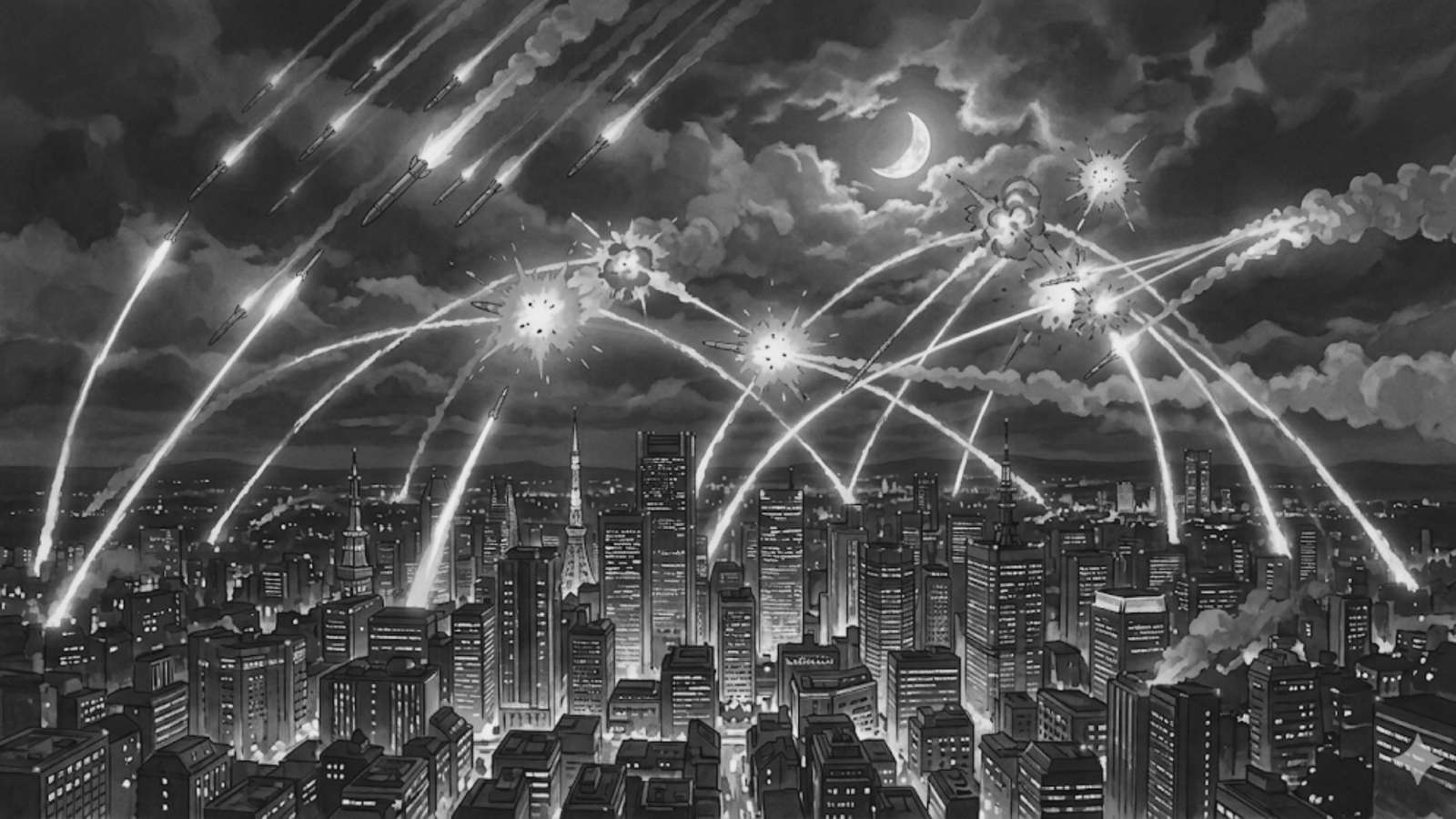
Image Source: Gemini
Tags
- #iran asymmetric warfare
- #iran asymmetric warfare doctrine
- #iran ballistic missile program
- #iran drone
- #iran israel conflict
- #iran military strategy
- #iran missile attacks
- #iran missile cities
- #iran missile tunnels
- #iran underground military bases
- #iran underground missile tunnels explained
- #iran usa conflict
- #israel iran air strikes
- #middle power diplomacy iran human rights
- #proxy warfare iran
- #u.s.–iran conflict
- #us iran conflict
- #us israel iran escalation
Author
Kalpesh Bhagoji Khandekar
Kalpesh Bhagoji Khandekar is pursuing his Master’s degree in Defence and Strategic Studies at Rashtriya Raksha University and is currently in his final year. His research interests centre on the dynamics of drone warfare and the transformation of modern battlefields through unmanned systems. Kalpesh is keen on contributing to the study of air power, drone warfare, and strategic innovation in future warfare.