Department of Hybrid Warfare & Irregular Conflict · Research Papers · Defence Technology · Armed Conflicts · Geopolitics ·
Misreading Asymmetry: Has the United States Failed to Understand Iran’s Way of War?
The ongoing U.S.–Iran conflict highlights a fundamental strategic dilemma: the limits of conventional military power against an adversary built for asymmetric warfare. Despite early claims of rapid success and expectations of a short campaign, the conflict has persisted, exposing a gap between U.S. assumptions and Iran’s operational reality. Iran’s strategy is rooted in cost imposition, dispersion, and endurance rather than conventional superiority. Lacking air dominance, it has invested over decades in low-cost drones, ballistic missiles, and proxy networks to offset U.S. technological advantages. This has created a cost asymmetry in which inexpensive systems such as Shahed-type drones force disproportionately expensive defensive responses, gradually eroding the efficiency of U.S. military operations. The conflict has also expanded across multiple domains and geographies. Iran’s use of proxy actors has transformed the war into a multi-front contest, targeting U.S. bases and allied infrastructure across the Middle East. Maritime disruption in the Strait of Hormuz, through which a significant share of global energy flows, has extended the conflict into the economic sphere. The entry of Houthi forces and the emergence of a dual chokepoint threat at both Hormuz and Bab al-Mandab further amplify global economic risks and strategic complexity. Beyond the physical battlefield, Iran has leveraged information warfare, cyber operations, and strategic signalling to shape perceptions and influence markets. At the same time, the indirect involvement of Ukraine through counter-drone cooperation reflects the growing convergence of conflict theatres, where tactics and technologies evolve across regions in real time. While the United States has achieved operational successes, including degrading elements of Iran’s military infrastructure, these gains have not translated into decisive strategic outcomes. Iran’s model does not require victory in conventional terms, but sustained pressure over time. The conflict remains unpredictable, with multiple escalation pathways still open, including broader regional involvement and potential ground operations. Ultimately, the challenge for the United States is not one of capability, but of adaptation. Iran’s approach reflects a shift toward multi-domain, distributed warfare, where economic, informational, and geographic factors are as critical as military force. Until this shift is fully understood, tactical success is likely to remain strategically inconclusive.
Expectation vs Reality in the U.S.–Iran Conflict
The ongoing U.S.–Iran conflict has exposed a familiar strategic dilemma that how does a superpower defeat an adversary that refuses to fight on its terms? At the outset, former U.S. President Donald Trump projected confidence that the operation would be decisive and time-bound, with U.S. officials suggesting that military objectives could be achieved “within weeks, not months.”
Yet, more than a month into the conflict, having begun on 28 February 2026, hostilities continue across multiple fronts, with no clear end in sight. This widening gap between initial expectations and battlefield reality raises a deeper question. Has Washington fundamentally misunderstood the nature of Iran’s asymmetric warfare capabilities?
Claims of Rapid Success and the Illusion of a Short War
Initial statements from President Donald Trump framed the campaign as a large-scale operation aimed at neutralising Iran’s military capabilities, with assertions that U.S. forces had struck “numerous Iranian naval and air targets” and that “just about everything has been knocked out” within days. Senior U.S. military leadership also projected confidence in the early phase, claiming to had established air superiority over Iranian territory by targeting Iran's command and control infrastructure, naval forces, ballistic missile sites and intelligence infrastructure. These were further amplified by statements that the United States was actively destroying Iran’s naval capability, with Trump asserting that multiple Iranian warships had already been sunk and that remaining vessels would soon follow. These developments were accompanied by claims of short war expectations, with a source familiar with Israel’s war plan indicating that the campaign was designed to last around two weeks and was progressing faster than expected, while President Trump stated that initial U.S. projections placed the duration at four to five weeks.
From the very beginning, the U.S. approach reflected a fundamentally conventional understanding of war, one centred on rapid degradation of enemy capabilities and decisive outcomes. Despite claims of a swift victory and a short war, Iran remains undefeated, and no clear end to the conflict is in sight. It is important to understand that this early optimism masked a deeper structural miscalculation.
The Limits of U.S. Warfighting Assumptions
Iran’s military strength does not reside in conventional platforms alone, but in its ability to disperse, absorb, and regenerate combat power across multiple domains. By declaring early success against visible targets, Washington appeared to equate tactical damage with strategic paralysis, an assumption that Iran’s doctrine is specifically designed to invalidate.
More critically, the U.S. failed to fully account for the layered nature of Iran’s asymmetric response. Even as Washington projected battlefield dominance, Tehran expanded the conflict laterally through proxy networks, sustained missile and drone attacks, and calibrated maritime disruption in the Strait of Hormuz. This ensured that the conflict could not be geographically or operationally contained. Early U.S. messaging also revealed inconsistencies in strategic intent, with President Trump stating that the strikes were ordered because he believed Iran was about to attack first, a rationale that differed from explanations provided by other senior officials. As the conflict moved beyond its initial phase, it became evident that the United States was not confronting a conventional adversary seeking battlefield victory, but a system designed for endurance, escalation control, and cost imposition. The persistence of the conflict is therefore not an anomaly, but a direct outcome of misreading the very nature of Iran’s asymmetric warfare model.
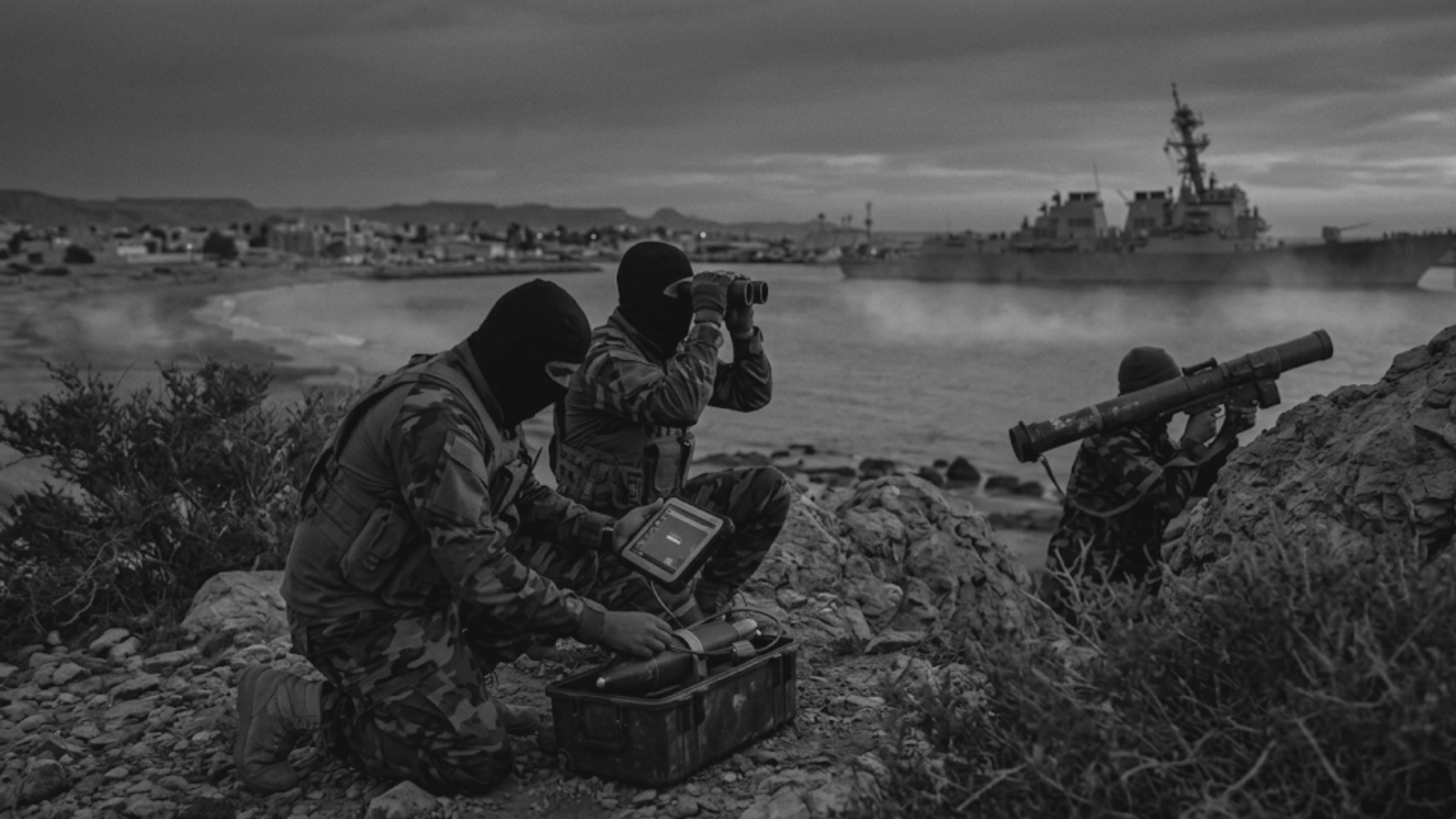
A key dimension of this misreading lies in the failure to fully appreciate the economics and structural logic of Iran’s asymmetric warfare model. Unlike the United States, Iran has long recognised its inability to achieve air superiority against a technologically superior adversary. Decades of sanctions, limited access to advanced aviation platforms, and an ageing air force have ensured that Tehran cannot contest the air domain in conventional terms. Instead of attempting to close this gap, Iran has deliberately bypassed it, investing heavily in mass-produced, low-cost systems such as drones, ballistic missiles, cruise missiles, and loitering munitions. This reflects a conscious doctrinal choice to replace technological parity with scale, survivability, and persistence.
The Logic of Iranian Asymmetry
The extensive use of drones and short-range missiles has allowed Tehran to impose disproportionate costs on technologically superior adversaries. Iranian Shahed-type drones are estimated to cost roughly between $20,000 and $50,000 per unit, while interceptor systems such as Patriot missiles can cost several million dollars per engagement. Even alternative interception methods, including fighter aircraft sorties or air-to-air missiles, involve significantly higher operational costs. This creates a persistent cost imbalance in which the defender is forced into an economically unfavourable exchange ratio. The implications of this dynamic are already visible, with concerns emerging over the depletion of high-end missile stockpiles amid sustained operations. In contrast, Iran’s ability to mass-produce and continuously deploy such systems allows it to sustain pressure at relatively low cost, turning economic asymmetry into a central instrument of strategy.
This capability is not a product of the current conflict alone, but the outcome of a deliberate, long-term effort to build a layered regional strike architecture designed to offset U.S. dominance. Since the early 2000s, Iran has systematically invested in missile proliferation, drone development, and the integration of proxy forces across the Middle East. This has included expanding missile ranges to cover U.S. bases across the Gulf, embedding strike capabilities within allied groups, and developing the capacity to launch attacks from multiple axes simultaneously. Iran has also invested in hardened and underground missile infrastructure, mobile launch platforms, and dispersed production systems, ensuring survivability even under sustained air and missile strikes. The objective has been to create a persistent threat environment rather than achieve conventional parity, ensuring that U.S. assets remain continuously vulnerable across the region.
Over time, this architecture has evolved into a network capable of targeting major U.S. military installations such as Al Udeid in Qatar, Al Dhafra in the United Arab Emirates, and bases in Iraq and Syria. Iranian missile and drone strikes have demonstrated the ability to hit U.S. and allied facilities across the region, forcing a widening of the battlespace beyond Iran’s borders. These attacks are not intended to deliver decisive battlefield victories, but to impose layered costs on the United States and its allies. The degradation of high-value assets such as air defence systems, runways, logistics hubs, and forward operating bases imposes immediate military costs by disrupting operational tempo and forcing resource reallocation. At the same time, it generates economic costs through the expenditure of expensive interceptors, infrastructure repair, and reinforcement of regional deployments.
More significantly, the strategic costs extend beyond immediate battlefield damage. By demonstrating the ability to penetrate and target heavily defended U.S. installations, Iran challenges the credibility of American security guarantees in the region. Gulf partners hosting U.S. bases are drawn directly into the conflict, increasing their exposure to risk and raising the political and economic costs of alignment. This complicates coalition cohesion and forces the United States to divert attention and resources toward defence and reassurance rather than offensive operations. In effect, Iran’s long-term investment in distributed strike capabilities transforms every U.S. asset in the region into both a military target and a strategic liability. The result is a conflict dynamic in which the United States is compelled to defend across multiple fronts, while Iran retains the ability to strike selectively, sustaining pressure at relatively low cost while amplifying the economic, military, and strategic burden on its adversary.
The Strait of Hormuz and the Weaponisation of Geography
Another critical pillar of Iran’s asymmetric strategy lies in its ability to weaponise geography, particularly through its control over the Strait of Hormuz. This narrow maritime corridor is not merely a regional chokepoint but a central artery of the global energy system. Approximately 20 percent of global oil consumption and a similar share of liquefied natural gas flows transit through the Strait, with over 20 million barrels of oil moving through it daily. In terms of seaborne trade, the Strait accounts for nearly a quarter of global oil shipments, making it one of the most critical nodes in the international economic system. As a result, even limited disruption in this corridor has immediate and disproportionate global consequences, transforming a regional conflict into a systemic economic shock.
What distinguishes Iran’s approach is not simply the ability to disrupt shipping, but the way in which it has institutionalised this capability as part of a long-term deterrence and coercion strategy. Over decades, Iran has developed a maritime denial architecture tailored specifically for the confined and congested geography of the Gulf. This includes naval mines, anti-ship missiles, fast attack craft, and increasingly, maritime drones, all designed to exploit chokepoint vulnerabilities rather than contest open seas dominance. The objective is to raise the cost of maintaining freedom of navigation to a level that becomes politically and economically burdensome over time.
The current conflict demonstrates how even calibrated disruption translates into immediate economic consequences. Insurance markets provide a clear indicator of this dynamic. War-risk premiums for vessels transiting the Gulf have surged by 200 to 300 percent, with some estimates placing premiums at 5 to 10 percent of a ship’s value, compared to negligible peacetime rates. In practical terms, insuring a single tanker voyage can cost millions of dollars, dramatically increasing the cost of energy transportation. At the same time, shipping activity has declined sharply, with vessels either rerouting or remaining anchored due to heightened risk, further constraining supply. This combination of reduced throughput and increased transaction costs effectively acts as a financial blockade without requiring a complete closure of the Strait.
The broader macroeconomic effects are equally significant. Disruptions in the Strait have contributed to a sharp surge in global oil prices, with crude rising more than 50 percent within a single month amid fears of prolonged instability. In more severe scenarios, the potential removal of Gulf oil supplies from the market could eliminate close to 20 percent of global supply, triggering inflationary pressures, supply chain disruptions, and a slowdown in global growth . Recent assessments suggest that the conflict has already affected up to 30 percent of oil flows and 20 percent of liquefied natural gas trade, representing one of the most significant disruptions to global energy markets in decades. These effects cascade beyond energy markets into food prices, manufacturing costs, and financial stability, amplifying the global footprint of what is ostensibly a regional conflict.
This economic dimension is central to Iran’s strategy of cost imposition. By targeting or threatening shipping in the Strait, Iran shifts the burden of the conflict from a trilateral military contest to a multilateral economic crisis. The United States is compelled not only to defend its own assets but also to ensure the stability of global energy flows, effectively expanding its strategic obligations. This requires sustained naval deployments, increased insurance guarantees, coordination with allies, and the management of global market volatility, all of which carry significant financial and political costs. At the same time, Iran’s actions impose indirect costs on U.S. allies and partners, particularly energy-importing economies in Asia and Europe, thereby internationalising the pressure generated by the conflict.
The Strait of Hormuz functions as a strategic multiplier within Iran’s asymmetric doctrine. It allows Tehran to convert limited tactical actions into systemic economic effects, leveraging geography to compensate for conventional military disadvantages. The United States, despite its overwhelming naval superiority, is thus drawn into a defensive posture where it must secure an entire global supply chain against relatively low-cost disruptions. The result is a classic asymmetry, where Iran does not need to win control of the Strait, but merely to contest it persistently, ensuring that the economic and strategic costs of maintaining access remain disproportionately high for its adversaries.
The Houthi Entry and the Bab al-Mandab Factor
An additional and highly consequential development in the maritime dimension of the conflict has been the entry of Yemen’s Houthi forces, aligned with Iran, which significantly expands both the geographic scope and strategic depth of the confrontation. The Houthis’ launch of missile attacks on Israeli military sites marks not only a kinetic escalation but also the opening of a second maritime front, extending the conflict from the Strait of Hormuz into the Red Sea and the Bab al-Mandab chokepoint. This development fundamentally alters the strategic calculus by transforming what was already a critical energy chokepoint crisis into a dual-chokepoint scenario with global implications.
The Bab al-Mandab Strait, which connects the Red Sea to the Gulf of Aden and serves as a gateway to the Suez Canal, is one of the world’s most vital maritime corridors for both energy and container trade. The involvement of the Houthis introduces a credible threat to this route, particularly given their demonstrated capability in previous Red Sea operations to target commercial vessels using drones, missiles, and small boat tactics. Analysts warn that their entry into the conflict raises the possibility of coordinated or sequential disruptions across both Hormuz and Bab al-Mandab, effectively placing two of the world’s most critical maritime arteries under simultaneous pressure.
This dual-front maritime pressure has immediate and measurable economic consequences. The expansion of risk from a single chokepoint to multiple interconnected routes significantly amplifies uncertainty in global shipping and energy markets. Recent reporting indicates that the involvement of the Houthis has already heightened fears of disruption in Red Sea shipping lanes, contributing to sharp increases in oil prices and shipping costs. In such a scenario, even alternative routes designed to bypass Hormuz become vulnerable, as the Red Sea corridor itself comes under threat. This creates a cascading effect in global supply chains, where rerouting options shrink and logistical costs escalate rapidly.
From a strategic perspective, this development highlights the depth of Iran’s asymmetric networked warfare model. By enabling allied actors such as the Houthis to activate geographically distant pressure points, Iran is able to extend the battlespace far beyond its immediate territory without direct escalation. This not only complicates U.S. military planning but also imposes a multidimensional burden, requiring simultaneous naval deployments across both the Gulf and the Red Sea. The United States is thus forced into a posture of distributed defence, where securing one chokepoint does not mitigate risk in another, and where the cost of maintaining maritime security rises exponentially.
More importantly, the emergence of a dual chokepoint threat underscores a fundamental principle of Iran’s strategy. It is not necessary to fully close these waterways to achieve strategic effect. The mere credible threat of disruption across multiple maritime arteries is sufficient to generate systemic economic pressure, elevate insurance premiums, disrupt trade flows, and induce volatility in global markets.
Narratives, Perception, and the Battle for Cognitive Dominance
Another critical but often underappreciated dimension of Iran’s asymmetric strategy lies in its use of information warfare and strategic signalling to shape perceptions, control escalation, and impose psychological costs on its adversaries. Unlike conventional military operations, where outcomes are measured in territorial gains or battlefield losses, the information domain allows Iran to compete with the United States on a more level playing field. By carefully managing narratives, amplifying selective successes, and exploiting ambiguity, Tehran seeks to influence not only domestic audiences but also international opinion, market behaviour, and political decision-making in adversary states.
Iran’s approach to information warfare is both decentralised and adaptive, operating alongside its military campaign. The ongoing conflict has seen a surge in misinformation, AI-generated content, and manipulated visuals circulating across platforms, complicating real-time verification and shaping public perception of battlefield developments. Analysts and reporting also highlight how the scale and geographic spread of the conflict make it inherently difficult to verify information, creating space for competing narratives and confusion. This environment enables Iran to reinforce perceptions of resilience and sustained capability, even under significant military pressure.
The role of disinformation has been explicitly acknowledged at the political level. U.S. President Donald Trump himself accused Iran of using artificial intelligence as a “disinformation weapon” to misrepresent wartime developments and shape narratives. Independent reporting has similarly documented the spread of AI-generated content and false visuals related to the conflict reaching millions of viewers online, further blurring the line between reality and perception. In such an environment, perception itself becomes a contested domain, where influencing belief can be as consequential as battlefield outcomes.
Alongside narrative manipulation, Iran has demonstrated an active cyber dimension to its asymmetric toolkit. Iranian-linked cyber groups have conducted intrusions targeting surveillance systems, companies, and infrastructure, including hacking into security cameras to monitor damage and track movements during the conflict. Such operations extend beyond immediate battlefield effects, enabling intelligence gathering while simultaneously reinforcing psychological pressure. In parallel, cyber activities targeting businesses and infrastructure add a layer of disruption that is difficult to attribute and respond to proportionately, complicating escalation management.
The economic implications of this information environment are equally significant. Markets are highly sensitive to uncertainty, and the combination of real attacks, perceived threats, and circulating narratives has contributed to heightened volatility in energy markets. Reporting indicates that conflict-related uncertainty and disruption have driven sharp increases in oil prices and broader market instability, reflecting how perception and risk signalling amplify economic consequences. In this sense, information warfare does not operate independently of physical conflict but amplifies its economic impact by sustaining a climate of uncertainty.
More importantly, information warfare enables Iran to shape the strategic narrative of the conflict in ways that constrain U.S. decision-making. By projecting continued capability and by highlighting the costs and duration of the conflict, Iran reinforces pressures within adversary societies and among allied partners. This is particularly relevant in democratic systems, where public opinion and political considerations influence military commitments. The longer the conflict persists without a clear resolution, the more space exists for such narratives to widen the gap between military capability and political will.
Operational Success Without Strategic Resolution
However, it would be analytically incomplete to view the conflict solely through the lens of U.S. miscalculation. While it is tempting to characterise the conflict as a failure of U.S. strategy, such a conclusion would overlook important operational realities. The United States and Israel have, in fact, achieved measurable battlefield outcomes, with U.S. officials stating that strikes had destroyed or significantly damaged Iranian missile sites, naval assets, and command infrastructure. These operations have disrupted segments of Iran’s conventional military capacity and imposed tangible costs on its ability to project force in a traditional sense.
At the same time, however, these outcomes must be viewed alongside the idea of limited strategic translation, as battlefield successes have not resulted in decisive strategic advantage or conflict termination. Intelligence assessments and ongoing reporting indicate that Iran retains a substantial portion of its missile and drone capabilities, allowing it to continue sustained operations despite repeated strikes. This reflects a deeper structural reality embedded in Iran’s doctrine, where capabilities are deliberately dispersed, redundant, and designed for regeneration.
This dynamic reinforces the concept of asymmetric resilience, wherein Iran’s model does not require battlefield superiority to achieve strategic effect. Instead, it relies on endurance, cost imposition, and the ability to sustain pressure over time. Even as its infrastructure is degraded, Iran continues to operate across multiple domains, ensuring that the conflict persists without decisive resolution. In this context, U.S. military success at the tactical level coexists with strategic ambiguity, highlighting the limits of conventional approaches against an adversary structured for long-term resistance.
Ultimately, the evidence supports a situation of non-decisive degradation, where Iranian capabilities can be reduced, disrupted, and temporarily constrained, but not fully eliminated. The persistence of missile launches, drone attacks, and proxy activity despite sustained military pressure underscores the inherent resilience of this model. As a result, while the United States has not failed in operational terms, it continues to confront a strategic environment in which success is difficult to consolidate into lasting dominance.
Ukraine, Drone Warfare, and the Globalisation of Conflict
Another emerging dimension that further complicates the conflict is the indirect involvement of Ukraine, particularly through its growing defence cooperation with the United States and Middle Eastern partners to counter Iranian-origin drone systems. Ukraine’s battlefield experience against Russia, where Iranian-designed Shahed loitering munitions have been used extensively, has positioned it as a key source of operational knowledge in countering such threats. Ukrainian officials have explicitly stated their willingness to support partners facing similar drone attacks, including through exchanges of interceptor technologies and operational expertise.
This cooperation is no longer theoretical. Ukraine has deployed hundreds of anti-drone specialists to multiple Middle Eastern countries, including Saudi Arabia, the UAE, Qatar, Kuwait, and Jordan, to assist in defending critical infrastructure against Iranian drone attacks. These deployments are complemented by growing defence-industrial cooperation, with Ukrainian manufacturers of interceptor drones reporting strong demand from both the United States and regional actors seeking cost-effective countermeasures against drone saturation tactics. In parallel, Ukraine has also opened access to battlefield data and operational insights to allied partners, enabling the development of improved AI-driven and layered air defence solutions.
The relevance of Ukraine’s experience lies in its direct exposure to the same class of threats now being employed by Iran. The war in Ukraine has demonstrated how large volumes of relatively inexpensive drones can overwhelm advanced air defence systems, forcing defenders to innovate rapidly and adopt cost-effective countermeasures . Western militaries have already begun incorporating these lessons, recognising that traditional air defence models are ill-suited to sustained drone saturation and require adaptation based on Ukrainian battlefield experience.
However, the entry of Ukraine into this equation introduces a new layer of strategic complexity. On one hand, it enhances the defensive capacity of U.S., Israel and Middle-Eastern nations by improving their ability to counter Iranian-style drone attacks. On the other, it further internationalises the conflict by linking two previously distinct theatres. Iran has already been deeply involved in the Ukraine war through the supply of drones to Russia, and Ukraine’s growing role in countering similar systems in the Middle East creates a feedback loop in which tactics, technologies, and countermeasures evolve across both conflicts simultaneously.
From a strategic perspective, this convergence accelerates the cycle of adaptation. Lessons learned in Ukraine are being directly transferred into the Middle Eastern theatre, while Iranian responses to these countermeasures may, in turn, influence developments in the European battlefield. This dynamic compresses innovation timelines and increases the pace of tactical evolution, making the conflict more fluid and less predictable. At the same time, it complicates escalation management, as actions in one theatre begin to shape perceptions and responses in another.
Ukraine’s indirect involvement underscores a broader transformation in the nature of modern warfare. Conflicts are no longer geographically contained but increasingly interconnected, with technologies, doctrines, and operational lessons flowing across regions in near real time. Rather than simplifying the battlespace, this development adds another layer of complexity, reinforcing the central challenge facing the United States. It is not merely confronting Iran in a regional conflict but engaging with an adaptive and globally networked model of warfare that is continuously evolving across multiple theatres.
An Unfinished War and the Challenge of Multi-Domain Conflict
The trajectory of the conflict thus far suggests that the central question is not whether the United States possesses the capability to defeat Iran, but whether it is operating within a framework suited to the nature of the war it is fighting. While significant operational gains have been achieved, the conflict continues to evolve across multiple domains, with new actors, theatres, and escalation pathways emerging simultaneously. This makes any definitive assessment premature and reinforces the inherently unpredictable character of the confrontation.
Several critical variables remain unresolved. Despite the scale of hostilities, NATO as an alliance has not formally entered the conflict, and key European members have shown reluctance to support U.S. operations beyond limited defensive measures, with countries such as Italy, Spain, and France restricting access to bases or airspace for offensive missions. Similarly, major Middle Eastern states remain divided, with some urging de-escalation due to economic vulnerabilities, while others push for stronger action against Iran’s capabilities . This fragmentation underscores the absence of a unified coalition, limiting the ability of the United States to translate military action into a broader strategic outcome.
At the same time, the conflict shows signs of entering a potentially more dangerous phase. Reports indicate that the United States has been deploying additional forces to the region and preparing contingency plans that could include ground operations, even as official statements continue to downplay the likelihood of such escalation. The presence of these parallel tracks, diplomatic signalling alongside military build-up, reflects a fluid and uncertain decision-making environment. Any move toward a ground offensive would fundamentally alter the nature of the conflict, increasing both the scale of engagement and the risks of regional spillover.
What further complicates the picture is the convergence of multiple vectors of conflict. The activation of proxy networks, the expansion of maritime disruption across key chokepoints, the role of information warfare, and the growing cross-theatre linkages, including lessons drawn from Ukraine, collectively create a highly complex battlespace. These vectors do not operate in isolation but interact with one another, amplifying uncertainty and compressing decision timelines. A strike in one domain can trigger cascading effects across economic, political, and military systems, making escalation pathways difficult to predict and even harder to control.
In this context, the conflict increasingly resembles a system-level confrontation rather than a conventional war. It is shaped not only by military engagements, but by market reactions, alliance dynamics, technological adaptation, and narrative competition. The result is a strategic environment in which outcomes are not determined solely on the battlefield, but through the interaction of multiple, overlapping pressures.
The way forward, therefore, remains uncertain. A negotiated settlement remains possible, as suggested by intermittent diplomatic signalling, but is complicated by conflicting objectives, mutual distrust, and the continued use of coercive leverage by both sides. At the same time, the risk of escalation persists, particularly if additional actors become directly involved or if the conflict expands into new domains. The absence of clear red lines, combined with the multiplicity of actors and interests, increases the likelihood of miscalculation.
Ultimately, the conflict underscores a broader shift in the nature of modern warfare. It is no longer defined by linear progression or decisive endpoints, but by persistence, adaptation, and interconnectedness. The United States is not simply confronting Iran as a state actor but engaging with a distributed and evolving model of warfare that operates simultaneously across military, economic, and informational domains. Until this reality is fully internalised, the risk remains that even tactical successes will continue to yield strategically inconclusive outcomes.
The views expressed are those of the authors and do not represent the views of CNAWS.
Tags
- #air strikes vs underground facilities
- #bab al-mandab chokepoint
- #bunker penetrating weapons
- #drone warfare economics
- #information warfare iran
- #iran asymmetric warfare
- #iran asymmetric warfare doctrine
- #iran ballistic missile program
- #iran drone
- #iran israel conflict
- #Iran Israel conflict analysis
- #iran military strategy
- #iran missile attacks
- #iran missile cities
- #iran missile tunnels
- #iran underground military bases
- #iran usa conflict
- #israel iran air strikes
- #middle east conflict escalation
- #multi-domain warfare
- #proxy warfare iran
- #strait of hormuz crisis
- #strategic miscalculation
- #u.s.–iran conflict
- #us iran conflict
- #us iran conflict analysis
- #US Iran conflict impact
- #us israel iran escalation
- #why air strikes may not destroy iran missile cities
Author
Mohit Vashisth
Mohit Vashisth is a Doctoral Research Fellow at Jindal School of International Affairs, O.P. Jindal Global University, Haryana, India. He was earlier associated with Max Security Solutions as a coordinator at Global Security Operations Centre (GSOC). At MAX, he was responsible for intelligence gathering, analysis, travel & security operations, and risk mitigation on a global scale during routine and emergency. He also has three years of experience working in the renewable energy sector. He is an engineering graduate with a major in Electronics and Communications and holds a Master’s degree in Political Science and International Affairs. His research areas are critical and disruptive defence technologies, counter-terrorism and Open-Source Intelligence (OSINT).