Department of Hybrid Warfare & Irregular Conflict · Detailed Reports · Terrorism and Militancy · Defence Technology ·
Drone Diffusion in Pakistan’s Militant Ecosystem and the Emerging Threat to India
Mohit Vashisth, Sushant Pawar and Prashail Tripathi
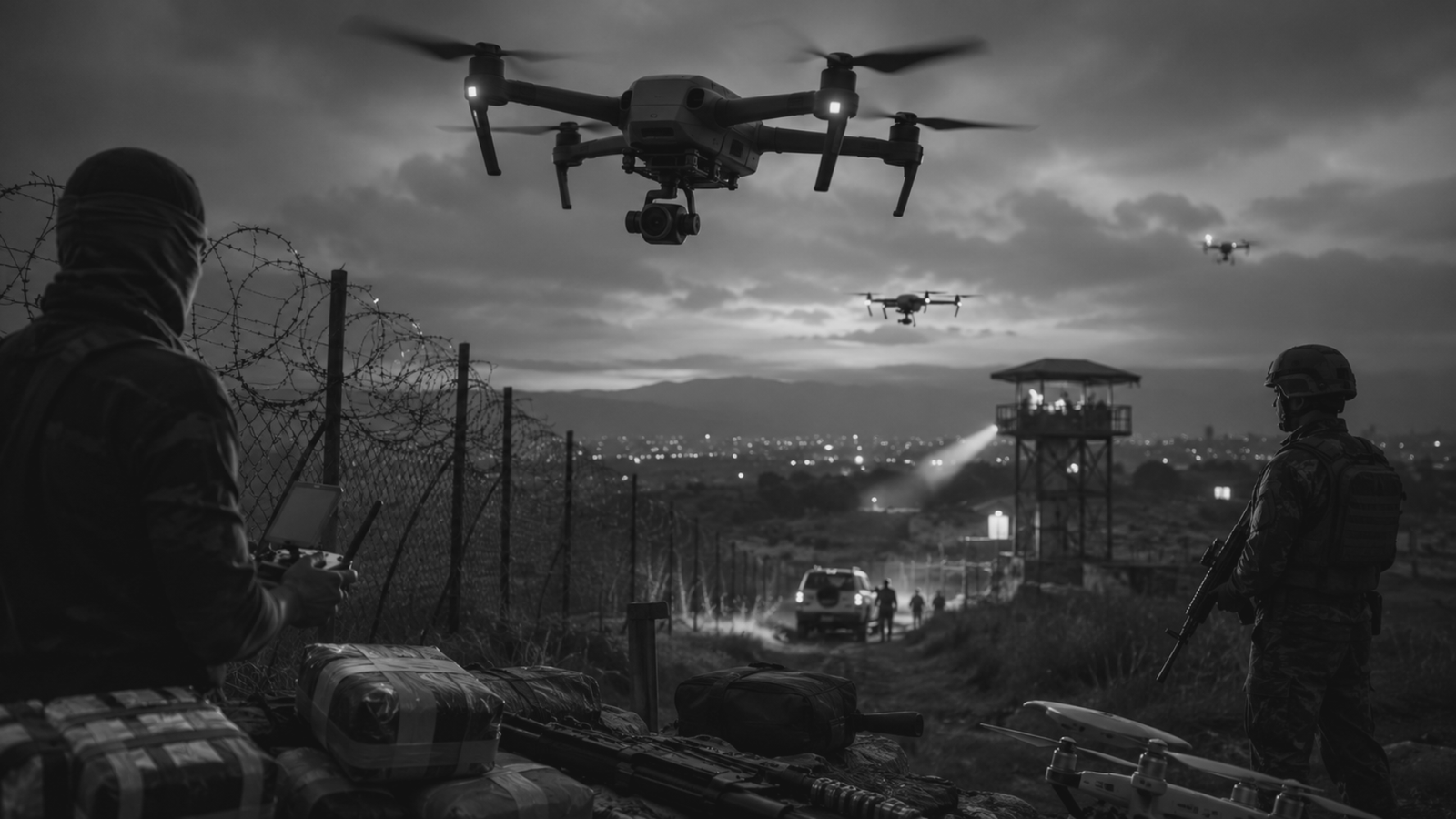
Drone warfare is emerging as a significant new layer in Pakistan’s militant and insurgent landscape. While Pakistan was first exposed to drones as a target theatre of American counter-terrorism strikes after 2004, the present threat has shifted toward the use of commercially available drones by non-state actors. TTP-linked factions and Baloch insurgent groups are increasingly showing interest in drones for reconnaissance, propaganda, payload delivery, stand-off attacks and tactical support. This does not yet represent sophisticated military-grade drone warfare, but it marks an important phase of adaptation in which low-cost aerial systems are being absorbed into militant operations. The current drone threat to India is already visible through Pakistan-linked terrorist-criminal networks that use drones to drop narcotics, weapons, ammunition and cash across the International Border and the Line of Control. This activity has created a tested ecosystem of launch points, handlers, receivers, routes, payload mechanisms and recovery networks. The key concern is that this existing logistics infrastructure could gradually evolve into drone-enabled terrorism. Future use by India-facing groups may not begin with spectacular attacks, but with reconnaissance, infiltration support, pre-positioning of weapons, propaganda filming, diversionary activity and limited strikes on static security targets. The risk of diffusion to JeM and LeT is plausible because these groups do not operate in isolation. Their historical linkages with al-Qaeda, the Afghan Taliban and the wider Pakistan-Afghanistan jihadist ecosystem create pathways for tactical learning and technology transfer. As TTP-linked actors and Baloch insurgents normalise drone use in Pakistan’s western and southwestern theatres, India-facing groups may adapt similar methods to the LoC, IB and hinterland security environment. The threat may also move beyond cross-border drones, with terrorist modules potentially procuring commercial drones inside India and launching them from Indian territory, thereby complicating detection and attribution.
This report is based on open-source intelligence and secondary research. It draws on publicly available reporting from credible media organisations, official statements, security-focused publications, think-tank assessments, designation records, conflict-monitoring sources and CNAWS incident monitoring. Militant propaganda, Telegram-based claims and archived statements have been used cautiously to understand claimed intent, messaging and tactical signalling, but they are not treated as independently verified evidence unless supported by credible reporting or multiple open-source indicators.
The report uses a trend-based analytical approach. It examines current drone-enabled smuggling and militant activity, compares it with global patterns of drone adoption by non-state actors, and assesses how such tactics may diffuse through Pakistan’s interconnected militant ecosystem. The assessment distinguishes between confirmed incidents, credible but unverified reporting, militant claims and analytical inference.
The report relies primarily on open-source information. Therefore, it cannot independently verify every militant claim, drone incident or technical detail. Some reporting on TTP, Baloch insurgents and drone-linked activity comes from local media, militant statements or security sources that may be incomplete, politically influenced or difficult to corroborate. The absence of public evidence should also not be read as absence of capability.
This assessment does not claim that JeM or LeT are already using drones at scale for attacks against India. It argues that such adoption is plausible based on existing drone-smuggling infrastructure, historical militant linkages and observed patterns of technology diffusion. The scenarios presented are predictive, not definitive.
India’s response must therefore move beyond reactive interception. The policy focus should shift from treating drones merely as smuggling tools to recognising them as part of a wider terrorist-criminal ecosystem. This requires layered counter-drone grids, target-centric protection, stronger domestic drone regulation, local intelligence networks, forensic exploitation of recovered drones, mapping of receiver networks, and a national drone incident database. The central assessment of this report is that drone-enabled terrorism by JeM and LeT is not inevitable, but it is realistic enough to demand urgent doctrinal, technological and intelligence-led preparation.
Drone warfare is emerging as a new tactical layer in Pakistan’s militant and insurgent ecosystem. What began as Pakistan’s exposure to American drone strikes in the post-9/11 period has gradually evolved into a wider environment in which non-state actors are no longer merely targets of unmanned systems, but potential users of them. The falling cost of commercial drones, the availability of dual-use components, the spread of online technical knowledge and the visibility of drone warfare in conflicts such as Syria, Iraq, Yemen, Gaza and Ukraine have lowered the barriers for militant experimentation. As a result, commercially available drones are increasingly being viewed by non-state actors as tools for reconnaissance, propaganda filming, payload delivery, surveillance of security positions, convoy monitoring and stand-off attacks.
Recent drone-related activity by TTP-linked factions and Baloch insurgent groups suggests that unmanned systems are no longer peripheral tools, but early indicators of tactical adaptation. Even when these systems remain technically simple, their operational value lies in their accessibility, deniability, psychological effect and ability to bypass traditional ground-based security measures. For groups operating in difficult terrain such as Khyber Pakhtunkhwa, former FATA and Balochistan, drones offer a low-cost method to observe troop movement, support ambushes, target static posts and produce propaganda that amplifies perceived capability. This makes drone adoption significant not because it immediately transforms insurgent warfare, but because it adds a new aerial dimension to existing guerrilla tactics.
This development also has direct implications for India. The historical connections between JeM, LeT, al-Qaeda, the Afghan Taliban and the wider Pakistan-Afghanistan militant ecosystem create plausible pathways through which drone warfare knowledge could diffuse to India-facing groups in the near future. Tactical innovation among militant organisations rarely remains confined to one group when networks share ideology, trainers, safe havens, propaganda channels, battlefield experience and logistical routes. Therefore, the expanding use of drones by TTP-linked actors and Baloch insurgents should be read as an early warning indicator for India’s security environment. It does not prove that JeM or LeT are already using drones at scale, but it does make future adoption plausible, especially for reconnaissance along the LoC, support to infiltration attempts, cross-border payload delivery, propaganda production and limited attacks on static security infrastructure.
1. Methodology
This report is based on open-source intelligence and secondary research. It draws on publicly available reporting from credible media organisations, research institutions, security-focused publications, official designation records and conflict-monitoring sources. The analysis also uses CNAWS incident monitoring, archived militant statements, Telegram-based propaganda claims and secondary assessments to identify emerging patterns in drone usage by militant and insurgent groups in Pakistan.
Militant claims and propaganda material have been treated with caution. Such sources are used only to understand claimed capabilities, messaging patterns and tactical intent, and are not treated as independently verified evidence unless corroborated by credible reporting, official statements or multiple open-source indicators. Where evidence remains incomplete, the report distinguishes between confirmed incidents, credible but unverified reporting, militant claims and analytical inference.
The report does not claim that all Pakistan-based militant groups currently possess advanced drone capabilities. Instead, it assesses observable trends, reported incidents and historical patterns of technology diffusion among militant networks to evaluate the likelihood of future drone adoption by groups such as JeM and LeT.
2. Early Emergence of Drone Usage in Pakistan’s Militant Landscape
The emergence of drones in Pakistan’s security environment initially occurred not through indigenous military innovation or militant adaptation, but through the extensive use of American unmanned aerial operations during the post-9/11 War on Terror. Beginning in 2004, the Federally Administered Tribal Areas (FATA), particularly South and North Waziristan, became one of the world’s earliest and most heavily scrutinised theatres of drone warfare. What started as a narrowly focused counter-terrorism instrument targeting senior Al-Qaeda figures gradually evolved into a sustained campaign of leadership decapitation against Taliban and jihadist networks operating within Pakistani territory.
The first widely acknowledged drone strike in Pakistan occurred in June 2004 near Wana in South Waziristan and targeted Nek Muhammad Wazir, a prominent militant commander linked to insurgent activity along the Afghanistan–Pakistan border. While Pakistani authorities initially claimed responsibility for the operation, subsequent investigative reporting and academic research attributed the strike to a CIA-operated Predator drone. Researchers including Steve Coll have argued that the Pakistani leadership under Pervez Musharraf quietly permitted American drone operations in exchange for military and technological assistance, including helicopters and night-vision equipment. This arrangement marked Pakistan’s introduction to drone warfare primarily as a target theatre rather than an active operator of unmanned systems.
Between 2004 and approximately 2007, drone strikes remained relatively infrequent and were almost exclusively directed against what Washington classified as “high-value targets” associated with Al-Qaeda leadership structures in FATA. One of the earliest known follow-up strikes occurred in May 2005 near the Afghan border in North Waziristan and reportedly killed Haitham al-Yemeni, an Al-Qaeda operative. The operation demonstrated the gradual expansion of so-called “personality strikes,” in which drone operations were centred around identified militant leaders rather than broader battlefield objectives.
A major escalation in both operational visibility and political controversy emerged in January 2006 during the Damadola strike in Bajaur Agency. Missiles struck a residential compound reportedly intended to target Ayman al-Zawahiri, then Al-Qaeda’s deputy leader. Although the intended target survived, the strike killed numerous civilians, including women and children, triggering widespread anti-American protests across Pakistan. The incident significantly shaped public perceptions of drones within Pakistan, where unmanned strikes increasingly became associated with violations of sovereignty, civilian casualties, and external intervention.
Over time, drone warfare in Pakistan evolved from sporadic covert operations into a systematic campaign aimed at dismantling militant command structures. Among the most notable militant leaders eliminated through drone strikes were Baitullah Mehsud, leader of Tehrik-e-Taliban Pakistan, who was killed in South Waziristan in August 2009, followed by his successor Hakimullah Mehsud in November 2013. In 2016, a drone strike in Balochistan killed Mullah Akhtar Mansour, leader of the Afghan Taliban, marking a significant geographical expansion of drone operations beyond the traditional FATA theatre. These developments illustrated the transformation of drones from experimental counter-terrorism assets into central instruments of long-range precision warfare within Pakistan’s security environment.
The prolonged exposure of militant and insurgent networks to drone warfare also produced secondary effects that would later shape the operational behaviour of non-state actors in the region. Militant organisations operating in Pakistan gradually recognised the strategic value of unmanned systems not only for reconnaissance and surveillance but also for logistics, propaganda, and low-cost asymmetric attacks. Simultaneously, the declining costs of commercial drone technology, the availability of dual-use platforms, and the spread of technical knowledge through global conflict theatres accelerated the diffusion of drone capabilities beyond state actors.
By the late 2010s and early 2020s, Pakistan’s militant ecosystem had entered a new phase in which drones were no longer viewed solely as instruments of foreign counter-terrorism operations. Instead, unmanned systems increasingly became tools adopted by insurgent, militant, and criminal networks for cross-border smuggling, intelligence gathering, psychological messaging, and limited attack operations. This shift reflects a broader global trend in which commercially accessible drone technology has lowered the barriers to entry for non-state actors seeking to project influence and conduct asymmetric operations at relatively low financial and operational cost.
3. Contemporary Analysis Of Drones Usage by Militant and Insurgent Groups in Pakistan
The use of drones by militant and insurgent actors in Pakistan has evolved rapidly since late 2024, marking a major tactical shift in the country’s insurgency landscape. Until recently, militant violence in Pakistan remained overwhelmingly dependent on traditional methods such as ambushes, improvised explosive devices (IEDs), suicide bombings, targeted killings, and small arms assaults. Drone warfare was largely absent from the operational playbooks of groups such as Tehrik-i-Taliban Pakistan, Islamic State Khorasan Province, and Baloch insurgent organizations.
By 2025 and early 2026, however, drone warfare had begun emerging as a visible component of militant adaptation. The shift reflects broader global insurgent trends observed in Syria, Iraq, Yemen, and Ukraine, where inexpensive commercial drones transformed the tactical environment by enabling reconnaissance, precision targeting, psychological warfare, and stand-off attacks at minimal cost.
The emergence of drone capabilities among Pakistan-based militant actors is particularly significant because it demonstrates increasing technical sophistication within decentralized insurgent ecosystems while exposing structural vulnerabilities in Pakistan’s counterinsurgency architecture.
Until mid-2024, there were no substantial documented cases of operational drone use by militant groups operating in Pakistan. Regional organizations including TTP, ISKP, Al-Qaeda affiliates, and Baloch insurgents relied primarily on conventional insurgent tactics.
The first credible indicators of militant drone use emerged in September 2024, when reporting by The Khorasan Diary, citing Pakistani security officials, documented quadcopter-borne IED attacks in North Waziristan. These attacks reportedly targeted security facilities and transportation routes in Mir Ali and Miranshah. According to the reports, recovered drone fragments were identified as products manufactured by DJI, one of the world’s largest commercial drone producers.
The attacks reportedly involved improvised explosive payloads attached to commercial quadcopters. Initial payloads consisted of small explosive-filled containers detonated using grenade-based triggering systems. Subsequent iterations reportedly incorporated nails and ball bearings to increase lethality, reflecting early experimentation with improvised kamikaze-style drone systems. No militant organization formally claimed responsibility for these early drone incidents. However, the timing coincided with a broader regional trend of militant adaptation toward low-cost aerial systems.
At approximately the same time, ISKP released propaganda booklets discussing the use of quadcopters in militant operations, signaling ideological and operational interest in drone warfare within jihadist circles. Both Islamic State and Al-Qaeda possess prior histories of drone experimentation in Iraq, Syria, and Afghanistan.
The Afghan Taliban themselves reportedly initiated their first drone-assisted attack in November 2020 against the Kunduz governor’s residence, resulting in four deaths and multiple injuries. This incident demonstrated that commercial drones had already entered the tactical ecosystem of militant actors operating in the Afghanistan-Pakistan theater before their adoption by Pakistani insurgent groups.
3.1. TTP and Allied Groups
The evolution of drone capabilities within TTP represents one of the most consequential tactical developments in Pakistan’s insurgency environment.
In December 2025, TTP formally announced the establishment of a new organizational branch referred to as its “Air Force” as part of a broader restructuring effort. Internal documents reportedly identified Maulvi Saleem Haqqani as head of the newly created unit, while an individual named Hamza was assigned responsibility for electronics and technical workshops.
This organizational restructuring is significant because it suggests drone warfare is no longer viewed by TTP merely as isolated experimentation but as an institutionalized operational capability integrated into the group’s broader insurgent framework.
Pakistani police data cited by DID Press indicated that at least 54 drone attacks occurred during 2025, with North Waziristan and Bannu experiencing the heaviest concentration of incidents. According to the reporting, militants frequently equipped drones with mortar shells or improvised explosive devices.
The tactical profile of these attacks aligns with a broader pattern visible throughout Pakistan’s frontier regions during 2025 and 2026. Drone incidents increasingly targeted police stations, checkpoints, military patrols, convoy routes, surveillance infrastructure, and forward operating positions. Unlike earlier phases of militancy in Pakistan, where attacks depended primarily on ground infiltration, roadside bombs, or suicide bombers, the introduction of drones enabled militant groups to conduct stand-off attacks while minimizing direct exposure. This reflects a gradual but important tactical transition in the operational behavior of TTP and allied militant factions. CNAWS Incident monitoring throughout April 2026 illustrates the increasing operational normalization of drones within TTP and associated militant networks. On April 2, 2026, armed militants reportedly attacked the Pezo police station in Lakki Marwat using a quadcopter drone that dropped an explosive shell onto the station roof. Although no casualties were reported, the attack demonstrated the ability of militants to bypass perimeter defenses and directly target police infrastructure from the air. On April 8, 2026, TTP militants allegedly carried out another quadcopter attack in the Kot Azam area, reportedly injuring four civilians. The incident highlighted both the expanding geographic spread of drone-related operations and the increasing risks posed to civilian populations residing near active conflict zones.
A day later, on April 9, 2026, additional drone-related incidents were reported in the Bakakhel area of Bannu during clashes between militants and Pakistani security forces. According to local reporting, a quadcopter strike injured multiple individuals as fighting continued in the area, illustrating how drones were being integrated into broader insurgent engagements rather than used as isolated tactical tools.
The use of drones was not limited to TTP alone. On April 12, 2026, Ittehad-ul-Mujahideen Pakistan, a group affiliated with TTP, claimed responsibility for a quadcopter drone attack targeting a Pakistani military post in the Akakhel Sultan Khel area of Bara Tehsil in Khyber Agency. According to the claim, the shell dropped by the drone exploded inside the military post, causing casualties among security personnel. The attack suggested that drone tactics were beginning to diffuse across allied militant ecosystems operating in Pakistan’s northwestern frontier regions.

Pakistani army camp in Dusli tehsil of North Waziristan targeted by IMP using drone 5 Aug 2025
The broader significance of these incidents was reflected in the March 2026 Pakistan Militancy Assessment published by the Centre for New Age Warfare Studies, which described drone-related incidents as still limited in overall frequency but indicative of “gradual tactical adaptation.” The assessment noted that while small arms and improvised explosive devices continued to dominate Pakistan’s insurgent landscape, the emergence of drones represented the early stages of a potentially important transformation in militant warfare tactics.
The assessment further observed that Pakistan’s insurgent environment remains dominated by small arms and IED warfare, but drone incidents signal the beginning of a new tactical layer that complicates traditional counterinsurgency responses.
3.2. Tactical Characteristics of TTP Drone Usage
Current evidence suggests that Tehrik-e-Taliban Pakistan and affiliated militant factions primarily rely on commercially available quadcopters rather than advanced military-grade unmanned aerial vehicles. Available reporting and forensic observations indicate that most systems used in attacks across Pakistan’s frontier regions are likely modified civilian drones acquired through commercial markets rather than purpose-built military platforms.
The majority of reported systems appear consistent with commercially accessible drone families such as the DJI Mavic series and DJI Phantom platforms manufactured by DJI. In several incidents, recovered drone fragments reportedly matched DJI-manufactured components, particularly during early quadcopter-borne IED attacks reported in North Waziristan during 2024. Alongside these systems, militants also appear to be experimenting with improvised FPV-style platforms and modified commercial quadcopters adapted for basic attack and reconnaissance roles.
The relatively low sophistication of these systems does not diminish their strategic impact. Commercial drones provide militants with stand-off attack capability while significantly reducing exposure during operations.
This is particularly important in Pakistan’s tribal regions, where terrain advantages, dispersed checkpoints, and limited radar coverage complicate drone detection and interception.
The introduction of drone warfare also undermines one of the Pakistani state’s historical advantages over insurgents: technological asymmetry. Low-cost drones compress the capability gap between militants and security forces by enabling surveillance and precision attacks using inexpensive commercial systems.
3.3. Baloch Insurgent Groups and Drone Warfare
The most dramatic institutionalization of drone warfare among insurgent actors in Pakistan has occurred within Baloch militant organizations.
On February 12, 2026, the Balochistan Liberation Army announced the establishment of its first dedicated air and drone warfare unit called QAHR, short for Qazi Aero Hive Rangers. According to official BLA media statements, the unit was fully operational and had already participated in Operation Herof 2.0.

BLA Press Release announcing formation of QAHR
The announcement represented a major symbolic and operational milestone in the evolution of the Baloch insurgency because it formalized aerial warfare as a recognized component of insurgent strategy. BLA propaganda material released through official Telegram channels included videos and imagery purportedly showing drone operations and technical capabilities associated with QAHR. Subsequent BLA media releases during March and April 2026 continued referencing drone-related operational activity. The emergence of QAHR reflects a broader modernization trend within the Baloch insurgency.

BLA QAHR Drone Unit
Unlike Tehrik-e-Taliban Pakistan, whose drone usage remains focused mainly on tactical battlefield attacks, Baloch insurgent groups increasingly appear to be integrating drones into broader insurgent warfare strategies. Their use of drones is linked not only to direct attacks, but also to coordinated ambushes, convoy targeting, infrastructure sabotage, reconnaissance, propaganda production, and psychological warfare.
Several incidents during April 2026 demonstrated drone-related activity linked to Baloch insurgent operations. On April 8, 2026, during BLF operations on the Quetta-Taftan Highway, militants reportedly destroyed Pakistani quadcopters during clashes. On April 9, 2026, reports from Turbat indicated militants destroyed surveillance quadcopters deployed by Pakistani security forces during an ambush operation. On April 9, 2026, the BLA reportedly carried out drone attacks against a Pakistani Army camp in Splangi, Mastung. The group later claimed responsibility for the operation. These incidents indicate that drone warfare in Balochistan extends beyond offensive use and increasingly includes counter-drone engagement against Pakistani surveillance systems.
The operational environment in Balochistan is particularly conducive to drone warfare because its vast deserts, mountainous terrain, and remote geography significantly reduce effective radar coverage and surveillance capacity. Pakistani security forces also rely heavily on military convoys and long communication routes that are difficult to secure across such expansive terrain, creating vulnerable targets for insurgent attacks. At the same time, Baloch insurgent groups possess mobility advantages across rugged and sparsely populated areas, allowing them to maneuver, observe, and coordinate operations more effectively while exploiting the limitations of conventional state surveillance and response systems.
Drone usage allows insurgent groups to monitor force movement, coordinate ambushes, and expand battlespace awareness across geographically dispersed operational theaters.
4. Counter-Drone Responses by Pakistan and Emerging Trends
Pakistan has responded to the rise of militant drone activity through a combination of electronic warfare measures, signal jamming systems, intelligence operations, kinetic interception methods, and cross-border targeting of suspected militant infrastructure. These efforts aim to disrupt drone communications, identify launch sites, intercept hostile UAVs, and limit the operational space available to militant groups using drones along Pakistan’s western frontier.
At the same time, available reporting suggests that militant organizations themselves are beginning to adopt counter-drone measures. Emerging evidence, including reports of insurgent groups experimenting with drone jammers, indicates that the conflict environment is gradually evolving beyond simple drone usage toward a more complex contest involving surveillance systems, electronic warfare, and counter-drone adaptation.
A DID Press report archived in April 2026 referenced IMP use of drone jammers, indicating that Pakistani militant organizations may already be experimenting with electronic warfare tools themselves. This development is especially significant because it signals a transition from isolated and improvised drone attacks toward a more mature aerial warfare ecosystem. The emerging environment increasingly involves not only offensive drone operations, but also the integration of reconnaissance systems, counter-drone technologies, and forms of electronic warfare adaptation. This suggests that militant groups operating in Pakistan are gradually moving beyond experimental drone usage toward more structured and technologically integrated operational capabilities.

Data Source: CNAWS Pakistan Militancy Dashboard

Data Source: CNAWS Pakistan Militancy Dashboard
The trajectory resembles patterns previously observed in Syria and Iraq, where militant drone warfare evolved rapidly from crude experimentation into semi-organized operational capability. Pakistan’s western insurgency environment now appears to be entering the early stages of a similar transformation.
5. Drone Technology Diffusion Among Militant Groups in the World
The adoption of drones by Pakistan-based militant and insurgent actors should be understood as part of a wider global pattern in which violent non-state actors observe battlefield utility elsewhere and then adapt similar systems to their own terrain, resources and operational needs.
ISIS provides one of the clearest examples. During the battle for Mosul, ISIS converted commercially available quadcopters into reconnaissance and attack platforms, including systems capable of dropping small munitions on Iraqi forces. CTC West Point described the ISIS drone programme as a case study in how a militant group overcame cost and technical asymmetries by modifying commercial components into a weapons system that temporarily challenged state responses.
The relationship between Afghan Taliban rule and the rise of militant drone warfare in Pakistan is indirect but strategically important. There is currently no verified evidence that the Afghan Taliban officially transferred military-grade drone systems to TTP or Baloch insurgents. However, Afghanistan after 2021 became a permissive environment for militant experimentation, training, and technical adaptation.
Before 2021, Taliban units used small commercial drones for reconnaissance, propaganda filming and eventually armed attacks. Radio Free Europe reported that the Taliban had used commercial drones in recent years for reconnaissance and propaganda videos, while The Diplomat documented the Taliban’s incorporation of weaponised commercial drones into its arsenal in late 2020. One notable case was the November 2020 Kunduz attack, where a small drone reportedly killed four bodyguards of the provincial governor.
Following the Taliban takeover of Afghanistan in 2021, TTP safe havens reportedly expanded, cross-border movement became easier, militant workshops grew harder for Pakistani forces to target, and insurgent networking across the Afghanistan-Pakistan region intensified. The Afghan conflict environment had already introduced commercial drones into militant warfare before the Taliban’s return to power, with Taliban forces using drones for reconnaissance, propaganda filming, and limited attack roles during the later phases of the insurgency against Afghan and NATO forces.
The Houthis in Yemen show a more advanced stage of drone diffusion. Their drone programme moved from relatively crude systems to longer-range attack drones used against Saudi, Emirati and maritime targets. Reuters, citing a UN report, stated that Iranian IRGC, Hezbollah and Iraqi specialists helped transform the Houthis from a local armed group with limited capabilities into a more powerful military organisation, including through weapons and technical support. FPRI also documented Houthi use of Qasef-1 drones against Saudi-led coalition Patriot air defence systems.
Hamas also adopted drones as part of its asymmetric toolkit. During the 7 October 2023 attack, Hamas used small drones to strike Israeli surveillance and border systems, helping create openings for ground infiltration. Wired noted that Hamas had long pursued drone capabilities with Iranian assistance, though its battlefield effectiveness remained uneven. The key lesson is that drones do not need to be strategically decisive to be operationally useful. They can support surprise, disruption, propaganda and psychological warfare.
The spread of drone warfare knowledge within militant ecosystems does not necessarily require direct state sponsorship. Tactical innovation increasingly circulates through battlefield observation, online manuals, Telegram channels, jihadist propaganda media, open-source warfare footage, and informal trainer networks. The global diffusion of FPV drone warfare techniques from conflicts in Ukraine and Syria has further accelerated this process, making drone-related tactics more accessible to militant and insurgent organizations operating in the region.
6. Drone Warfare Diffusion and the India-Facing Terrorist Threat
The risk of drone warfare diffusing to India-facing groups such as JeM and LeT should be assessed through the wider militant ecosystem in which these organisations have historically operated. The strongest evidence does not suggest a direct JeM or LeT relationship with Baloch insurgents. Rather, the more defensible argument is that JeM and LeT are embedded in a broader jihadist network that overlaps with al-Qaeda, the Afghan Taliban and, indirectly, the TTP ecosystem. The UN Security Council states that JeM was founded by Masood Azhar after his release from prison and that the group was associated with al-Qaeda, Osama bin Laden and the Taliban. The UN also records that JeM cooperated with LeT and that both groups were implicated in the 13 December 2001 attack on the Indian Parliament. This establishes JeM and LeT not as isolated India-facing organisations, but as actors historically connected to a wider jihadist infrastructure in Pakistan and Afghanistan.
LeT’s links to this ecosystem are also well documented. The UN Security Council describes LeT as a Pakistan-based organisation that supported listed individuals and entities including al-Qaeda and Osama bin Laden. It further notes that LeT provided infrastructure and training support to al-Qaeda-linked operatives, and that Abu Zubaydah, a senior al-Qaeda figure, was captured in March 2002 from a LeT safe house in Faisalabad. These details are important because technology diffusion among militant groups often occurs through shared safe houses, training environments, logistical networks, battlefield observation and ideological affinity, rather than through formal organisational mergers. In this context, LeT’s historic support role for al-Qaeda-linked actors creates a plausible pathway through which tactical knowledge, including drone-related know-how, could circulate into India-facing networks.
JeM’s relationship with the Afghan jihadist theatre further strengthens this diffusion argument. The US National Counterterrorism Center describes JeM as a Pakistan-based group focused on Kashmir but also notes that it has sought to expel foreign troops from Afghanistan. The same profile records that JeM members were involved in the 2007 Red Mosque uprising and that Asmatullah Moavia, later associated with TTP, split from JeM after disagreements over the response to that incident. This does not prove a current command relationship between JeM and TTP, but it does show personnel-level and ideological overlap between JeM and Pakistan’s broader militant milieu. Such overlaps matter because drone warfare is a low-cost, modular capability that can spread through individuals, trainers, workshops, online material and battlefield learning.
The TTP represents the most relevant bridge between the Afghan Taliban-al-Qaeda ecosystem and the current drone adaptation trend in Pakistan’s western frontier. The UN Security Council describes TTP as an alliance of militant groups that emerged in 2007 in the Pakistan-Afghanistan border region, while Reuters has reported that TTP pledges loyalty to the Afghan Taliban, even though it remains organisationally separate. Reuters also noted Pakistan’s warning at the UN that TTP could become a spearhead for wider terrorist objectives, including those of al-Qaeda. This matters for India because TTP’s battlefield adaptation, including drone use, is taking place within the same broad ideological and geographic environment that has historically intersected with JeM, LeT, al-Qaeda and Taliban-linked networks.
Therefore, the argument should not be framed as a claim that JeM or LeT are already using drones at scale, unless independently verified evidence emerges. A stronger and more credible assessment is that the connections among JeM, LeT, al-Qaeda, the Afghan Taliban and the TTP create favourable conditions for tactical diffusion. Once drones demonstrate battlefield value for TTP and other Pakistan-based militant actors, the same ecosystem that previously enabled ideological cooperation, training support, safe-house access and operational learning could enable the spread of drone tactics to India-facing groups. For JeM and LeT, drones would offer clear utility in reconnaissance, propaganda filming, cross-border payload delivery, surveillance of security posts, support to infiltration attempts and limited stand-off attacks. The key concern, therefore, is not inevitability but plausibility: the networked nature of Pakistan’s jihadist landscape makes future drone adoption by JeM and LeT a realistic security risk.
7. India-Specific Implications: LoC, IB and the Risk of Drone Diffusion
For India, the most immediate concern is that drone warfare does not need to begin with spectacular attacks. It can begin through routine logistics, reconnaissance and deniable cross-border activity. Indian reporting and official statements already show that drones from Pakistan are frequently used across the International Border and, increasingly, along the Line of Control to drop narcotics, weapons, ammunition, explosives and cash. This existing pattern is important because it has already created a tested ecosystem of drone operators, handlers, receivers, routes, launch points, GPS-based navigation methods and recovery networks on the Indian side. Once such an ecosystem exists, the same infrastructure can potentially be adapted from smuggling to tactical support for terrorism.
The Punjab sector provides the clearest evidence of this trend. In 2025, the BSF seized 272 drones coming from Pakistan into Punjab to drop arms, ammunition and narcotics. The BSF recovered more than 367 kg of heroin, over 10 kg of RDX, 12 hand grenades and 200 arms during the year. This indicates that cross-border drone activity is no longer occasional or experimental. It has become a persistent logistics channel used to move narcotics, weapons and explosive material into India.
Between November 1, 2024, and October 31, 2025, BSF detected 1,816 drone sightings along the India-Pakistan border. Drone-based smuggling of drugs and weapons from Pakistan has increased since the first such case was detected in Punjab in mid-2019. Chinese-made DJI Matrice and DJI Mavic drones are commonly used, and that AK-series rifles and Chinese pistols have been sent from Pakistan through drones. This matters because these are not military-grade systems. They are commercially available platforms, which makes replication by militant groups easier and cheaper.
The threat is not limited to Punjab. Along the LoC in Jammu and Kashmir, drones have also been used for dropping weapons, ammunition and cash. In April 2023, NDTV, citing officials, reported that a Pakistani drone was brought down after crossing the LoC in Rajouri. Security forces recovered five AK-47 magazines, 131 rounds, ₹2 lakh in cash and other items from the packet attached to the drone. The same report stated that drone smuggling of arms, cash and narcotics had become a major challenge along both the International Border and the Line of Control, with repeated attempts being made to drop material to fuel terror activities in Jammu and Kashmir.
The operational significance for India is that drones can support infiltration without replacing infiltration. They can be used to reconnoitre border fencing, observe patrol routines, identify gaps in deployment, deliver weapons to local overground workers, and provide small consignments of arms or explosives before an attack. Reuters reported in January 2026 that India’s Army Chief said Pakistan had been asked to control drone intrusions, after multiple sightings in the Jammu region. He assessed that such drones may have been used to identify gaps or laxity through which terrorists could be sent. Reuters also reported that in another incident, a drone from Pakistan was suspected of dropping two pistols, three magazines, sixteen bullets and one grenade.
The Jammu Air Force Station attack of June 2021 marked the first known drone-enabled terrorist strike on an Indian security establishment. In the early hours of 27 June 2021, two low-intensity explosions occurred inside the technical area of the IAF station at Jammu airport after suspected drones dropped improvised explosive devices. Two IAF personnel suffered minor injuries, while no major equipment damage was reported.
This creates a direct link with the concern over JeM and LeT. These groups do not need to develop an independent drone programme from scratch if a wider Pakistan-based ecosystem of drone smuggling, narcotics trafficking, weapons delivery and militant logistics already exists. Their historical connections with al-Qaeda, the Afghan Taliban and the broader Pakistan-Afghanistan jihadist environment make tactical learning more plausible. If TTP-linked actors and Baloch insurgents normalise drones for reconnaissance, payload delivery and attacks on security posts, India-facing groups such as JeM and LeT could adapt the same logic for LoC surveillance, infiltration support, targeted delivery of arms and explosives, propaganda filming, and limited stand-off attacks on static security installations.
The most likely near-term threat is not large drone swarms or sophisticated military UAVs. It is the gradual weaponisation of already visible patterns of small commercial drones being used repeatedly, cheaply and deniably across familiar routes.
8. Drone-Enabled Terrorism: Future Threat Scenarios for India
The present drone threat from Pakistan should no longer be assessed merely as a smuggling problem. The repeated use of drones for dropping narcotics, weapons, ammunition and cash across the International Border and the Line of Control has already normalised the basic infrastructure required for drone-enabled hostile activity. This includes cross-border launch networks, handlers, receivers, GPS-based navigation, night-time flight patterns, payload dropping mechanisms and recovery chains inside India. In other words, the foundation for drone-enabled terrorism already exists. The next phase of concern is how this established terrorist-criminal logistics ecosystem may evolve into direct operational support for terrorist attacks.
The most realistic near-term evolution is not sophisticated drone strikes, but the tactical use of drones to support conventional terrorist operations. JeM and LeT are more likely to first use drones as enabling tools rather than as primary weapons. This could include reconnaissance of border fencing, observation of patrol routines, identification of gaps in deployment, movement tracking of security forces and pre-positioning of weapons for infiltrating cadres or local modules. Such use would represent a significant escalation because drones would reduce dependence on human couriers and allow handlers to separate the logistics phase from the attack phase.
A second plausible scenario is drone-supported infiltration. In this model, drones may be used before an infiltration attempt to identify safe crossing points, monitor Indian patrol patterns or confirm whether a route is under surveillance. During an operation, drones could be used to create distraction, test response time or provide limited situational awareness to handlers. This would not require advanced drone warfare capability. It would simply involve adapting existing cross-border drone routes from criminal smuggling to terrorist facilitation.
A third likely pathway is the pre-positioning of attack material inside Indian territory. Instead of infiltrating with weapons, JeM or LeT cadres could rely on drone-dropped arms, grenades, ammunition, cash and communication devices already placed with overground workers or criminal receivers. This would make attacks harder to detect at the preparation stage because the movement of men and material would be separated. It would also allow Pakistan-based handlers to activate local modules with reduced physical exposure.
A fourth, more escalatory but still plausible scenario is limited drone-assisted attacks on static security targets. These may include police posts, forward posts, watchtowers, communication equipment, vehicles, camps or lightly protected perimeter infrastructure. Such attacks would likely remain small-scale in the initial phase, using commercially available drones and improvised payloads rather than sophisticated military systems. Their purpose may be less about mass casualties and more about disruption, propaganda, psychological pressure and testing India’s counter-drone response.
The least likely near-term scenario is advanced swarm warfare or large-scale precision drone attacks by JeM or LeT. Such operations require higher technical skills, reliable command systems, payload integration and strong operational security. However, the danger lies in incremental adaptation. Once drones are routinely used for logistics, the same networks can gradually experiment with reconnaissance, diversion, targeting support and limited attacks. This is how low-cost technologies often diffuse within militant ecosystems.
Another plausible pathway is that terrorist modules may not rely only on drones launched from Pakistan. Commercial drones can also be sourced within India through legal or grey-market channels and then launched from Indian territory by local modules, overground workers or criminal facilitators. This would reduce the risks associated with cross-border flight, including detection by border surveillance systems, jamming, interception and attribution. In such a scenario, Pakistan-based handlers would not need to physically send the drone across the International Border or the Line of Control. Instead, they could provide funding, target guidance, technical instructions or payload material, while the drone itself is procured, assembled, modified and launched locally.
This scenario is particularly concerning because it would shift the threat from border security to internal security. A locally launched drone could be used for reconnaissance of police stations, military camps, convoy routes, religious sites, public gatherings or critical infrastructure before an attack. It could also be used for limited payload delivery or diversionary activity during a larger terrorist operation. The operational advantage for groups such as JeM and LeT would be deniability and flexibility. A drone sourced and launched inside India would complicate attribution, reduce dependence on cross-border routes and allow terrorist handlers to exploit domestic criminal networks, online marketplaces and local sympathisers.
Therefore, India’s concern should not be whether JeM or LeT suddenly acquire advanced drone warfare capability. The more realistic risk is a gradual progression from drone-enabled smuggling to drone-enabled terrorism. The existing terrorist-criminal nexus has already solved the first problem of moving payloads across the border without human infiltration. The next challenge for security agencies is to prevent that same infrastructure from being converted into an operational support system for reconnaissance, infiltration, pre-attack logistics and limited stand-off attacks. The key analytical point is that India’s drone threat should not be viewed only as a cross-border intrusion problem. As commercial drones become more accessible, the more difficult challenge may be detecting locally procured drones used by terrorist-criminal networks from within Indian territory itself.
9. Recommendations and Policy Suggestions
9.1. Protecting Targets from Cross-Border Drones
India’s response must shift from treating hostile drones as isolated border incidents to treating them as part of a wider terrorist-criminal logistics and future attack ecosystem. The present pattern already involves drones being used across the India-Pakistan border for narcotics, arms and ammunition movement. Official PIB reporting has acknowledged that anti-national elements and smugglers use drones for arms and narcotics smuggling across the Punjab border, and that anti-drone systems, anti-rogue drone SOPs, police alerts and depth nakas in suspected dropping zones are already part of the response. The next step must be to move from reactive interception to predictive disruption.
India should build a layered counter-drone grid along the IB, LoC and vulnerable hinterland zones. This grid should not depend only on high-end kinetic interception. It should combine radar, radio-frequency detection, electro-optical sensors, acoustic detection, thermal imaging, jamming, spoofing, physical interception and rapid ground search teams. A single technology will not solve the problem because small commercial drones fly low, slow and often at night. The emphasis should be on a layered system that detects, tracks, identifies, disrupts and then exploits the recovered drone for intelligence.
The BSF, Army, police, intelligence agencies and civil administration must operate from a common drone threat picture. Union Home Minister Amit Shah recently called for anti-drone systems along the border and stressed that it is equally important to identify who receives drones once they land and who uses the material brought by them. This is the correct approach. The receiver network is as important as the drone itself. Every drone recovery should trigger a full-spectrum investigation into launch point, flight path, payload, financial trail, mobile activity, local receiver, storage point and intended end user.
India also needs a national drone incident database. At present, drone incidents are often reported as local seizures. They should be fused into one national pattern analysis system covering Punjab, Jammu, Rajasthan, Gujarat, Kashmir and major urban centres. Each incident should be logged by location, time, drone model, payload, weather, route, suspected handler network, recovery site and linked arrests. Over time, this will allow predictive mapping of preferred launch corridors, landing zones, seasonal patterns and criminal-terrorist linkages.
The second line of defence must be strengthened. Border interception alone is insufficient because many drones will not be detected at the crossing point. India must strengthen village-level surveillance, local police intelligence, highway checkpoints, canal-side monitoring, farm-sector watch networks and search protocols in known dropping zones. Punjab’s reported deployment of local anti-drone systems as a second line of defence shows the right direction, but this needs to be standardised and expanded.
A major policy priority should be regulation of domestic drone procurement without damaging India’s legitimate drone industry. The domestic procurement scenario is plausible because hostile modules may source drones inside India and launch them locally. The Drone Rules, 2021 and subsequent amendments provide the regulatory foundation, but security agencies need better integration with sellers, repair shops, training schools, e-commerce platforms and import channels. Suspicious bulk purchases, repeated cash purchases, abnormal battery or spare-part procurement, tampering with identification systems and activity near sensitive zones should generate alerts.
India should also harden likely terrorist targets against low-cost drones. Air bases, police stations, ammunition depots, camps, religious sites, public events, railway nodes, energy infrastructure and convoy routes should be assessed for vulnerability to small drones. The 2021 Jammu Air Force Station attack showed that even low-intensity drone attacks can create strategic shock. Therefore, protection cannot be limited to high-value military bases. Static installations should have overhead protection, controlled approach zones, night surveillance, drone alarms and rehearsed response drills.
Counter-drone training must be pushed down to the tactical level. Every border post, police station in vulnerable districts and military camp near high-threat areas should know what to do when a drone is detected. Response cannot depend only on specialist teams. Units should be trained in detection reporting, blackout drills, search grid activation, payload safety, forensic preservation and immediate area domination. The first thirty minutes after a drone sighting are critical.
India should treat captured drones as intelligence assets, not merely seized objects. Forensic exploitation can reveal serial numbers, flight logs, firmware, GPS coordinates, controller links, payload design, battery source, repair history and possible procurement channels. A national drone forensics cell should support BSF, NIA, state police and military intelligence. Every recovered drone should be exploited for network mapping.
Policy should also focus on the financial ecosystem. Drone drops of narcotics are not only a drug problem. They are a financing mechanism for terrorism, separatism and organised crime. Enforcement agencies must link narcotics cases with terror-financing investigations wherever indicators exist. Cash, hawala routes, cryptocurrency use, courier networks and local receivers should be investigated together rather than in separate silos.
India should develop red-team testing of sensitive installations. Friendly teams should simulate low-cost drone threats to test detection gaps, response time, command confusion and night readiness. This should be done periodically, not as a one-time audit. The objective is to expose weaknesses before adversaries exploit them.
Finally, India’s doctrine must recognise that the future threat is not only cross-border drone intrusion. It is the convergence of drones, organised crime, terrorism, narcotics, local modules and online technical knowledge. The correct response is therefore not only technological. It must be intelligence-led, locally networked, legally supported and operationally rehearsed. The aim should be to deny JeM, LeT or any Pakistan-backed network the ability to convert today’s drone smuggling infrastructure into tomorrow’s drone-enabled terrorism.
9.2. Protecting Targets from Drones Launched from Indian Territory
India’s counter-drone thinking must move beyond the assumption that hostile drones will always cross the International Border or the Line of Control. A more difficult scenario is the use of commercially available drones procured inside India and launched from Indian territory by terrorist modules, overground workers or criminal facilitators. This scenario reduces the effectiveness of border-focused detection and complicates attribution because the drone may never cross an international boundary. Protection of targets must therefore shift from a purely border-interdiction model to a target-centric, layered security model.
The first requirement is vulnerability mapping of likely targets. Military stations, air bases, police posts, ammunition depots, religious sites, political venues, railway stations, energy infrastructure, communication nodes, convoy routes and large public gatherings should be assessed for drone exposure. The assessment should examine visibility from nearby open areas, rooftops, agricultural fields, abandoned plots, parking areas, water bodies and high-rise structures. A locally launched drone does not need long range. It only requires a concealed launch point within practical distance of the target. Therefore, the security perimeter must be expanded from the compound wall to the surrounding launch environment.
Second, sensitive targets must establish an outer “drone security zone” in coordination with local police and civil administration. This should include surveillance of likely launch points, temporary restrictions during high-threat periods, checking of suspicious parked vehicles, monitoring of rooftops near sensitive locations and rapid response patrols in the surrounding area. For high-value sites, drone defence cannot begin at the fence line. It must begin in the neighbourhood, marketplace, approach road and open ground from where a drone could be launched.
Third, detection systems must be layered. Small commercial drones are difficult to detect because they fly low, have limited radar signature and can operate at night. Therefore, protection should combine radio-frequency detection, visual observation, thermal imaging, acoustic sensors, electro-optical cameras and trained sentries. No single sensor should be treated as decisive. Human observation remains important, especially at police stations, camps and public venues where sophisticated systems may not be available.
Fourth, every sensitive installation should have a rehearsed drone response drill. The first few minutes after detection are critical. The response should include immediate alerting, movement of exposed personnel under cover, protection of fuel, ammunition and communication assets, activation of searchlights or night-vision observation, reporting to police and air defence channels, and deployment of a quick reaction team to identify the launch or recovery area. The aim should not only be to neutralise the drone, but also to capture the local network behind it.
Fifth, static targets should be physically hardened against small drone payloads. This does not require turning every post into a fortress. Practical measures such as overhead cover for sentry posts, protected parking of vehicles, dispersion of ammunition and fuel stores, camouflage netting, blast-resistant storage, covered walkways in vulnerable areas and reduction of exposed high-value equipment can reduce the impact of low-payload drone attacks. The 2021 Jammu Air Force Station attack demonstrated that even low-intensity drone attacks can create strategic and psychological effect. Hardening must therefore focus on reducing both physical damage and symbolic impact.
Sixth, India should develop local drone intelligence around sensitive locations. Police stations and military units should maintain updated information on drone sellers, repair shops, hobbyist groups, training centres, e-commerce delivery patterns, battery suppliers and local flying clubs in their jurisdiction. This should not become harassment of legitimate users, but a structured awareness network. Suspicious purchases, repeated repairs, tampering with drone identification, unusual night flying, or drone activity near sensitive sites should trigger discreet verification.
Seventh, major events and high-risk days require temporary drone denial measures. Religious gatherings, political rallies, military ceremonies, VIP visits, national days, court appearances of high-profile accused, and sensitive anniversaries should be treated as potential drone-risk periods. Temporary counter-drone deployment, no-fly enforcement, rooftop checks, access control around launch-prone areas and rapid public reporting channels should be activated in advance.
Eighth, convoys and mobile targets require separate procedures. A drone launched from Indian territory may be used to observe convoy movement, film security patterns or support an ambush. Convoy commanders should avoid predictable halts, vary routes where possible, maintain observation of overhead threats, and coordinate with local police for suspicious drone sightings along movement corridors. The purpose is not to overburden movement with fear of drones, but to include drone awareness as part of routine convoy discipline.
Ninth, forensic exploitation must be built into target protection. If a drone crashes, is recovered or drops material, the site should be treated as both a security incident and an intelligence opportunity. Personnel must preserve the drone, payload, battery, memory card, controller links, packaging and fingerprints where possible. Rapid exploitation may reveal procurement channels, launch coordinates, flight path, handlers and local support networks. This is particularly important in the domestic-launch scenario because the drone’s origin may point to an internal module rather than a cross-border launch point.
Finally, India needs a target-centric counter-drone doctrine that recognises three rings of defence. The outer ring should detect suspicious procurement, local launch preparation and hostile reconnaissance. The middle ring should secure likely launch zones around sensitive targets. The inner ring should detect, disrupt, shelter and recover during an actual drone incident. The objective is not only to stop the drone in the air, but to dismantle the network that bought it, modified it, launched it and planned to exploit its effect.
10. Conclusion
Drone warfare in Pakistan’s militant and insurgent landscape is no longer a distant or speculative concern. It is emerging from the convergence of three developments, the long exposure of militant groups to drone warfare in the Afghanistan-Pakistan theatre, the global diffusion of low-cost commercial drone tactics, and the already established use of drones by Pakistan-linked terrorist-criminal networks for dropping narcotics, weapons, ammunition and cash across India’s borders. What began as a smuggling and logistics challenge now has the potential to evolve into a wider terrorist capability.
The evidence from TTP-linked factions and Baloch insurgent groups indicates that drones are being gradually absorbed into militant operational thinking. These groups are not necessarily using sophisticated military-grade systems. Their advantage lies in commercially available drones that are cheap, deniable, adaptable and difficult to detect at low altitude. Even limited drone use can provide reconnaissance, propaganda value, payload delivery, tactical distraction and psychological effect. This makes drones attractive to non-state actors because they add an aerial dimension to existing guerrilla and terrorist methods without requiring major technological transformation.
For India, the concern is not only cross-border drone intrusion. That threat already exists and is visible in repeated drops of narcotics, arms and cash. The more serious future risk is the conversion of this logistics ecosystem into drone-enabled terrorism. JeM and LeT may not need to build an advanced drone programme from scratch. Their historical linkages with al-Qaeda, the Afghan Taliban and the wider Pakistan-Afghanistan jihadist ecosystem create plausible pathways for tactical learning and diffusion. If TTP and other Pakistan-based actors continue to normalise drones for reconnaissance, attacks and battlefield support, India-facing groups may adapt the same methods for infiltration support, target surveillance, pre-positioning of weapons, propaganda filming and limited attacks on static security installations.
The threat may also shift inward. Terrorist modules could procure drones within India and launch them from Indian territory, reducing the relevance of border detection and complicating attribution. This scenario would make target protection, local intelligence, domestic drone regulation, forensic exploitation and neighbourhood-level surveillance as important as border interdiction.
Therefore, India’s response must move from reactive seizure to predictive disruption. The objective should not be limited to shooting down drones. It must include mapping receiver networks, identifying procurement chains, hardening vulnerable targets, integrating police and military intelligence, building a national drone incident database and preparing installations for locally launched drone threats. The central assessment is clear that drone-enabled terrorism by JeM and LeT is not inevitable, but it is realistic enough to demand urgent doctrinal, technological and intelligence-led preparation.
Tags
- #Baloch insurgency
- #Baloch insurgents drones
- #Baloch Liberation Army
- #Baloch Liberation Front
- #Balochistan
- #Balochistan conflict
- #balochistan insurgency analysis
- #commercial drones terrorism
- #counter drone strategy India
- #counter drone systems
- #counter drone systems india
- #Counter-drone Systems
- #cross-border terrorism
- #drone smuggling India
- #drone smuggling punjab border
- #drone swarm attacks
- #drone terrorism
- #drone threats to india
- #drone warfare
- #Drone Warfare in India
- #drone warfare in south asia
- #drone warfare India
- #drone-based narco-terrorism
- #drone-enabled terrorism
- #Hafiz Gul Bahadur Group
- #india pakistan border drones
- #India security threats
- #indian drone defence systems
- #indo-pak drone conflict
- #International Border drone smuggling
- #jaish-e-mohammad
- #jammu drone sightings
- #JeM drone threat
- #lashkar-e-taiba
- #LeT drone threat
- #LoC drone threat
- #pakistan
- #Pakistan drones
- #Pakistan ISI terrorism
- #Pakistan militant drones
- #Pakistan proxy warfare
- #Pakistan terror networks
- #pakistani drones in punjab
- #punjab drone seizures
- #rajasthan border drones
- #Tehreek-e-Taliban Pakistan
- #terrorist drone attacks
- #ttp attacks in pakistan
- #TTP drone warfare
- #urban drone warfare india
- #urban security drone attacks
Author
Mohit Vashisth, Sushant Pawar and Prashail Tripathi
Mohit Vashisth is the Founder and Executive Director (Intelligence) at CNAWS. Sushant serves as the Lead Intelligence Analyst for the Pakistan Desk at CNAWS, specializing in the Balochistan insurgency and Tehrik-e-Taliban Pakistan (TTP). Prashail Tripathi is a Research Analyst at CNAWS.