Department of Hybrid Warfare & Irregular Conflict · Situational Reports · Armed Conflicts ·
Inside Iran’s "Missile Cities": Why Air Strikes Alone May Not Be Enough
Modern wars are often decided long before the first missile is launched. Countries that expect to face technologically superior adversaries tend to invest heavily in survivability. Iran is one such case. Over the past two decades, Tehran has built an extensive underground military infrastructure designed to protect critical capabilities from air attacks.
Recent strikes and escalating tensions across West Asia have renewed attention on this network. While advanced stand-off weapons used by the United States and Israel can hit targets with remarkable precision, many analysts argue that a significant portion of Iran’s military capacity lies deeper than such attacks can easily reach. Understanding the structure and logic of Iran’s underground system helps explain why.
Why Iran Began Building Underground Military Facilities
Iran’s underground military strategy emerged from observing modern air campaigns. Conflicts in Iraq, Kosovo, Afghanistan, and Libya demonstrated how precision strikes can dismantle exposed military infrastructure within days.
Iranian planners drew a different conclusion from those wars. If key capabilities remained visible from the air, they would likely be destroyed early in a conflict. Moving assets underground offered a way to reduce that vulnerability.
Over time, Iran invested heavily in hardened facilities, tunnel complexes, and dispersed military sites. These installations are believed to house missiles, drones, logistics systems, and command infrastructure. The objective was not simply concealment but survival under sustained attack.
This approach reflects a broader doctrine often described as asymmetric deterrence, where a country offsets technological disadvantages through defensive architecture and survivability.
What Are Iran’s “Missile Cities”
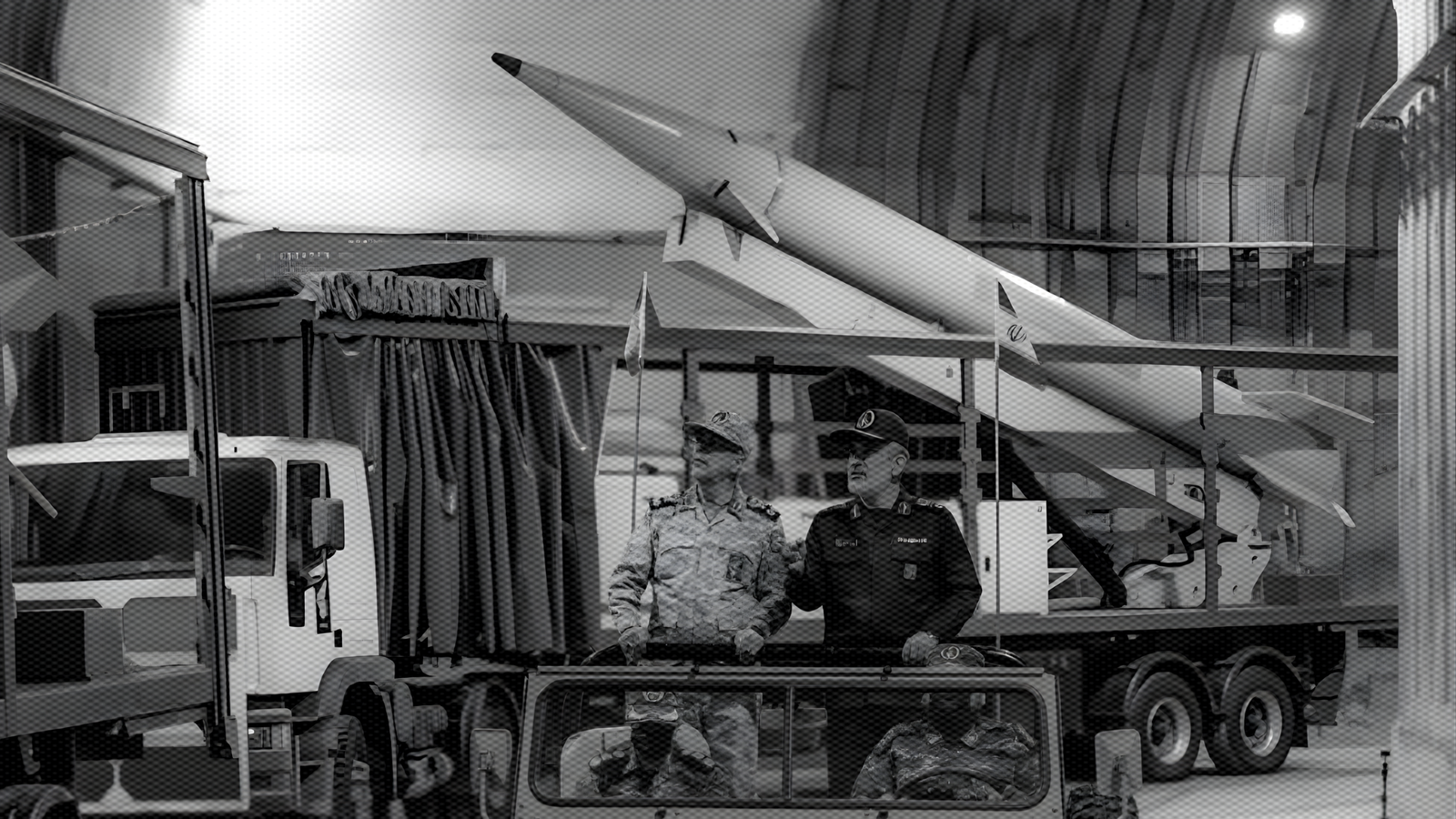
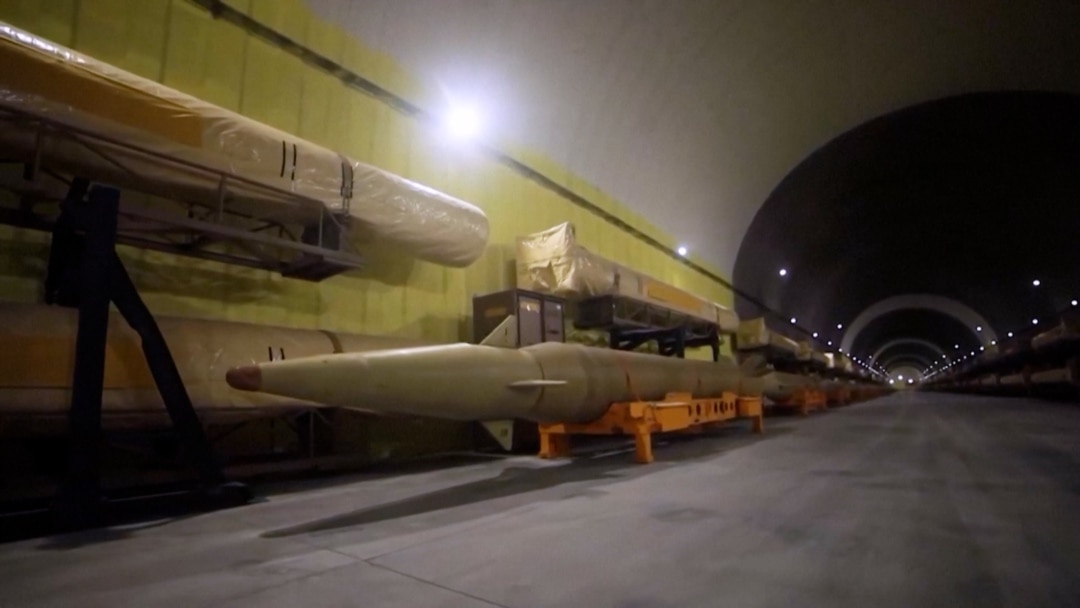
One of the most widely discussed components of Iran’s underground network is the system often referred to as “missile cities.” These are large underground bases designed to store and launch ballistic missiles.
Rather than a single bunker, a missile city is usually a complex network of tunnels and chambers. Inside these facilities, missiles can be stored, assembled, and prepared for launch. Transporter-erector-launchers move within the tunnels and can exit through concealed openings when needed.
From a strategic perspective, such facilities serve two purposes. First, they protect missile forces from pre-emptive strikes. Second, they ensure Iran retains retaliatory capability even if surface bases are hit.
Iran has occasionally released video footage from inside these installations, likely to demonstrate that these systems exist and remain operational.
How Deep Are Iran’s Underground Military Bases
Many of Iran’s most sensitive facilities are believed to be built deep underground, sometimes inside mountainous terrain. Depth varies by location, but in some cases installations are located beneath significant layers of rock and reinforced structures.
This depth provides protection against conventional air strikes and complicates targeting. Hardened construction, blast doors, and reinforced tunnels add additional resilience.
Facilities designed in this way are not invulnerable, but they are much harder to destroy quickly. Even when entrances or surface structures are damaged, the deeper sections may remain functional.
This principle has been used by several countries seeking to protect strategic assets from aerial attack.
How Missile Launchers Move Inside Iran’s Tunnel Networks
Mobility is a key feature of Iran’s underground system. Missiles are often paired with transporter-erector-launchers that allow them to move through tunnel networks and emerge from different exits.
For surveillance systems observing from space, this creates uncertainty. A satellite may detect the existence of a facility but cannot easily determine the exact location of a launcher at any given moment.
This combination of concealment and mobility complicates attempts to eliminate missile forces before they can be used.
Iran’s Underground Military Industry and Weapons Production
Iran’s subterranean infrastructure is believed to support more than storage and launch operations. Parts of the network may also connect to manufacturing and assembly activities tied to Iran’s missile and drone programs.
Over the years Iran has developed a domestic defense industry partly because sanctions limited access to foreign weapons systems. Protecting elements of that industry underground reduces the risk that a single strike could disrupt production entirely.
By dispersing facilities across multiple locations, the system gains redundancy. Damage to one site does not necessarily eliminate the broader capability.
Why Iran Built Nuclear Facilities Underground
Iran’s nuclear facilities also illustrate the logic behind underground construction. Sensitive activities at certain locations take place beneath layers of rock and reinforced materials. This design complicates attempts to destroy such facilities using conventional munitions. Even if surface structures are damaged, deeper halls may remain intact. The protective architecture is one reason why discussions about military options against such facilities often emphasize the difficulty of achieving quick results.
Why Stand-Off Weapons Struggle Against Deep Underground Targets
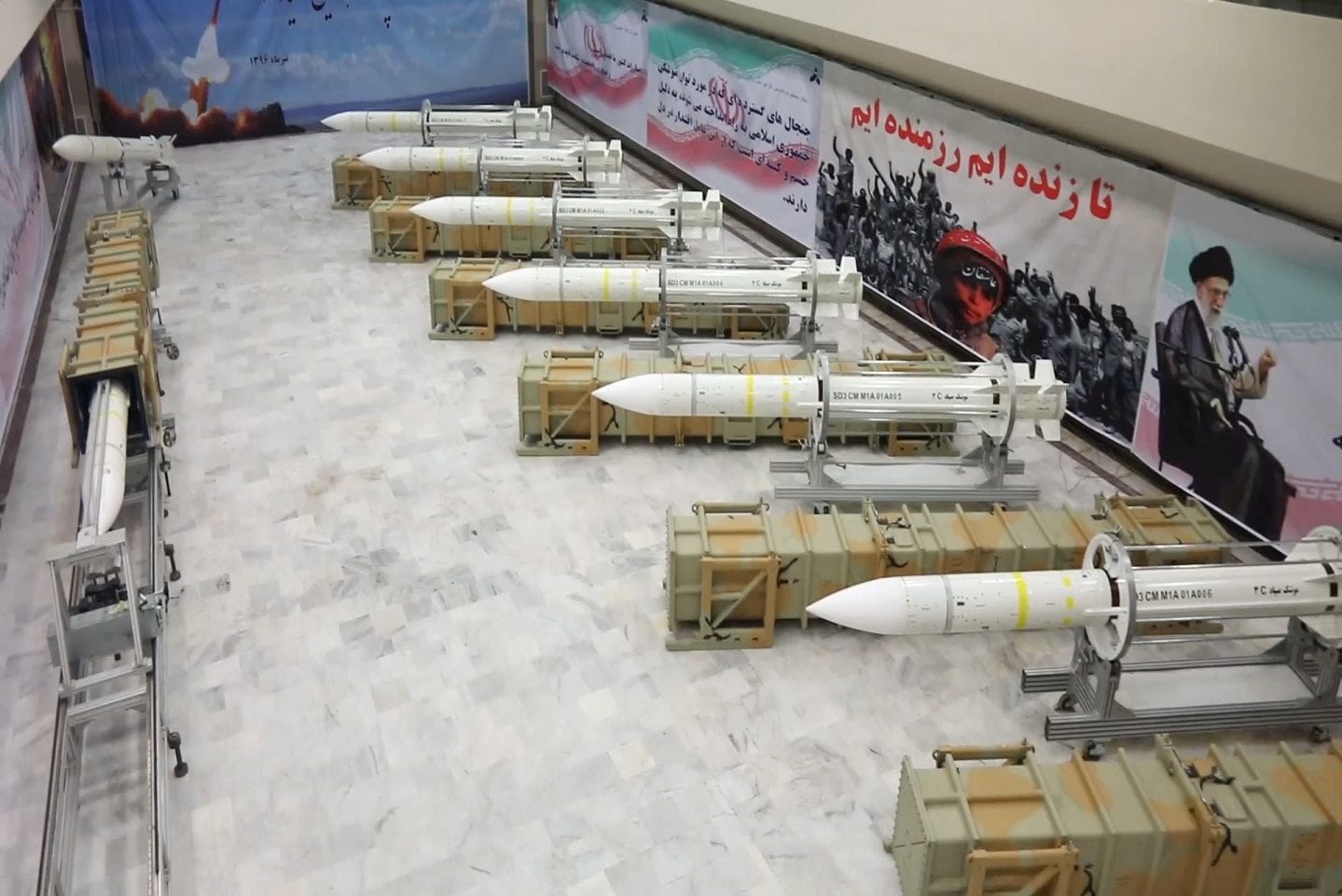
Stand-off weapons allow aircraft to launch missiles or precision bombs from distances outside heavy air defenses. They have become central to modern air campaigns because they reduce risk to pilots while maintaining accuracy. However, their effectiveness decreases when targets are deeply buried. Penetration depends on the design of the weapon, the material above the target, and the depth of the structure. Specialized bunker-penetrating weapons can break through reinforced surfaces, but even these have limits. Facilities buried inside mountains or very deep underground may remain beyond their reach. In many cases, strikes can damage entrances, power supplies, and support infrastructure without fully destroying the core of the installation.
How Iran Uses Geography to Protect Military Infrastructure
Iran’s geography also plays a role. Much of the country is mountainous, providing ideal locations for hidden facilities. Building inside rock formations offers natural shielding that adds to engineered protections.
For planners designing defensive systems, geography can become a force multiplier. It allows facilities to be concealed and hardened simultaneously.
This advantage has likely influenced where many underground sites have been constructed.
Why Dispersed Military Facilities Are Harder to Destroy
Another characteristic of Iran’s approach is dispersal. Rather than relying on a small number of major bases, infrastructure is believed to be spread across different regions.
Dispersal complicates military planning for any adversary. Neutralizing a single location does not eliminate the overall capability. Multiple sites would have to be located, monitored, and struck.
Even then, it is difficult to be certain that every critical facility has been identified.
Iran’s Military Strategy: Building Survivability Into Its Defense
Taken together, these elements form a system designed around a simple principle: survivability. The objective is to ensure that key capabilities remain intact long enough to influence the course of a conflict.
For Iran, this approach provides a form of deterrence. If potential adversaries know that military capabilities cannot be easily destroyed in a single strike, the calculations surrounding escalation become more complex.
Many countries have pursued similar strategies in different forms, particularly when facing stronger opponents.
What Iran’s Underground Bases Mean for Future Conflicts in West Asia
The existence of extensive underground infrastructure changes how military operations are planned. Air power can still play a decisive role, but it may not achieve immediate results against hardened and deeply buried targets.
Campaigns aimed at neutralizing such systems often require sustained pressure over time, combined with intelligence gathering and other forms of disruption. Even then, success is rarely guaranteed.
This reality contributes to the caution that often surrounds discussions about military options in the region.
Conclusion: Why Iran’s Underground Military Complex Matters
Iran’s underground military complex reflects years of preparation shaped by lessons from earlier conflicts. By moving key capabilities beneath the surface, dispersing them across the country, and integrating them into tunnel networks, Tehran has attempted to reduce vulnerability to conventional air strikes.
Stand-off weapons remain powerful tools and can damage important parts of this infrastructure. Yet the deeper sections of the system are inherently harder to eliminate quickly. As a result, any conflict involving such facilities would likely be more complicated and prolonged than initial strike campaigns might suggest.
Understanding this dynamic is essential for anyone trying to assess the strategic landscape of West Asia today.
Tags
- #air strikes vs underground facilities
- #bunker penetrating weapons
- #iran asymmetric warfare
- #iran asymmetric warfare doctrine
- #iran ballistic missile program
- #iran drone
- #iran israel conflict
- #Iran Israel conflict analysis
- #iran military strategy
- #iran missile attacks
- #iran missile cities
- #iran missile tunnels
- #iran underground military bases
- #iran underground missile tunnels explained
- #iran usa conflict
- #israel iran air strikes
- #middle east missile warfare
- #proxy warfare iran
- #stand off weapons limitations
- #u.s.–iran conflict
- #us iran conflict
- #us iran conflict analysis
- #US Iran conflict impact
- #us israel iran escalation
- #west asia military tensions
- #why air strikes may not destroy iran missile cities
Author