Department of Maritime Security · Research Papers · Maritime Security ·
Emerging Role of Unmanned Underwater Vehicles in Naval Surveillance in the Indian Ocean Region
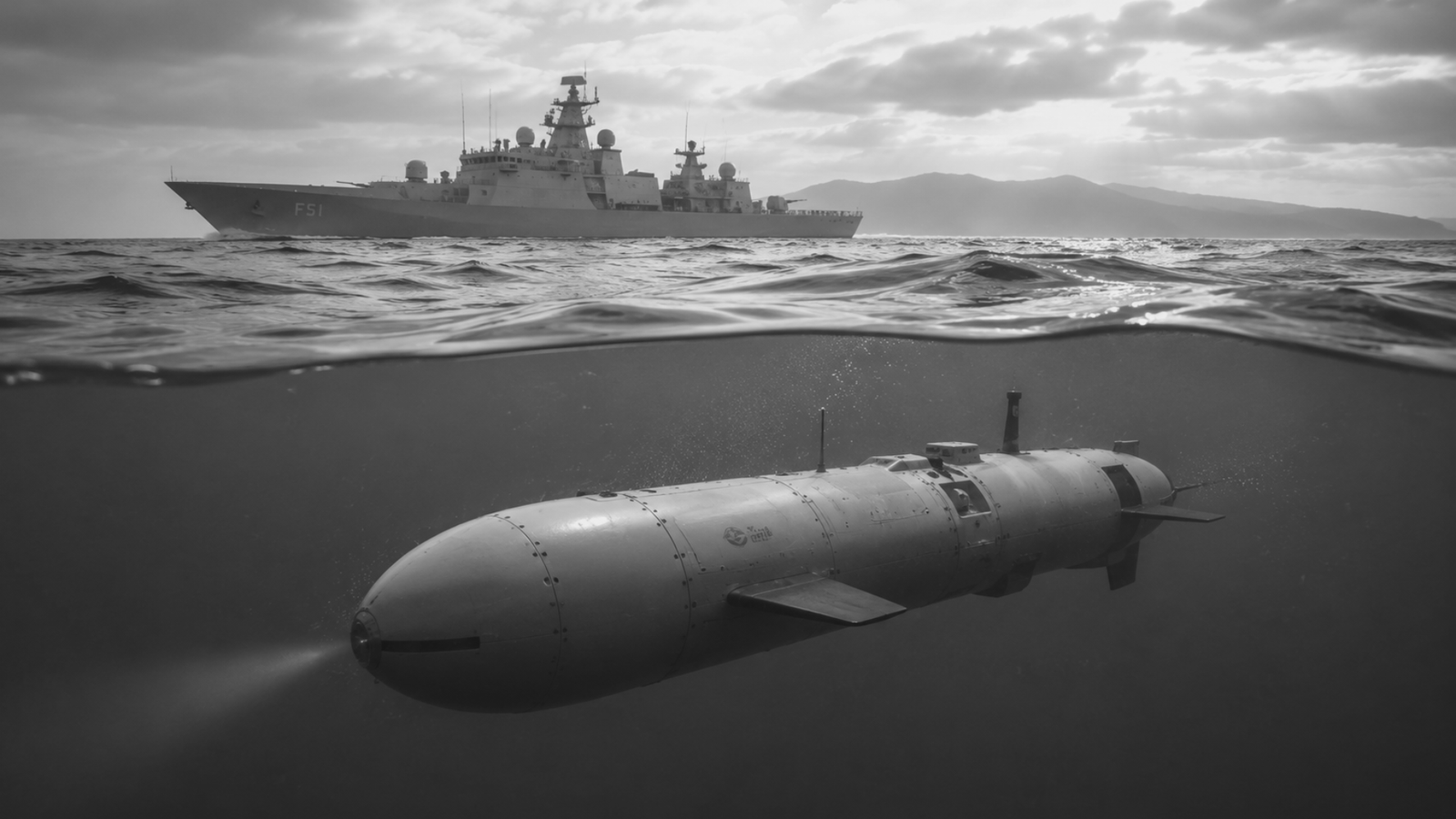
The IOR has been one of the important waterways in the world, owing to its relevance in international trade, transport of energy and regional security. The growth in the maritime traffic is also causing the growing demand in the efficient surveillance systems that can control the surface and underwater environment. Although still efficient, the traditional surveillance systems are limited in terms of cost, durability, and the ability to identify objects in the water. One of the solutions in this field is the use of Unmanned Underwater Vehicles (UUVs).
The present paper offers the evaluation of the role of UUVs in the Indian Ocean Region (IOR) naval surveillance, including the technological development of this technology, its operational application, and strategic importance. It analyzes the application of UUVs in the surveillance missions and the deployment of UUVs by other dominant powers (India, US, China and Australia) in the region. It also looks into the implications of the issues of wider security that would be created by competition and cooperation among nations using UUVs. The article explains the main gaps in existing research and argues that, while UUVs will improve surveillance, they will also create new concerns that need to be handled carefully. The paper concludes that UUVs will continue to play an important role in influencing maritime security in the IOR.
Introduction
The Indian Ocean Region (IOR) is the hub of maritime activity in the world. It links key economical hubs in Asia, Africa, and Middle East, and transports a significant part of the global trade including crucial energy supplies like oil and gas. Safety and security of this region is thus crucial not just to the countries of this region but also to the global economy.
Nonetheless, the region has a broad spectrum of problems. These are piracy, illegal fishing, smuggling, trafficking, and the rising military activity. Besides this, there are submarines and other underwater systems that have complicated surveillance (Bueger, 2015). Conventional ways like the naval boats, airplanes, and satellites are also good in monitoring the surface but are restricted in underwater monitoring.
Unmanned Underwater Vehicles (UUVs) have become a solution to these. Such systems have the ability to work under the surface over long durations, gather detailed information and perform missions without putting human lives at risk (Alharbi et al., 2023). Technological development in the maritime systems like UUVs is altering the manner in which the process of naval surveillance is being conducted in the Indian Ocean Region.
Regardless of this increased significance, there are a number of gaps in research. The existing literature focuses on the technical design and engineering aspect of UAVs, yet they do not focus on the strategic application of the UAVs in specific regions such as the Indian ocean (Patel, 2025). It also lacks comparative analysis of the usage of UUVs in different countries and its impact on the regional power dynamics. Also, the problem of governance, the legal framework, and the threat of conflict are often discussed in broad terms and do not imply a detailed analysis (Milledge et al., 2025). This paper attempts to fill these gaps through a synthesis of technical knowledge, regional and strategic analysis. It gives an in-depth perspective of the UUVs and their influence on the Indian Ocean Region naval surveillance.
Technological Development of Underwater Vehicles
The UUVs have been influenced by the sustained advances in various technology fields. Such developments have made UUVs a complex system that can be used to execute complicated missions than being just an experimental device.
One of the most important developments is in navigation systems. The initially developed UUVs could not be used underwater because GPS signals could not be utilized. New systems employ the strategy of a blend of inertial navigation, acoustic signals and seabed mapping to ascertain their position. This enables the UUVs to navigate along accurate routes and perform in harsh and challenging underwater settings (Bae & Hong, 2023).
Sensor technology is one more noteworthy field of development. UUVs have recently been fitted with sophisticated sonar systems which are able to locate objects at a great distance and provide detailed pictures of the ocean floor. The sensors play a very important role in surveillance activities, since these sensors enable UUVs to detect submarines, mines, and other seawater objects. Moreover, there are sensors on the environment that allow gathering information about the conditions in the water that can be utilized in military and scientific studies (Agnihotri, 2024).
There is also an improvement in energy systems. The early UUVs had a short battery life, thus limiting their range and mission time. Contemporary UUVs have a more efficient energy management system and battery, which enables them to work over a long time. There are even more advanced systems that are researching other forms of energy that can be used to extend more endurance.
Artificial intelligence has also been integrated into UUVs to increase their capabilities. Such systems are now able to handle data in missions and make decisions based on the varying conditions. E.g. a UUV is able to alter its path in the case of an obstacle or area of interest. Such a degree of autonomy minimizes the necessity of human control at all times and enhances the efficiency of missions.
Finally, the multi-modal tendency to integrate systems is becoming more and more popular, and UUVs are used alongside unmanned surface and aerial vehicles. This forms a network of systems that are able to exchange information and give a more comprehensive view of maritime activity (Wibisono et al., 2023).
Importance of the Indian Ocean Region
The Indian Ocean Region is geographically large as well as strategically important. It is a big transit route of international trade, as a considerable portion of the world shipping passes through its waters. The area contains the major maritime choke points that include the Strait of Hormuz and Strait of Malacca which are critical in the flow of energy supply (Parmar, 2013).
There is also the rising geopolitical rivalry in the region. India regards the Indian ocean as its sphere of influence and it has been focusing on its security. China has grown into the area to defend its trade routes and advance its overall strategic interests. To promote stability and the freedom of navigation, the United States is highly equipped with naval presence. Australia is one of the regional partners and this role is significant in ensuring security and cooperation (Thakur & Pal, 2025).
The magnitude of underwater surveillance grows with the increasing marine activity. Submarines and other underwater systems cannot be easily detected and hence it is of great concern to the naval forces. UUVs are a viable answer as they are able to maintain constant surveillance over the oceanic environments (Singh, 2016).
Role of UUVs in Naval Surveillance
The UUVs have brought in new capabilities which have greatly enhanced the naval surveillance. Persistent surveillance is one of their crucial functions. UUVs can spend a considerable amount of time in the water compared to the conventional systems, which will offer continuous monitoring of specific areas. This is especially applicable in those areas where twenty-four-hour monitoring is needed like in strategic choke points or in areas of high naval traffic (Wibisono et al., 2023).
Another important role is covert surveillance. UUVs are also silent and hard to notice and this enables them to collect information without raising the eyebrows of others. This enables them to be useful in intelligence collection and overseeing sensitive locations. UUVs are also significant in the data gathering and in the mapping of the environment. They can produce accurate maps of the seabed and monitor the changes. This information may be applied in navigation, planning and detection of abnormal behavior. Also, UUVs are utilised extensively during mine detection and clearance operations. Naval mines are a threat to both shipping and naval operations. UUVs have the capability of detecting and identifying mines safely without exposing human personnel to risks (Singh, 2016).
Use of UUVs in the Indian Ocean Region.
India
India has made gradual moves towards the development and deployment of Unmanned Underwater Vehicles as is aimed at enhancing its overall ability to build maritime security in the Indian Ocean Region. With such a long coastline and strategic position, India is confronted with the challenge of managing an extensive maritime zone which incorporates the lines of active shipping and the military-sensitive zones.
In response, India has been working on indigenous UUVs development, primarily by Defence Research and Development Organisation (DRDO) and other research centres. An example in point is the creation of Autonomous Underwater Vehicles like Neerakshi which has been utilised in underwater exploration and testing. Moreover, DRDO has also engaged in systems that are intended to detect mines, seabed mapping and port security (Joseph, 2023).
The Indian approach to the use of UUVs is mostly defensive and surveillance-based. Underwater domain awareness is enhanced using these systems and it refers to having a clear picture of the activities under the sea surface. This involves monitoring of movements under water, searching of unfamiliar objects and patrolling of sensitive points like ports and naval bases (Singh, 2016).
The other significant point in the strategy of India is its attempt to combine UUVs with other surveillance means, including coastal radar systems and satellite surveillance. This gives a clearer picture of the maritime activity. Another area that India is making efforts to enhance its collaboration with the regional partners is through collaborative exercises and information sharing (Panneerselvam, 2023).
The application of UUVs by India can be seen as indicative of its intentions to ensure that the waters around it are secure and that it is less reliant on foreign technology.
United States
The United States is a world pioneer in Unmanned Underwater Vehicles development and use. It has one of the best UUVs programmer in the world that is backed by good research, funding and working experience. The US Navy has created a diverse collection of UUVs including large platforms like Orca Extra-Large Unmanned Undersea Vehicle and medium sized platforms like Echo Ranger. These vehicles can carry out long missions lasting a few weeks and travel great distances without human control (Button et al., 2009).
The United States applies UUVs in the Indian Ocean Region in a number of ways. These are intelligence collection, seabed mapping, submarine action surveillance and sea lane security. Silent operation of UUVs enables them to be particularly effective in surveying the locations where their direct presence may lead to tension. Networked operations are one of the primary features of the US strategy. UUVs may be used with other unmanned systems, such as UAVs and surface vessels, in order to create a surveillance system. This enables improved data sharing and swiftness in responding to possible threats (Button et al., 2009).
Also important is the international cooperation of the United States. It is a close ally to other partners such as India and Australia and they exchange technology, conduct joint exercises and help in the development of regional security. This collaborative model enhances its power in the Indian Ocean in the process of fostering stability.
China
China has also succeeded in raising underwater technology, including the Unmanned Underwater Vehicles at a high rate. It is acting in a broader strategy to increase its presence and influence on the Indian Ocean Region. China has come up with a series of AUVs including the Qianlong series that are utilised in deep sea exploration and data gathering. Although these systems are usually introduced as scientific research, they can also be used in the military, especially in surveillance and intelligence collection (Liu et al., 2022).
Chinese UUVs have been reported to be used on different sections of the Indian Ocean, gathering information about the seabed conditions, water properties and the underwater geography (Sutton, 2020). Submarine operations and strategic planning can be used with this information. Consequently, the activities have given an alarm to other nations within the region.
The use of UUVs in China is a mix of scientific interest and strategic considerations. The collection of comprehensive data on the underwater will helps China to understand the area better as well as assist its naval activities (McKenzie, 2026).
The scale of the investment in China is another significant factor. The number of universities and research establishments working on UUVs development is very high, which means that it is a long-term investment in the development of this kind of technology. In general, many believe that the use of UUVs by China is a result of its attempt to increase its presence in the Indian Ocean which has security and balance of power consequences in the region.
Australia
Australia has been more collaborative and research oriented on the development and application of UUVs. Australia is facing a similar situation, as its maritime zone is rather big, and the navy is rather small in relation to the major powers, so it uses technology and alliances to improve its surveillance capacities.
Australia has also made investments in autonomous underwater systems to enhance surveillance of their surrounding waters and to support regional security. Notably, the Royal Australian Navy is developing the Extra Large Unmanned Underwater Vehicle known as Ghost Shark, which operates in the Indian Ocean Region. Such systems are applied within environmental monitoring, seabed mapping, and maritime activity surveillance systems (Panneerselvam, 2023).
An essential aspect of the Australian approach is that the country pays a lot of attention to the collaboration with its allies, specifically the United States and India. Australia plans to develop more sophisticated and combined unmanned systems by collaborating in projects and defence alliances.
Australia is participating to improve on the interoperability meaning that the different systems of different nations should be compatible to one another. This is significant to collective operations and information exchange (Prime Minister of Australia, 2023).
The UUVs deployed in the Indian Ocean Region help Australia to achieve its general aim of having a stable and secure sea-water environment rather than actual strategic rivalry.
Comparative Insight
The analysis of the countries shows that the purposes and plans of all the countries are significantly different, although they invest in UUVs technology and they are their long-term strategic plans.
India focuses on regional stability and autonomy and is trying to protect its coastal waters and its neighbors. The US is concerned about the international dimension and technological superiority, and UUVs are subordinated to the larger network of advanced systems. The strategy through which China explores scientifically and expands strategically has been raising concerns as to its long-term interest. Australia, in its turn, appreciates collaboration and stability, in which UUVs are implemented as the partners of facilitating alliances and security in the area.
These inconsistencies lead to a major conclusion that UUVs are not merely technological devices but also strategic and political tools as well. It is through their application that the way nations relate, compete, and cooperate in the Indian Ocean Region can be determined.
In the meantime, the increase in UUVs causes the escalation of the risk of confusion and friction. The operations of these systems are not necessarily transparent since they work in the underwater environment and are hard to be detected. It may develop distrust and uncertainty between nations.
UUVs implementation in Indian Ocean Region are also a representation of the complex of the security demand, the development of technology and strategic competition. On the one hand, they are clearly beneficial in improving surveillance, on the other hand, their growing use requires more deliberations, cooperation, and maybe the development of mutual rules to offer a stable environment in the region.
Strategic and Security Implications
There are many implications of the growing usage of UUVs on regional security. To begin with, UUVs increase the level of situational awareness that can help countries to detect and react to threats more competently. This increases defence and improves maritime security (Chen & Li, 2026).
Second, they add to strategic competition. As more nations are advancing more advanced UUVs, there is a threat of a sea arms race (Chen & Li, 2026).
Third, UUVs also create issues of covert operations and surveillance. Their capability of operating in contrary to gather intelligence information, but they also create a feeling of distrust among countries (Wu, Sun, & Yang, 2025).
Fourth, it has legal and regulatory issues. Existing universal regulations are not very explicit on the use of UUVs, particularly in shared waters (Chang, Zhang, & Wang, 2020).
Finally, UUVs are changing naval strategy. They are entering into integrated systems which integrate air, surface, and underwater capability resulting in new types of maritime operations (Kraska & Pedrozo, 2022).
Challenges and Limitations
In spite of their obvious benefits, Unmanned Underwater Vehicles have a number of critical technical and operational restrictions that influence their efficiency in naval surveillance. Underwater communication is one of the most important problems because the signals do not travel effectively through water, and real-time control is hard to make, and it is not always reliable (Wibisono et al., 2023). Consequently, the high degree of autonomy required in most UUVs will minimise the flexibility in missions. As well, the limitation of power is also a critical concern, as the majority of UUVs utilise batteries that restrict their operational scope and time. In spite of the fact that the development of energy systems is being improved, long-range missions that span large distances such as the Indian Ocean are yet to be supported. The cost of development and maintenance is also high and this limits the use of these systems, particularly to smaller or developing nations (Bennang, 2023).
In addition to technical concerns, there are other overarching issues of security, safety and regulation. UUVs work in difficult environments underwater where failure of the system, loss of communication or actual destruction always exists. Their ability to operate silently and remain unnoticed also raises concerns about misuse, especially when used to spy or disrupt underwater infrastructure (Khawaja et al., 2022). Meanwhile, the lack of explicit international legal regulations on the activities of UAVs brings ambiguity and makes the possibility of interstate conflicts more likely. All these questions lead to the fact that UUVs are a promising tool in the sphere of naval surveillance, but its further implementation will demand the further technological progress, potential regulation, and worldwide cooperation (Ruhal, 2024).
Conclusion
The use of Unmanned Underwater Vehicles is changing the naval surveillance in the Indian Ocean Region. They come in handy in the present maritime security due to their ability to operate independently, submerge over long periods of time and collect precise information.
As it has been demonstrated in this paper, UUVs are not mere technological advantages, but they are also strategic resources that affect the balance of power in the region. India, United States, China and Australia are some of the countries that are spending so much on these systems with their own intentions and priorities.
Nonetheless, there are also new challenges associated with the growing usage of UUVs. Communication, cost, and energy issues should be improved by addressing them to enhance their efficiency. What is more important is that the absence of international rules will lead to uncertainty and the possibility of conflict.
The research gap identified in this research paper shows that further studies on the strategic and regional implications of the UUV use are required. Research directions in the future are cooperation, governance, and the formulation of frameworks to make the use safe and responsible. To sum up, UUVs will be the key to the future of naval surveillance in the Indian Ocean Region. Not only the level of technology will define how they will be influential but how countries will manage and utilise them. They are capable of creating stability and security in their proper management. Otherwise, they can add competition and tension to an already complicated region.
References:
- Agnihotri, C. (2024). Naval drones: Force multipliers in maritime operations. Maritime India Report. https://maritimeindia.org/wp-content/uploads/2024/11/MP2024-Anuttama.pdf
- Alharbi, A., Alsubhi, K., Alzahrani, A., Alotaibi, S., & Alghamdi, M. (2023). A comprehensive survey on Internet of Things (IoT) security: Issues and solutions. Sensors, 23(17), 7321. https://doi.org/10.3390/s23177321
- Bae, I., & Hong, J. (2023). Survey on unmanned marine vehicles. Sensors. https://www.mdpi.com/1424-8220/23/10/4643
- Bennang, N. (2023, June). Issues and challenges of communication protocols in autonomous underwater vehicles: A literature review. ResearchGate. https://www.researchgate.net/publication/371540653_Issues_and_Challenges_of_Communication_Protocols_in_Autonomous_Underwater_Vehicles_A_Literature_Review
- Button, R. W., Kamp, J., Curtin, T. B., & Dryden, J. (2009). A survey of missions for unmanned undersea vehicles (Report No. MG-808-NAVY). RAND Corporation. https://apps.dtic.mil/sti/tr/pdf/ADA503362.pdf
- Bueger, C. (2015). Learning from piracy: Future challenges of maritime security governance. Global Affairs, 1(1). https://doi.org/10.1080/23340460.2015.960170
- Chang, Y. C., Zhang, C., & Wang, N. (2020). The international legal status of the unmanned maritime vehicles. Marine Policy, 113, 103830. https://doi.org/10.1016/j.marpol.2020.103830
- Chen, X., & Li, L. (2026). The implications of military unmanned maritime vehicles on the international maritime security order: From challenge to re balance. Frontiers in Political Science, 7, Article 1733407. https://www.frontiersin.org/journals/political-science/articles/10.3389/fpos.2025.1733407/full
- Joseph, B. S. (2023). Taking stock of India’s evolving unmanned undersea capabilities. The Diplomat. https://thediplomat.com/2023/08/taking-stock-of-indias-evolving-unmanned-undersea-capabilities/
- Khawaja, W., Semkin, V., Ratyal, N. I., Yaqoob, Q., Gul, J., & Guvenc, I. (2022). Threats from and countermeasures for unmanned aerial and underwater vehicles. Sensors, 22(10), Article 3896. https://doi.org/10.3390/s22103896
- Kraska, J., & Pedrozo, R. (2022). Unmanned maritime systems. Disruptive technology and the law of naval warfare. Oxford University Press. https://doi.org/10.1093/oso/9780197630181.003.0004
- Liu, K., Wang, H., Xu, X., Song, T., & Meng, Q. (2022). Development and trials of a novel deep-sea multi-joint autonomous underwater vehicle. Ocean Engineering. https://doi.org/10.1016/j.oceaneng.2022.112558
- Milledge, T. J., Pradhan, B., & Shukla, N. (2025). Integrating systems methodologies for Australian undersea surveillance: A systematic literature review. Systems Engineering. https://incose.onlinelibrary.wiley.com/doi/epdf/10.1002/sys.21806
- Panneerselvam, P. (2023). India and Australia: The need for strategic cooperation in underwater domain awareness. National Institute of Advanced Studies. http://eprints.nias.res.in/2653/1/AII_StrategicCoop_Brief.pdf
- Parmar, S. S. (2013). Maritime security in the Indian Ocean: A changing kaleidoscope. Journal of Defence Studies, 7(4). https://www.idsa.in/system/files/jds_7_4_SarabjeetSinghParmar.pdf
- Patel, S. (2025). A comprehensive review of unmanned underwater vehicles. https://jsiar.com/2025-June/JSIAR-J-25-06111.pdf
- Prime Minister of Australia. (2023, October 25). United States Australia Joint Leaders’ Statement — Building an innovation alliance. https://www.pm.gov.au/media/united-states-australia-joint-leaders-statement-building-innovation-alliance
- Ruhal, S. (2024). The evolving seascape of naval warfare: Unmanned underwater vehicles and the challenges for international law. Journal of Conflict and Security Law, 29(3), 349–374. https://doi.org/10.1093/jcsl/krae011
- Singh, A. (2016). Unmanned & autonomous vehicles and future maritime operations in littoral Asia (ORF Special Report). Observer Research Foundation. https://www.orfonline.org/public/uploads/posts/pdf/20240809112943.pdf
- Sutton, H. I. (2020, March 22). China deployed 12 underwater drones in Indian Ocean. Forbes. https://www.forbes.com/sites/hisutton/2020/03/22/china-deployed-underwater-drones-in-indian-ocean/
- Thakur, H. R., & Pal, R. (2025). India’s maritime security strategies in the Indian Ocean since 2014. National Research Journal of Human Resource Management, 12(2). https://www.nrjhrm.in/images/paper_pdffiles/IND-69427c84b671e.pdf
- Wibisono, A., Piran, M. J., Song, H. K., & Lee, B. M. (2023). A survey on unmanned underwater vehicles: Challenges, enabling technologies, and future research directions. Sensors, 23(17), 7321. https://doi.org/10.3390/s23177321
- Wu, W., Sun, Q., & Yang, H. (2025, December 5). The application of unmanned vehicle systems during the course of maritime law enforcement. Frontiers in Marine Science, 12, Article 1672951. https://www.frontiersin.org/journals/marine-science/articles/10.3389/fmars.2025.1672951/full
The views expressed are those of the authors and do not represent the views of CNAWS.
Image Source: ChatGPT
Tags
- #Autonomous Underwater Vehicles
- #Indian Ocean Region
- #Indo-Pacific Security
- #Indo-Pacific security strategy
- #Maritime Security
- #Naval Surveillance
- #Underwater Domain Awareness
- #Underwater Warfare
- #Unmanned Underwater Vehicles
Author
Kalpesh Bhagoji Khandekar
Kalpesh Bhagoji Khandekar is pursuing his Master’s degree in Defence and Strategic Studies at Rashtriya Raksha University and is currently in his final year. His research interests centre on the dynamics of drone warfare and the transformation of modern battlefields through unmanned systems. Kalpesh is keen on contributing to the study of air power, drone warfare, and strategic innovation in future warfare.