
Department of Strategic Foresight & Scenario Planning · Detailed Reports · Geopolitics ·
Tracking the People's Liberation Army (PLA): 06th - 11th July, 2026
Colonel KK Venkatraman (Retd.)
Dear Readers,
I have skipped two weeks of newsletter partly due to the ever widening backlog and my other commitments. My sincere apologies for the inconvenience. With this, I hope to streamline the publication of this newsletter and publish the newsletter for the week on the following Sunday. Besides being current, the publication on a Sunday morning will provide you, more time to read than on a week day.
Major happenings during the week were the test launch of Submarine Launched Ballistic Missile (SLBM), Sino-Russian Joint Exercise “Joint Sea-2026” and the National Science and Technology Award Conference. This newsletter covers them in detail.
Contrary to the perception that authoritarian regimes restrict the creativity of its people, last week’s PLA Daily had some interesting thoughts on changes in the nature and character of warfare. While these do not necessarily mean the ‘official’ stance of the PLA, it gives a fair overview of the diverse and original discussions happening within the PLA. You can read them under the ‘Combat Theory’ Section.
Go on. Happy reading.
Test Firing of SLBM
Test Firing of Submarine Launched Ballistic Missile (SLBM)
On 6 Jul 2026, an unidentified PLAN SSBN launched a SLBM from the South China Sea. The missile carried a training warhead and landed at the pre-determined spot in the Pacific Ocean. The missile was tracked during the initial stages of its 7000 km flight path by an AN/FPS-115 Pave Paws radar based in Taiwan. The Secretary General of Taiwan’s National Security Council in a X post, said that the missile was a JL-2 and shared its flight path. (PLA Daily. 7 Jul 2026. Page 1. PLAN successfully conducts Test Launch of SLBM(中国海军成功组织潜射战略导弹试射). Liberty Times. 08 Jul 2026. Joseph Wu identifies JL-2 missile and its trajectory by relying on intelligence from “Leshan Radar Station.”吳釗燮點出「巨浪-2」飛彈及路徑 靠的是「樂山大佛」第一手情資))
The last two tests of ICBMs with targets in the Pacific Ocean were conducted on 18 May 1980 and 25 Sep 2024, when China launched an DF-31/DF-41 missile from North-western desert /Hainan to the South Pacific. China’s SLBMs have been tested atleast four times since the initial test in 2018. The test comes in the backdrop of Australia’s defence treaties with Vanautu and Fiji and a day ahead of 36th NATO meet. While Taiwan announced it as a JL-2, it is possible that the missile was a JL-3 which was displayed during last year’s parade.
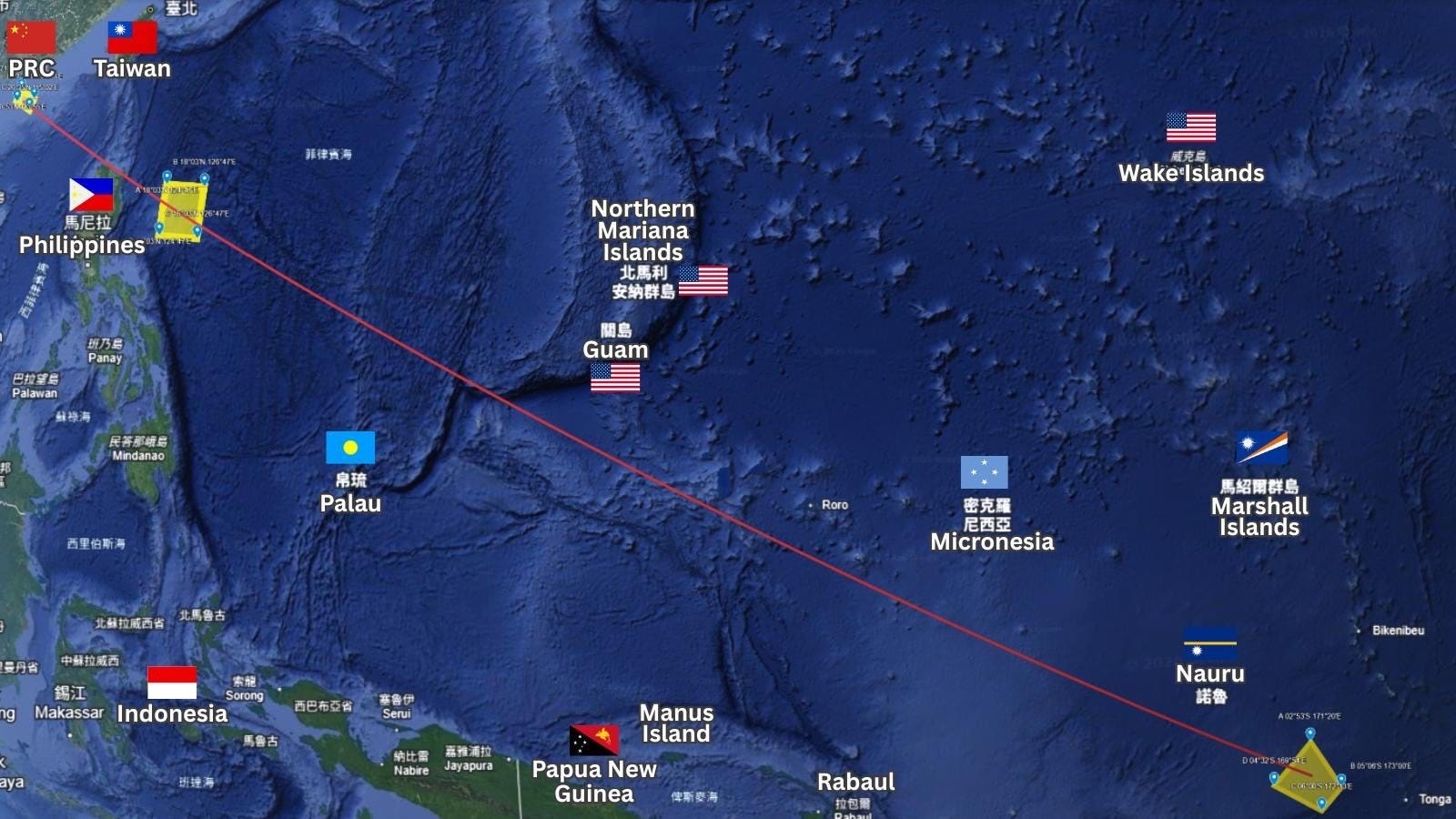
(Flight Path of SLBM. Image Source: https://x.com/josephwutw)
Combat Theory
Enhancing Resilience of Combat systems in AI-Era
Kong Rui, Zhang Wendou and Chen Xiaoqian call for structural, functional and temporal resilience by integration of AI-technologies coupled with integrated communication network architecture which reduces the vulnerability or overdependence on critical nodes, provides redundancy for weapon systems and a shift from physical ‘time and space’ to ‘ informational ‘time and space’. They believe that this will result in parallel and iterative processing of OODA cycle instead of a linear processing as was the case earlier. To achieve this, the authors call for a balance between speed and stability rather than purely ‘speed’ in decision making. The authors, finally call for evolutionary resilience by creating a closed-loop mechanism, capable of identifying problems, incorporating feedback, correcting deviations, and generating new capabilities. (PLA Daily. 07 Jul 2026. Page 7. Enhancing the Resilience of Combat Systems in the Era of Intelligentization (智能化条件下,如何增强作战体系韧性))
Are Heavy Weapons like tanks relevant in Conventional Warfare?
Zhang Hanxiao argues that while lightweight and low-cost weapon systems are increasingly playing a vital role in modern warfare, due to their flexible deployment, affordability, and rapid iteration capabilities, there is a need to leverage the capabilities of heavier weapons such as delivering high-intensity firepower and serving as critical nodes within the system. The author argues that both are not mutually exclusive and are complementary to each other. While heavy weapons provide critical destruction, strategic deterrence and systemic support, lightweight equipment expands the system’s operational reach and response speed, extends their operational range and enhances capabilities. To achieve this, he calls for evaluating the role and position of heavy equipment in the overall system, improving their core functions, optimising costs and rapid iteration. Calling heavy equipment as the load bearing pillars of the system, the author calls for offloading non-core functions to light weight equipment while focusing on strategic deterrence, long-range fire suppression, and neutralising critical system nodes. The overall aim is combat effectiveness, cost optimisation and keeping pace with trends towards application of AI in warfare. (PLA Daily. 07 Jul 2026. Page 7. Striving to excel amidst the trend towards Lightweight systems (在轻量化浪潮中“力争上游”)
Attrition in Asymmetric Warfare
Dong Zhixiao analyses the current cost attrition in Asymmetric Warfare where low cost assets (such as drones) are used to deplete high cost ones (such as radar systems). The author suggests that by assessing ‘cost-effectiveness’ ratio and improving the synergy between manned and unmanned systems, it is possible to achieve a decisiive advantage. This necessitates a national defence industry capable of metching war time requirements and redundant systems to ensure survivability and resilience. (PLA Daily. 9 Jul 2026. Page 7. How an “Ant Swallows an Elephant”(“蚂蚁吞象”是如何实现的))
Logistics in AI Era
Zeng Qingling calls upgrading the logistic support to meet the requirements of modern warfare. To achieve this, he calls for miniaturization, modularization, and portability of support units which can exploit a wider range of routes and transport methods, distributing the logistic loads to key nodes instead of bases and a bi-directional flow of information for real time monitoring. (PLA Daily. 07 Jul 2026. Page 7. Ensuring the unimpeded flow of Logistic “Capillaries”(畅通后勤保障“毛细血管”)
Intelligentization
Smart Analysis of Flight Data
A PLAAF (likely WTC) fighter unit has developed a Smart Flight Data Training Support System to analyse flight data. The pilots need to input the core parameters prior to the flight based on which the system automatically creates benchmarks for the flight. Once the aircraft lands, the system automatically generates a debrief, highlighting important achievements and shortcomings. The system also proactively assists pilots to identify safety hazards and mitigate flight risks and is under trials in multiple units. Apart from improving the quality of analysis, the system reduces workload on the pilots. (PLA Daily. 11 Jul 2026. Page 4. Flight Debriefings Gain “Smart Partner”(飞行复盘有了“数智搭档”))
Smart Analyser to improve Physical Fitness
A Rocket Force unit uses Smart Analyser to evaluate physical performance of individual personnel. The smart analyser uses facial-recognition, HD cameras and fitness bands to measure and evaluate physical performance and medical parameters and offers customised recommendations such as correcting posture and specific exercises for improvement. The article suggests that the equipment has improved physical standards and combat effectiveness and reduced training related injuries. (PLA Daily. 10 Jul 2026. page “Smart Brain” assists Troops to Strengthen themselves(“智慧大脑”助力官兵强身健体))
Infantry Tactics
Qian Fengjun calls for a paradigm change in Infantry Tactics by adopting swarm warfare principles such as individual autonomy, collective coordination, shared objectives, and dynamic aggregation/dispersion by leveraging smart terminals, unmanned platforms, and data link networks to achieve all-domain connectivity and executing distributed deployment, autonomous coordination, saturation attacks, and agile neutralization. (PLA Daily. 09 Jul 2026. Page 7. Forging a New Paradigm for Infantry Swarm Operations (打造步兵蜂群作战新范式))
Training
Joint Training between 74 Group Army Air Defence (AD) Brigade and PLAAF units
Chen Dianhong and Zheng Ye highlight the close integration of elements of 74 Group Army AD Bde and PLAAF units in the Gobi Desert and Guangdong during exercises conducted in this summer. To achieve ‘system of systems’ confrontation, the brigade coordinated the deployment of entire battalions at multiple locations including the Gobi Desert and partnered with Air Force units to pioneer a “multi-point deployment, cross-domain joint training” approach, and shifted training and combat readiness efforts to joint training across multiple domains. Target acquisition data was shared in real time between ground based radar with both ground based weapons systems and fighter aircraft and ‘enemy’ targets were destroyed. Similarly, in the coastal areas, the brigade was able to offset the limitations of ground based radars with data from PLAAF aircraft and achieve complete coverage of land, sea and air. Similar exercise was conducted in Guangdong East and the comments of the brigade commander suggests that this is part of the long term mechanism. (PLA Daily. 5 July 2026. Page 4. System-of-Systems Training conducted across three locations during Exercises(一场野外驻训 三地体系练兵))
The PLA has been endeavouring to achieve ‘system of systems’ confrontation for long. The exercise also validates the ‘plug and fight’ concept as part of the ‘System of Systems’ confrontation. A point of interest is that battalions of 74 Group Army AD brigade have an operational role in the Gobi Desert which is part of the AOR of Western Theatre Command(WTC), while 74 Group Army forms part of Southern Theatre Command(STC). While the progress is commendable, it also reflects on the quality of staff work(or rather the lack thereof) at the theatre levels (STC and WTC) forcing units to coordinate on their own.
Takeaways from Information Support Force Exercise
An after action discussion of PLA Information Support Force exercise provides some interesting techniques adopted and challenges faced by operators of Information Support Force during exercises. First is the conduct of two sided exercises including penetration of networks, diversion of attacks to quarantined zones. Second the after action review meeting discussed between playing safe by sticking to ‘approved’ techniques and exploring unauthorised techniques based on the demands of the situation and risking admonition/downgradation of status. To change the status quo, the unit created a 16 point checklist clearly defining scope for trial and error, distinguishing between combat-oriented experimentation and actual negligence, and adopting unified standards to address the concerns of operators. Adoption of the checklist has encouraged operators to experiment, creat and refine techniques for cyber warfare including central monitoring of networks. The checklist has now been expanded to 20. (PLA Daily. 07 Jul 2026. Page 5. What Did the 20-Point “Training Fault-Tolerance Checklist” Unlock? (20条“训练容错清单”激活了什么)
High Altitude Night Live Firing Exercise by Aviation Helicopters
Helicopters of 85 Army Aviation Brigade (Tibet MD), operated from a 4500 metre high Forward Operating Base and carried out night firing in High Altitude. Braving turbulence, rain and mist, the helicopters used six types of munitions which included missile firing to target ‘enemy’ command posts. The exercise also validated night time training of maintenance and ground support crew. (PLA Daily. 7 Jul 2026. Page 5. Thunderbolts pierce Cold Night; Trajectories illuminate snow capped peaks (霹雳惊寒夜 弹道映雪山))
The accompanying picture suggests that the helicopters included WZ-10 attack helicopters. Operating them from a forward operating base located above 4500m altitude at night is a progressive and essential capability of PLA Army Aviation. This would enable the PLA to cover maximum, if not all, Indian Army deployments in High Altitude.
SAR Exercise by 76 Group Army Aviation Brigade
The 76 Group Army Aviation Brigade organised a Search and Rescue (SAR) exercise recently. The helicopters adopted ‘grid based zoning’ and ‘diagonal sweeping patterns’ to cover the area. While electro-optical payloads transmitted imageries in real time to the command centre, commanders guided the helicopters progressively to a narrow area. Subsequently, the ‘victims’ were located, provide first aid and winched aboard. At the base, medical personnel on standby, received the ‘victims’ and transported them to the hospital. The brigade representative informed that SAR is one of the tasks regularly performed by the brigade. (PLA Daily. 09 Jul 2026. Page 5. Air-ground coordination opens up “lifeline.”(空地协同打通“生命通道”))
Growing Importance of Joint Tactical Controllers
An article on an exercise of 73 Group Army highlights the growing importance of Joint Tactical Controllers (战术引导员/联合战术引导员) in joint operations. Apart from being well versed with the operational situation, tactical controllers are expcted to be aware of all types of fire support. In this particular case, the Tactical Controller called for fire support from naval guns. (PLA Daily. 09 Jul 2026. Page 5. Sharpening the Eyes That Scan the Battlefield (擦亮洞察战场的双眸))
PLA’s Eastern Theatre Command has been experimenting with tactical controllers since 2021. This included agreement between 72 Group Army & Nanjing Campus of PLA Artillery & Air Defence Academy and nearby civil institutions to work out the requirements of JTACs. Going by this article, the concept is still evolving. There is also a likelihood that developments in one unit/formation are not being shared across the PLA, resulting in reinventing the wheel.
PLAAF
Merger of two PLAAF transportation Units of CTC
A PLA Daily article covers the experiences of a maintenance squadron of Central Theatre Command(CTC) which was creating by merging two squadrons located at the same base. The challenges included different work cultures, indifference from a few veterans and anxiety about future career prospects. The squadron overcame these challenges, developed innovations to overcome maintenance challenges and created a mentor-mentee system and stood first at the brigade level competition. The Political Instructor’s interview suggests that few challenges remain such as the need for greater coordination and career development of individuals. (PLA Daily. 6 July 2026. Page 5. Decoding the “Integration Code” of a New Squadron (解析一个新中队的“融合密码”))
Judging by the pictures in the article, the units were previously maintaining Y-7 and Y-8 aircraft. It is likely that the maintenance squadron belongs to the 13 Transport Division. While the current configuration of the transport unit is not known, it is likely that the maintenance squadron maintains the same types of aircraft albeit with a reduced strength.
Science & Technology
11th National Congress of the China Association of Science and Technology
The National Science and Technology Award Conference, the general assemblies of the members of Chinese Academy of Sciences (CAS) and Chinese Academy of Engineering (CAE), and the 11th National Congress of of the China Association of Sceince and Technology, were held at Beijing on 08 Jul 2026. In his address President Xi Jinping called for achiveing scientific breakthroughs, greater application of S&T Developments, development of human resources, improving the efficiency of innovation, cost efficiency and ensuring governance and ethics. Chen Liquan and Ben De were awarded the 2025 National Highest Science and Technology Award. Chen Liquan is from the China Academy of Sciences and was awarded for his pioneering work on Lithium batteries. Ben De from the 14th Institute of China Electronics Technology Group, was awarded for his work on Airborne Pulse Doppler radar, Phased Array radar and Sky based surveillance radar. Ye Cong, Chief Designer of "Fendouzhe" deep sea manned submersible was the winner of the special prize of the National Science and Technology Progress Award. A total of 9 First Class and 236 Second class awards were awarded during the event. (PLA Daily. 09 Jul 2026. Page 1. Decision of the CPC Central Committee and State Council on the 2025 National Science and Technology Awards 中共中央国务院关于2025年度国家科学技术奖励的决定))
Space
Successful Recovery of Reusable First stage of Long March-10
China successfully recovered the first stage of a Long March 10B rocket, becoming the second country to successfully recover a rocket for reuse. The rocket was launched from Hainan Commercial Space Launch Centre on 10 Jul 2026. Six minutes after separation, the first stage successfully landed on a sea-based platform where it was captured using a net. The Long March 10B can launch a payload of 16 tons to the Low Earth Orbit (LEO) and will help reduce the overall cost of launching payload. The mission also successfully validated a number of technologies such as optimising the overall configuration and multiple restarts and high altitude ignition (PLA Daily. 11 Jul 2026. Page 3. Long March-10 rocket will enhance Nation’s Space Access capabilities.长征十号系列运载火箭将加快提升我国进出空间能力)
China has filed plans with the ITU for launching more than 2,00,000 satellites to the LEO. This necessitates mass production of rockets and satellites at a cheaper cost and reusing components to the maximum extent possible. The Long March 10 B is expected to become the work horse for the forthcoming decade.
Launch of Qianfan Satellites
A Long March 6 launched from Taiyuan Satellitle Launch Centre placed 13th set of Qianfan satellites into the Polar orbit in the polar orbit on 4 Jul 2026. (PLA Daily. 05 July 2026. Page 3. 13th set of Qianfan polar orbit satellites successfully launched (我国成功发射千帆极轨13组卫星))
The Qianfan satellite constellation are the Chinese quivalent of Starlink satellites and are intended to provide satellite internet services from the Low Earth Orbit. They will comprise of 15,000 satellites of which 1,296 satellites are to be launched in Phase 1. A total of 218 satellites have been placed in orbit so far.
International Cooperation
Sino-Russian Exercise ‘Joint Sea 2026’
China and Russia conducted joint exercise ‘Joint Sea 2026 in the Yellow Sea from 06 to 13 Jul 2026. The exercise focused on submarine rescue, surface strikes, air defense and anti-missile operations. Apart from Russian and Chinese submarines operating together, media coverage highlighted joint reconnaissance and early warning, command coordination, and firepower strikes and sharing of air target acquisition data, suggesting a high degree of interoperability. Both sides established a three-tier air-defense and anti-missile network, with long range cover provided by the Chinese, medium range by the Russians and close-in-weapon systems of the respective ships. An interview by Rear Admiral Sergei Sinko prior to the commencement of the exercise suggested that unmanned and counter-unmanned systems formed a significant part of the exercise.
Participating ships included Slava-class cruiser Varyag, the Steregushchy-class corvette Rezkiy, improved Kilo-II class submarine Ufa and the Search and Rescue vessel Igor Belousov from the Russian side and Type 55 Destroyer Anshan, Type 52D destroyer Kaifeng, Type 054A guided-missile frigate Wuhu (Hull 539), diesel-electric submarine type "Yun", Type 903A comprehensive replenishment ship Kekexilihu, Type 926 submarine support ship Yangchenghu and Type 39B submarine Yun from the Chinese side. On termination of exercise, both sides will carry out a joint patrol in the Pacific. (Tass. 06 Jul 2026. Rear Admiral Sinko: Use of Unmanned System will be a feature of the Russia-China Exercise(Контр-адмирал Синько: применение БПЛА станет особенностью учений РФ и КНР). PLA Daily. 11 Jul 2026. Page 3. Join hands to forge “defense” of Seas and Sky (携手锻造海天“防线”))
4th China-ASEAN Defence Thinktank Exchange
The 4th China-ASEAN Defence Thinktank Exchange was held at Kunming from 8 to 10 Jul 2026. The Exchange themed “Practicing the Asian Security Model: China and ASEAN jointly respond to a Changing World” was attended by 150 defence officials and scholars from China and ASEAN. The conference included discussions on themes such as “Building a Community of Maritime Security and Ocean Destiny", "Enhancing Strategic Mutual Trust with Pragmatic Cooperation" and "Future-oriented Defense Security Cooperation". (PLA Daily. 10 July Page 4. 4th China-ASEAN Defense Think-Tank Exchange Opens(第四届中国—东盟防务智库交流活动开幕). 11 Jul 2026. Page 3. Practicing the Asian Security Model: China and ASEAN jointly respond to a Changing World (践行亚洲安全模式 合力应对共同挑战))
Visit of PLAN Ships Qi Jiguang and Kunlunshan to Vietnam
PLAN Type 680 training ship Qi Jiguang (Hull No 83) and Type 71 amphibious transport ship Kunlunshan (Hull No 998) arrived at Ho Chi Minh city on 05 July 2026 on a four day visit. After departing port, the task force carried out joint maritime training with the Vietnam People's Navy on formation maneuvering, communication drills, and maritime etiquette. (PLA Daily. 6 July 2026. Page 4. PLAN task force led by Ship 83 arrived in Vietnam for a friendly visit (我海军83舰编队抵达越南进行友好访问)
Handing Over of Military Equipment to Mongolia
On 6 Jul 2026, China handed over military equipment to Mongolia, at the latter’s capital Ulan Bator. Going by the pictures in open source media, the equipment handed over comprises one light vehicle, 10 minibuses and nearly 30 buses, which will help improve operations and transport of units. (People’s Daily. 07 Jul 2026. Page 3. Handover Ceremony Held for Chinese Military Vehicles and Equipment Provided to Mongolia (中国援蒙古国军队车辆装备交接仪式举行))
Health
Hyperbaric Chambers in High Altitude
A PLA Daily article suggests that providing systematic Hyperbaric Oxygen* therapy to personnel prior to their deployment in high-altitude regions can boost antioxidant enzyme activity and improve hypoxia tolerance, alleviating potential symptoms such as headaches and breathing difficulties upon induction in High Altitude. The article also suggests that providing periodic intermittent HBO interventions (at approximately 2 atmospheres of pressure) to troops deployed for longer periods in high altitude areas, can accelerate metabolism, relieve muscular and neurological fatigue, and shorten recovery times after training, thus allowing the body to recover quickly. In the long term, it suggests intelligent, precision oxygen-control technology to utilise hyperbaric oxygen to treat critical illness and safeguard health of service personnel. (PLA Daily. 5 Jul 2026. Page 7. An Overview of Hyperbaric Oxygen Therapy(高压氧疗面面观))
*Hyperbaric chambers employ higher atmospheric pressures (2 to 3 times) than normal atmospheric pressure in plains.
The Indian Armed Forces use HAPO bags which work on the same concept, though their use is restricted to providing First Aid for High Altitude Pulmonary Oedema(HAPO). The PLA article suggests their employment both during acclimatisation and deployment as a normal course. It must be kept in mind that PLA troops are deployed for much longer periods as they are permanently posted to units in High altitude and are not turned over except in rare cases.
Miscellaneous
PLAN Accident
A PLA Navy helicopter belonging to the Southern Theatre Command is likely to have crashed in Hainan on 10 Jul 2026, resulting in the deaths of two of its crew. Other reports suggests that there was a third crew member, whose status is unknown. There was no official confirmation of the same. The unit (91911) operates Z-8 and Z-9 helicopters with specialised roles. (SCMP. 10 Jul 2026. 2 Chinese military naval pilots killed during PLA frontline training exercises).
Barracks
Operational Security
PLA Daily articles often use anecdotes/stories to sensitise all ranks across the Army on issues of concern. One such article cautions soldiers against feeding ‘sensitive’ data such as Army’s physical standards into AI-platforms and asking for solutions. Instead it recommends that generic queries about such as how to improve breathing rhythm while running and how to improve. The detachment has circulated checklists for soldiers to vet before feeding the data to AI based platforms. (PLA Daily. 11 Jun 2026. Page 6. Don’t Let “AI Assistants” become a source of Information Leak(莫让“AI帮手”成泄密缺口))
That is all for this week, folks. See you again next week.
Tags
- #AI warfare
- #China
- #China defence analysis
- #China military
- #china space technology
- #PLA
- #PLA Daily
- #Tracking the People's Liberation Army (PLA)
Author
Colonel KK Venkatraman (Retd.)
Colonel KK Venkatraman (Retired) was commissioned in the Indian Army in December 1997. An alumnus of the Defence Services Staff College, Wellington, he has served extensively in Counter Terrorist Operations in Jammu and Kashmir, Counter Insurgency Operations in Assam and along the Line of Actual Control in the Eastern Theatre. He has served in General Staff appointments in the Eastern, Central and Northern theatres. While in service, the author was part of an in-service Study Group on “Teachings of Sun Tzu and its impact on Modern Day Polity, Society and Psyche” which piqued his life-long interest in China Studies. He holds an MPhil in Defence and Strategic Studies from Punjabi University, Patiala. His MPhil dissertation entitled, “International Dynamics of China’s Belt and Road Initiative (BRI): An Analytical Study”, analyses the BRI and its impact at the global, regional and national levels. He is currently pursuing his PhD in International Affairs at OP Jindal Global University, Sonepat, where he is working on China’s Holistic Approach to National Security. Previously, he was Research Fellow at Institute of Chinese Studies, New Delhi where he researched on ‘Application of Artificial Intelligence by PLA and its Implications on Warfighting’. The officer was NASC Fellow (Non-Resident) of 2023 and 2024 cohorts at The Takshashila Institution, Bengaluru where he researched on the PLA’s Western Theatre Command and the PLA Army Aviation respectively. He is a mentor at Atma Nirbhar Soch, independent think tank on Strategic Studies, and has delivered guest lectures at Takshashila Institution, Bengaluru and Delhi University. His weekly newsletter titled, “Tracking the PLA” covers happenings in the People’s Liberation Army of China.