Department of Hybrid Warfare & Irregular Conflict · Detailed Reports · Terrorism and Militancy ·
Pakistan’s Gendered Proxy Strategy: Assessing the Women’s Wings of LeT and JeM
Introduction
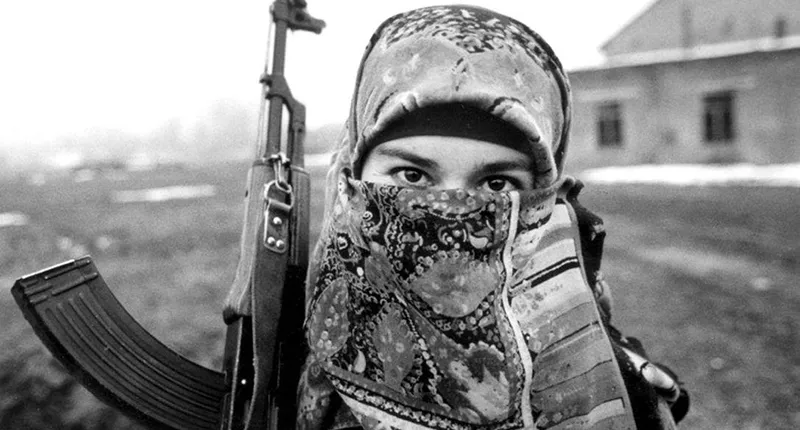
Operation Sindoor and its aftermath have precipitated a notable recalibration within Pakistan-based militant networks that operate in and around Jammu and Kashmir. What began as a series of kinetic strikes against training hubs and command nodes has, according to open-source reporting, been followed by a visible organisational response. That response takes the form of deliberate attempts to broaden recruitment bases and to normalise female participation through political covers, social welfare activity, doctrinal courses and district level chapters. This development requires a careful reassessment of prevailing assumptions about gender and militancy in South Asia.
This paper brings together scholarly literature, comparative case studies and fresh OSINT to examine the evolving role of women in terrorism with special emphasis on post-Sindoor dynamics. It situates the recent emergence of women’s wings within a broader global continuum that includes the LTTE, PKK, ISIS and Boko Haram. It then assesses the historical baseline in Jammu and Kashmir where female participation has been largely auxiliary and symbolic rather than militarised. Building on the data collected through open source on LeT and JeM initiatives, the paper analyses organisation, doctrinal framing, training modalities and likely operational pathways for female recruits. The goal is to provide a policy relevant synthesis that clarifies risks, identifies indicators to monitor and offers practicable recommendations for intelligence, law enforcement and community actors. The analysis relies on systematic open-source collection, event chronology, and targeted interrogation of propaganda, audio and venue level evidence gathered during October 2025.
Comparative Cases: Learning from Global Precedents
Global precedents demonstrate that the inclusion of women in terrorist organisations can serve multiple strategic functions, particularly when groups face leadership decapitation or recruitment crises.
LTTE (Liberation Tigers of Tamil Eelam), Sri Lanka
The LTTE’s use of women represents one of the most systematic and institutionalised examples of female participation in a modern insurgency. Founded in 1976 under Velupillai Prabhakaran, the LTTE’s separatist movement for Tamil Eelam incorporated women not as auxiliaries but as a formal component of its fighting force.
By the late 1980s, the LTTE had established the Women’s Front of the Liberation Tigers of Tamil Eelam and the Women’s Wing of the Sea Tigers, effectively embedding women into its military command structure. Field studies indicate that female fighters constituted between 20 and 30 percent of LTTE combatants at the height of the conflict. Women underwent the same rigorous training as men, including weapons handling, explosives, and guerrilla tactics, and were deployed in frontline combat, reconnaissance, and suicide missions.
Notably, the LTTE’s Black Tiger suicide unit included several women who carried out high-profile attacks, including the 1991 assassination of former Indian Prime Minister Rajiv Gandhi by Thenmozhi Rajaratnam (Dhanu). This incident marked one of the earliest globally recognised instances of a female suicide bomber.
The LTTE’s decision to recruit women was both ideological and pragmatic. Years of attrition and population loss in Tamil regions made women an indispensable resource for sustaining manpower. The movement also exploited the symbolism of female sacrifice, presenting women as embodiments of purity, discipline, and revolutionary virtue. Female combatants were portrayed in propaganda as “Tigresses,” valorised for transcending traditional gender roles in pursuit of Tamil liberation.
This institutionalisation of female militancy created what scholars call a “militarised feminism.” It allowed women to gain agency within the rigid framework of war while simultaneously serving the LTTE’s authoritarian ends. The LTTE model demonstrates how insurgent organisations can normalise female combat roles when ideological commitment and operational necessity align.
Islamic State (ISIS) and Al-Qa‘ida Affiliates, Iraq & Syria
The Islamic State (ISIS) and related Al-Qa‘ida networks represent the most globally documented instance of gendered jihad. While early jihadist movements such as Al-Qa‘ida restricted women to support roles, ISIS institutionalised a gendered governance system within its wilayats or provinces, giving women defined roles in administration, recruitment, and moral policing.
A study published in Perspectives on Terrorism notes that ISIS established the al-Khansaa Brigade, an all-female morality police unit that patrolled markets, monitored dress codes, and enforced Sharia regulations. Beyond governance, women were central to ISIS propaganda. Online magazines like Dabiq and Rumiyah frequently featured female narratives that extolled martyrdom, domestic jihad, and motherhood as sacred duties.
ISIS also used women in operational capacities, especially as couriers, recruiters of foreign fighters, and sometimes as suicide attackers in Iraq and Syria after 2016. Many women joined ISIS through voluntary ideological alignment rather than coercion, often viewing participation as a spiritual or social duty. However, once embedded, they faced systematic control, forced marriage, and sexual slavery, particularly non-Muslim captives such as Yazidis.
The ISIS model illustrates how terrorist organisations can adapt patriarchal ideology to justify female participation without violating their doctrinal logic. Women were not portrayed as equal warriors but as custodians of the caliphate whose participation strengthened the state’s moral order. This gendered governance paradigm continues to influence jihadist recruitment worldwide, including in South Asia.
Chechen insurgents, North Caucasus
The Chechen insurgency in the North Caucasus during the 1990s and 2000s introduced the phenomenon of the Black Widows, female suicide attackers motivated by vengeance and religious ideology. Many were widows or relatives of men killed by Russian forces.
These women executed high-impact attacks, including the 2002 Moscow theatre siege and the 2004 Beslan school massacre. Their operations achieved massive media attention and instilled psychological fear far beyond their tactical scope.
Unlike ISIS or the LTTE, Chechen female militants were not integrated into formal brigades but mobilised symbolically. Their personal grief was transformed into political weaponry. The term Black Widow, coined by Russian media, encapsulated the fusion of victimhood and vengeance that made these women powerful propaganda tools.
Scholars note that the Chechen case illustrates revenge-based recruitment, where personal trauma is reframed as collective jihad. The symbolic capital of maternal grief and sacrifice became a recruitment motif that transcended individual agency. For extremist movements, such imagery generates both sympathy and terror, a potent dual effect.
Boko Haram, Nigeria
Boko Haram’s evolution demonstrates another model: the weaponisation of women. Initially, women and girls were abducted and subjected to sexual slavery and forced marriage. However, as the Nigerian military intensified operations, Boko Haram began coercively using women as suicide bombers and messengers.
According to Human Rights Watch, between 2014 and 2017 Boko Haram deployed more than 200 women and girls in suicide missions across Nigeria, Niger, and Cameroon. The tactic leveraged gender-based security assumptions because female bombers attracted less suspicion at checkpoints and markets, dramatically increasing operational success rates.
Beyond tactical utility, Boko Haram’s use of women served psychological warfare. It shocked communities, eroded moral boundaries, and conveyed total ideological control over women’s bodies. The group justified these acts by reframing coercion as religious duty.
Boko Haram’s case highlights how groups under military pressure can rapidly repurpose gender dynamics for survival, turning victims into instruments of violence. It also demonstrates how forced recruitment and gender-based violence can coexist with operational rationality within extremist ecosystems.
PKK (Kurdistan Workers’ Party)
The PKK’s trajectory offers a contrasting model of ideological empowerment of women. Founded in 1978, the Kurdistan Workers’ Party gradually integrated gender equality into its revolutionary doctrine under Abdullah Öcalan’s belief that “the liberation of Kurdistan is inseparable from the liberation of women.” By the early 1990s, Kurdish women began joining the organisation in significant numbers, not as auxiliaries but as combatants and commanders. The PKK institutionalised this participation through all-female units such as the Free Women’s Units (YJA-STAR) and later, its Syrian affiliate’s Women’s Protection Units (YPJ). Unlike Boko Haram’s coercive approach, the PKK framed women’s involvement as voluntary emancipation, a rejection of patriarchal oppression and an assertion of political agency. Female fighters became both symbols of social revolution and instruments of legitimacy, projecting the movement as progressive in contrast to conservative regional regimes. The PKK example demonstrates how integrating women can expand recruitment, enhance ideological coherence, and rebrand an insurgency’s image, a lesson increasingly emulated by other militant groups seeking to fuse gender narratives with operational strategy.
Maoist and Naxalite Insurgencies, India
India’s own Maoist insurgency provides a compelling domestic precedent for women’s structural integration in insurgent movements. Research by the Strategic and Policy Research Foundation (SPRF) highlights that women comprise between 30 and 40 percent of active cadres in certain Naxal-affected districts such as Bastar, Gadchiroli, and Sukma.
Women in Maoist movements serve across multiple operational tiers as combatants, messengers, medical aides, intelligence gatherers, and political commissars. In several cases, women have also assumed leadership roles within zonal or area committees. This high level of participation stems from socio-economic and structural factors such as poverty, land dispossession, patriarchal violence, and lack of education. The Maoists exploit these vulnerabilities to frame participation as both a political and emancipatory act.
The Maoist narrative presents armed struggle as a means for women to achieve liberation from caste and gender oppression. In doing so, it constructs a gendered ideology of empowerment through insurgency. While participation offers some women temporary autonomy and social mobility, it also subjects them to coercion, exploitation, and violence within the ranks.
The Naxalite case demonstrates how insurgent groups can successfully integrate women by intertwining gender liberation with revolutionary ideology. It also underscores the importance of social grievances and structural inequity as recruitment drivers, conditions that may be replicated or exploited by other groups, including Islamist actors seeking to mobilise women under new justifications.
Comparative Assessment of Global Patterns
A comparative analysis of these case studies reveals several consistent patterns in the mobilisation of women within insurgent and terrorist organisations. Across ideological and geographical contexts, women are incorporated into militant structures through a combination of ideological persuasion, social grievance exploitation, and, in some cases, coercion. Recruitment narratives are often framed around empowerment, emancipation, or religious duty, allowing organisations to transform gendered identities into instruments of legitimacy and operational expansion. Once integrated, women perform a wide spectrum of functions ranging from logistical support, intelligence gathering, and recruitment to frontline combat and suicide operations. This functional diversity enhances organisational resilience and adaptability, particularly under conditions of sustained military pressure.
A notable pattern is the instrumentalisation of gendered social norms to achieve tactical advantage. Female operatives are often able to exploit societal taboos and security blind spots that limit scrutiny of women in public spaces, thereby facilitating movement, concealment, and surprise. Simultaneously, women are deployed as symbols of ideological purity and moral conviction, serving as powerful propaganda tools that bolster the moral legitimacy of the movement in the eyes of local communities. In cases such as the LTTE and PKK, the incorporation of women into combat units was institutionalised through formal structures and ideological rationales, transforming gender inclusion into a strategic asset. Conversely, groups such as Boko Haram and certain jihadist factions demonstrate how coercion and gender-based violence can coexist with operational rationality, turning victims into instruments of terror.
Collectively, these patterns underscore that the use of women in militancy is neither incidental nor uniform. It reflects deliberate strategic choices aimed at maximising recruitment potential, sustaining operational continuity, and enhancing the psychological and symbolic dimensions of warfare. The growing digitalisation of recruitment further extends this trend, allowing extremist groups to access and radicalise female populations at scale through online religious instruction and social networking platforms. This evolution demands that counterterrorism frameworks incorporate gender-sensitive analysis as an essential component of both preventive and kinetic strategies.
Historical Background: Women and Militancy in J&K
Historically, there is substantial evidence indicating that Pakistan-linked terrorist organisations have incorporated women into the Kashmir conflict, though primarily in limited, non-combatant, and auxiliary roles. The South Asia Terrorism Portal (SATP) documents that women’s participation in militancy in Jammu and Kashmir (J&K) has been concentrated in domains such as ideological mobilisation, social enforcement, logistical facilitation, and recruitment, with only sporadic attempts to train women for operational or sabotage activities. The most prominent historical example is Dukhtaran-e-Millat (DeM), an all-women Islamist organisation founded in the late 1980s under the leadership of Asiya Andrabi. DeM’s activities extended beyond religious activism to include public enforcement of conservative moral norms, such as opposing Valentine’s Day celebrations and targeting couples perceived as violating Islamic codes of behaviour. The group also organised protests and issued statements supporting separatist and jihadist causes within Kashmir. Studies published by the Institute of Peace and Conflict Studies (IPCS) and the European Foundation for South Asian Studies (EFSAS) note that DeM functioned both as a social control mechanism and as a political platform for legitimising Islamist narratives in Kashmir, operating in close ideological alignment with groups such as Hizbul Mujahideen and Jamaat-e-Islami.
In parallel, intelligence and media reports suggest that Lashkar‑e‑Taiba (LeT) has periodically experimented with the recruitment and training of small numbers of women in Pakistan-occupied Kashmir (PoK) for infiltration or sabotage operations aimed at Indian territory. Although these claims are often drawn from Indian Army or security briefings that require further corroboration, they provide plausible indicators of evolving recruitment strategies.
Empirical studies from Pakistan’s National Counter Terrorism Authority (NACTA) corroborate these observations. Khan (2021), in a policy report titled Gendered Analysis of Push and Pull Factors in Pakistan’s Terrorism Landscape, identifies socio-economic deprivation, patriarchal oppression, and limited access to education as critical push factors that make women vulnerable to radicalisation. The report highlights how terrorist networks exploit these vulnerabilities by presenting militancy as both a spiritual and socio-political opportunity for empowerment. Simultaneously, emotional triggers such as familial loss or revenge are manipulated through narrative framing to channel women’s participation into logistical or propagandistic roles.
Research published in Nature Humanities and Social Sciences Communications (2024) observes that women in Kashmir occupy complex positions within the conflict ecosystem, serving not only as victims but also as agents of mobilisation and ideological continuity. Their participation in protest movements, moral policing, and community activism has provided militant narratives with social legitimacy and continuity, especially during periods of reduced male militant activity.
Similarly, studies on women and militancy in South Asia, such as those conducted by the Program on Extremism at George Washington University, note that female participation often operates through domestic and community networks, allowing extremist groups to penetrate private spaces that remain inaccessible to male operatives. This approach enables sustained recruitment, logistical support, and fundraising through informal community ties.
Another journal article titled Gender, Jihad, and Jingoism: Women as Perpetrators, Planners, and Patrons of Militancy in Kashmir by Swati Parashar argues that women in Kashmiri militancy were active as protestors, facilitators and motivators, yet their contributions remain marginalised in both militant narratives and peace-building discourse. Drawing on interviews and secondary data, Parashar argues that women’s involvement has historically extended beyond emotional support and victimhood to include strategic activism, intelligence gathering, and ideological propagation. She notes that the female-led Dukhtaran-e-Millat (DeM) is emblematic of this phenomenon, functioning as both an Islamist moral force and a political actor reinforcing separatist narratives. Parashar’s work situates female militancy within a broader socio-political framework, where women’s activism operates simultaneously as an assertion of religious morality and as a form of resistance against perceived occupation.
In contrast to movements such as the Liberation Tigers of Tamil Eelam (LTTE) in Sri Lanka or the Kurdistan Workers’ Party (PKK) in Turkey, the Kashmir insurgency has not seen large-scale institutionalisation of female combatant roles. Women’s involvement has largely remained ideological and symbolic, intended to reinforce the moral and social dimensions of jihad rather than to expand direct military capability. The integration of women into Pakistan-backed militant structures thus reflects calculated strategic objectives, including the enhancement of propaganda credibility, expansion of recruitment bases, and strengthening of the socio-religious legitimacy of jihadist movements. As noted by scholars in Cambridge University Press’s volume Gender, Conflict, and Peace in Kashmir, all-women separatist organisations such as DeM contributed to the normalisation of Islamist mobilisation in the public sphere by fusing religious conservatism with political militancy.
Collectively, this evidence underscores that female engagement in militancy and terrorism in J&K has been instrumental rather than incidental. It represents a deliberate strategic adaptation by Pakistan-linked groups seeking to sustain operational networks under increasing security pressure. Women’s mobilisation, while limited in scale, serves critical ideological and logistical functions that enhance the resilience and societal entrenchment of militant ecosystems in Kashmir. Crucially, there is no substantive historical record of Pakistan-based groups deploying female combatants or suicide bombers in Kashmir prior to 2025. The religious orthodoxy underpinning these organisations traditionally discouraged women from direct combat. Hence, reports of the establishment of women’s wings following Operation Sindoor represent a significant ideological and operational departure from past practice.
The New Wave: Women’s Wings in JeM and LeT
Lashkar-e-Taiba (LeT)
Organisational cover and political fronts
LeT is operating a political front under the Pak Markazi Muslim League, abbreviated PMML. PMML in turn runs several mass mobilisation outfits that function as recruitment, radicalisation and social cover mechanisms. PMML’s three named political outfits relevant to female mobilisation are:
- Muslim Youth League.
- Muslim Women League, abbreviated MWL.
- Muslim Girls League, abbreviated MGL.

These organisations stage public events, relief activities and rallies that serve simultaneous purposes: community outreach, legitimacy building and covert radicalisation and recruitment.
Leadership and family links
Both the Muslim Women League and the Muslim Girls League are reportedly led by female members of Hafiz Saeed’s family. This familial leadership is an important feature because it confers symbolic legitimacy and creates protective insulation for the outfits.
Specific activities, events and media evidence
- OSINT and ground inputs observed an uptick in events organised by the Muslim Women League and the Muslim Girls League during the reporting period.
- In a mid-October video attributed to the Muslim Women League, LeT cadre are seen instructing MWL members about recent Indian Army operations. The video depicts active lecturing by Lashkar personnel intended to brainwash and manipulate attendees, using operational narratives and grievance framing.

- During the recent floods in Pakistan, multiple videos were recorded and circulated showing women from the Muslim Women League taking part in flood relief activities. During the same period, CNAWS intelligence accessed multiple images from rallies organised by the Muslim Girls League. These humanitarian and rally images function as both recruitment opportunities and propaganda material.


- Jammu and Kashmir United Movement, abbreviated JKUM, which is another political front associated with LeT, maintains a women’s wing that largely operates in Pakistan-occupied Jammu and Kashmir. The JKUM women’s wing is headquartered at Kotli in PoJK.

Jaish-e-Mohammed (JeM)
Early signals and initial recruitment targeting
- The earliest documented instance in the brief of JeM targeting women occurred around June to July, when an undated video from an unidentified location in PoJK was uploaded on social media by JeM-sponsored accounts. This video marked an initial visible recruitment signal aimed at women.

- JeM later issued a pamphlet announcing the launch of a women’s organisation called Jamaat-ul-Mominat and calling on women to join the outfit.

Official launch and dates
- Reportedly, the Jamaat-ul-Mominat was launched from Markaz Usman-o-Ali in Bahawalpur on September 27, 2025. The launch is attributed to Masood Azhar.
- JeM affiliated accounts also posted a pamphlet targeting women on October 6, 2025, reminding women of their duties and calling for action.

Command and leadership
- Command of Jamaat-ul-Mominat has been assigned to Sadiya Azhar, who is identified as the wife of Yusuf Azhar. Yusuf Azhar was killed during India’s Operation Sindoor.
- The group’s consultative council or Shura reportedly includes Samaira Azhar, identified as one of Masood Azhar’s sisters, and Afreera Farooq, identified as the wife of Pulwama mastermind Umar Farooq, who was neutralised by the Indian Army.
Announced events, training and online courses
JeM announced and organised a sequence of in-person and online activities aimed at rapid mobilisation of women. The brief documents the following items:
- Dukhtaran-e-Islam training event for Jamaat-ul-Mominat in Rawalakot, PoJK. Location specified as opposite Hilltop Hotel. Scheduled for October 19, 2025.

- An online course for women titled Tufat al-Muminat delivered via Zoom. The course fee was PKR 500.


- Another online course for women titled Alfiya Al-Jihad Fi Sabil Allah, under the command of Samaira Azhar, scheduled via Zoom starting October 25, 2025.

- A women’s rally announced for October 26, 2025 at Nisar Marriage Hall near Sarwar Shaheed College, Gujar Khan, Rawalpindi.

- A training session for women scheduled for October 27, 2025 in Lahore at Koh-e-Noor Shadi Hall Nizamabad Chicken House.

Audio evidence: Masood Azhar speech at Markaz Usman-o-Ali
CNAWS obtained a 21-minute audio recording of a speech delivered by Masood Azhar at Markaz Usman-o-Ali in Bahawalpur. The recording contains a detailed blueprint for recruitment, training, indoctrination and deployment of women under the new wing called Jamaat-ul-Mominat. Key passages and revelations from the audio are as follows:
1. Institutional mirroring. Masood Azhar states that women will undergo an induction course modeled on the male programme. He outlines a female induction course called “Daura-e-Taskiya.” This is explicitly compared to the male 15-day course known as “Daura-e-Tarbiat,” which for two decades has served as JeM’s initial indoctrination stage for men.
2. Staged curriculum. Azhar explains that after the Daura-e-Taskiya, women will progress to a second stage called “Daura-Ayat-ul-Nisah,” where they will be taught how Islamic texts “instruct women to conduct jihad.” The courses are presented as doctrinal and operational preparation.
3. Promises of spiritual reward. Azhar promises recruits that “any woman who joins Jamaat-ul-Mominat will go straight to paradise from her grave after death.” The language is used to incentivise martyrdom and absolute commitment.
4. Justification and competitive framing. Azhar justifies forming a female brigade by asserting that “enemies of Jaish have put Hindu women into the army and set up female journalists against us,” and argues that he must now “mobilise his women to compete and fight against them.”
5. Organisational expansion. He announces a plan to establish Jamaat-ul-Mominat branches in every district of Pakistan. Each branch will be headed by a District Muntazima responsible for recruitment and local oversight.
6. Strict communication rules. Azhar prescribes strict rules for communication: women joining the brigade must not speak to any unrelated men by phone or messenger, except their husbands or immediate family members. This is presented as a discipline and security measure.
7. Use of family trauma as mobilisation tool. Azhar reveals that Jamaat-ul-Mominat includes four to five women whose male relatives were killed in encounters with the Indian Army. He states that these women will be used in a recruitment campaign titled “Shoba-e-Dawat” to inspire new recruits. The audio reportedly names specific family losses.
8. Recommended reading for indoctrination. Azhar urges recruits to read his book “Ae Musalman Behna” as part of their doctrinal study and indoctrination.
9. Personal and family references. Azhar claims that 14 members of his family were killed during India’s Operation Sindoor. He names several deceased relatives including Yusuf Azhar, Jameel Ahmed, Hamza Jameel and Huzaifa Azhar. He also claims that his elder sister Hawa Bibi died in the same strike. Azhar recounts that he had planned the idea of a women’s brigade with his sister before she was killed.
Public confirmation and operationalisation
- Following the audio and pamphlet releases, JeM confirmed details via a new poster which named Umme Masood, whose real name is Samaira Azhar, as the instructor for online classes. The poster indicated the online classes would be held five days a week starting October 25, 2025.
- JeM-aligned social media and pamphleteering continued to circulate calls to women, course schedules and rally information throughout October 2025.
Rationale behind Floating These Women Outfits by LeT and Jaish Post-Op Sindoor
The decision by Lashkar-e-Taiba and Jaish-e-Mohammed to establish women’s outfits after Operation Sindoor reflects a multifaceted strategic calculus rooted in the immediate operational environment, historical patterns in Jammu and Kashmir, and global precedents of gendered mobilisation. In the short term these outfits provide organisational resilience: following leadership losses and disruption of male training hubs, women’s wings expand the recruitment base and create low-cost avenues for replenishing human resources through ostensibly benign social and religious programmes. They also exploit social blind spots; in conservative societies women often move in family and community spaces that receive less security scrutiny, enabling safer channels for fundraising, messaging, movement of materiel, and clandestine networking. Historically in J&K, groups such as Dukhtaran-e-Millat demonstrated how female-led social activism can normalise Islamist narratives and lend moral legitimacy to militant causes, so replicating a gendered front allows Pakistan-linked proxies to tap existing community trust networks and domestic spheres that insurgents previously accessed primarily through male intermediaries. Globally, insurgent movements show that female participation can serve distinct functions depending on organisational needs: the LTTE and PKK institutionalised women to sustain manpower and broaden ideological appeal, ISIS repurposed women for governance, recruitment and propaganda, and Boko Haram weaponised women under pressure to preserve operational reach. Taken together these precedents indicate that LeT and JeM are not merely performing symbolic gestures but are testing a deliberate toolkit: combining doctrinal reframing, kinship-based leadership, welfare activity and online courses to convert social legitimacy into a sustainable recruitment and support architecture. Politically, the move also complicates attribution and response by framing mobilisation within welfare and religious domains, thereby increasing deniability and imposing higher political costs on kinetic countermeasures. Finally, the psychological and informational value of female mobilisation should not be underestimated; even limited visible participation can be amplified into narratives of broad-based societal support, which in turn can erode local resistance to militant messaging and create new openings for radicalisation that are harder to detect and reverse.
Threat Assessment and Implications for India
a) Operational and Tactical Risks
- The institutionalisation of women’s outfits by Pakistan-based groups introduces a set of operational and tactical risks that differ in character from traditional male-centric mobilisation. Women operatives are able to exploit gendered security assumptions, enabling them to move through checkpoints, transport funds, or deliver messages with reduced scrutiny. Their activities within family and community networks complicate intelligence mapping because these social spheres are typically less accessible to male operatives and conventional security coverage.
- The primary recruitment effort is directed at women in Pakistan, but the campaign is explicitly designed to radiate outward. Propaganda, doctrine courses and kinship networks will progressively target women in Pakistan occupied Jammu and Kashmir, the Kashmir Valley and ultimately other parts of India. In J&K the most at-risk cohort consists of women who have direct exposure to militancy through family ties, particularly those whose relatives were associated with terrorist groups and were killed in encounters with Indian security forces. Such women face elevated risks of radicalisation because grieving, social marginalisation and narratives of revenge lower the barrier to recruitment. In other Indian states the adversary will preferentially target less-educated and more orthodox communities where welfare messaging, religious instruction and charitable activity resonate and can be leveraged as vectors of ideological capture.
- Infiltration of Pakistani female cadres into J&K for kinetic operations has low probability in the near term because crossing the Line of Control or the International Border remains logistically difficult and highly risky. That low probability does not equal impossibility. Alternative ingress methods, including transit through third countries such as Nepal, present plausible compromise routes for moving personnel across international boundaries. Such routes are more complex and require established facilitators, but they cannot be ignored entirely. Even when physical infiltration is constrained the adversary can achieve operational outcomes by remotely radicalising women inside India. Remote radicalisation is the more immediate and strategically valuable threat because it converts locally available human resources into operatives or support networks without the political, logistical and security costs of cross-border movement.
- Short and medium term tactical risks therefore cluster around three vectors. First is the use of women as low-visibility couriers, logistics facilitators and community-level financiers. Second is the amplification role women play in propaganda and recruitment, particularly through social media, online religious courses and local study circles. Third is the latent potential for escalation into violent roles, including sabotage or suicide operations, should doctrinal framing and operational necessity converge over time. Global precedents such as Boko Haram, ISIS and the LTTE show that under duress organisations can move from symbolic inclusion of women to instrumental deployment. Indian security planning must therefore treat female mobilisation as an early indicator of organisational adaptation rather than as a temporary rhetorical shift.
b) Strategic and Policy Implications for India
- Strategically, the emergence of women’s wings in LeT and JeM signals an adaptive adversary seeking resilience through societal embedding. This approach increases deniability because mobilisation can be framed as welfare, education or religious activity. It also raises the political costs of kinetic countermeasures, since women-led social initiatives attract public sympathy and international scrutiny when targeted. For policymakers the central implication is that counterterrorism strategies must expand beyond battlefield disruption and incorporate gender-aware prevention, protection and rehabilitation measures.
- Specific policy responses should prioritise the following lines of action. First, integrate gender-sensitive indicators into HUMINT and OSINT fusion so that recruitment patterns targeted at women are detected early. This requires training analysts to recognise gendered narratives, to monitor women-focused online courses and to map female-led charitable fronts in PoJK and in Pakistani provinces where PMML, MWL or MGL activity is concentrated. Second, strengthen community resilience by partnering with credible local women’s groups, religious scholars and educational institutions to counter extremist theology and to provide social support for families affected by militancy. Third, disrupt dual-use welfare and educational fronts through financial-trail analysis and legal tools while preserving genuine humanitarian assistance. Fourth, bolster legal and digital frameworks to identify and take down encrypted or fee-based online courses that serve as radicalisation funnels.
- Operationally, Indian security agencies should prioritise surveillance and investigative attention on three categories. The first category is women-led organisations or study circles that exhibit ideological alignment or direct ties to known militant fronts. The second category is social media influencers, paid course instructors and online account clusters that provide doctrinal content for female audiences. The third category is community nodes where women associated with deceased militants congregate or receive services. Prioritising these categories will allow resources to be concentrated where the risk of conversion to violent support or operational roles is highest.
c) Psychological and Information Warfare Implications
- Women’s mobilisation has strong psychological and informational value for the adversary. Even limited visible participation can be magnified into narratives of broad social support for jihad. Such narratives are effective at generating sympathy, intimidating opponents and recruiting new adherents. In J&K this effect is magnified because family networks and local social norms shape public perception more strongly than in many other environments. The adversary can therefore extract disproportionate political and propaganda gains from relatively small cohorts of female activists.
- From an attribution standpoint the use of women complicates clear linkage between activities and Pakistan-based groups. Welfare and relief work, when mixed with ideological instruction, provide plausible deniability. This reduces the efficacy of straightforward attribution-based countermeasures and forces a more forensic approach that combines financial tracking, signal intelligence and detailed social network analysis.
Conclusion
The emergence of women’s outfits in LeT and JeM represents a purposeful attempt to adapt to the post–Operation Sindoor security environment by exploiting social networks, doctrinal narratives and kinship ties. The primary recruitment base remains Pakistani women, but the operation is deliberately designed to reach Pakistan occupied Jammu and Kashmir and then spread to the Kashmir Valley and other vulnerable parts of India. Women in J&K who have family members previously associated with militancy are at disproportionate risk of radicalisation. In other parts of India the adversary will exploit less-educated and more orthodox communities where welfare messaging can substitute for absent public services.
The near-term probability of Pakistani women conducting kinetic operations in J&K remains low because crossing the LoC and IB is operationally difficult. Alternative routes such as transit via Nepal remain a contingency that requires monitoring. The core risk for India is therefore the remote radicalisation and local recruitment of women who are accessible and vulnerable within Indian society. Converting these local women into recruiters, logisticians or low-visibility operatives offers the adversary sustainable capability without the costs of cross-border infiltration.
(The views expressed are those of the authors and do not represent the views of CNAWS.)
Tags
- #counter-terrorism
- #female radicalisation in south asia
- #female recruitment in jihadist organisations
- #gender dynamics in terrorism
- #india counterterrorism
- #Inter-Services Intelligence (ISI)
- #jaish-e-mohammad
- #lashkar-e-taiba
- #pakistan
- #pakistan gendered proxy strategy
- #proxy warfare
- #psychological warfare
- #terrorism
- #women in let and jem
- #women’s wings of terrorist groups
Author
Mohit Vashisth
Mohit Vashisth is a Doctoral Research Fellow at Jindal School of International Affairs, O.P. Jindal Global University, Haryana, India. He was earlier associated with Max Security Solutions as a coordinator at Global Security Operations Centre (GSOC). At MAX, he was responsible for intelligence gathering, analysis, travel & security operations, and risk mitigation on a global scale during routine and emergency. He also has three years of experience working in the renewable energy sector. He is an engineering graduate with a major in Electronics and Communications and holds a Master’s degree in Political Science and International Affairs. His research areas are critical and disruptive defence technologies, counter-terrorism and Open-Source Intelligence (OSINT).