Department of Maritime Security · Articles · Maritime Security · Defence Technology · Armed Conflicts ·
The Unseen Force: How Naval Mines Anchor Taiwan’s Asymmetric Defence
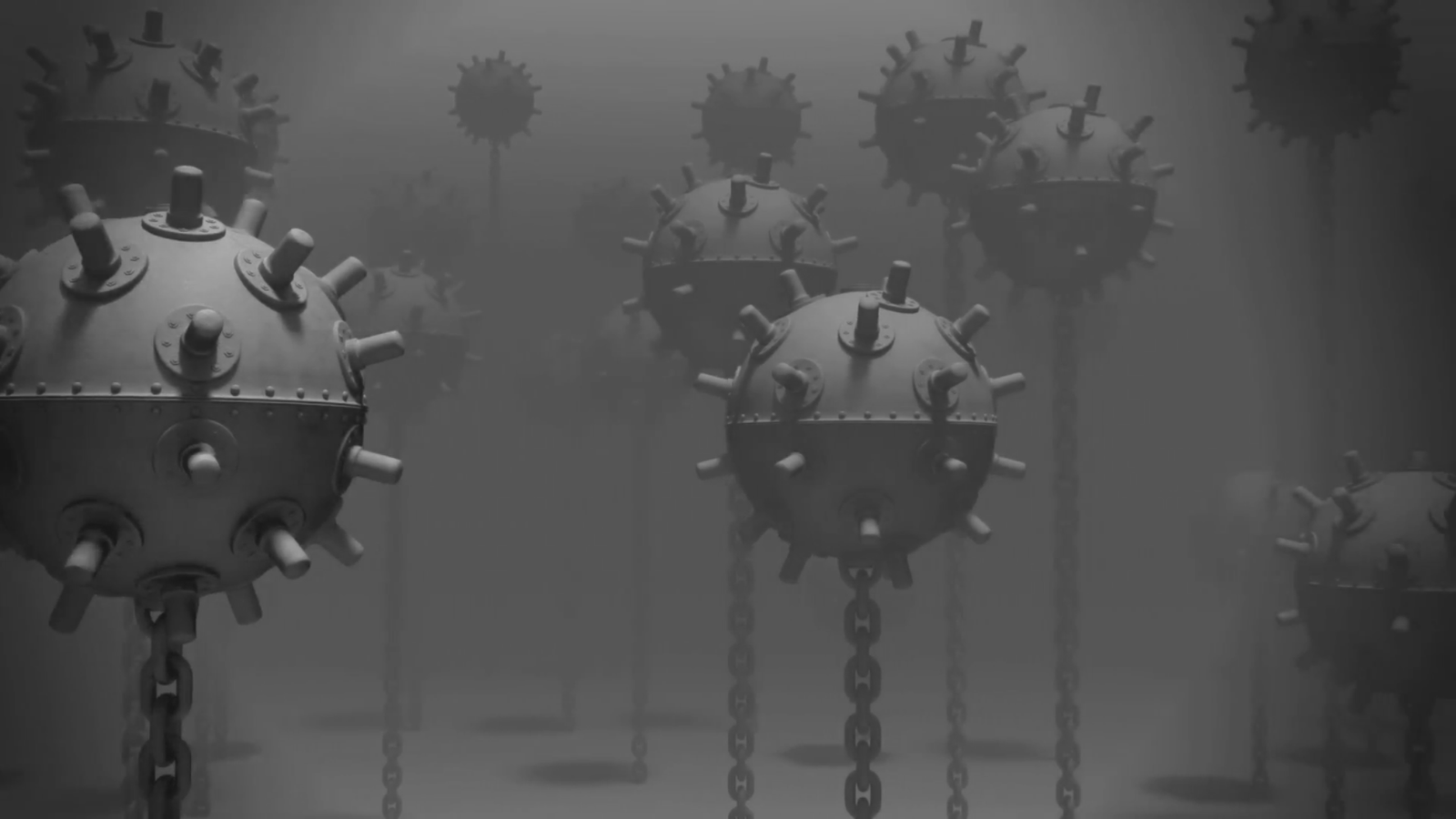
When conversations about Taiwan’s defence arise, attention frequently shifts to fighter jets, anti-ship missiles, or drones. However, hidden beneath the surface is an older yet equally formidable weapon that could influence the future of cross-Strait security: naval mines. Inexpensive, hard to detect, and challenging to eliminate, mines are quietly becoming a key element of Taiwan's asymmetric strategy against a more assertive China. Although they may not possess the allure of stealth aircraft or hypersonic missiles, mines have the potential to significantly complicate Beijing's invasion calculations. As tensions escalate, this cost-effective yet impactful tool is emerging as a strategic equaliser.
Foreign War and a Silent Stake in Deterrence
Taiwan has made significant investments in mine warfare. The Min Jiang-class minelayers, which were launched in 2020, are specifically designed for the quick and automated deployment of mines in contested waters. Each ship can carry 64 Wan Hsiang mines and is capable of laying them even in challenging sea conditions.
By 2022, the Navy had four of these vessels operational. In March 2025, Taiwan revealed contracts for an additional six Min Jiang-class ships, expected to be delivered by 2027.
This year, President Lai Ching-te oversaw live-mine exercises off the coast of Kaohsiung, where crews deployed three varieties of domestically produced mines equipped with sound, magnetic, and pressure sensors. This was a notable technological leap, and the exercises conveyed a clear message: Taiwan is committed to investing in and enhancing its sea denial capabilities.
For Taipei, the logic is simple. Cost matters in asymmetric warfare. An advanced anti-ship missile can cost millions, whereas mines can be manufactured and deployed at a fraction of that cost. For this, quantity is deterrence.
The Porcupine Strategy at sea
Taiwan’s use of mines fits neatly into its broader “porcupine strategy” – to deter invasion by making it excessively expensive through affordable, high-impact weaponry. In this framework, mines are the hidden spikes: unseen until they incapacitate a vessel.
In the event of an invasion, China would likely have to transport hundreds of thousands of troops across the Taiwan Strait, necessitating amphibious landings at a limited number of suitable beaches. Mines could turn these chokepoints into lethal traps, forcing the People’s Liberation Army Navy (PLAN) to allocate away significant time and resources for minesweeping operations before any possible commencement of landing.
This logic is not theoretical. Naval mines have shaped wars for over a century, from the Russo-Japanese War to Vietnam. Even modern navies are vulnerable: in 1988, a single Iranian mine nearly sank the USS Samuel B. Roberts in the Persian Gulf.
Geography as a Force Multiplier
Taiwan’s geography makes mine warfare particularly effective. The narrow straits, rugged coastlines, shallow waters, and limited suitable landing beaches form natural choke points that are perfect for defensive mining.
By integrating mines with existing mobile coastal defences, and loitering munitions, Taiwan can direct invading forces into lethal zones. Essentially, the sea transforms into an invisible minefield, while the land is fortified like a stronghold.
Asymmetric pressure on the PLA
For Beijing, clearing mines in contested waters is a nightmare. Mine clearance is a slow, perilous, and resource-heavy process. It usually requires specialized vessels, helicopters, and unmanned underwater systems, all vulnerable to Taiwan’s land-based missile and drone strikes.
Even the mere suspicion of mines can halt naval operations. Ships are forced to change course, convoys are delayed, and amphibious task forces become hesitant. All these take effect without a single mine detonating.
In the realm of modern warfare, time is of the essence. A delay of even a few days could allow U.S. and allied forces to intervene, thwarting Beijing’s aspirations for a swift and decisive strike.
The American and Allied Place
Taiwan is not developing mine warfare in isolation. The United States quietly backs Taiwan’s investment, viewing the naval mines as a key component of the wider Indo-Pacific strategy to delay and deny Chinese sea dominance.
On the other hand, Japan’s Maritime Self-Defence Force (JMSDF) brings world-class mine countermeasure (MCM) expertise. This creates a paradox: while allies benefit from Taiwan’s mining capability during conflict, they must also prepare to clear mines quickly afterward to restore commercial shipping lanes.
Risks and Limitations
Even though sea mines are enticing, they are not the silver bullet.
The 1907 Hague Convention VIII prohibits the unrestricted use of sea mines that threaten civilian shipping; they must be documented and removed per international law. Although they provide strategic benefits, sea mines are stationary and cannot distinguish between military and civilian vessels, raising legal and humanitarian concerns. Misusing these mines could result in diplomatic fallout and damage Taiwan's ethical standing.
Taiwan’s minelayers face the threat of pre-emptive strikes from China, prompting Taipei to prioritize automation, dispersal strategies, and unmanned surface vehicles for rapid deployment during attacks. Meanwhile, China's enhanced mine countermeasure capabilities increase the risks of clearing operations.
Importantly, mines are not a standalone solution; they serve to delay and complicate invasions but cannot win wars alone. Effective defence requires integrating mines with missile systems, drones, cyber operations, and resilient command and control to create a credible multi-layered deterrence platform.
Regional Lessons: Beyond Taiwan
Taiwan’s focus on mine warfare reflects a broader trend in the Indo-Pacific, where smaller nations adopt low-cost deterrence to counter major powers' naval dominance. In key maritime chokepoints like the Taiwan Strait and South China Sea, sea mines are an affordable deterrent.
For the U.S. and Japan, enhancing Taiwan's mine warfare capabilities strengthens the first island chain, crucial for curbing China's maritime ambitions. This approach also serves as a model for Southeast Asian nations seeking cheap and asymmetric strategies.
Taiwan’s mine warfare strategy complicates China's position, which is already challenged by the growing naval presence of the U.S. and allies. Overall, it highlights how smaller nations can leverage denial capabilities to shift strategic dynamics in contested waters.
Concluding Adieu: The Force of Unseen
Today, when hypersonic weapons and artificial intelligence are at the centre of headlines, it is important bear in mind that Taiwan exemplifies the renewed significance of traditional tools. The mines remain hidden until it is too late, and this very invisibility grants them their strength. For Taiwan, these mines symbolize the logic of asymmetrical defence: making more out of less, denying China from a swift military victory, and buying time for allies to intervene.
In the broader context, they highlight a growing trend towards layered and denial-based strategies in maritime security. While sea mines may lack the allure of stealth aircraft or missile systems, they could be sufficient enough to be a game-changer in the deep waters of the Taiwan Strait.
Gaurav Sen is a Senior Research Fellow at School of International Studies, Jawaharlal Nehru University, New Delhi. He is the author of the book ‘Peril of the Pacific: Military Balance and Battle for Taiwan’.
Tang Meng Kit is a Singaporean freelance analyst and commentator who works as an aerospace engineer. He graduated from the S. Rajaratnam School of International Studies (RSIS), NTU, Singapore in 2025.
(The views expressed are those of the authors and do not represent the views of CNAWS.)
Tags
- #Autonomous Underwater Vehicles
- #China
- #China-Taiwan Conflict
- #min jiang-class minelayers
- #Remotely Operated Underwater Vehicles
- #sea denial strategy taiwan
- #taiwan asymmetric warfare
- #taiwan defence strategy
- #taiwan maritime defence
- #taiwan naval mines
- #taiwan porcupine strategy
- #taiwan strait security
- #taiwan vs china invasion deterrence
- #Unmanned Underwater Vehicles (UUVs)
Author
Gaurav Sen and Tang Meng Kit
Gaurav Sen is a Senior Research Fellow at School of International Studies, Jawaharlal Nehru University, New Delhi. He is the author of the book ‘Peril of the Pacific: Military Balance and Battle for Taiwan’. Tang Meng Kit is a Singaporean freelance analyst and commentator who works as an aerospace engineer. He graduated from the S. Rajaratnam School of International Studies (RSIS), NTU, Singapore in 2025.