Department of Economic & Resource Warfare · Articles · Energy Security ·
Hydrocarbons and Hegemony: Energy Geopolitics Behind the US–Israel–Iran Crisis
Missiles may dominate headlines, but markets rarely lie. Within hours of renewed strikes and counter-threats between the United States, Israel, and Iran, oil prices surged, insurance premiums for Gulf shipping spiked, and investors rushed toward safe-haven assets. The reaction was immediate and instinctive. Not because of diplomatic breakdown alone, but because the world understands what is truly at stake. Nearly 20 percent of globally traded oil flows through a narrow maritime artery: the Strait of Hormuz. Any escalation in the Gulf is therefore not a regional disturbance. It is a systemic shock risk. Despite years of confident rhetoric about renewable transitions and post-oil futures, hydrocarbons continue to anchor global industry, military logistics, currency stability, and supply chains. This crisis is unfolding at a moment when resource competition is widening beyond oil. Strategic minerals, rare earth supply chains, and energy dominance doctrines are reshaping foreign policy calculations. Washington’s increasingly transactional approach to security partnerships, Gulf states recalibrating alliances, and Iran leveraging geography all point to a deeper structural reality: energy remains power. The present escalation is not simply about nuclear deterrence or regional rivalry. It is part of a broader recalibration of global resource politics, where control over chokepoints, reserves, shipping routes, and mineral networks determines geopolitical leverage. To understand the US–Israel–Iran confrontation solely through security language is to miss the underlying architecture of power. This article examines the structural drivers behind the Gulf crisis, from oil markets and Hormuz vulnerabilities to mineral diplomacy and the expanding logic of resource competition in the 21st century.
The recent escalation involving the United States, Israel, and Iran, now spilling across the Gulf, and drawing in regional actors such as Qatar, the UAE, and Saudi Arabia has been framed in familiar language of deterrence, security, nuclear threat, and regional stability. Yet the speed with which oil prices surged, shipping routes were disrupted, and global markets trembled tells a different story. Beneath the rhetoric of security and democracy lies an older and more enduring logic of control over energy, supply chains, and strategic resources.
Market Shock and the Immediate Energy Response
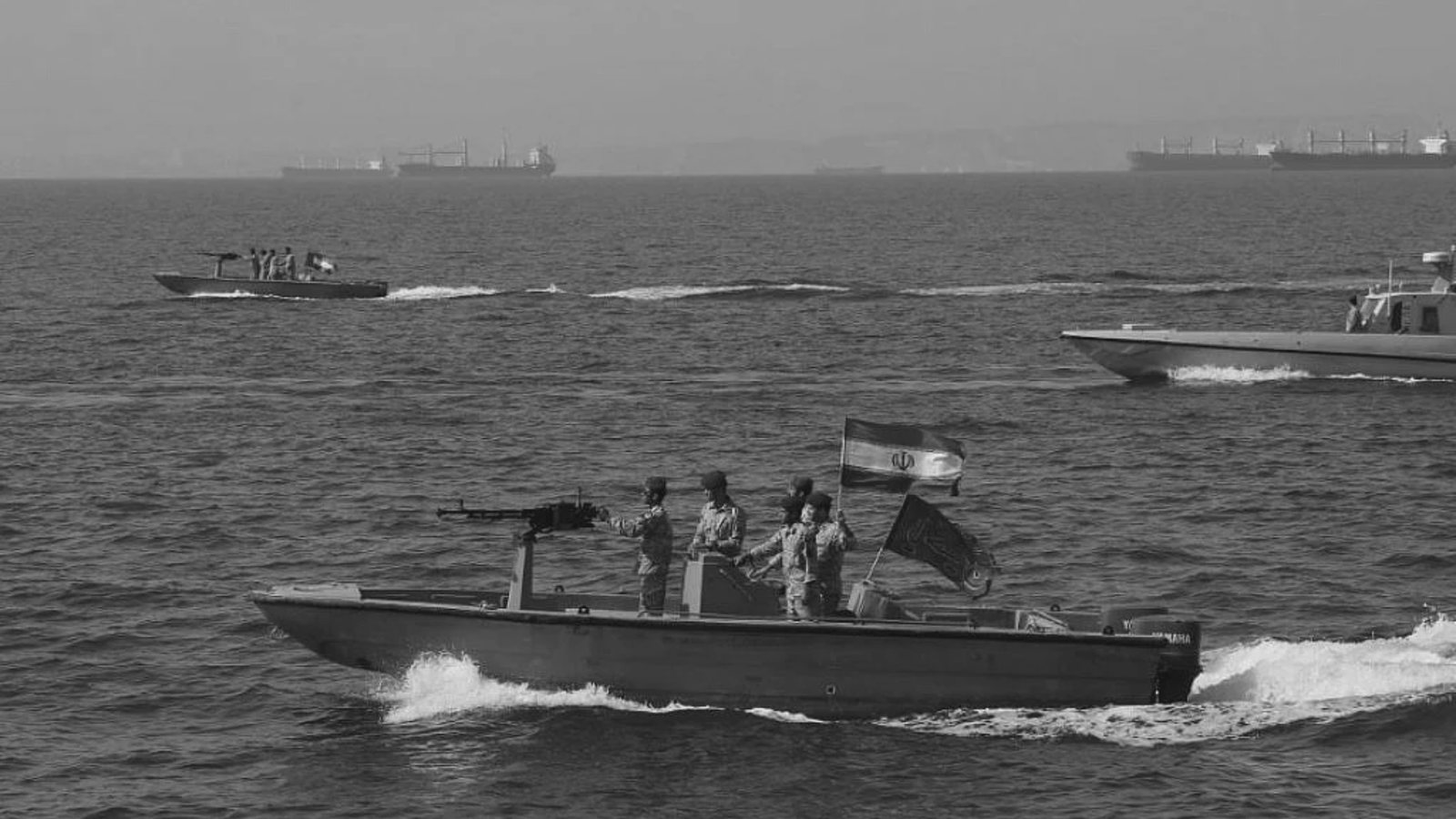
Within hours of reported strikes and retaliatory threats, Brent crude spiked sharply, equities wavered, and gold prices rose as investors fled to safety. Tanker traffic through the Strait of Hormuz through which roughly 20 percent of global oil shipments pass became precarious as drones and missile threats intensified. This was not a peripheral reaction. It was the global economy responding to the vulnerability of its energy arteries. If fossil fuels were truly on the verge of irrelevance, as some transition narratives insist, such tremors would not ripple so violently through markets.
Iran’s Geostrategic Position and the Hormuz Factor
Iran’s strategic value in this equation is not accidental. It possesses among the world’s largest proven crude oil reserves (approximately 13.3 percent of global reserves) and the second largest natural gas reserves. More importantly, it sits astride the Strait of Hormuz, a maritime chokepoint through which an estimated 20.9 percent of global oil trade flows; where geography and geology converge. Control over, or disruption within, Iranian territory is never merely about Tehran’s nuclear ambitions. It is about leverage over the world’s most critical hydrocarbon corridor.
Venezuela and the Politics of Hydrocarbon Endowments
Nor is Iran an isolated case. Venezuela holds the largest proven crude oil reserves in the world, around 19.4 percent of the global total. Recent U.S. actions in Venezuela, framed as responses to democratic backsliding or sanctions enforcement, must be read against this background. It stretches credulity to treat these interventions as purely normative. When the two countries most heavily targeted by American pressure also happen to sit atop some of the planet’s largest hydrocarbon endowments, coincidence becomes a weak explanation.
Structural Oil Dependence and Market Vulnerability
The market reaction to the latest Middle East escalation reinforces this interpretation. As reports emerged of attacks and potential blockades, oil futures surged and stock markets faltered. Investors did not react to abstract diplomatic tensions; they reacted to the possibility of supply shock. The modern global economy remains deeply oil-dependent, whether in transportation, petrochemicals, fertilizers, or defence logistics. Even as renewable capacity expands, hydrocarbons remain embedded in industrial systems and military infrastructures. The speed of market panic is perhaps the most honest indicator of energy’s continued centrality.
Energy Dominance and Transactional U.S. Strategy
The United States, particularly under Donald Trump’s leadership, has adopted a more overtly transactional approach to foreign policy, one that increasingly links security guarantees to resource access. Trump has repeatedly emphasized “energy dominance” and has shown willingness to reconfigure alliances around supply chains. His recent agreement with Ukraine; reportedly tying security support to access or ownership stakes in critical minerals, reflects a broader doctrine of “security for resources”. This approach extends beyond hydrocarbons to rare earths and strategic minerals, domains where China currently holds significant leverage.
Critical Minerals and Expanding Resource Competition
Here the comparison with China becomes instructive. Beijing’s dominance in rare earth processing and critical mineral supply chains has reshaped global industrial dependencies. From electric vehicles to advanced weapons systems, mineral inputs are becoming as strategically significant as oil once was. Trump’s repeated references to Greenland’s mineral potential and his overt interest in reshaping mineral partnerships suggest that Washington recognizes this shift. Yet instead of replacing hydrocarbons in the geopolitical hierarchy, critical minerals appear to be joining them. The result is not a post-oil world, but a more complex resource competition layered atop persistent oil dependence.
Gulf States and the Architecture of the Oil Order
The involvement of Gulf states further underscores this dynamic. Saudi Arabia, whose national champion Saudi Aramco remains the world’s largest oil producer, supplying roughly 10 percent of global output, operates within a security architecture long intertwined with the United States. Other majors such as ExxonMobil, Chevron, Shell, BP, and TotalEnergies function across multiple jurisdictions but remain embedded within Western financial and regulatory systems. The global oil order is not merely about barrels in the ground; it is about who insures them, ships them, refines them, and denominates them in dollars.
Energy Transition and the Limits of Post-Oil Narratives
In this context, Iran’s ability to threaten Hormuz becomes a structural challenge to U.S.-aligned energy architecture. Even without a formal blockade, sporadic attacks on tankers or credible missile threats can raise insurance premiums, deter shipping, and inject volatility into global supply. The mere possibility of disruption becomes a geopolitical tool. For Washington and its allies, neutralizing that leverage is not simply about curbing Iranian influence, it is about preserving the stability of a system from which they derive economic and strategic advantage.
Critics may argue that this situation overemphasizes hydrocarbons in an era of climate transition. After all, renewable energy investment is rising, and electric mobility is expanding. Yet recent events reveal the limits of that optimism. When oil prices surge, central banks worry about inflation; when Hormuz is threatened, global shipping recalibrates overnight. Renewable grids do not yet power aviation fuel supply chains or naval fleets. Nor have they eliminated petrochemical feedstocks. The materiality of oil persists, even as the rhetoric of transition grows louder.
Resource Competition and the Persistence of Power Politics
This does not mean that every U.S. action is reducible to oil. Security concerns regarding nuclear proliferation or regional militias are real. But to ignore the energy dimension is to misread the structural incentives shaping state behaviour. Control over supply chains, whether in hydrocarbons or critical minerals translates into geopolitical leverage. It influences currency stability, industrial capacity, and military readiness. In a world increasingly defined by strategic competition, resources remain the ultimate bargaining chips.
The present crisis, then, should be read less as an isolated flare-up and more as part of a broader recalibration of global resource politics. The United States appears intent on reinforcing its position across energy domains: maintaining influence over Gulf oil flows, constraining rivals in Venezuela and Iran, and countering China’s grip on critical minerals. Trump’s explicit framing of foreign policy in transactional, resource-centric terms merely makes visible what has often been implicit.
The uncomfortable implication is that the narrative of fossil fuel irrelevance is premature. Oil and gas may eventually decline in relative importance, but they remain central to contemporary power. As long as nearly a fifth of global oil passes through a narrow strait vulnerable to drones and missiles, and as long as the world’s largest reserves lie in politically contested territories, hydrocarbons will continue to anchor geopolitical rivalries.
If anything, the convergence of oil wars and mineral diplomacy signals not the end of resource politics, but its expansion. The energy transition may change the composition of strategic commodities, but it does not eliminate the logic of competition. In that sense, the current US–Israel–Iran escalation is less an aberration than a reminder: beneath the language of security and democracy, the struggle for control over the material foundations of modern power endures.
The views expressed are those of the authors and do not represent the views of CNAWS.
Image Source: Atta Kenare/AFP
Tags
- #brent crude spike
- #china rare earth dominance
- #critical minerals geopolitics
- #energy geopolitics
- #energy security
- #gulf crisis 2026
- #iran asymmetric warfare
- #iran asymmetric warfare doctrine
- #Iran Israel conflict analysis
- #iran military strategy
- #iran usa conflict
- #maritime chokepoints
- #middle east oil tensions
- #oil prices surge
- #proxy warfare iran
- #shipping disruption gulf
- #strait of hormuz crisis
- #u.s.–iran conflict
- #us iran conflict
- #us iran conflict analysis
- #US Iran conflict impact
- #us israel iran escalation
- #venezuela oil reserves
Author
Nikita Vats
Nikita Vats is a PhD candidate in International Relations at the Jindal School of International Affairs, O.P. Jindal Global University, India. She previously served as a Research Associate at the National Maritime Foundation, where she contributed to maritime and strategic policy research. She holds a B.Sc. (Hons.) in Chemistry from the University of Delhi and an M.Sc. in Chemistry from Punjab University. She also holds a second Master’s degree in Political Science and International Relations. Her research interests span strategic affairs in the Indo-Pacific, India’s energy security, critical minerals, climate diplomacy, and emerging technology-related security issues. Her current doctoral research focuses on the geopolitics of energy transition and India's strategic imperatives in contemporary world politics.